
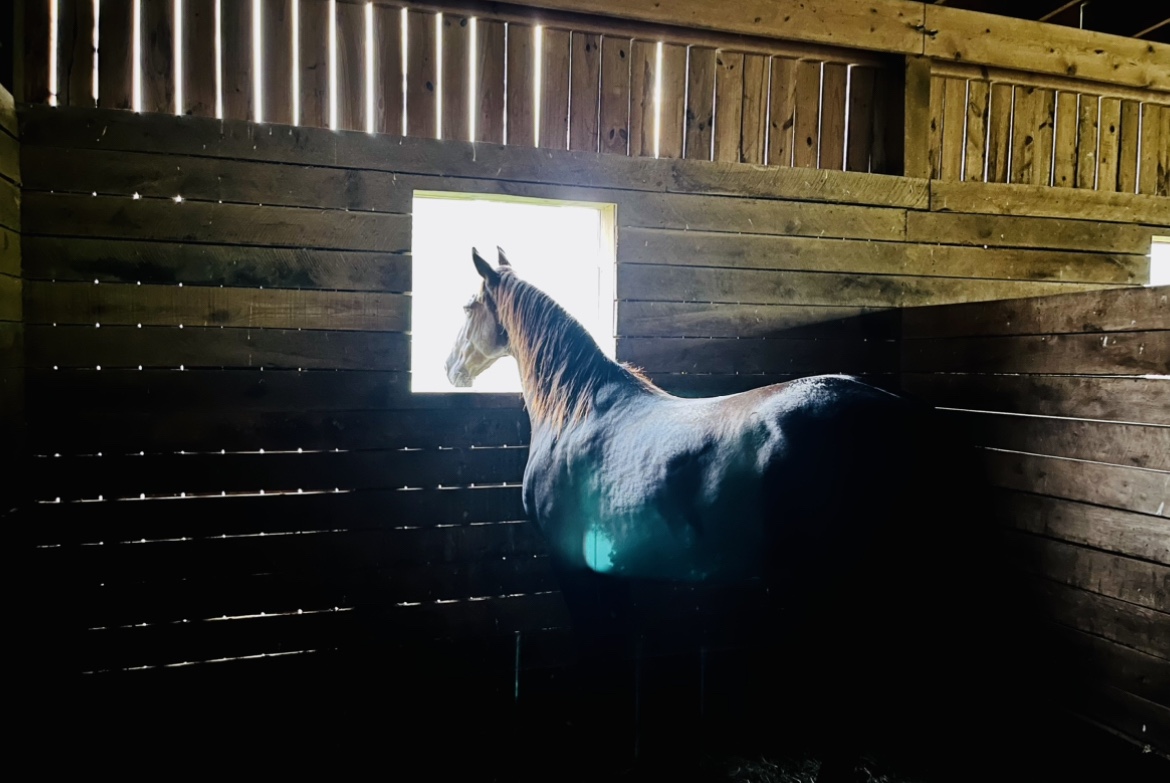
A local newspaper here in my town has picked up an article series I’m writing about the process of getting a horse and rider prepared for a 100 mile ride. I’m going to repost this (third in the series) article here and remind anyone within driving distance that we’re having our first Roving Clinic of 2025 this weekend, March 22-23, 2025. The fun bonus of this clinic is my amazing husband has been working tirelessly to create a space for us to come together right here on my own land. I had been looking around for a place to do more education events, and Matt looked around and said: let’s just get started here!
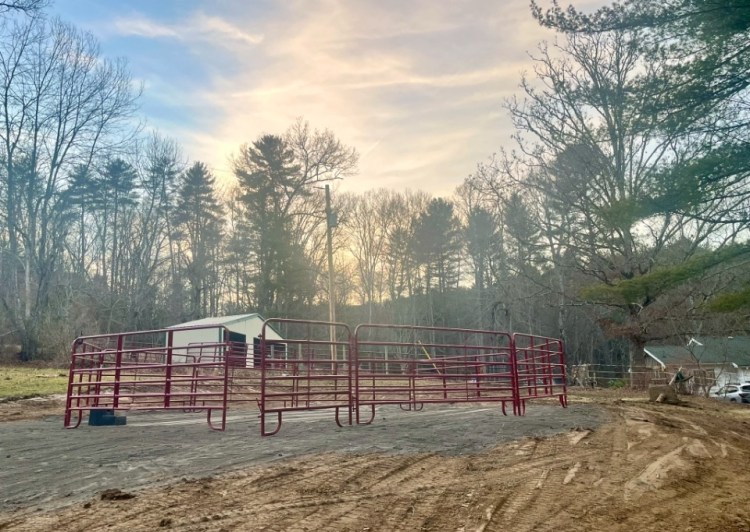
Turns out, he is right! We may be small, but we are a community of powerful horse people who are committed to changing the way we think and helping our horses change the way they think as well. We love to add to the family, and we aren’t “cliquey” – we have a wide variety of people who come to participate and to watch, observe, and learn.
Now, without further delay, here is the third article about the horse’s mind and why it meant so much to me in my endurance journey.
It’s amazing how many endurance miles Khaleesi and I have completed without her having a forward thought. I suppose that reveals how much one can force a horse through on sheer willpower and drive. Early on, as I was learning to work with horses, I learned a lot about driving horses around. No, I don’t mean in a truck! I mean the energy or force applied to make a horse move away from pressure. To ride any horse on the most basic level, you have to communicate effectively that a horse go forward, and have the horse do so in response. In my experience, most people approach this by driving the horse. The reason this is such a common approach is probably because it is so effective. Yet, I have since learned you can drive a horse forward without the horse having a forward thought, and this is actually a problem!
Horses are prey animals and come with the built in response of: run away first, ask questions later. It is pretty easy to get a horse to flee from pressure, however, we don’t actually want them to run away, so we also have to contain them. Generally we do this with a halter and rope, or a round pen. The message is: flee, move, evade, but also, you’re trapped. It’s not a stretch to imagine most horses don’t feel very good about this kind of work. I am now amazed at how many horses do become obedient and responsive to the pressure. I do not think I was alone in mistakenly thinking my horse was doing great with this system.
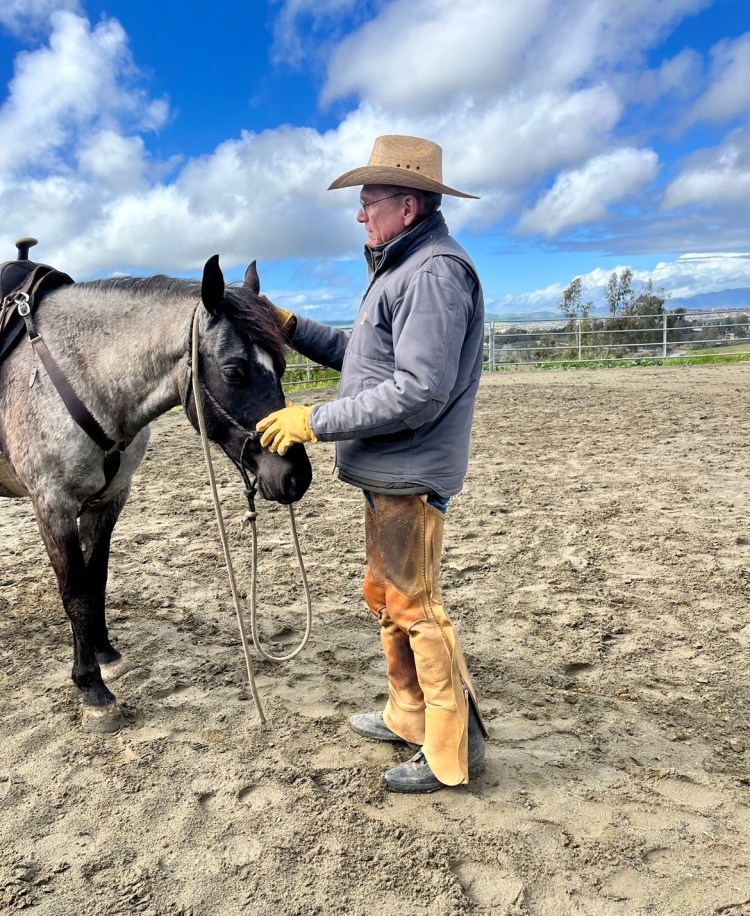
I flew across the country a couple winters back to watch Harry Whitney work horses in California. He says that it is good to learn what motions come with a horse’s emotions. Due to the prevalence of working horses in this driving pressure system, it has become less common to see what a horse looks like physically when they are truly relaxed and confident in their work with humans. This was true for me. I remember seeing quick, snappy, obedient responses to my requests, I was sure the horse was happy and life was good. Looking back, I understand now that my horses were moving in tension and avoidance, not soft responsiveness. Their bodies were rigid, braced, and tense.
This may seem like a tangent for an article series about an endurance team heading to a 100 mile race, but it’s one of the most important things I discovered that led to increasing success at this sport.
When driving a horse “away” from pressure, the horse’s attention is on the thing it is fleeing from. If I want my horse to run freely forward over the many miles, I need my horse to be thinking about going forward, not thinking about what is driving from behind. Using the sympathetic nervous system to propel a horse (even at a walk) adds adrenaline to the system which is supposed to be for emergency use only. To compile trouble from the driving approach, the horse is also trying to avoid punishment as he/she anticipates a tap or kick and braces against that force as well.
This means a horse driven forward is carrying some level of tension. Strength in movement comes through relaxation, flexibility, and good form. Working for extended time and intensity in tension brings diminished performance and increased injuries. These can be metabolic, like a heart rate that cannot drop for the vet check, or lameness from sustained tension in muscles and joints. This kind of lameness is difficult to diagnose because it doesn’t come from an obvious injury.
Once again, I speak from experience. For a couple years I wrestled with a mystery intermittent lameness in Khaleesi. I took an entire season off from competing after some disappointing events where we did not complete due to lameness pulls. The trouble was, no one could pinpoint the problem and how to fix it. I had professionals check her hooves and legs, and shoulders, to no avail. I had radiographs done on her feet to see if she had unusually thin soles or signs of arthritis. She had no evidence of problems in the tendons or joints. The lameness would show up both with and without saddle; it would randomly appear when asked to trot on a line or around a circle.
The reason I now believe it was a result of many miles moving in tension, is because I still find it today, though it is very rare. If I address her thought, the lameness dissolves instantly. In those early years, we were severely lacking a forward thought. I am now convinced a lot of physical problems are a product of the mind resisting the work, which creates brace in the body, leading to physical injuries that are difficult to diagnose and treat.
After spending some time with Harry Whitney and Tom Moates, I came to understand what a major factor the horse’s thought is. I am amazed at the things that will improve when the mental system comes into alignment. When I began to work with this understanding, it brought the final key that changed our endurance team to stronger finishes and eventually completing our first 100 mile event.
Modern horse training, for the most part, teaches people to drive a horse first from the ground by adding pressure to the horse’s hind end. We chase the horse with the tail of a rope or a flag. Eventually, we move into the saddle and drive either with legs to kick or a crop to tap. Anyone who is about to be kicked or tapped is going to brace in anticipation. That brace in the body acts like a brake, making it hard to move easily. You can drive using the gas and brake at the same time. It works, but is there a better way?
A better way?
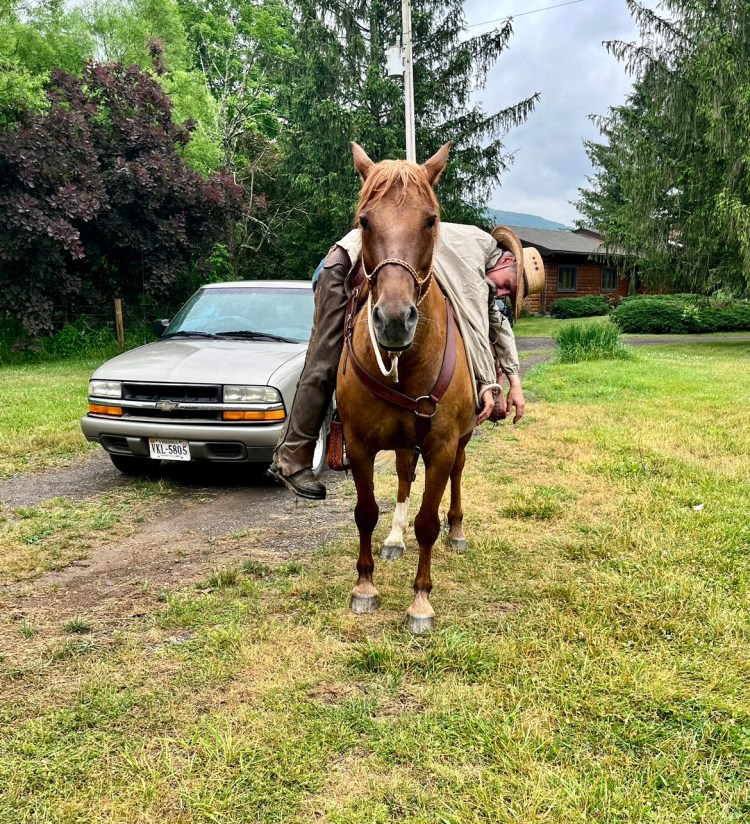
I want to create a desire for my horse to move freely toward something. Helping a horse create a forward thought is more complex than chasing it to run away from pressure. Once I was able to see the difference of a horse moving in relaxation and strength, I could not “unsee” it. I knew this was the way my horse could have longevity and success in her sport.
I hear a lot of talk regarding the necessity of moving a horse’s feet. Strangely enough, we rarely put a rope on the feet to ride. We put a halter on the horse’s head and use a lead rope, or a bridle and reins. I’m pretty sure we do this because the horse’s brain is housed there. While I have seen people get a horse to move it’s feet without it’s brain engaged in the same movement, this is not a horse I want to be attached to in any way! I don’t want to crank on a horse’s head for steering, and then drive it with pressure from behind to go. With strong enough levers applied, it can create compliance, but there are some horses who never break into this obedience. These non compliant types become the “problem horses” no one wants to work with. Their future is bleak as they fight against a pressure that does not make sense to them and become dangerous, sometimes even aggressive. Yet, even for the many horses who comply with the driving pressure system, their performance doesn’t compare to the brilliance of a horse who is present and engaged mentally in their work.

Khaleesi was, thankfully, a compliant type horse, and I spent years driving her before I knew there was a better way. She was smart enough to get out of punishment by doing what I wanted, but it showed up in her body over time. When I learned how to work with her mind and change her thoughts toward something, I saw the change in her body too. We are now erasing the brace and tension she used to carry, and the flexible strength we are developing is really encouraging.
This is a process I really enjoy. I’m still collecting tools on how to get my horse to think forward on down the trail. When that slightly lame gait appears, I don’t panic that a lameness injury is imminent. I shift my approach to get her mind thinking down the road, and when her mind straightens out, so do her legs. It’s amazing!
This approach of working with horses is not only good for an endurance team, it has become a way of life, and the community around it is creative and engaging! It changes everything we do together from leading on the ground, loading in a trailer, getting better transitions, and certainly getting over a jump. If you want to join us to see it in action, we are meeting in Bath and Highland Counties the weekend of March 22-23. Contact me at Jaime@hopehorsemanship.com for schedule, location, and details. Tom Moates will be working with us and our horses, and he always has some books on hand that make great resources for further understanding on starting with a horse’s thought.

 Hope Horsemanship