Tag: nature

  • Path to Vermont Series: Change the way you think

    Path to Vermont Series: Change the way you think

    A local newspaper here in my town has picked up an article series I’m writing about the process of getting a horse and rider prepared for a 100 mile ride. I’m going to repost this (third in the series) article here and remind anyone within driving distance that we’re having our first Roving Clinic of 2025 this weekend, March 22-23, 2025. The fun bonus of this clinic is my amazing husband has been working tirelessly to create a space for us to come together right here on my own land. I had been looking around for a place to do more education events, and Matt looked around and said: let’s just get started here!
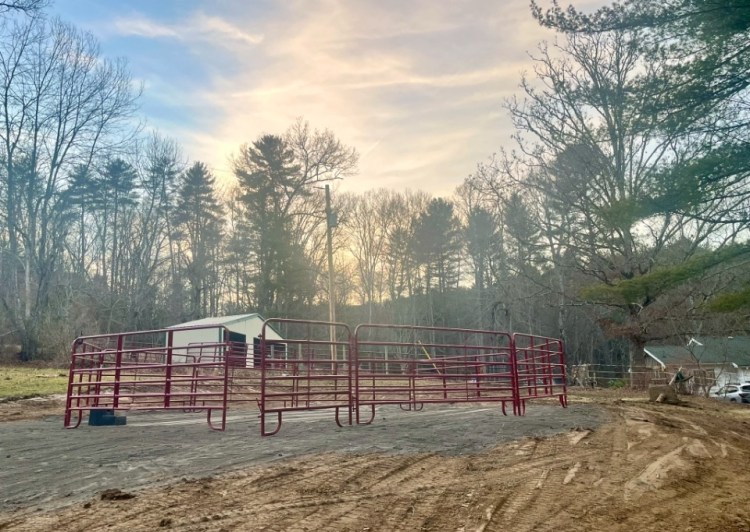
    Turns out, he is right! We may be small, but we are a community of powerful horse people who are committed to changing the way we think and helping our horses change the way they think as well. We love to add to the family, and we aren’t “cliquey” – we have a wide variety of people who come to participate and to watch, observe, and learn.

    Now, without further delay, here is the third article about the horse’s mind and why it meant so much to me in my endurance journey.


    It’s amazing how many endurance miles Khaleesi and I have completed without her having a forward thought. I suppose that reveals how much one can force a horse through on sheer willpower and drive. Early on, as I was learning to work with horses, I learned a lot about driving horses around. No, I don’t mean in a truck! I mean the energy or force applied to make a horse move away from pressure. To ride any horse on the most basic level, you have to communicate effectively that a horse go forward, and have the horse do so in response. In my experience, most people approach this by driving the horse. The reason this is such a common approach is probably because it is so effective. Yet, I have since learned you can drive a horse forward without the horse having a forward thought, and this is actually a problem!

    Horses are prey animals and come with the built in response of: run away first, ask questions later. It is pretty easy to get a horse to flee from pressure, however, we don’t actually want them to run away, so we also have to contain them. Generally we do this with a halter and rope, or a round pen. The message is: flee, move, evade, but also, you’re trapped. It’s not a stretch to imagine most horses don’t feel very good about this kind of work. I am now amazed at how many horses do become obedient and responsive to the pressure. I do not think I was alone in mistakenly thinking my horse was doing great with this system.

    I flew across the country a couple winters back to watch Harry Whitney work horses in California. He says that it is good to learn what motions come with a horse’s emotions. Due to the prevalence of working horses in this driving pressure system, it has become less common to see what a horse looks like physically when they are truly relaxed and confident in their work with humans. This was true for me. I remember seeing quick, snappy, obedient responses to my requests, I was sure the horse was happy and life was good. Looking back, I understand now that my horses were moving in tension and avoidance, not soft responsiveness. Their bodies were rigid, braced, and tense.
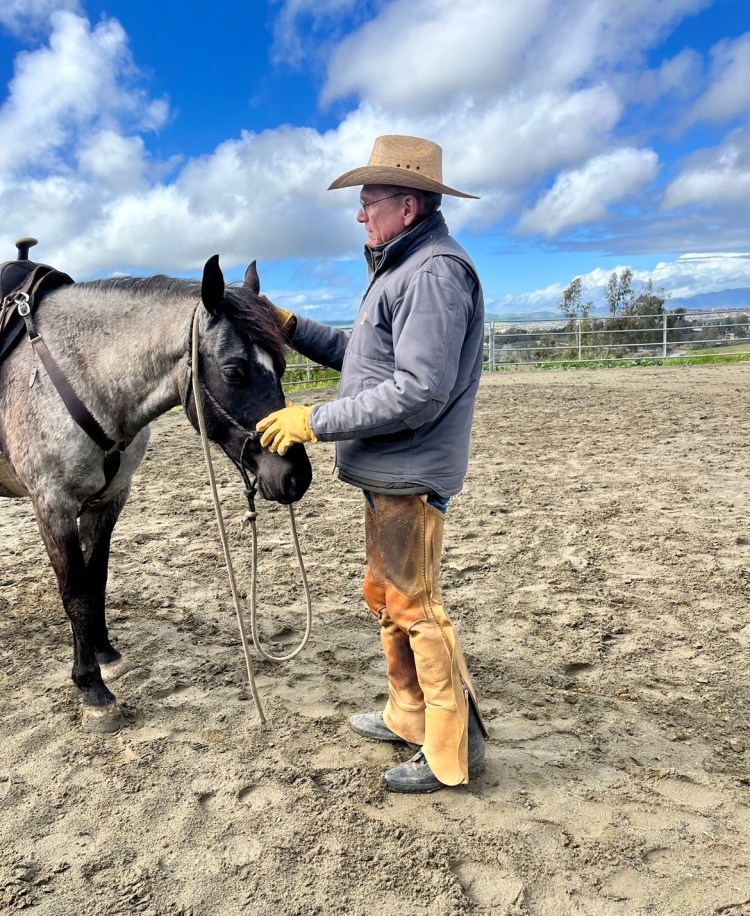
    This may seem like a tangent for an article series about an endurance team heading to a 100 mile race, but it’s one of the most important things I discovered that led to increasing success at this sport. 

    When driving a horse “away” from pressure, the horse’s attention is on the thing it is fleeing from. If I want my horse to run freely forward over the many miles, I need my horse to be thinking about going forward, not thinking about what is driving from behind. Using the sympathetic nervous system to propel a horse (even at a walk) adds adrenaline to the system which is supposed to be for emergency use only. To compile trouble from the driving approach, the horse is also trying to avoid punishment as he/she anticipates a tap or kick and braces against that force as well. 

    This means a horse driven forward is carrying some level of tension. Strength in movement comes through relaxation, flexibility, and good form. Working for extended time and intensity in tension brings diminished performance and increased injuries. These can be metabolic, like a heart rate that cannot drop for the vet check, or lameness from sustained tension in muscles and joints. This kind of lameness is difficult to diagnose because it doesn’t come from an obvious injury.

    Once again, I speak from experience. For a couple years I wrestled with a mystery intermittent lameness in Khaleesi. I took an entire season off from competing after some disappointing events where we did not complete due to lameness pulls. The trouble was, no one could pinpoint the problem and how to fix it. I had professionals check her hooves and legs, and shoulders, to no avail. I had radiographs done on her feet to see if she had unusually thin soles or signs of arthritis. She had no evidence of problems in the tendons or joints. The lameness would show up both with and without saddle; it would randomly appear when asked to trot on a line or around a circle.

    The reason I now believe it was a result of many miles moving in tension, is because I still find it today, though it is very rare. If I address her thought, the lameness dissolves instantly. In those early years, we were severely lacking a forward thought. I am now convinced a lot of physical problems are a product of the mind resisting the work, which creates brace in the body, leading to physical injuries that are difficult to diagnose and treat.

    After spending some time with Harry Whitney and Tom Moates, I came to understand what a major factor the horse’s thought is. I am amazed at the things that will improve when the mental system comes into alignment. When I began to work with this understanding, it brought the final key that changed our endurance team to stronger finishes and eventually completing our first 100 mile event. 

    Modern horse training, for the most part, teaches people to drive a horse first from the ground by adding pressure to the horse’s hind end. We chase the horse with the tail of a rope or a flag.  Eventually, we move into the saddle and drive either with legs to kick or a crop to tap. Anyone who is about to be kicked or tapped is going to brace in anticipation. That brace in the body acts like a brake, making it hard to move easily. You can drive using the gas and brake at the same time. It works, but is there a better way?

    A better way?
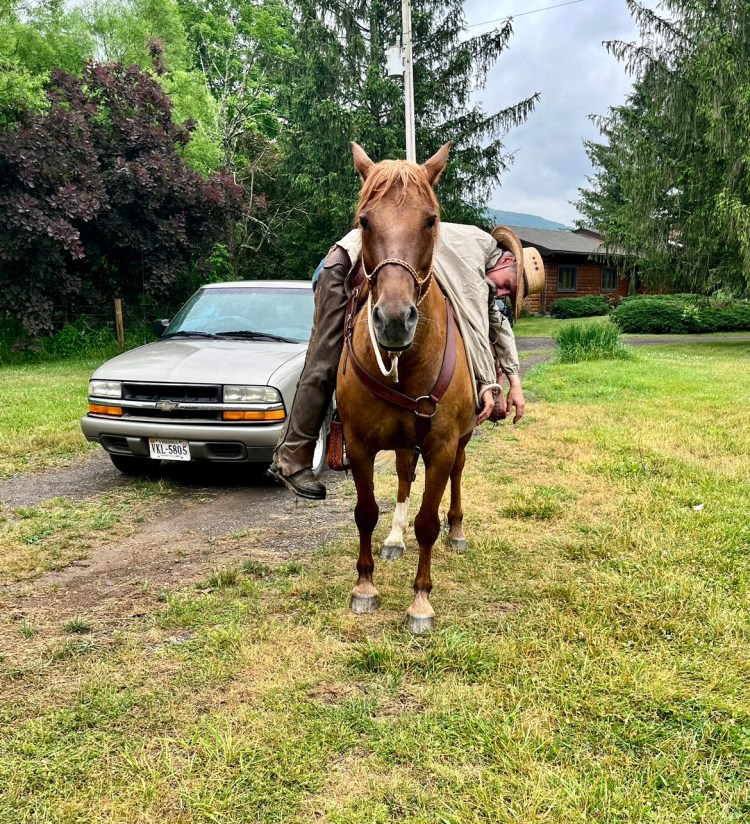
    I want to create a desire for my horse to move freely toward something. Helping a horse create a forward thought is more complex than chasing it to run away from pressure. Once I was able to see the difference of a horse moving in relaxation and strength, I could not “unsee” it. I knew this was the way my horse could have longevity and success in her sport.

    I hear a lot of talk regarding the necessity of moving a horse’s feet. Strangely enough, we rarely put a rope on the feet to ride. We put a halter on the horse’s head and use a lead rope, or a bridle and reins. I’m pretty sure we do this because the horse’s brain is housed there. While I have seen people get a horse to move it’s feet without it’s brain engaged in the same movement, this is not a horse I want to be attached to in any way! I don’t want to crank on a horse’s head for steering, and then drive it with pressure from behind to go. With strong enough levers applied, it can create compliance, but there are some horses who never break into this obedience. These non compliant types become the “problem horses” no one wants to work with. Their future is bleak as they fight against a pressure that does not make sense to them and become dangerous, sometimes even aggressive. Yet, even for the many horses who comply with the driving pressure system, their performance doesn’t compare to the brilliance of a horse who is present and engaged mentally in their work. 

    Khaleesi was, thankfully, a compliant type horse, and I spent years driving her before I knew there was a better way. She was smart enough to get out of punishment by doing what I wanted, but it showed up in her body over time. When I learned how to work with her mind and change her thoughts toward something, I saw the change in her body too. We are now erasing the brace and tension she used to carry, and the flexible strength we are developing is really encouraging. 

    This is a process I really enjoy. I’m still collecting tools on how to get my horse to think forward on down the trail. When that slightly lame gait appears, I don’t panic that a lameness injury is imminent. I shift my approach to get her mind thinking down the road, and when her mind straightens out, so do her legs. It’s amazing!

    This approach of working with horses is not only good for an endurance team, it has become a way of life, and the community around it is creative and engaging! It changes everything we do together from leading on the ground, loading in a trailer, getting better transitions, and certainly getting over a jump. If you want to join us to see it in action, we are meeting in Bath and Highland Counties the weekend of March 22-23. Contact me at Jaime@hopehorsemanship.com for schedule, location, and details. Tom Moates will be working with us and our horses, and he always has some books on hand that make great resources for further understanding on starting with a horse’s thought

  • What we don’t say: RESPECT

    What we don’t say: RESPECT

    I’ve heard we all have personal algorithms that are used to feed us opportunities and advertisements that align with our interests. One might imagine I get a lot of horse related nudges anytime I’m grazing the internet. One would be right. 

    Something occurred to me as I read through the ad copy, target written to sell me something. I noticed a few buzz topics, words I remember having a certain weight in past years, and as I read, I pondered: I haven’t had a conversation about some of these things in quite a while. In fact, is it my imagination, or are they missing in the horse community I’ve settled into? As I read questions like: How is your ground work game? Or Does your horse respect you? It was a bit like hearing about someone I used to know well and thinking: hey, yeah, what is she up to now anyway? It’s been forever since we’ve talked.

    I love words. Words matter to me. Sloppy language bothers me. Sometimes I fail at getting just the right word, but I try to express as clearly as possible what I want to communicate, and I spend time and effort to do so. It’s common for communities and industries to share language- terms that to insiders, have particularly meaning often deeper than the surface definition. I love that the current group of horsemanship enthusiasts I have found myself in community with seem to have a similar interest in using words that best express what we intend and not using words that carry a layer we don’t intend.

    One such word I noticed was:

    RESPECT

    I was following a conversation about a horse disrespecting the handler, and realized the “respect peg” was not on my brain wall where I’d last noticed it. Do you think about having “pegs” to hand ideas and information on? I know it’s hard to take in information if there’s no “peg” for it, you have to sometimes start by creating one when learning new things. Once you have a peg, or some might imagine it more like a drawer or a file… you need somewhere to house the information and process it. I think of pegs to hang a concept on. When I read these conversations and questions regarding a horse respecting or disrespecting a human I thought it should have a peg. I have had plenty of past conversations about respect or disrespect in horses, this isn’t new to me, but as I scanned, sure enough, the respect peg was missing. Where had it gone? I hadn’t remembered pulling it out. It was now glaringly absent from my current process of working with horses. That’s odd, I thought. Is this on purpose? Or have I simply not noticed it?

    I put the thought to one of my horse education mentors with the question: is it just me, or do we not talk about “respect” with our horses in this community? 

    No… it wasn’t just me, we don’t tend to use that word. 

    We don’t use the term respect because both respect and disrespect add a layer of emotion that is probably not accurate for the horses in question most of the time. Horses rarely show disrespect in the same way that humans do. In our cultural usage, to disrespect contains a sense of offense or insult. Adding that layer unnecessarily brings an emotion to the table that gets in the way of helping the horse and human find a better connection.

    Horses do have emotional systems. Horses do have feelings, preferences and opinions, however horses are far less inclined to make things personal than humans. When we assign these more human attitudes, we add problems that are not real. This is why our horse community tends to move away from the words respect and disrespect. I don’t think that means it’s impossible for a horse to show disrespect, only that it’s much more rare than the horse world at large seems to believe.

    I took a moment to consider what horse behaviors have been categorized as disrespect in circles from my past. It looked like a horse that invades personal space, possibly stepping on someone, or even runs them over, or ignores a handler completely when their attention is required. None of those behaviors is acceptable, but are they disrespect

    I thought about a child and a mom walking in the mall, and something takes the child’s attention (it could be a distraction like an inviting toy store, or a fear, like someone particularly scary looking) and this causes the child to lose track of mom, and run into her, maybe even trip her while walking. Most people would not berate the child for being disrespectful. Probably they would give a short lecture on paying attention and keeping better track of their surroundings- including not walking into people. Some moms would never have gotten tripped because they are prone to notice when the child is becoming distracted and are always three steps ahead. That mom might bring the child’s attention back before the wreck even happens.

    I remember being in a round pen with Khaleesi while Harry Whitney watched us interact. She walked off from me, then paused to smell a poop pile from a previous horse. I was trying to get something done together and she completely checked out on me. She doesn’t tend to run me over, we’ve clarified that pretty well over the years, but in some circles this complete disregard could easily be interpreted as disrespect. Harry observed: Right now that poop pile is of more importance to your horse than you are… I’d probably do something about that.

    That line still rings in my mind and makes me smile. It comes back to me in what appears on the surface to be very different scenarios, but at the core they are the same problem. My horse is more in tune to a poop pile has a similar root issue as another horse about to trample me because of a distraction that took her full attention leaving me of very little importance. In either scenario the problem is that the horse mentally severed our connection and made something else of higher importance. This is not offensive, it simply needs to be addressed. I do not need to add an emotional layer that my horse has just insulted me, rather do something to remind the horse that I need to be the most important thing in her world right now. If she stays mentally present- with me – she is aware of me, and she is not likely to run me over, drag me off, or step on me.

    Ideally I want to find ways to keep the connection, not instill fear. For a prey animal, fear is easy to conjure and use. It takes more thought, creativity, and attention to draw into something that feels good than to drive with something that creates a threat. When we don’t give our horses a reason to stay connected, it is not surprising they are more concerned with their environment and disconnect with us in order to connect with something they think IS important. This can look like keeping tabs on a lawn mower in the next field, or eating grass as we try to walk from barn to arena, or calling to it’s buddy who brings a higher sense of security than we provide.

    In that round pen, as my horse smelled the poop pile, I had some options, this time I banged my flag on the ground next to me. I did not chase her with it or direct it at her as a threat. I used the flag to make an unexpected sound in the environment to interrupt her thought about the poop and get her to ask what was that? It would be similar to yelling hey there! to someone whose attention I was looking for across the yard. I am learning what it means to be of importance to my horse, and hopefully without my horse feeling constantly threatened by me. I want to give my horse repeated experiences that connection with me is the best place to be. I want my horse to find peace, security, and confidence there. This process assumes that I exhibit those things myself (peace and confidence), and I am developing myself to be a leader sufficient for my horse’s needs. Horses are wired to seek a leader they find sufficiently competent to follow. The definition of sufficiently competent can vary widely between horses. That’s an entirely other wormhole for another day.

    Is this about respect? I suppose it depends on your own sense of that word. If respect simply means to you that someone else gives you consideration and attention, and stays in connection so you can work together, then I suppose the word is not a problem. But if you find yourself singing along with Aretha about R-E-S-P-E-C-T… find out what it means to me, and with that word you have shades of offense or insult, it is likely creating a dynamic that won’t help either of you sort out the behavior issues in question.

    Some may eye roll and say it’s about semantics- it’s all the same thing. Some will hold onto the term as a useful way to describe unwanted horse behaviors, but I think my work with the horses around me has become more productive without it. Today if I have an issue with a horse invading my space or checking out, I’m more likely to see it as a lack of attention and connection, and find something that works to bring back the focus and connection in as little threat language as I can.

    If I’m back in the mall with the child who gets distracted, I might call their name in a regular speaking voice and when they check in with me, crisis is averted. However if the child is in the yard and gets focused on a ball across the street and I notice a truck approaching, I might have to get pretty big, yell in a firm voice, and even seem threatening in order to get their attention back. I’ve seen some horses who have become really good at tuning out humans and protecting their disconnection as if their lives depend on it. I’ve seen Harry Whitney get pretty big in his efforts to get that horse to snap into the present and consider making a better choice. The goal, however, is always to bring the horse to a safe place, a place of peace where they feel good about the connection and seek it out- not for fear, but because they feel better there. 

    I can see why we don’t address horses’ disrespect and I had not noticed the concept was missing. We just don’t see truly disrespectful horses very often. I may have never yet seen one in person. We see horses who have strong thoughts about things other than the work we want to do. We see horses who have left their mind with their herd, or the last place they felt safe. We see horses who are afraid, possibly in pain, or don’t believe they can be at peace when connecting with a human. These are the things we begin addressing, and we see what we can do to bring a change for the better. I suppose until I see a horse that is truly disrespectful, I’ll just keep on addressing the problems as they stand and see where it leads, and I’ll leave that respect peg off the wall until I find a need for it.