Category: Uncategorized

  • Life in Transition

    Life in Transition

    Have You Ever Felt Bone Tired?

    Recently I’ve noticed that my body seems to be struggling to keep up with me. I hear this echo reminder: the body keeps the score. I haven’t read that book, but it’s been recommended to me a few times. Maybe I should…

    I have learned not to ignore the subtle things, and this week I sat with the question—what is it? My joints get stiff; I have these weaknesses in my hip or shoulder that come and go… I’m getting older each year, and I had a pretty bad case of Lyme’s in 2024, so that can’t be discounted as a factor. The spirit is willing, but some days when I get up in the morning, it seems the flesh is weak.

    As I journaled and allowed myself to take stock of what is going on, I thought about how draining transitions are on us. I am definitely in a transition—in fact, I’m at the edge of the transition cliff this month, and as I get closer to the edge, the stress and fears are becoming more real each day. I sometimes get that feeling through my whole body—that tingling feeling when you’re too close to the edge and you look down…

    You step back and say: It’s okay, I’m not going to fling myself over. I am safe here.

    Only, actually, I am about to fling myself over.

    I have never felt the need to bungee jump or parachute out of a perfectly good plane. The turbulence that drops you (safely seat-belted in) without notice, makes me queasy. I’ve been told there are only two fears we are born with: the fear of loud noises and the fear of falling. This thing feels incredibly primal when it shudders through my system as I lay in the safety of my bed.

    As I considered this transition period, I realized I’ve probably been in some form of transition since 2019, but with a few seasons of stability in different areas of my life, I think moving to the rural mountains of Virginia in 2007 was the first real cliff dive that sent me into a way of life that has been constantly calling me to new growth and uncomfortable expansion. Looking back, there were numerous times I was pretty sure I wouldn’t “make it,” and yet each time, there I landed, in a better place than I left.

    As I considered this, it occurred to me that transitions are the most meaty and challenging places, and they define our lives, the excellence, and how far we can go. Just yesterday I heard in an interview: The scope of your life will likely be determined by how much pain you can tolerate.
    He was talking about how risky and painful expansion and growth can be. Those who can tolerate the pain that comes with being willing to press into places we cannot be certain of are more likely to expand their reach and see internal growth than those who have to stay in their comfort zone. Also I do not discount the reality that sometimes we are forced into transitions we did not volunteer for. Peoples lives are shifted through unwanted divorce, unexpected job loss, medical trauma, accidents and the like. That reminded me of a series I listened to on repeat, taking notes, by Tony Stoltfus years back, on going through transitions well—and how important the transition is to how the next season will be once we arrive.

    In fact, I believe the transitions are the most valuable material and show the strength or weakness in the structure, and this is where I circle back to my horsemanship.

    I spent a week with Harry Whitney and friends in Floyd, VA, a couple weeks ago, and in a few lessons he talked about the value of frequent transitions. Once we are established in a pattern, solid training and autopilot can take over, and we can look (artificially) pretty good. The part that reveals what is really going on under the surface, is in making a change together.
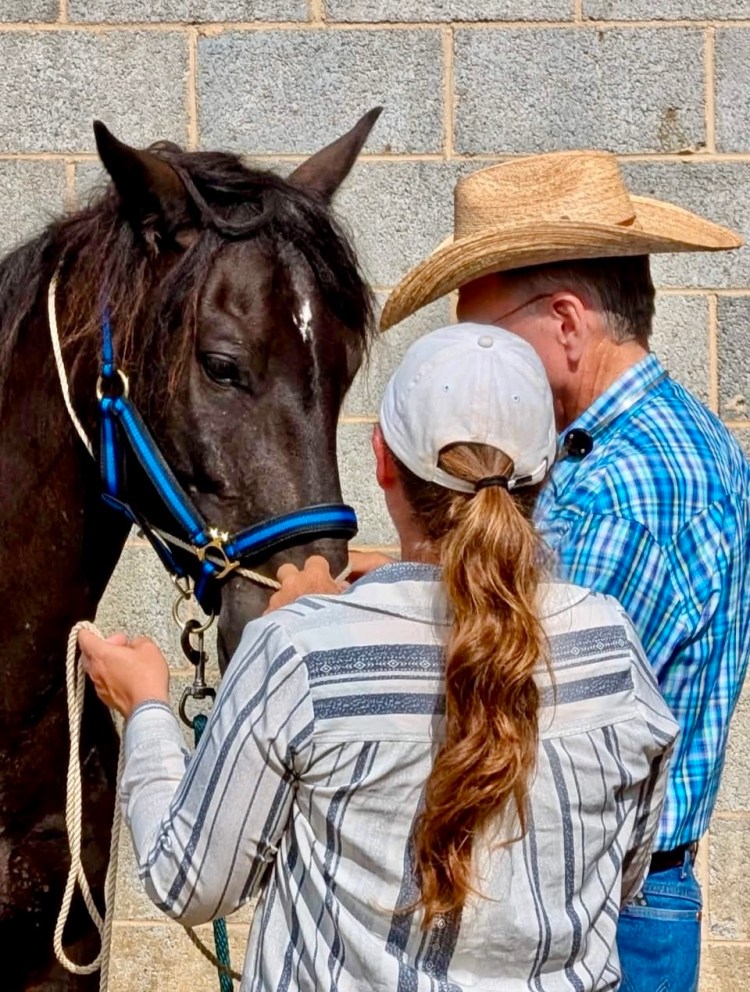
    Honor, Jaime and Harry Whitney

    Change in direction and change in speed are the most common with a horse—but these always require (if done well) a change of thought. How quickly and how completely can we get into the change? How available is the horse to our input that we should make a change? The way in which the horse goes from halt to walk, or walk to halt, can tell a lot about the quality of the connection.

    Humans have gotten adept at finding ways to make the body of the horse comply. We have the tools: reins and double reins; bits and stronger bits; martingales and nosebands; chains and cavessons when we need them. No matter how good we are at forcing the horse to physically take on a transition, their body tells the score if you look.

    “Get better at seeing the motions that go along with the emotions,” Harry would say. 

    Once you see how the tension shows itself, you won’t be able to unsee it. The first level of unwanted tension from a horse in physical compliance without a mental change is a head raising. I have seen this from a subtle lift to a full-on head fling that could take out a rider if not wearing a helmet. Even if you fix this with a tie-down, the brace shows up in the muscles and the hollow frame still exists under the surface. Tension kills. Bracing against the work we are doing creates damage internally and externally. I have actually seen horses (multiple times) exhibit intermittent lameness of various degrees that no veterinarian or farrier could explain or heal come right after working in a round pen with Harry, whose first concern is to remove the tension that comes from the mind and body out of alignment. Not only have I seen it, I went through it with Khaleesi a few years ago, and getting her to think “forward” instead of being physically driven forward cleared out the uneven lameness I’d been worrying over. It will show up on occasion—always when she does not want to go forward (especially the last loop of an endurance ride from camp)—and if I get her mind lined out, the off-step lameness gait dissolves completely. Every time.

    There are transitions all over our horse lives. Removing my horse from the pasture with her friends is a transition. Being groomed and tacked for an activity is a transition. Going from the ground to the saddle is a transition. How much attention do you pay to these steps? Does your horse fling up his head when you approach with a halter? Do you have to trick your horse into being caught with cookies or trapping him in a stall for breakfast? Do you use cross-ties to groom? Have you ever had someone hold your horse for you while you mount? Some of the ways we mitigate the weakness in these places are not bad if they are a temporary measure in place while the weakness is addressed so the horse can come fully on board, but they do reveal when something is broken in the connection.

    Leaving friends or the barn for a trail ride is a transition, changing gaits in the arena… changing direction, lines, and circles in an arena… These are all places we can find out: how available is the horse to us?

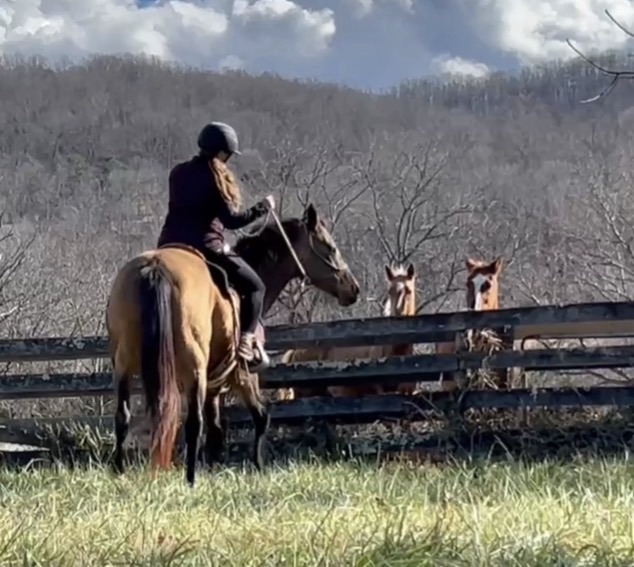
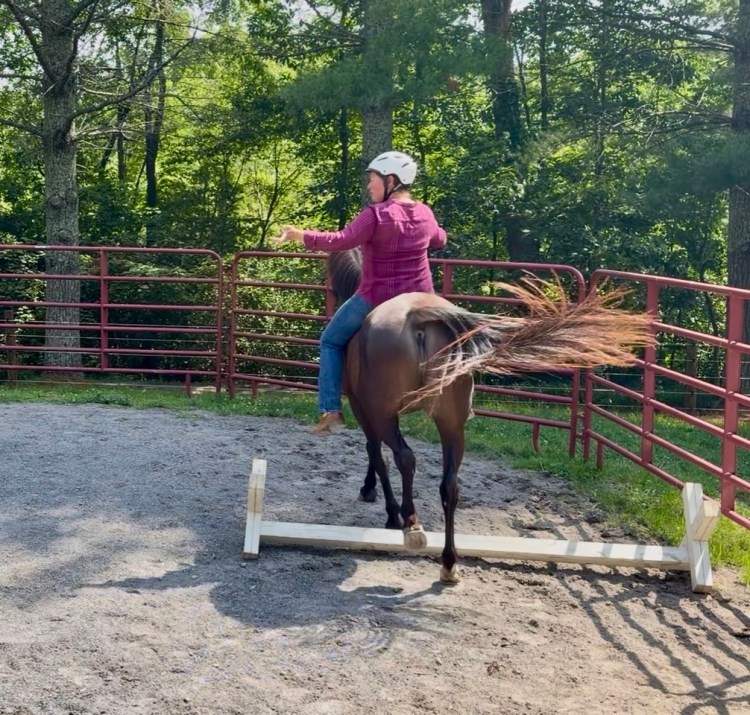
    I have found the first place to start, is to notice: whenever you stop your horse, does the head elevate? If so, you have tension in the transition and mental/physical disagreement—however slight. It is a weakness. Another place is going up a gait—when you ask your horse from walk to trot, do they pop themselves up into the trot with a hop in the front end? Or is it a smooth lift of the entire body driven from the hind?

    Most horses exhibit some of these tensions. Perfection is rare—but the truth, if we are willing to see it, will set us free. Noticing is the first step! Doing more frequent transitions until the resistance dissolves will bring more availability, relaxation, and connection. I have never seen someone address these transition issues and not get some shifts from the attempt. We first must have eyes to see, then we can begin to ask how we can make this better.
    Screenshot

    The best news is that focusing on the transition places makes a big difference in the whole picture. This is where greatness is gained or lost. Adjust the connection in the transition, and the connection in the execution of the whole is raised every time.

    I think it’s like this in life too. The transition spaces are harder to stay connected. Self-protection stemming from fear disconnects us from each other, ourselves, and God. When we disconnect, we harden and brace, preparing for the worst and feeling alone in our survival. For me, it can be easy to barrel onward, knowing what I have to do and bracing for the trouble I perceive ahead. I force myself onward because I know it’s what I must do. When walking through hell, keep walking! (I am far from walking through hell, but the point is related.)

    The fact that I’ve noticed I feel increasingly sore, exhausted, and with more on my mind that keeps me from interacting fully present with those around me is a signal to slow down and breathe. To reconnect first internally with myself: What is going on, and how do I feel about it? What am I most afraid of today?

    When I expose the truth of what I believe in the transition, and what is bringing the tension and stress, I can reconnect with others too. I might need to share my fears with trusted friends who can remind me I’m not alone and remind me of the truth of who I am. This truth is always greater than the perceived truth the fear plants. For me, I need to slow down to hear what God has to say about this season as well. I hear him in the ancient writings, in things highlighted in the nature around me, I hear him in a word of encouragement from a friend that hits deeper than usual, sometimes in a dream, or an idea or image that comes to me as if completely from outside my own thoughts. We all hear voices! It’s just easier to accept the voice that says: You’ll never make it. You’re going to die here. Why would you ever risk it? You’re not good enough.

    It is much harder to align with the voice of love that says: You are going to be okay! Relax and have peace even in the unknown—I promise to guide you through. No matter what happens, you’ll grow and learn—and you’re never alone! You can do it. Look how many times you thought you might fall and instead you flew! You can fly again!

    I suppose if the parallel returns to the horsemanship—it’s my job when I notice the tension to slow down and remind her: You can do this! We are in it together, and you can trust me. Relax into my guidance and trust that when we do it together, it will feel so much better! You can have peace right here, with me! Trust me.

    I know many people argue we don’t have time for that. But I choose not to believe in scarcity whenever I notice it creeping in. When we submit to the Kronos of the time clock and we believe that the scarcity of seconds, minutes, hours and days rule our lives, it always creates stress and tension and anxiety. When I enter into that transition space as a timeless product of Kairos time, everything expands and I have peace. What is more important than staying present in the moment, in the truth, and smoothing out the rough edges?
    Screenshot

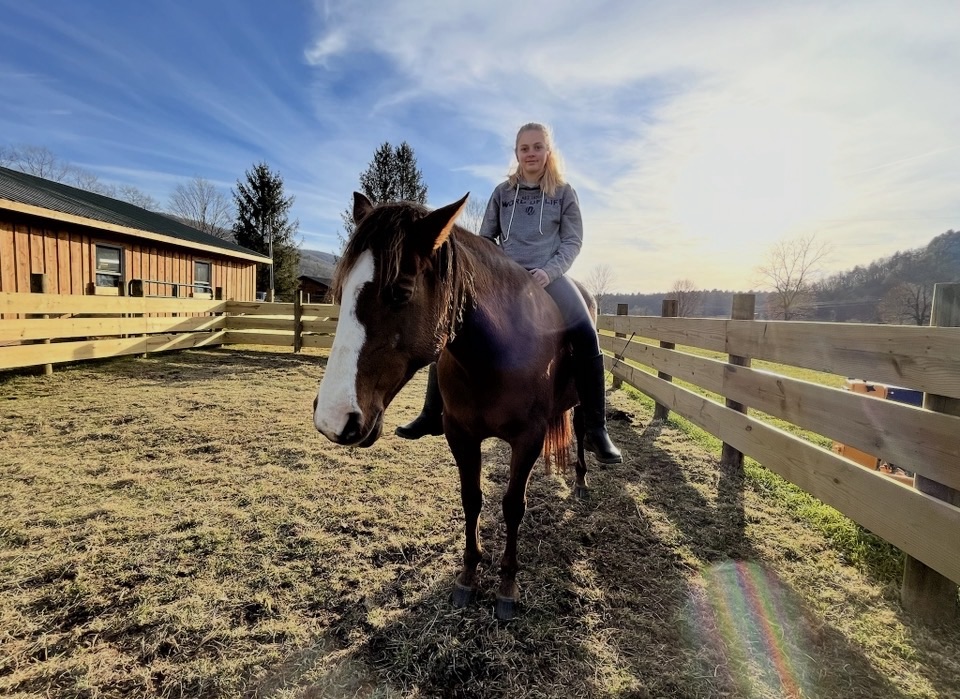
    Yes, especially in the beginning, it takes time away from whatever agenda I have set. I have the choice before me to hurry in tension and disconnection to force something in order to check a box and get a thing accomplished, or I can step into eternity for a moment and reconnect, guide, and become a real leader that my horse will increasingly trust and depend on. The process is slower early on, but creates something of magical excellence along the years that is the thing I crave more than the buckle, the ribbon, or the record. It is more real than anything else I could produce, and it lasts longer too.
    For me, it is worth it.

  • Hope and Honor

    Hope and Honor

    Before there was a Hope Horsemanship, there was Khaleesi and Wyoming. Before Khaleesi and Wyoming was Faygo and she was the seed, the mare who first captured me. Khaleesi is the first horse I started, and Wyoming is my first mustang and the most complex horse I’ve tried to help. These two are my foundation, and from these grew my passion to explore horsemanship as a priority above a particular sport or discipline. From them came Hope Horsemanship.  

    The first horse I brought into the family under Hope Horsemanship we named, appropriately: Hope. 

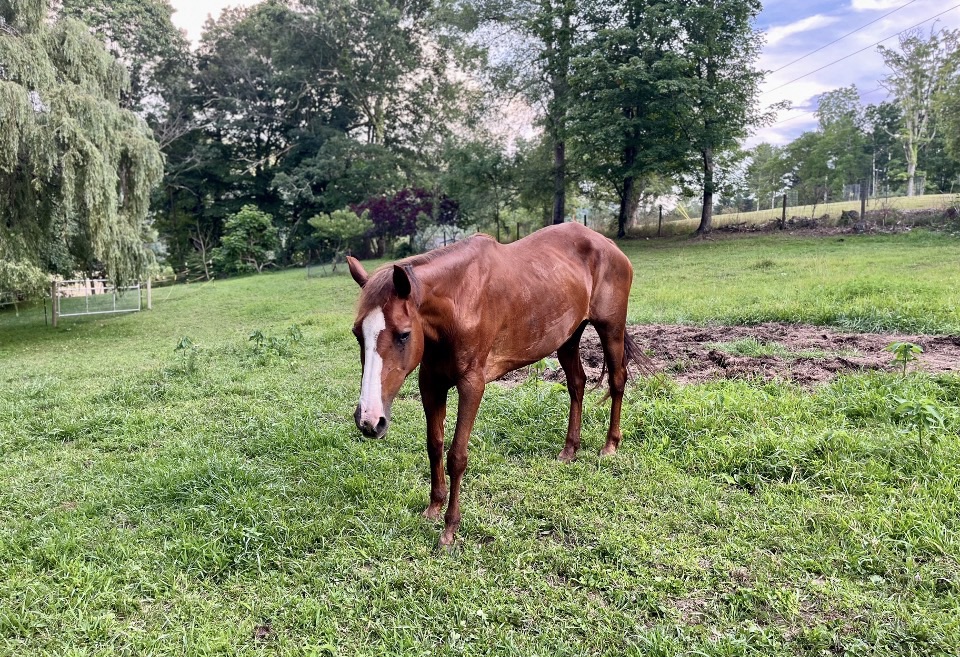
    Hope: just after her arrival in VA 2021

    Some of my readers may have followed the journey of Hope from her arrival as a discarded rescue (returned twice and then left to languish in a field at a lesson facility) in December 2020) through her descent into illness, the multi-year struggle for her healing and eventually the release of her spirit (July 2024). This sweet little quarter horse mare actually came with the name Sugar. When she seemed to have nothing left to give, she was discovered by a friend who saw something in her sweet nature, decided that she deserved another chance and contacted me thinking she could be the perfect fit for the plans I had for HH.

    It seemed right to me, and I agreed to take her for a very small price, sight unseen, over the phone. No pre-purchase exam, we were just going to bring her home to give her a different life, and I hoped she would bring something to the future of Hope Horsemanship. I hoped she would be a horse gentle with kids and patient with newbie adults. 

    The little mare was compliant, certainly shut down, and I was glad to bring her home to get to know her. There were clearly physical issues – she was what I considered at the time held together by duct tape and bailing twine and we began working with her gradually, taking into consideration that she needed care and patience. 

    I was told she had a reputation of refusing to work with riding students- becoming obstinate, fighting against any direction that didn’t carry enough force, and even crow hopping or bucking to “get out of” whatever she was asked to do. I was pretty sure she had been trying to communicate “I can’t” more than “I don’t want to.” We never saw that side of Hope, but clearly she was a deeply shut down horse. This was one reason I decided to take her. I didn’t have a shut down horse and wanted to learn how to help them. 

    I do have some fond memories of seeking out creative ways to help her to engage and trust. Iva and I did lots of undirected work like riding on the buckle, encouraging her to access curiosity, express opinions, have actual choices, and we wanted above all to get a message through her exterior barriers that she was safe with us. She did come out of her shell at times and we loved when it seemed like she was trusting us with opinions even if the opinions were not so great! 

    Iva & Hope in a clinic 2022

    I thought she was the future of Hope Horsemanship, and for a season she did some easy trail rides, helped some kids learn about ground work, and even got to be hand painted in a kids camp. Through all of her time with us, she was adored, loved, fed carrots, and was a favorite of the kids who came to visit. She had lots of reason not to trust or like humans, but she always held a gentle nature. Those who had the opportunity to know her were fortunate and all who met her felt her loss.

    Looking back, I don’t have complete clarity on the unraveling we experienced with her. I was sure she would only improve, get better, eventually thrive with our love and care. There is still a lot of mystery in the life of Hope. When I try to make sense of it, I believe a life of deep stress and fear alongside seasons of neglect meant she had a compromised immune system that never fully came right. When she arrived, she had mucous that came and went, but never fully cleared up. In the time she was with me she was moved (by necessity) four times and she was incorporated into a larger new herd and then removed again. In fact, in that short season, there were many factors I did not have control over that created extra stress for a horse that was compromised. In the moment we can only respond to what is in front of us, however looking back, I wish I could have given her more stability than I was able to.  

    We had her tested for everything from respiratory illnesses to tick borne illnesses and did not find an answer to solve the complications. We tried various treatment options and instead of improving, she get worse. I reached out to a functional vet team closer to the D.C. region and wondered if a more sophisticated team could help. This meant a 2+ hour haul for consultation on a warm early summer day. When I stopped to refuel close to the destination I was appalled at the condition I found Hope in. She was drenched in sweat, unsteady on her feet, but I knew there was no going back, it was shorter to the vet complex than to return home. Still, I was concerned she might not make it to the vet appointment alive. 

    I called ahead to let them know what to expect. She did not die en route. When she was released into a stall she laid down completely spent. I had brought Khaleesi along who was none the worse for wear, so it was not the ride itself, it was the condition of the poor mare that made the travel so hard.

    Hope did not die, but was too weak to travel and stayed on as a patient of the vet team for three weeks. 

    Hope was an internal web of imbalance. The only clear illness we could pinpoint was exposure to EPM which we treated over time. She stabilized to come home eventually and all I had was “wait and see.” The vet team knew she was deeply unwell and had tried all they knew to help her. She may come around and heal, and she may not. 

    The sweet mare did live another year or so but she never recovered to stablility.

    During that time, I was deeply convinced she would come right. I had invested in faith money I didn’t “have” to support her with vet care far beyond her “worth.” We would give her the love, the medical care, the dietary support, and her story would be beautiful. 

    She was Hope. She was our future. 

    She had to overcome and be the horse that ushered new young people into a love of horses and teach them basic care and horsemanship. I always love the underdog, and this mare deserved a happy ending. I would do everything in my power to ensure it.

    Hope is also my middle name. We hope for things unseen, because if they were obvious and current, there is no need to hope. For the things that are true now, we simply enjoy the experience of them. It seemed appropriate that our first Hope Horsemanship story would be one of overcoming a past of abuse, and a present illness into strength and healing. I believe in the power of a good story, I’m also strong-willed and stubborn. I refused to give up on her.

    In 2024, I had to face that this beautiful creature was coming to a place where the struggle was too much to overcome. Each day I knew I was approaching the time to release her from this burden, yet as she continued to appear in good spirits through ill health, to eat voraciously and move about the yard with the herd, I felt the imminent reminder that death is coming, but each day it was not today. 

    The day I went to file her feet and she could not balance or hold herself up enough for me to attend to trimming her feet that I knew it was time. Letting her feet grow long would cause her more pain in time. She was trying but unable to stand.

    I had to face the truth: she was not getting better. 

    It was wrong to make her stay any longer.

    I am fortunate to have a neighbor friend who helps in euthanizing horses when needed. He had known Hope since she’d come to live with us and followed her story sometimes helping in her care when I needed a hand. He assured me, he also felt it was time.

    As I grieved that little horse in the place she rested in the dirt at what is now our home base. I was glad she was at least put to rest here on the property that now serves as our headquarters. 

    Still, I had so many questions. Was she the wrong horse? Did I make a mistake bringing her here? Did I miss something that could have changed her story? Did all the changes I had to move through before we came home exacerbate her instability? Why the horribly sad ending after so much investment? Her vet bills were significant and in the end did not really change her future except maybe to extend her life- and I’m not certain that was to her benefit looking back. I did not understand. So much disappointment, and now Hope buried deep in the ground.

    We settled into being a 2-horse family and Matt said he thought our little place here was a bit small for a third horse. For over a year we continued on without a plan to expand the herd until the Fall of 2025 when Matt began to entertain an interest in a horse he could work with and enjoy. 

    That’s when a gelding needing a home came across my radar. I was contacted by a local trainer who had adopted this little guy with another mustang from the BLM for a client. They began with the other horse, and then the project fell through before they got to working with the black gelding. She felt he would be a nice project to bring along, basically blank slate, but not particularly challenging. He had a nice demeanor and calm state of mind. She liked him but had no place for him long term in her program now. 

    Did I know anyone who might be interested?

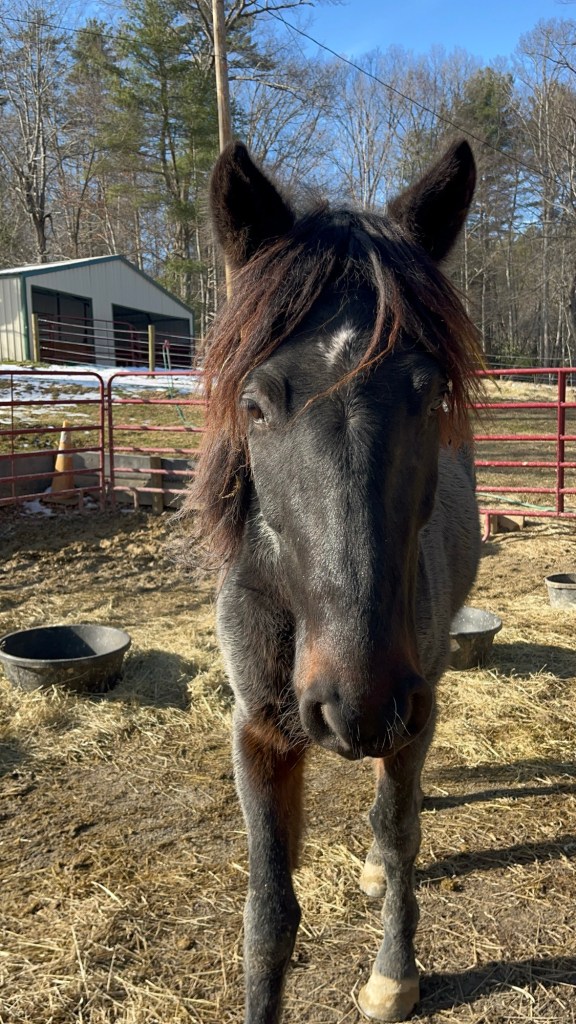
    We began to think he could be a match for us, and we decided to take him ourselves and bring him home. Now we have a new Hope Horsemanship family member and Matt settled on the name Honor. We believe he has the potential to be a good fit for working with those who have little horse experience, and kids. Honor is appropriate because it embodies what we hope to always do: honor the horse, and honor each other. 

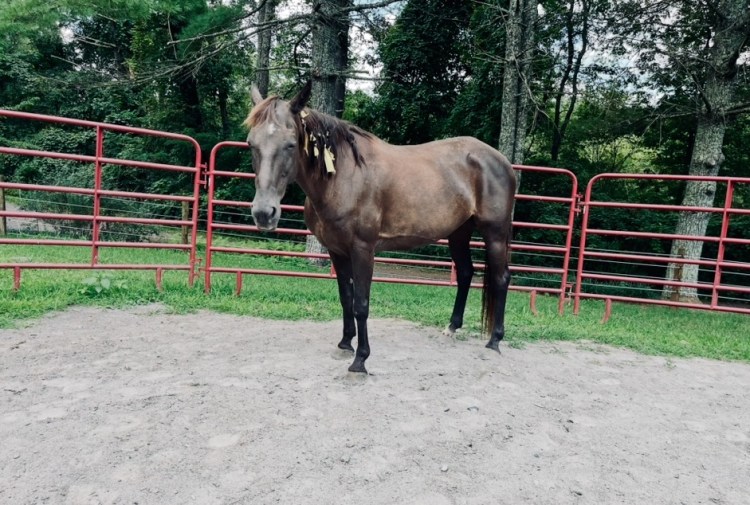
    Honor the BLM Mustang gelding

    I have been reflecting back on the story of Hope this fall, the first horse I held so much expectation. Her story has felt like a waste of a beautiful life and a tragic ending that was clearly wrongly written. However now that some time has passed I have some other thoughts for this mystery. 

    I think of the words of Jesus 

    “Truly I say to you: unless a grain of wheat falls into the earth and dies, it remains alone; but if it dies, it bears much fruit. Whoever loves his life looses it, but whoever is willing to lose his life in this world will find life eternal.”

    I pondered the parallel of this sweet horse who quite literally died and has been buried in the ground here at our headquarters for Hope Horsemanship. Even though I couldn’t make her heal and recover, I tried all the avenues I possibly could. I absorbed large vet bills I still don’t know how I was able to pay. For the most part, Hope did not serve us, we served her.  From what I knew of her history, she gave all of herself to those who misused her before she was taken from the field of neglect to come live with us here. She didn’t have much left to offer except her brokenness. 

    I had hoped her story would be of miraculous victory, but instead seems like it was the story of getting an opportunity to walk out what I talk: caring about the horses above being a tool toward my own goals. We got to love her regardless of what she provided and serve her even when she only cost us. In time, I had to face releasing my hopes for her, and let her go. 

    I am grappling with a strange, sad, beautiful mystery that is just beyond my reach.

    It’s hovering, and I every time I try to nail it down into a clear or definitive statement it dissolves into gossamer threads that don’t hold together. Regardless it feels there is something foundational in the truth that despite giving my all, this discarded beautiful creature did not flourish in health and strength. The threads I do feel brushing past my fingertips echo in soft whispers… they say things like maybe there is a story greater than the one I would write… maybe no matter how hard I try there are things beyond my control… maybe the dreams that get lodged in my heart are bigger, reaching not over a year or two, but a lifetime— even more than my own… maybe there is some significant truth about a seed being broken open in order for a harvest to come in time. 

    Maybe it wasn’t a mistake or a failure. 

    Iva & Hope

    Maybe Hope was a gift. Maybe it was exactly the intended story that she spent the last season of her life being cared for after the humans before us took all she had. Maybe when that season came to an end, she made it to her final destination, being honored in releasing her into the ground and maybe her life broke open, planted at home, symbolically seeding a harvest that we are already beginning to see. The dreams I hoped she was going to be part of, now coming in a new season, with a different horse. A horse to honor her story and remind us to always honor the horses that weave through our community.

    I don’t know what Honor’s story will be, it is much too soon to tell. I hope his story is happier. I hope he will flourish and thrive and have a good life being part of a program founded on honor and hope. Maybe the first Hope Horsemanship horse was not only a grief, but a reminder that this community is built on love regardless of what we get back in return. We remember with Hope, that we have an obligation to care for and steward the pieces of creation that are entrusted to us. She reminds us that the story is bigger than our immediate interests and goals.

    These are foundational principles at Hope Horsemanship. As we bring horses into the human world, it is our honor to care for them and provide clear, fair, kind leadership. Hope Horsemanship began with a sacrifice of love. We got to live what we believe with Hope’s life and even her death. 

    Hope: days before she passed 2024

    Regardless what the next chapter brings, with Honor, I hope to be open to the mystery, to be patient with a long story that is bigger than my immediate ideas and goals. I hope for celebration and joy, alongside the ability to grieve with those we share the trail with too- because we know this journey is rich with joy, celebration, sorrow and sadness too. The beautiful mystery weaves them together, and the more I allow it to unfold, the more amazed I am.
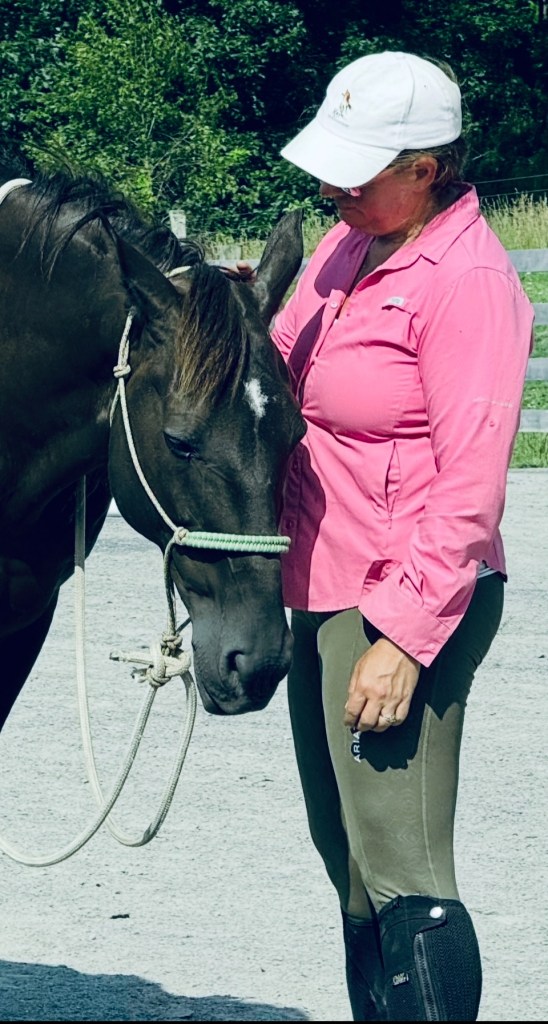
    Slideshow

    Video slideshow YouTube link: https://youtu.be/heCPPRPgJ60?si=UMcv8-w47tIXwf_6

  • Mind the Gap

    Mind the Gap

    Life around Hope Horsemanship after the Vermont trip has not slowed down much but it has changed tracks. Khaleesi has been on a work break due to a broken saddle and some trailer repairs that surfaced unexpectedly. These have take over a month to get sorted out and the saddle and trailer are both repaired and ready to go.

    Meanwhile I have gone back to the round pen, and made some nutritional adjustments for Khaleesi. I have had a harder time than usual keeping weight on her this season and through testing, found some mineral deficiencies that I’ve adjusted. I also took a step back to realize the severe drought we had in our area the last two years have meant finding quality hay was tough. Though I was thankful we always had hay to feed, I have noticed with this year’s new hay- now enjoying rain and sun – the quality is markedly better, and now going on two months of feeding it along with a month of supplementing missing nutrients, she is looking more like her old self again. 

    As for the round pen, it has been nice to take some time with what I consider my “oldest child,” the solid one I count on. I started Khaleesi as a four-year old with basic “natural horsemanship” that included a lot of drive/draw methods and today I am looking at how that worked out. Many would say it worked great. She is obedient and compliant to the task at hand, and I don’t have problems that are safety concerns. Because of this, I spend less time checking in with her and finding quality time to test our connection and relationship. Yet, what we have is significantly less than what I want with her. I hope for a willing connected relationship where we work together and the process does not cause her to shut down and “get it done” so she can go back to the rest of her happy life that does not include me.

    Khaleesi unsure I have anything to offer her…
    K lets down for a moment and finds peace with an imperfect human

    Khaleesi is a more independent and confident horse than Wyoming, and that is helpful, but also comes with a downside. Our history together has been my own growth journey, and for much of it I haven’t been the same leader I am today. In our history, I have not been the consistent leader she would look to for peace and protection.  She seems to think she’s covering that on her own most of the time. Like an oldest child who grew up with new parents trying to figure it out and doing their best…

    Today, however, I continue to deepen my understanding and experience. I am developing patience, clarity, and confidence, and these play into the leadership an independent mare can recognize. This break we had from so much riding and physical training opened some opportunity to reconnect in a better way.

    This brings me to the gap that Harry Whitney talks about. 

    (My best paraphrase follows): 

    Humans have the ability to learn not only by experience, but by observing or gaining understanding. This means we get a concept or see something is possible before we have the ability to do it ourselves in practice. This is a gap between what we want to do and what we can do. We experiment, and try, and grow, and we become more able to replicate what we want to see, and that’s good. However while this is happening, during the closing of the gap between what we envision and what we can accomplish, the understanding begins to creep up with new possibility and we push the bar farther out of what we want to do — always beyond what we are capable of. This is how we keep growing, and it’s a good thing. However, if you’re not careful, you’ll get discouraged because you know what you want to see and it isn’t what is happening. You need to find a way to remind yourself of where you’ve been, not only looking forward to where you want to be. There will always be a gap of where you are and where you want to be. That’s good. But remember where you’ve been and how far you’ve come or you can get really discouraged in this process.

    This reminder hit home once again on the last day of the Floyd Harry Whitney Clinic (hosted by Tom Moates). I can see that I am continually becoming a leader that Khaleesi can trust and let down increasing layers of protection built in during the early years when I was working in a driving mode. She can only find transformation through experience. I can’t tell her I’m trying to learn better ways. Well I do actually sometimes tell her… but she won’t know it until I carry those better ways consistently into our work together, and not fall back on the expedient things that get it done quicker, and driving a horse is expedient…

    Harry, Dory, Jaime & Kevin (From the Akhal-Teke Foundation) on the last day of clinic in Floyd, VA

    I am changing. Each year I am learning to operate differently and resting increasingly in the truth that I want the process over the product. Each year I care less about the speed of the outcome and more about the quality of it. I still have to apologize to my horse from time to time, but it’s less often. I believe the future of the relationship I am building with Khaleesi is going to be better than our past. Even as I keep seeing more growth available ahead of me.

    This gap doesn’t only exist in a horsemanship journey. It is real for all people in all things we take on in life. It’s true for hobbies, relationships, health, work and career, and personal growth. I am somehow programmed with a love for this gap and diving into the gap keeps me getting out of bed some mornings. Depending on the area of my life, it also makes me not want to get out of bed some mornings! But I actually love the gap because if we aren’t growing and increasing our capacity, what are we doing? 

    I have also come to see not everyone loves the gap. And I can see relationships gone sideways because I didn’t understand that at times- and have a little more compassion for those who find the gap exhausting and frustrating. I suppose finding this insight, even if it’s later in life, is also growth. I am grateful for the people who have been patient with me as I dive headlong into the gap year after year seeking to pursue the thing that will never be achieved this side of the grave. It takes a special kind of companion on the journey to swim in that stream and those who are either in the pace boat or swimming along, I say thank you! Regardless of how much I love the process, it cannot be done alone. 

    Wyoming is feeling better about working together each session

    Today the year is more than half over already and some of the big milestones have been hit or missed. As I look ahead I have some ideas to press into Khaleesi’s potential for next year and we plan to finish the 2025 season at the Fort Valley ride in October. My continued confidence in the process is bringing nice changes in the work with Wyoming, and I will continue to post up some work videos that include the good, the bad, and some of the ugly in our sessions. I am also enjoying the partnership with the Akhal-Teke Foundation and the horse I worked in the Harry Whitney Clinic this year was one of their young mares, Swan Ysk Doretmek (Dory). I was able to put on Dory’s first rides at the end of the clinic under Harry’s guidance, and I’m continuing the work with her back in Lexington. 

    First Ride on Dory under the guidance of Harry Whitney

    The Hope Horsemanship HQ continues to expand within the confines of our tiny horse farm footprint, and Matt is building a tiny rustic cabin that will offer housing for those who are looking to come onsite. We are building some experience frameworks for all ages of people with horses and people without them who want to see what transformation is available when we leave our fears and anxiety behind. 

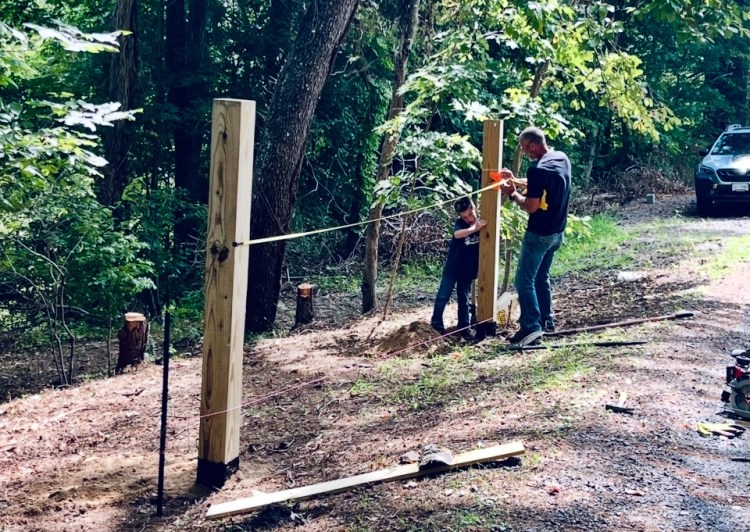
    Matt and our nephew working on the Transformation Lodge foundation

    We hope to be onsite in the HHHQ the weekend of October 4-5 here in Bath County, VA for one of our fun and fabulous Tom Moates clinics if the spaces fill. We have openings for both horse participants and auditors for those who are swimming to gap and want to improve the quality of their horsemanship work alongside us! Contact Jaime@HopeHorsemanship.com to reserve a spot or get confirmation the clinic is happening for auditors.

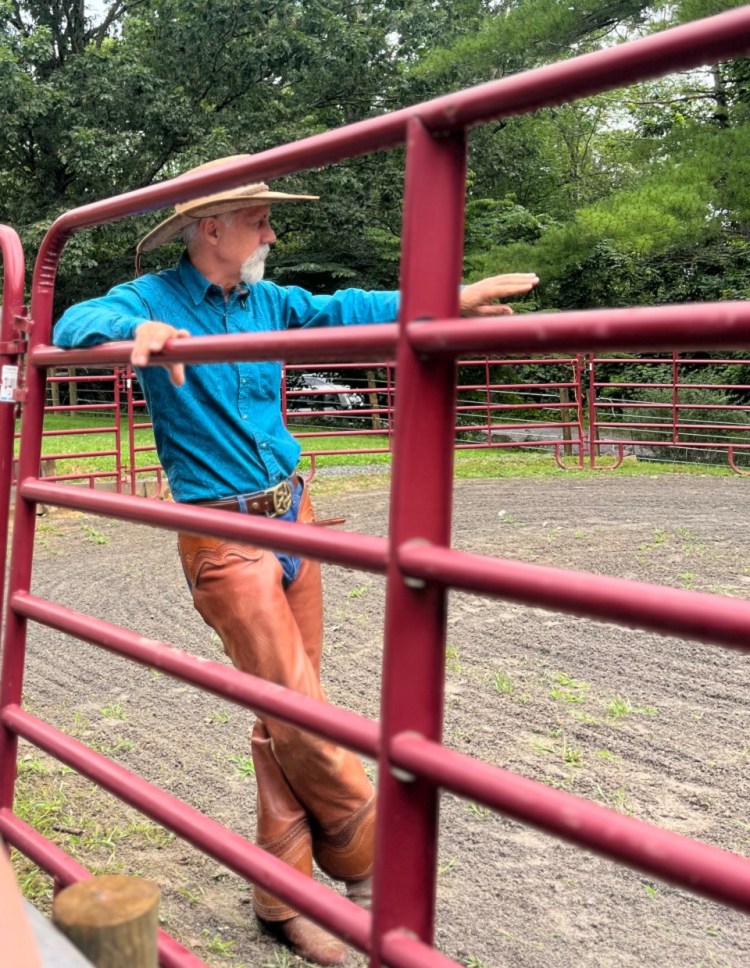
    Tom Moates at a recent clinic explaining a concept to a participant in the round pen

    If you want to see the work with Wyoming, the YouTube channel is live, and the last three videos from a recent work session (before Harry’s clinic) is available here: Foundations Playlist

    Stay tuned, we’re always swimming the gap, and looking for others in the gap community to encourage and find connection with. Don’t forget to look back once in a while to remember just how far you’ve come. In the words of Ronnie Moyer: It’s direction, not perfection that counts!

  • Death and Resurrection

    Death and Resurrection

    Everyone dies… but not everyone really lives.

    William Wallace

    As I pondered an appropriate title for this recap I thought it fitting that, on the road to Vermont, my husband stopped to pick up a Garmin Fenix Smartwatch for me as a birthday gift. Next time I might ask if they have a model named: Garmin Victory Lap, or a Garmin Nailed-it…

    Pair of Garmin Fenix Watches

    The Vermont 100 starting line had an eight month lead up from conception to reality — if you don’t count the nine years it took us to crest the first 100 mile finish line in 2023. This was clearly the biggest overall investment in a goal over my decade engaging in equine endurance events. 

    As the event drew near, I realized the larger the investment, the more pressure to produce a favorable outcome builds. What is the point of doing this if it isn’t to ride over the finish line? Most of us know on some level this is not the whole truth. Still, it is a struggle for the goal driven to not only believe there is more to life than a favorable outcome, but to live (and ride) in the peace that larger reality brings.

    I have been binge listening to Jaime & Donna Winship interviews  this year and they have been transformational in my life. The insight and questions have challenged me to up my game when it comes to walking in the truth, and it’s meant being real about what I want to believe, what I know in my head, and what is being lived out in my actions – revealed by my emotional system. I have come to realize, that regardless of what knowledge I have accumulated, my emotional system tells on me, and if I slow down and address it, like it or not, I will find what I really believe, and what I’m actually afraid of.

    I thought the Vermont trip was a test of what my horse was made of, what I was capable of, and if we had what it took to take on an unknown 100 mile ride, and succeed by crossing the finish line. I was probably wrong. 

    As the departure neared it seemed like the resistance grew. Vehicle issues, dog fights, horses escaping in a storm, an entire massive batch of dog food is ruined (this was a huge problem actually!), then bad traffic on our first day of travel leaving us sitting in unseasonably hot temperatures for over an hour— which is not ideal for a horse on her way to a 100 mile event. Each disruption gave me pause and as I wondered “what is this about?” I always heard the nudge: Keep going, do the next step until you don’t have one.

    Shady grass yard for Khaleesi in PA

    I am grateful for the warm welcome from Matt’s family at our layover in PA. Khaleesi had a lovely shaded back yard with grass where I set up her temporary pen, and we enjoyed family time with eggplant and cheesecake!

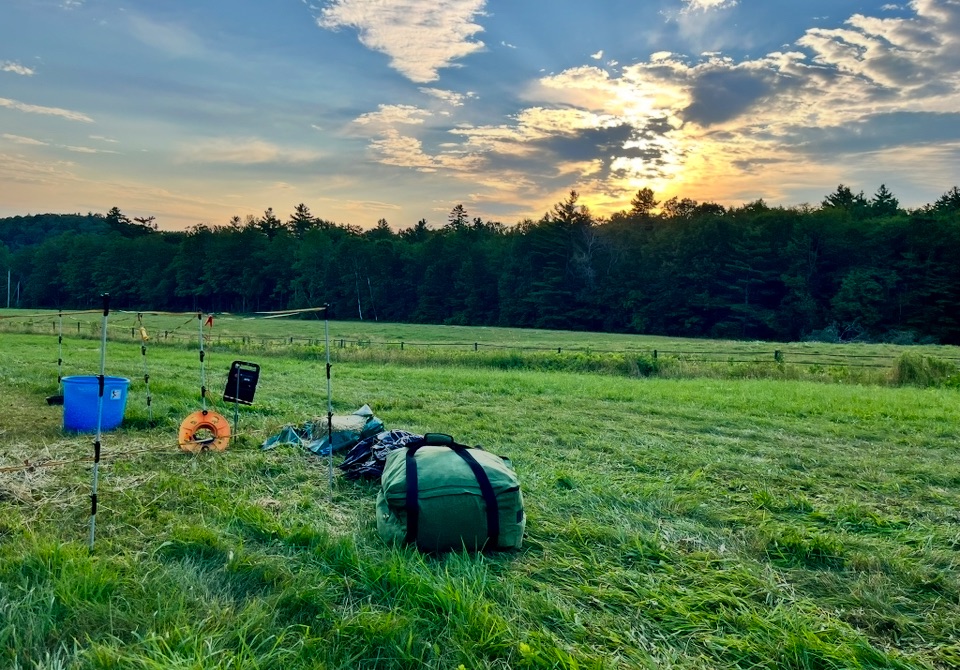
    The second day of travel brought new territory for both of us as we continued onward and on my birthday we arrived in Vermont— through dark clouds and a rain storm that gave way to a cool evening and stunning colors in the sky. We set up camp alone in the area set aside for smaller trailers, near the start and finish line. This evening I will always remember as a moment of beauty and quiet as we had the entire field to ourselves and the glory of Vermont stretched out on all sides of us. 

    We had arrived.

    Ride camp Thursday evening after the storm

    We woke up to cool breezes and peeking out the tent we watched the grasses dance in the early light. It was sublime and Matt and I took a moment to take in the glory of the last moments of peace and calm we may have for a while. Check in and Vetting in was not available until Friday afternoon, so we puttered about with details, and found a delightful little market and cafe with home made bagels and much needed ice. Camp began to bustle through the day as 450 runners came and went to register for the foot race that would share the trail with us horse riders. When the time came, we checked in with the ride management, then took horse #109 (that’s Khaleesi) to the pre-ride vet inspection. 

    This is where things began to get disruptive again. K had a resting heart rate of 36BPM which is excellent, and her hydration and overall condition earned A scores. The head vet saw something slightly off in her trot out and asked us to try again. We did. He still thought something was questionable and asked us to trot a third time and included another vet to watch. Not enough to hinder us, but enough to plant a seed of doubt, they marked her card with a “B” and suggested I stay aware of the potential something might be off. 

    Checking out the starting line the day before the race.

    This is not what you want to hear the day before you embark on a single-day 100 mile endurance race. 

    I mulled over what it could mean. We visited the ride farrier, Howard, who became a new friend! Marcus had warned that her feet were getting soft from such a wet summer, and I wanted to have her nails clenched in case they were getting loose. Howard chatted with us freely in his Scottish lilt as he checked all four feet and added one nail for good measure in a weak spot. He was a positive and kind guy, and didn’t charge us for the time he spent checking the nails. He wished us the best and promised he’d keep his eye out for us through the day. 

    Still, I had concerns. 

    It clouded my evening. I was nervous. Do I go out with concerns? Once again I asked the question: what should I know, what do I do about it? And I sensed the reply so clearly: You do the next thing you know to do, until there is no next thing

    We spent some time looking up references for #109 and I held onto the words from Joshua 1:09 that reminded me to have courage and do not fear because God goes with you. Ok then. We show up to the starting line, and we go. We do the next thing until there isn’t a next thing to do.

    The runners leave at 4am, and what an experience that was! They line up and hundreds of headlamps jog under the starting line turning up the dirt lane past our camp site with cheers and cowbells. Khaleesi was beside herself with the experience! A line of cheering mass in the dark with headlamps bouncing to and fro. She had never seen anything like it. I had been warned of this and she was walking on lead with me when they departed and it took a moment to get her settled back down. 

    Before the start

    The trail opened for horses an hour later, and the eleven, 100-mile equine competitors left camp with my mind on the only problem I thought I was facing: would I end up with a lameness issue today? The trail is monstrously hilly from go. The exit from camp is significantly downhill on a gravel road. I had been walking Khaleesi around camp for 15 minutes, but she was not adequately warmed up for these hills and to make matters more concerning, her adrenaline was way up. Her head was in the air like a llama, and her trot felt like a jackhammer. If I had reason to be concerned she might hurt herself, the tension she was packing along with us trying to race at a high speed in the cool pre-dawn was not helping. 

    I unloaded all my tools to bring her mind back to the present and not run as if for her very survival with the other horses. I was mostly unsuccessful in getting her to relax into the work and had to negotiate with her the best I could. It is common for her to run faster in the morning and I work with her to find a good speed where she is moving freely and soft through her body. Considering the morning was cooler than it had been and her adrenaline was up- I now also worried about potential tie up. Tie up is somewhat mysterious, but the root is usually associated with a horse over running their ability through adrenaline and going into a metabolic state that can be dangerous. This is not something I have worried about with this horse previously, but something about this morning had her running on more adrenaline than I’ve seen. 

    It took almost 30 minutes to get a more relaxed mental state. We rode on this way for a few miles, now in last place, but I have been there many times and wasn’t concerned. She had leveled out, was trotting beautifully, strong, and relaxed.  We may cross the finish line last, but a finish was my goal. We had launched past the danger zone and were well on our way to the first checkpoint at mile 16. This was not a true vet hold, but a 10 minute pass through where the vet gave a quick look as you departed to make sure all systems appeared to be sound.

    It was about mile 13 when the unraveling began.

    Flying along with a beautiful balanced trot I was enjoying the early morning and greeting the runners we passed, when things went into slow motion. First I felt my left foot was not catch the stirrup bar. Then I realized I was coming off balance and wasn’t able to recover. I reached around Khaleesi’s neck and when it was clear I was going down, I swung myself around her neck and landed on the ground in front of her. She was aware something went wrong and when I landed at her feet she came to a stop above me. I remember my calves both going into a tension spasm, but otherwise I was perfectly fine and so was she. How embarrassing, I thought, and assured the runners who had witnessed the crash that I was totally fine. Next I saw my left stirrup and it’s leather on the ground and realized I hadn’t simply come unbalanced in a poor riding moment, the stirrup had come off the saddle. 

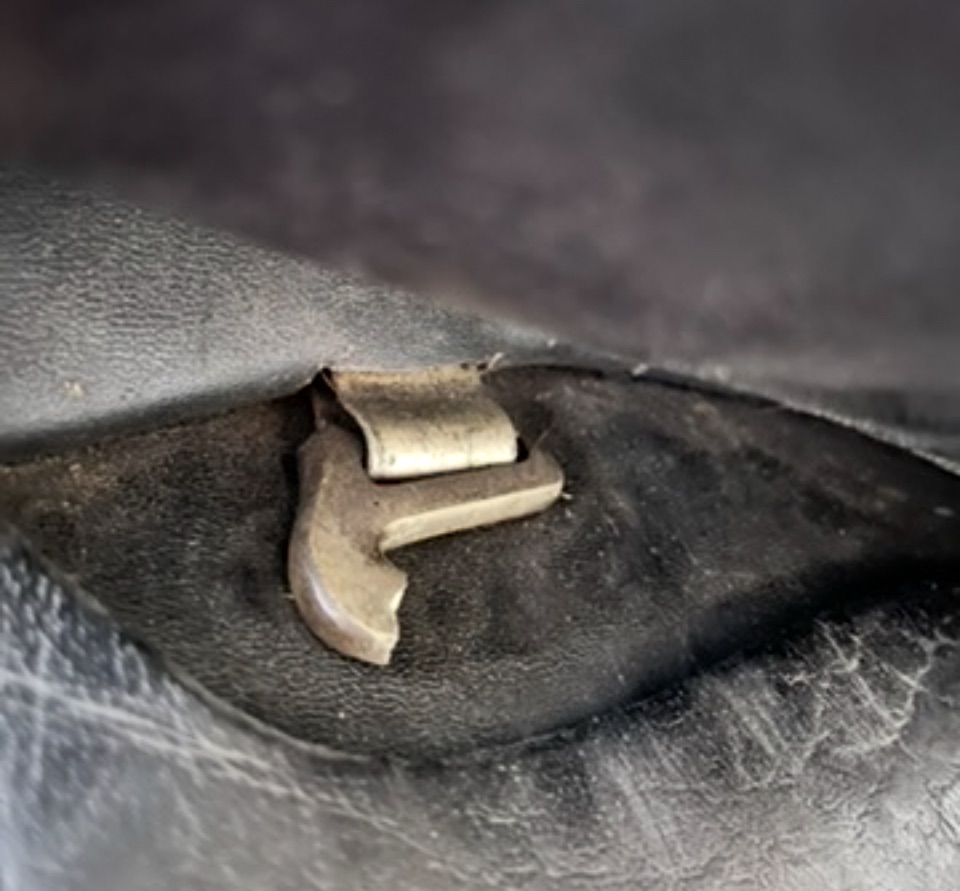
    My hope as I stood up, was the leather had simply worked its way off the bar it attaches to. The truth was worse. The metal bar itself had sheared off and there was nothing on the saddle to reattach the left stirrup.

    Broken metal stirrup bar

    I had not planned for this.

    In all the potential things that could go wrong. This was not one of the things I had even considered. 

    I began walking next to K, carrying the stirrup leather in hand and wondered: is this the end for us? Already only 13 miles in? Can we recover? 

    Again I heard the reminder: do what comes next, until you cannot make another move. Do the next thing. Keep moving.

    Service in this area of Vermont is notoriously horrible, but miraculously both Matt (already waiting at the checkpoint) and I (three miles out) had service. The only thing I could think was to try my alternate saddle. However, there were issues:

    • 1) the saddle was in the horse trailer at ride camp. Ride camp (I learned then) was 30-35 minutes away from the check point by vehicle. At least an hour round trip.
    • 2) the alternate saddle was the exact make and model, but it was a “regular” width. The saddle that I was using that fits her properly with the ideal pad set up is an “X” or a wide width. 

    The broken piece of metal would cost us around an hour, and it would mean riding in a saddle that was not the right size. An analogy would be if I had two pairs of identical shoes, the ones that work best for me a size 9, and the other pair a size 8.5. In this example we could say I wear the size 9 with thick socks that help protect my feet from blisters and give the comfort I need to run at my best. If I have to switch to the size 8.5, I will have to use thin socks with less protection and will not be as comfortable running. 

    I walked the three miles into the pit stop and chatted with the vet and land owners while waiting around 30 more minutes for Matt to return with the saddle. We changed the saddle quickly as possible, and trotted down the hill with a green light from the vet to meet everyone at the first vet hold at mile 22. 

    My first go with the other saddle I had left too much padding and had to stop and get off twice to adjust as the pads, but we moved as fast as we could and arrived at Vet Check 1 to find everyone waiting to help us. The vet was taking the heart rate of the horse as we were pulling off the saddle and her pulse dropped very fast to get our hold clock starting as quickly as possible. She looked great and the vet wondered aloud to us why we had a “B” score for her trot the day before, he thought her trot looked great. 

    Arrival at vet hold 1

    After the 30 minute hold we left with almost zero padding under the saddle, and 22 more miles until the next hold. The “rolling hills” were relentless. I had expected hills, but these were mini-mountains. Thankfully she is aces as trotting down the hills and staying in a relaxed form, but every time I thought we hit some level ground, around a corner was another brutal climb. I could feel the saddle impeding her free moving trot and meant a shorter stride. We were running against the clock, and doing it alone except for the runners which did keep us company. The drawback was they often would walking up the big hills, and when I could inspire K to get some trotting intervals up the hills, and as soon as we came to a walking human she put on the brakes and walked with them instead!

    Still, we ran into vet check 2 with a few minutes to spare and met again with the royal treatment. She was pulsed immediately to the parameter of 64 while pulling tack and they started our hold clock immediately. Here we saw Howard again who offered to trot out Khaleesi while a volunteer brought me iced water. He even checked her nails and gave a quick tighten up to be sure. It was wild to watch the whole team working my horse while Matt helped me with my own needs. She passed with all perfect scores and was surprisingly tolerant of all the pampering. They even brought over a pop up tent and fed her apples while continuing to sponge her as we were going into the heat of the day. 

    Volunteers swarm around the royal steed helping us at vet hold 2

    This hold was 50 minutes and then we were pushing the clock to do 17 miles with more nasty climbs (one I think was called suicide!) to make it to mile 62. I had my doubts we could sustain this all the way to the finish line, but the reminder came: do the next thing until there isn’t a next thing to do. 

    The climbing had been grueling and I kept wondering if it would level out. The total elevation we climbed from starting line to Vet Check 1 was 3,200 feet. The 22 miles from Vet Check 1- Vet Check 2 was 3,786 feet. I suppose we got a little relief on the third loop as the 17 miles brought just under 3,000 feet of climbing. The hour we lost in the cool of the morning to get ahead was very costly.

    This mid-afternoon is where she generally begins to drag. It’s hot and here the bugs were voracious. When the flies got really bad she would stop and shake her head and refuse to move onward. She kept begging me to stop in a large grass patch and eat.

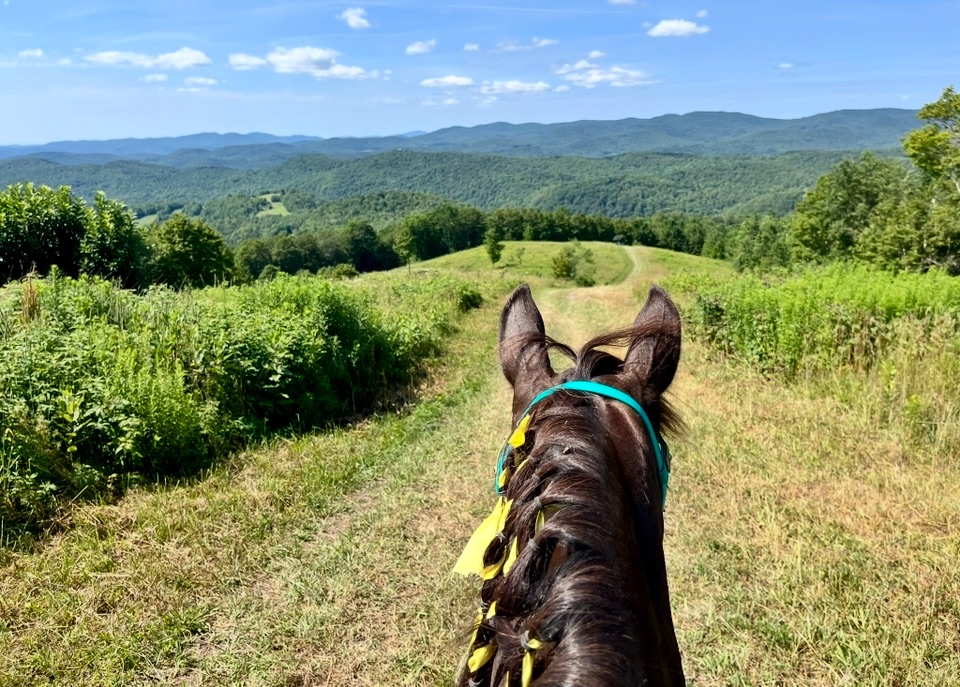
    Gorgeous views from the high meadows

    Unfortunately- we did not have time for that while also racing the clock (she had great gut sounds – this was not an issue). I wanted her to be able to graze and go, but once she started eating it’s all she could think about. I could tell she wasn’t exactly “tired” she was hot, distracted, and irritated. 

    And in the background, the clock… always ticking away.

    It was about three miles more to the next vet check when we passed by the runner aid station they call “Margaritaville,” one other frustration was not knowing where the horse vet checks are and for example Vet check 2 showed up almost 2 miles late according to my GPS which had me concerned. If I had been familiar with the course I might have had more confidence, I might have pushed through here, but I wasn’t even sure in 3 miles the mirage of vet check 3 would actually appear. 

    After the hills, the heat, the clock, the flies, and the constant nagging to give up and only eat the grass… I faced the gauntlet of Margaritaville. We had just gotten a little steam rolling and then there are people lined up on both sides of the road waiting to crew for their runners, canopy tents set up, and cheers and chaos and actually lots of fun for humans- but it’s a potential death zone for a horse not used to such things. Each one of these aid stations slowed us down as K navigated what to her was totally new and concerning, and truthfully it about took all the hope out of me as we walked through the town with her worrying about the cowbells and the little kids running out in front of us excited to see the horse, waving flags or shaking bells. 

    It is possible if I had gotten through the Margaritaville gauntlet and ran her up the hill into the checkpoint, we MIGHT have just made it and gotten out for one more loop. It is possible if we had gotten out there we MIGHT have taken the slightly easier next 11 miles and found the day cooling off, and her second wind coming up, and we MIGHT have begun to beat the clock that was breathing down our hind end. I’ll never know.

    Instead, when I saw a house that offered horse water and carrots, I stopped and got off my horse. This act was basically where the white flag came out and went up the flagpole, because I think I knew getting off and taking time here would mean surrender to the clock. I had not taken the time to electrolyte during the 17 miles and I wondered if that was working against us. I allowed someone to offer K a carrot, and I took a glass of cold water (my hydration pack wasn’t empty but it was warm). After a few minutes I got back on Khaleesi and I insisted we keep moving, but I didn’t push. We got into the hold about 4 minutes after the pulse time had passed and were considered “OT” or Over Time, and no longer in the race. 

    After pulling her tack, the remaining vet checked her and with a heart rate of 48 and all A scores, we loaded up on a trailer to base camp. She was healthy and her gait remained solid through the 62 miles without a hitch. All the things I had prepared for and been concerned about did not pose a problem. The extra calcium plan for the heat and humidity was in place, no metabolic issues came. Her shoes held up great. No issues with her gait. Looking back I did a pretty good job getting this non-arabian ready for a challenging 100 mile ride. Regardless of that, equipment failure still turned into a failure to complete. 

    It was disappointing, but I think I had a pretty good outlook. In retrospect, the day before when we heard a vet tell us we might have a problem, I asked: please let me start this race, and please, I want to see some of the trail… we’ve come so far. And as if a response to that request, we saw over half of the trail. We got three full hard loops in and saw 62 miles of the Vermont 100. 

    I thought the test was going to be about getting across the finish line, but in looking back, I think it was a test to reveal what is under my own skin when the cost is high and the outcome is loss. The only way to see what is there is when things get real. The investment has to be real, and the loss has to be equally real.

    The night before the ride, as I stressed over the potential lameness, I looked squarely at the fear that if I did not finish this ride I might feel like I was a wasted investment. I felt if I could not pull off a finish that I was unworthy. That I had less value. I was worried I might carry the label: Failure. I think that “B” grade helped prepare me, because I sat with my devoted husband and in tears I admitted that I felt I will have let him and everyone down if I can’t get this done. 

    And we both knew that was not true. The pressure was internally generated, and completely unnecessary. 

    He assured me that regardless of the outcome, he was here… WITH me. And I kept hearing a reminder over the months and in that moment that also God was with me. Regardless the outcome. As I navigated between the lies and the truth, like a sharp double edged sword separating bone from marrow, tendons and joints, I think the lie was cut away and the truth remained. 

    Jaime & Matt give K a break at a rest stop in NY

    The truth transforms us. The truth sets us free. The truth allows us to respond to what comes and be disappointed without being devastated.

    No matter what came in the test of the event, I had reached for something beyond what my comfort zone could claim. I had dreamed big and made plans. I walked out those plans day after day, and not only did the preparations, but wrote about them and shared them transparently with others. I took the risk because my real identity was not tied to the outcome and I knew I would still be “me” if I shared a victory or a defeat with the stakeholders.

    In the end, only a few days of hindsight, and hours of being able to process, I can see that I carry a failure to complete on my public record, but I am not a failure. My identity is a bold, adventurous daughter of a creator king. That Father created a beautiful world for me to explore. I love a challenge. I want to live fully the life I have been given, and I’m willing to take a risk that things may not go as planned, and then pivot and roll with the next steps. I want to be fearless and free in the truth, and to walk in grace and love as I run and fall, as I encourage others, and help pick them up along the way. 

    I have heard it said that it is only in being willing to die that we may fully live. As Dr. Luke wrote centuries ago: Those who seek to preserve their lives will lose it, but whoever is willing to lose their life will find it.

    Photo taken between checkpoint 1 and vet check 1. Makes me smile as I imagine the hope we held after the trouble began. Ben Kimball Photography.

    In a way, the trailer ride home from mile 62 was like a death. The death of a hoped for outcome. But I have experienced that to move from empire building to living in the kingdom, death is only a door to resurrection. Like the Phoenix (Fenix!), there is a level up that only death of the old can bring forth. I do believe that this story is a good one, and the little voice that came as I looked at my broken saddle from the ground at mile 13 (“Don’t be afraid, this is a gift!”) is somehow right… Even this is a gift, bigger and better than I can see at the moment.

    Possibly the most interesting question that still lingers, floating up in the aftermath of the great adventure, the one I am not certain how to answer honestly… remains… 

    If I knew then how this would play out… would I still have gone?

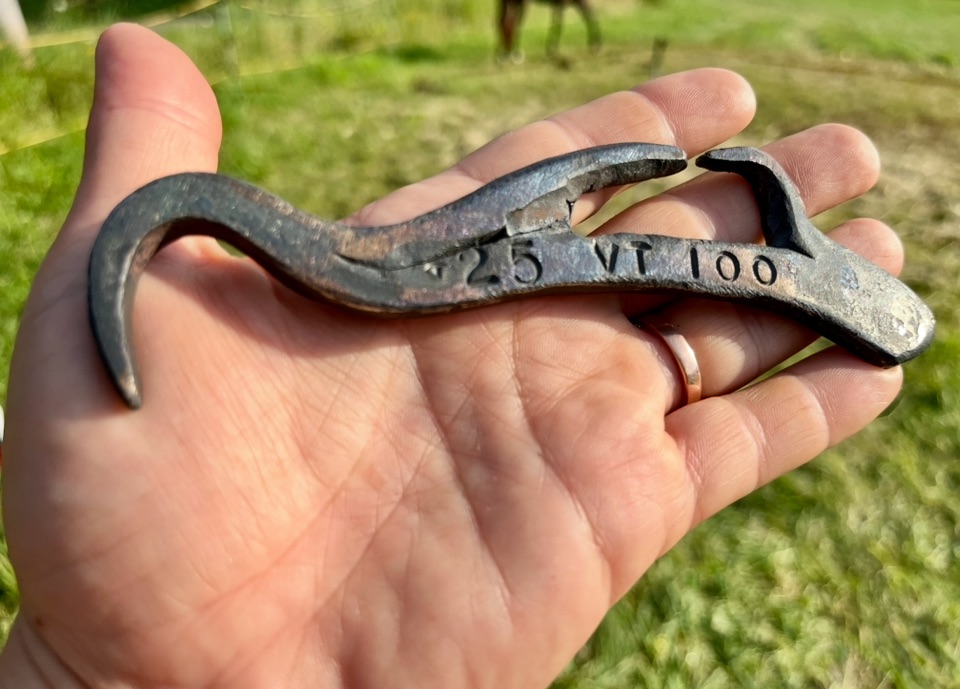
    Howard the farrier brought us a special momento to honor our spirit with the ‘Broken Tack Challenge’ award. I treasure it!
  • The Time Has Come

    The Time Has Come

    Re-post of article written for the Highland-Bath Recorder.

    Last November, the idea of traveling to Vermont for the historic 100 mile endurance ride seemed like a great fun adventure goal; now that we leave in two days my feelings have shifted some. 

    The questions hover near the surface of my mind: Am I ready? Is she ready? Is Matt ready? Do I have everything I need? Will I have enough time to get it all together and actually haul out of here to make it to Vermont before the trail opens? 

    I’d like to answer a resounding YES, but there are so many variables and unknowns, the real answer is:

    I hope so! 

    The mysteries of the unknowns are a challenge. I have confidence that one step at a time is how this will work out. I will try to stay in the present, yet plan for the future without getting overwhelmed by it, and learn from the past without obsessing over it. 

    The Old Dominion 55 helped me uncover some weaknesses that I’ve been addressing in the past weeks. 

    First, Khaleesi went into the June ride with a body score of “Ideal” which is a five out of 10. On the other side of that ride she has been too lean, dropping down to a four, or “Moderately thin.” I don’t want her on the thin side leaving Virginia for two days of trailer hauling (which can bring on weight loss and dehydration) and then going into a 100 mile ride without enough weight to burn and utilize through the ride. I spoke to my nutrition professional (Stephanie Carter of Indigo Ancestral Health) who knows my horse and has worked with us for a few years. She gave me some tips to bring her weight up: more quantity of higher quality hay (the new hay season has come so we have access to better hay now), adding a stabilized rice bran to her current diet of hay pellets and Coolstance and feeding that twice a day consistently instead of once a day, increasing access to my limited pasture now that the grasses are healthy for summer. Also she has been on increased rest — the bulk of our training has been established over the past nine months. There is about one month between the OD 55 and the Vermont 100,  and instead of regular riding I have taken her on fewer rides that are around 20 miles to simulate longer segments like we will face in a 100. She has rounded out her figure a bit and is looking less lean today.

    Long Training Ride with Matt & Mike on their bikes

    After the intense humid heat of the OD 55 crushed us, I did some research into the issue of calcium loss and found that in high humidity, excess sweating, and horses that tend to pant to stay cool (Khaleesi does this), studies show increased depletion of calcium above the other electrolyte minerals. If it’s humid in Vermont, I will be prepared with Calcium (mixed with watermelon liquid which helps the taste) to support her with. I tried it on the long training rides with no ill effect so it won’t be as experimental now. 

    As for electrolytes, I often bring extra just in case and end up wasting them. For the OD ride, for the first time, I estimated what I would need minimally and did not bring extra. Due to the heat and humidity she would have benefitted from more electrolyte support than usual and I was unprepared. For Vermont, I will not be stingy with my electrolyte plan.

    I spend a lot of miles and hours in the saddle, and I am also constantly considering how I can improve my riding. I have been taking virtual lessons with a wonderful dressage trainer I admire from Tennessee (Mattalyn Rogers), and she is helping me find where Khaleesi is tight or weak and where I am not balanced well. We continue to improve our movement toward relaxed and flexible strength. I had one last lesson before packing up, and it gave me some great ideas to consider while we’re riding all day Saturday into Sunday!

    I also do virtual consultations with an Alexander Technique practitioner (Deb Romero with Optimal Posture) who has helped me understand posture basics. She reminds me where to be strong in the core, where to have increased flexibility, and how my joints work together to stay out of my horse’s way as she carries me those long miles. This has helped me not only in riding but my every day life as I move around in my body all day long.

    Also, I found someone who does counter strain with horses. Counter strain has been very effective for me, and I was interested to see if it could be helpful for Khaleesi. True enough Dave found a nerve pathway that was inflamed and it corroborated an issue my dressage coach noticed in Khaleesi’s right hind. He was able to help her release that nerve pathway and it should help her increase flexibility and freedom of motion going forward.

    The last pieces are on the human side. The completion rate on most single-day 100 mile endurance rides ranges from 30-60% and the first 100 we attempted in 2022 had nine riders begin and only one finished. It wasn’t us. My horse was still healthy and strong at 4am, but hours of rain had made the course so sloppy the rest of the competitors either had minor injuries or were going too slow to finish in time. In order for the day to end in a completion for one of these events, everything needs to line up in your favor. First you pray for favorable weather, then it helps to know the course, be familiar with the set up of the vet checks, and the flow of the ride in general, these details help to know how to prepare.

    The many unknown factors are my biggest concerns. I don’t know what the course is like, I don’t know what the crewing areas are like, and I don’t know how the vet holds flow. I have noticed that the rides in the South have slightly different customs than the rides around here, and I’ve heard there are more differences out in the West, so my guess is Vermont might have it’s share of unique ways I won’t be used to. These are not entirely new rules, but how the ride management and people in the area navigate the basics can vary. If you aren’t used to them it can cause confusion and take some time to get acclimated. When you are on the clock, wasting time with confusion is never welcome.

    As for my part, my plan is to ride what is in front of me on the horse I have to the best of my ability. I am less nervous about the actual ride. Once on the horse the only option is to keep going or quit. It becomes pretty simple. It’s in all the preparation that I get frazzled and that is where I am residing at the moment! I am very limited on helping Matt know what to expect in crewing this ride, so he is going to be on his own figuring out what to do and where to go while I’m out on course. I hope it doesn’t get overwhelming for him! People in this sport tend to help each other out, and Matt’s proven pretty capable in all things so I believe we will figure it out.

    There is a saying we share that just getting to the starting line takes a lot of endurance! In this case it’s been months of preparing, training, and planning that will be under our wheels so to speak as we roll out of Bath County on Wednesday on this great adventure. And whatever comes, we’ll have to take it on together! 

  • A Beast of a Test

    A Beast of a Test

    With a nickname like “The Beast of the East,” the Old Dominion 55 mile equine endurance ride is a real test to every horse and rider team that shows up to the starting line. While the “No Frills” ride in April felt like a great success — we may not have been flashy, but we were solid — the Old Dominion squeezed us hard enough to find out what we were made of. While we did technically pass the test, the “Beast” also revealed some weaknesses that I plan to address before we load up for the Vermont 100 in mid-July.

    On a good day, the OD 55 is arguably one of the toughest rides in its class. My horse climbed over 10,000 feet between 6:30am and 7pm on June 13 with unrelenting rocks every step of the way. There are rock gardens, large and small embedded rocks, loose rocks, gravel rocks, creek rocks and river rocks. 

    The vet exam the day before showed excellent scores heading into the ride, including a resting heart rate of 36 which is a great indicator of fitness. Khaleesi’s body condition score was a “five” which is ideal, and better than the “four” she rated in April. I felt confident coming into the race, especially after the unseasonably warm No Frills 55 in April went so well as a first ride after a year off, and I think this lulled me into some complacency. 

    I might have noticed some warning bells when ride morning was so unusually warm and humid. The last time I was at this ride it was in the 40s at the start! I noticed within a mile that Khaleesi was not her usual “on fire” self. I knew she wanted to run with the pack, but she felt heavy and clearly unable to fly up the mountains like she has in years past. We were riding through thick humid air from the starting line, and her lack of energy concerned me from very early on.

    The first mountain we cross is a long, tough climb. The vet check and crew area is nestled down in the valley, and after making it up and over the ridge, we managed a respectable trot down the gravel roads to finish the first sixteen miles with 2,500 feet of climbing in about two and a half hours. I assumed that because the ride felt like a heavy slog, she would require extra time to cool down in order to meet the pulse criteria of 64 bpm. I was wrong! She dropped past 64 into the 50s immediately and was ready for the vet inspection. Khaleesi had high scores, and the vets made a point to tell me she looked excellent. She ate and drank through the hold and we went out to face the longest loop with the worst of the climbs, and the heat of mid-day. 

    Loop two is over 17 miles and 3,200 feet of elevation— relentless climbing, some of it so steep I hike it on foot to help her conserve some strength. The heat was rising into the afternoon, with no breeze which meant the air stayed sticky and thick. It was miserable. The horse was giving me her best, but neither of us were thriving. I had to remind us both not to quit and die on the side of the mountain in the draining heat of the full sun. We were not made to be vulture food. It’s disconcerting to see your average pace grind down to less than 3mph. There is generous water right before the climb begins and water after it ends, but in between has the feel of a desert wilderness, which possibly encouraged me to not stop too long anywhere. The famous saying about going through hell I’ve heard, is to keep going!

    Ride Photo Credit: Becky Pearman

    And yet the mountain does give way to a crest, first there are lovely high meadows with some tall thick grass that gives the horse some fuel in the tank. Eventually, the water trough comes into sight, and the descent into vet check 2 (Laurel Run) is within grasp. Not long after the downhill begins, there is a single track, rutted out section, where I get off the horse again, and begin my jog down the loose dirt and rocks to make up some time. It’s too slow here if Khaleesi has to pick her way down balancing me over the loose and challenging terrain. When I get off she can jog behind me in the loose rocks without slipping as much. We shimmy down until intersecting with the gravel roads in the valley, and I get back on the horse to ride the last few miles.

    Once again, with concern that pulse could take time to drop, I took an extra minute sponging her in the heat and humidity. Surprisingly, a trip to the pulse takers revealed that indeed she was at 60, which is below the required 64. We vet through with all A scores, and I settle in, alone at the Laurel Run hold where no crew is allowed. I take care of my horse and fill up my water. I continued to wet her with a cool water sponge through the hold, because I have learned her core may still be hot. I want her to leave this checkpoint cool and fresh for the mid-afternoon segments in the direct sun with still no breeze.

    The worst of the mountains and rocks for the 55 mile course are in the first two loops. Once you pass through Laurel Run around mile 35, the way home via Bird Haven for your last vet check and 30 minute hold, is mostly gravel roads with some connecting single track trails. Usually my horse would begin to perk up as we head toward home. This year I found a steady solid willingness to trot slowly on down the road, there was no extra perking up available. 

    At Bird Haven, her pulse once again dropped quickly, but here she earned her first “B” scores for “attitude” and “impulsion.” She is tired and she was lagging behind in the jog. With that aside, everything else was very good and we had plenty of time to finish the last 6 miles. I could walk the trail back to camp and probably still finish in time. Walk we did, with some trot intervals. A light rain was setting in, and I welcomed the cloud cover and sprinkles. The cool wave brought her back to life and as we got within a few miles of the finish, she finally perked up. When we dropped onto the gravel road less than a mile out, she trotted, then broke into a run as we came into sight of the finish line along the base camp field. Our triumphant canter into the finish line brought many cheers through the camp below. I was simply thrilled it was over!

    Matt walks Khaleesi to prepare for the final vet while I waited for our rider card at the finish line.

    We made it through the final vet with no trouble, and walked back to the trailer. The horse looked surprisingly good, she meandered around her pen and ate and drank all night with minimal rest in between as if it were a normal night. This was the puzzle before me: a horse that seemed to be tired on course, that had less available energy than I’m used to, ending the ride looking the best I’ve seen her for being hardly exhausted or stiff and sore. 

    And so, this ride was technically successful, but left me with questions. It all seems to boil down to the worst humidity we’ve faced in my recollection at a competition. I had expected a stronger showing from Khaleesi based on the No Frills 55 and the training rides in between. Considering there’s a chance Vermont could have a similar high humidity day, it seems worth some exploration of what I might have missed, and what I might prepare for. 

    In the next article I’ll pick apart what I think might have helped support Khaleesi, as well as ask some experts for their advice. Hopefully this challenge will give me some new pieces to consider that will give us a stronger showing at the Vermont 100 just weeks away!

  • The Cup Runneth Over…

    The Cup Runneth Over…

    Hope Horsemanship may be quiet recently, but not out of inactivity. I’ve been working with horses at the Akhal-Teke Foundation (Lexington, VA) which has been fascinating. I showed up in the midst of breeding and baby season and each visit had different needs around moving horses in and out of herds and fields to visit stallions and be weaned from or reunited with mamas. There are cute babies in the nursery paddocks and yearlings needing some handling and attention. With twenty-eight horses on site, there’s always more to do than time to do it! The purpose of the foundation is to steward a bio-diverse breeding population of this very rare breed and the people behind it are dedicated and fun to get to know. There will be more to share about this partnership as time goes on.

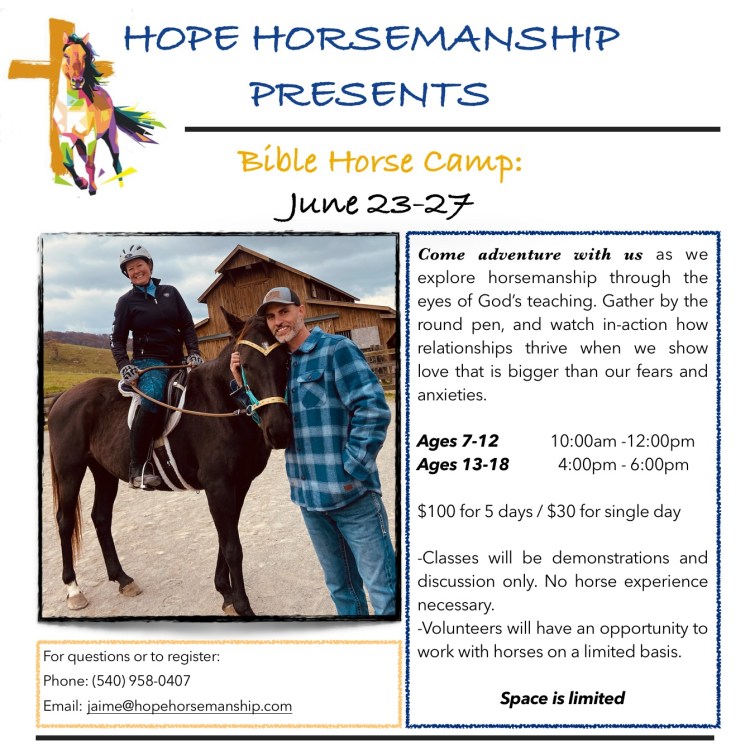
    Between getting Khaleesi ready to take on the Vermont 100 in July, just over a month away, some clients and the Akhal-Teke Foundation work, we are planning a Tom Moates Clinic July 11-12 here at HQ (there is still room for one more horse to participate!), and a new program we’re excited to develop with kids June 23-27 where we’ll be addressing a topic each day, discussing it and doing demos with the horses to show how to take on fear, anxiety, how to love well and know what good boundaries look like, how to find confidence in yourself, and what good leaders do, and more. For anyone local to us, there is still room, and though the program is 5-days for 2 hours each day, single days can work as space allows. Contact Jaime@HopeHorsemanship.com for enrollment details!

    I’ve managed to carve out a couple short sessions to check in with Wyoming in between. First, I was able to put on her halter without any nipping threats- which is encouraging (twice!). She is still mildly concerned, but gave me the benefit of the doubt. I sense our connection continues to improve in general over the last year or two. I rubbed her and stood in place for a moment after she accepted the halter and told her ‘that was really nice, and thank you.’ I was glad she relaxed before we continued on – the halter means we’ll be working today. I don’t want to trick her, that erodes trust. I want her to be ok with the work we do together and to stay with her each step.

    I moved her away from Khaleesi gradually, checking in with her every few steps when she got sticky, and reconnected her mentally to me. I was asking her to let go of Khaleesi and take a few more steps with me. It is not about if I’m acting like a predator, pretending to be part of the herd, “listening to the horse”, or getting the correct approach angles. It’s not even about sensing discomfort and starting on “pressure-release” from a distance. I have incorporated all of those things over the years with various change in the horse. They all have limitations that Wyoming has ensured I learn. 

    I mentioned it’s not about “listening to the horse” and what I do not mean by that is one should not be aware of what the horse is telling us. What I mean is I’ve “listened to the horse” so well at times that I’m not able to direct or lead because I’m only responding to what she is putting out and the horse is not intended to lead the dance.

    Instead, I observe and try to understand. With that information, I can better know where the horse’s mind is, and I need to have influence on that mind in order to guide her. Wyoming’s mind goes back to Khaleesi, I pause and do not move forward until I am able to bring that mind back to me, draw a few more steps… mind goes back to Khaleesi, pause, ask her again let go of Khaleesi, focus on me… take a few steps. This is a practice and she lets go a little at a time. Khaleesi is important to her. She is the security of a good leader and the only herd she has. I am increasingly able to offer what Wyoming recognizes as good leadership, however I am not going to be a herd mate (ever). I am not a horse, I’ll never convince her otherwise. I am a human who cares about these horses, and will do everything I can to bring peace and security to her if she’ll stay with me. I can enter her world, and invite her to participate in mine in a way that honors her and lifts her up to be able to participate and do more than she could ever imagine in her horsey brain. 

    I’ve heard the argument that a horse is content in a life of foraging and grazing and resting under a shady tree. That’s probably true. However, when a horse and human partner with trust and integrity, something bigger than either the human or the horse alone could reach happens, and it is a thing of exquisite beauty. When it’s done poorly, it is sad and discouraging. It is hard to see people using horses for their own glory and the trauma and damage that results. My hope is keep learning how to do it well, and honor the horse as I grow- and walk in a sense of grace along the path. 

    Eventually Wyoming truly lets go of Khaleesi, and we walk together to the tack room without further hitches. I put the saddle pad on her back and begin poking at her side where the cinch will go. I’ve noticed she carries tension here, and sometimes in the saddle, she seems physically uncomfortable. At times she almost colicky- and then also no issues. Sometimes both in the same day… The saddle is a good fit, and the cinch is wide, distributing the pressure across a generous area. It’s too intermittent for me to be convinced it is ulcers. Addressing her built up anxiety has had the most effect in resolving the issue.

    When you poke a horse, which I don’t recommend doing just to annoy it, you either find relaxed muscle and it can be almost like a massage, or you find tension and the horse will “boing” like a spring. Depending on the amount of tension, I’ve seen the entire horse’s body act like a giant spring. It can seem pretty disturbing, however I have seen this done in a way that over a few minutes the tension begins to release, the horse starts to soften, and this feels much better for the horse. The kind of tension that’s created when the entire body springs from the contact does not feel good at all, and ignoring it doesn’t make it go away. Putting a saddle over that and trying to ride probably really doesn’t feel very good.

    Wyoming is mostly relaxed, but there are a couple specific points that when poked at create the spring reaction in her side. Surprisingly for what it looks like, she isn’t bothered. In fact she stands still while I poke around at her and eventually she even yawns and shakes her head. The tension begins to release. I do this on both sides, and THEN get the saddle. Once the saddle is on, I poke again in the same places. There is still spring tension there so I poke around a bit more and she still stands calmly. More yawning and licking and releasing. The tension is not completely gone when I go to cinch up, but it’s diminished. The saddle brings up that tension to some extent; it starts with the saddle pad, and it’s connected to experience being ridden more than direct physical pain from. 

    Once I get the saddle on, we enter the round pen and my plan is to check in, ask her to move around me and return in both directions to see how she’s doing. This horse gets sticky in the forward both on the ground and in the saddle, and I’d like to see this improve.

    As expected, I had some stickiness asking her to move around. I am not lunging to tire her out, and I’m not running her in circles in order to “suck her in” to draw to me. I want her to get connected to me before we begin, then I want her to stay connected to me while she walks or trots around the pen, and then remain connected when I stop and invite her back in. Both directions. With me the entire time. When this connection is broken, I must re-establish it before we continue. I worked through the stickiness of forward both directions until she accepted then relaxed into walking around without halter or lead, with me directing her in the pen, was not so bad. 

    Leading, on lead or at liberty, is not a problem. The stickiness comes when I ask her to move on to circle without me being out in front leading. This is important because if I’m riding I cannot be out in front leading which is where she seems to prefer me. 

    This goes well, and I end our short session there. She willingly puts her nose in the halter, and we walk to the tack room. I remove the saddle and then do a poking test. Zero reaction. No spring. Relaxed.

    The second day is similar to the first, only there is almost no tension spring on poking the second day. I have more time to play with the mounting block, sitting in the saddle (though I didn’t ride off), and some experimental time “riding” from the ground. This is when I stand at the saddle, drape my arm over and walk next to the horse in a similar behind the head position as if I were riding. 

    Here I discover something interesting. I can get this working for me when I stand on her left (though it is sticky at first), but when I change sides and stand on her right and ask her to walk off, I get chaos. First she paws the ground and then tries to paw at her underside (as if colic or ulcers), then she reaches over to nip at me. This is very similar to the behavior that has been randomly concerning in the saddle. 

    I was not sitting on her, and doing this from the left side did not create the trouble. Whenever she is uncomfortable enough to reach around to bite at the rider’s boot, it is 90% to the right side. I am pretty certain this is not a physical issue, I hang in there until she takes a couple steps. It’s challenging but I reward small improvements in the right direction. This side never comes smooth, but it does get better. I go back to working from the mounting block then end the session. The strong reaction on the right side is valuable information toward helping her become comfortable carrying a rider. I will certainly dig in there more as time goes on.

    I am happy with our work. 

    First, I am increasingly aware of the horse’s focus and how to encourage her to connect with me, and then how to direct her mind. This leads to what Harry Whitney calls with-you-ness. If I have a calm confidence, a presence in the moment, and can get the horse to stay with me in that space, we have a much better chance at working together. The better chance she will feel better about the work.

    Second, I stay aware of what Ross Jacobs calls the worry cup. A common pitfall working with horses is moving ahead one thing to the next without noticing until the cup runneth over, and that usually means an explosion or some kind of injury scenario for the human. How often have I heard things like: I don’t understand, you have seen X, Y or Z a million times, and now you freak out? That could tell us that X, Y or Z can be tolerated when the cup is low, but if the worry and anxiety is already at 7/8 full, X is just too much for the moment. Before we judge the horse harshly, I can recall a day when things keep going wrong until a simple thing that would normally merit an eye roll, instead gets a full out tantrum. Most horses have various degrees of concern reactions and it can be different day to day. 

    If I would have trapped her with the halter, walked off to the tack room without looking back (or worse, drove her onward as she struggled to leave) then put on the saddle and went to work, we would have had more problems to fix in the round pen. It’s likely I could have pushed her through, but when I returned her to the field she wouldn’t feel very good about it, and the next time I arrived with the halter, she’d put more effort into evading me. If I’d have tried to ride her after the cup was brimming full, I’d probably have us both in a situation neither of us would be feeling good about. This is one way people get hurt. When the cup runneth over…

    Third, I have more joy in the process. I like to see results, but this horse has been a gift of growth in my life for years. She has challenged my horsemanship, my emotional maturity, and my relational concepts. I have let go more of the expectations I carry in my ability to get things done with her. I’ve had more of my own self-worth and identity wrapped up in not failing this horse than I would like to admit over the years, and that’s a burden she can sense even if I pretend it’s not there. I am more curious and less pressured to see “results” with her. I have also come to just plain like the mare for who she is, even though what she does is often everything I wish she wouldn’t do! 

    I actually enjoy her, even if I’m standing next to her at the tack room poking at her sides to see if she’ll let go of some tension. I have been reading more about how important joy is to the brain for personal growth and transformation. 

    This weekend is the Old Dominion 55 for Khaleesi and me. It’s our last event before heading to Vermont. We are doing all the things we learned to prepare for the OD 100 in 2023, and it seems the mare is on a good track for giving me her best. I feel confident that we will take these rides on together and whatever comes it will be fun, and we’ll either grow from increased success, or we’ll grow from learning through failures. Regardless we will grow, and what fruit that comes, we will share it with you!

    Stay tuned! Come visit! And do it all with Joy.

  • Path to Vermont Series: Training V Testing

    Path to Vermont Series: Training V Testing

    If you prefer an audio version of this blog, you can find it here:

    Powerful Horse Substack: Training V Testing Post

    The first endurance event of 2025 is upon us, and we just passed through the most intense window for physical training. The preparation and training began in November. Now we are tapering down to a week of rest and recovery going into the Old Dominion No Frills 55-mile Endurance Ride on April 19.

    When I was new to the sport of equine endurance riding, I remember hearing the advice to ride the race the same way I trained at home. At the time it made sense and was my strategy for many years, until I was trying to level up from 50 mile events to the single-day 100 miler. In that season, I found myself hanging around successful human endurance athletes, mainly endurance mountain bikers, and they approached training differently. The science in human competitive endurance was favoring a polarized training plan, and as I learned about this, I wondered if it would carry over into the equine system.

    It turns out, aside from the fact that humans lose their base of fitness much faster than horses, horses and humans have many parallels in physical training. After some research, I made changes in my training plan with my horse Khaleesi. Looking back, I attribute this physical training change, alongside the mental centered horsemanship approach that I was learning from Harry Whitney and Tom Moates, as the two key factors that changed the game for us. I saw an increase in speed in the 50 mile distance and then a first successful 100 mile ride completion in 2023.

    Polarized training focuses on the low intensity and high intensity ends of the effort and heart rate scale while avoiding the middle intensity zone. The years I spent training and competing with the same intensity approach is an example of working mostly in the middle zone that we now avoid.

    Today, I dedicate roughly 80% of my training efforts toward low intensity workouts, which are often referred to as zone 2 training. On a heart rate scale of zones 1-5, zone 2 is around 60% of maximum effort. When an athlete spends a significant amount of time in this low intensity zone, the body becomes more adept at burning fat for fuel and builds endurance with minimal muscle fatigue.

    The high intensity interval workouts use the maximum heart rate effort, zone 5, for short bursts. A polarized training plan utilizes fewer of these maximum effort workouts than low intensity training. The heart and lungs are taxed to exhaustion and when balanced with rest and recovery increases cardio fitness. They are highly effective in enhancing speed and power, but if overused, create more breakdown than build up. 

    Working at high intensity zones is hard. When I do this myself, as a human, I rationalize that it’s good for my health and fitness. Unless I produce a predator worth running from for a few minutes at an all out sprint, it’s hard to get my calm-minded mare on board with putting in that kind of unsustainable effort. I do have some motivational tricks that seem to work for her, but it’s not as easy to inspire her to run at her maximum capacity for a time, and if done the wrong way could create problems in our relationship. 

    I schedule most of our high intensity sessions at the Jackson River Scenic Trail because it’s basically flat and has consistent gravel footing.  I ask Khaleesi to jog or run until I sense fatigue taking hold and she tries to break down into a slower pace. Then we walk to fully recover, and repeat. I alternate jogging (trotting) and cantering (running with more effort) with the walking recovery. As with most horses, her motivation increases on the way back to the trailer- it amazes me how much new energy she picks up when she thinks we’re almost finished. Knowing this, I wait until the end of the workout when she’s the most warmed up and motivated, to ask for the most maximum effort. I push her as hard I can get away with and still keep a connection between us, then finish with a snack and some water at the parking lot.

    Part of the Jackson River Scenic Trail in VA

    I currently use a fitness watch to track my heart rate zones. You might be wondering if there are heart rate monitors for horses that make tracking this as simple as it does with humans. There are, and I have one. I rarely use it anymore. Even if it reads accurately which sometimes I’m not sure if it is… I find the data on heart rate zones for horses less clear cut. Human heart zones adjust for age, and if you train with a smart watch or app, it will set your individual heart rate and percentages with your personal data, and adjust as you train.  Human heart rate zones are calculated pretty specifically. For horses, I haven’t seen reliable equations to calculate heart rate zones that account for variables like age or fitness. There are generic equine estimates, but they appear to be one-size-fits all. Even so, when I worked with an equine, real time, heart rate monitor, I followed trends and norms for Khaleesi, and it was helpful. It adds a step and time in saddling up that doesn’t seem worth the effort lately. After many years training together, I have a feel for how hard she is working, and because she’s a living creature we have to work together regardless of the data, so I choose the training goal and then execute it to the best of my ability with the horse in front of me that day. 

    In addition to these workouts, easy days for recovery are beneficial, and for these I hike leading Khaleesi on foot. I began this practice while training for the Old Dominion 100 in 2023. I was concerned about balancing the amount of physical training necessary with the real possibility of overworking the horse. I also found riding too hard, too often, made her much less happy to see me each day (clear degrade in relationship). I started hiking with her primarily to shake up the routine and give her a break from carrying me around the mountains. 

    It was great confirmation to continue when later I heard an interview with equine fitness professional Jec Ballou. She explained the physical benefits from hand walking horses: without rider or saddle, the horse has free swing of the ribcage, and if walked consistently and rhythmically (which is not the same as grazing around a large pasture) there are positive changes in the muscles between the ribs and in the abdomen which adds postural strength and increased lung capacity. These hikes add significant value without breaking down the horse physically.

    We hike together often!

    So what about that middle ground polarized training seeks to avoid? This zone 3 or gray zone as it’s nicknamed, is the workload that produces the most fatigue for the least physiological gain. Too much time in the gray zone leads to a fitness plateau, and the amount of days required for recovery is greater from a zone 3 workout. Too much time in this gray zone without adequate rest and recovery increases potential for injury.

    On the flip side, zone 3 has another nickame: race pace. Elite distance athletes compete most of their events in this zone. I like to think now, unlike when I first began in equine endurance, I have clarified the difference between training and testing. My training program is centered on building the horse’s endurance, speed, recovery and efficiency. When the day of testing arrives, I enter the gray zone and push the limits to race pace. Here I ask for my horse’s best effort without crossing the line to injury or damage. Race day will exhaust my horse more than our regular training and take more recovery after the event. This is the test to see what the system is made out of and how effective the training has been. 

    Everyone has a difference comfort level of how often to run at race pace. I require a minimum of one ride that is appropriate loop length (18-25 miles), with a variety of challenging terrain, with the intent on realistic race pace approach a couple weeks prior to an event. Sometimes I’m able to get in two, but I avoid more than that.

    I am satisfied with the training that we’ve put in for this ride. Fifteen days prior to the No Frills event, Khaleesi and I did our race pace training ride as we took on a challenging 20 miles of mountain single track with a total of 4,000 combed feet of elevation. It was hard, but Khaleesi held up well, and even offered trotting and cantering in the last miles which was significantly uphill. In fairness, I never get a true race pace outside of the excitement and structure of an actual event, but it’s a good effort. 

    I was pleased with how well she finished the ride, and barring something going sideways, I am hopeful that we will finish the Old Dominion No Frills 55. 

    Whatever comes, you can read about it here! Stay tuned!

  • The Live Wild Beating Heart

    The Live Wild Beating Heart

    We seem to be entering a new season here on the ground at Hope Horsemanship! Over the winter we have done a lot of work breaking new ground and with the emergence of Spring, we have facilities in place to do more activities right here at home. Over the weekend we hosted our first Roving Clinic with the majority of the activities right on the ground on our tiny little horse farm. I took a video tour and will include the link at the end.

    Sunday at the Hope Horsemanship Clinic with Tom Moates coaching Abigail

    As the clinic approached and a new season seemed so clearly springing up, I considered Wyoming who I would be working with on both days. Where were we and what did I want to focus on with her sessions? How is it possible that after seven years there is still so much trouble in that mare? What was her life about here with me, and have I failed her? 

    When I found her online through a TIP trainer in the Mustang Heritage Foundation, I was looking for a companion for my small herd that could be a solid trail riding mount and teach me more about horses. I considered her- born in the wild – a native so to speak. Who better to learn horse from than a wild mustang who should come with pretty pure horse language and instincts? 

    Her description was a well-started mare who needed some miles and experience. She was a pretty and nicely built red dun, and seemed like exactly what I was looking for. That was seven years ago. Things did not go as expected.

    I have since come to see the horse you will learn a lot from is not usually also the horse that is a solid nice trail horse anyone with a little experience can enjoy. These are two very different kinds of horses!

    There is a saying in the Bible from Paul that God can do anything- far more than you could ever imagine or guess or think to request in your wildest dreams. He doesn’t do it by pushing us around, but by working within us… (the Message edition). This is certainly true.

    God has a sense of humor and loves me, so he didn’t give me a solid riding mount. I already had one of those. I got the learning horse and I got it big. I brought home an enigma that catalyzed an epic adventure I would probably not have agreed to had I seen it coming. Of course that’s the best kind, and the more steps I take into the wild, the more I realize this is the only kind of life I want to be engaged in. In fact, if I thought at this point things were settling down into a predictable solid life I could maintain on my own devices, I’d likely fall into a hopeless depression at this point. How boring that story would seem now.

    Wyoming did not comply with the accepted natural horsemanship style training that I was immersed in. Even if she may have been able to function within that paradigm, to ensure our journey, clearly I did not possess the skillset to get it done, and in the area I live no one I found was offering anything much different. The mare would not travel in a trailer, so the possibility of sending her farther out to someone who might have been able to jam her into compliance with more creative tools was off the table as well.

    We were stuck with each other, and if anyone was going to help this horse- it was going to be me- and we were not going anywhere. I was going to need help, and it was going to have to come to us. Somehow help was going to have to travel to the most remote, least populated counties in the Virginia Mountains. To add layers of complication, I did not even have my own property to hold these education events, and I didn’t have the kind of funding it would have taken to simply hire a good professional from afar to come and give me a private training window. Clearly it would take a community here in the remote mountains and looking back, it has been a substantial miracle.

    It became pretty clear to me that if God could feed thousands with one kid’s lunch, he could bring the help I needed to this little tiny community and give us a place to do the work. If He was really there, and He cared about this mare, and me, He’d have to show up and do something. 

    He did. Seven years later I am looking around my tiny horse farm, the same place I was living when this all began never imagining it could be a clinic hosting education center- I didn’t even believe until a year ago horses could exist and thrive here. 

    We began this journey with the favor and ridiculous “luck” of the free use of a massive private horse facility! We went from 3,000 acres, indoor arena, outdoor arena, massive barn and large turn out to 3.5 acres and only exactly what we need to come together and grow. On the outside it looks like reduction, but on the inside it’s a huge expansion and a new beginning of a growth season. It’s like a seed that contains everything a massive tree needs to flourish has been planted, the roots have been reaching down and now is beginning to sprout above the surface.

    All because of a red dun mustang mare who wouldn’t get with the program.

    It was just last week the truth flickered to life in front of me as the truth hit me like a stone. This mare is the living, beating heart of Hope Horsemanship. She is the thread that has stitched it all together. She is the reason I’ve delved into approaches including natural horsemanship, the “Ray Hunt” lineup, positive reinforcement, clicker training, “pure” liberty, old school just get it done by force, and anything else I could experiment with because something was going to get a real change. Everything had moments that looked like a shift, but none of them stuck and made the difference. Regardless of what I could get her to do, I still had a horse with deep anxiety and massive brace toward working with people, and who would try with a willingness that I still find unbelievable, and then come to an “I can’t” moment and break down into a chaotic wreck. It’s a miracle neither of us have gotten killed in the process!

    Working on a right direction circle a few years back

    After finding Harry Whitney then Tom Moates I see the path straightening out, but now in her teens there is so much baggage she carries- a significant amount of it before her arrival- but in all my best efforts I too have added to the weight she carries.

    This is also a lesson. Best intentions are often laced with unintended very real negative consequences. Such is life. We do our best to unravel the tangles we make in our attempts to grow, we trust God to redeem it, and we have grace with others who are making tangled messes in their own efforts. Then I also remind myself to keep trying even though in a time to come I’ll look back on the tangles I’m still making as I try today. It’s ok. Change is possible and growth does come to those who don’t give up. Let grace abound.

    I always learn deep things when I spend time with Wyoming. Sunday, I was pressing on anxiety she carried walking around me, loose in the pen, to the right. She could tolerate walking to the left, but when asked to the right she showed various degrees of trying to displace her attention to not stay present with me, (sniffing the ground, looking outside the pen).  When I continued to (as gently as possible and still get her mind) bring her attention to our present work and relax and see she will not die… she would break into a trot- movement to dissipate the deep anxiety- and would sweat way more than necessary on this cool breezy day. She was in fight or flight and she chose fight just as many times as flight. Even when the entire pen was available to her she would come into the block I had made in a corner and try to force her way to go back in the left direction before she would consider walking to the right. 

    Wyoming bunched up and anxious about moving in a right direction circle

    We have spent a lot of time over the years making circles on and off a lead rope looking for various things over those years, and in the last two years, relaxation and peace has been a high priority. I can imagine bystanders thinking this is crazy- at what point does one brand the horse broken and move on… leave her alone in the pasture to eventually die or as others have suggested to me: give her to someone who is adept enough to do something useful with the mare, which is clearly not me. And here are the shadow voices echoing in my own mind the same thoughts. 

    Yet I’m borderline belligerent with determination that there is YET hope. Maybe that’s due to my middle name being Hope. Maybe it’s why this enterprise is called Hope Horsemanship. If there is ever a foundational change in this horse it will be the success story of my lifetime. Any sane horse person would have probably walked away from this tangled up knot of anxiety and brace when after three years she still threatens to take me out on a regular basis. So clearly… I am not a sane horse person. I guess I’m ok with that. At this point, I have to know. If she’s not dead yet, there is still hope. 

    Isn’t this what we want to believe about ourselves too? The ones we love? The things they carry that create problems and weight us with anxiety… that while we breathe there is hope for light, love and life to increase?

    Here we are in the pen together on a day of new beginnings, and Wyoming is sick with worry about doing this very simple request, after many years of variations of doing this and not dying. Still she was not “being dramatic” or “making it up” – somewhere in her primitive mustang brain this felt like a survival issue. Still. This was clear to me. To a human it doesn’t make sense, however I know people who deal with severe anxiety and isn’t it the same? Don’t the humans I know with anxiety disorders know somehow that the thing they are about to go into cardiac arrest over is not actually a survival thing, but it doesn’t matter because the reaction is still very real to them?

    I was filled with compassion for this mare. This beating heart of my vision for transformation. I continued to insist that she find the right circle and encouraged her with peace whenever she got even the slightest change, first by taking the direction, then whenever a split second of breathing and relaxation set in. She still couldn’t walk, she had to trot or even canter going that direction, but she began to not fight me every time I asked. She began to choose the open door over the closed one even if the open door felt like death.

    One reason this still felt so life or death for her was because in all the years we have picked up this right circle, she may have complied to avoid the fight with me, she may have made an effort to do the thing physically, but she never broke through to a fundamental change in her mental and emotional systems that she could be ok and relax going to the right around me. She was still deeply unconvinced. The only thing that would change this was experience. The only way to get the experience was to get through it to the other side in a way that was not only obedient, but also relaxed. She would require a handler that could not only get the thing accomplished physically but would be able to help her past the physical into the mental and emotional place before taking off all the pressure so the place she would be left with, after the thing that felt like death, would be a true peace. 

    Chatting with Tom about our riding challenges

    In that pen with me, she is safe and nothing can harm her. Still, she doesn’t know that yet, not really. Not in the way that it is experientially real, and for a horse that is the only way they can know anything. She had to experience the fear of survival, then the submission to it, and then the reality that she is safe and ok.

    How often is this true for me?

    Lately I feel inundated by growth opportunities that feel like a threat to my very survival. I have a sense that God is insisting that I learn in a deeper level that nothing can harm me when I’m in his care, and then remember I’m always in his care. Nothing can take away anything that matters. Nothing can touch me without his consent and only because it will mean I emerge in strength, confidence, and peace having experienced that truth that even though it feels like death, submitting to the storm experience only reveals that I’m completely safe and have nothing to fear. And we are assured that even through death we still have nothing to fear. Even death is not a threat. Tell that to my amygdala!

    A fearless life is a powerful life. Fear is what brings about control and bullying. A fearless life doesn’t have to be so protective and choose to fight, a fearless life walks through open doors that look like death with confidence and find new life, new seasons, and great peace. 

    When Wyoming is in fear of her survival, she chooses to fight me. When she trusts that she is safe she, can hear my direction and walk out to the open space I have prepared for her and carry herself relaxed with confidence. I have seen glimpses of it, and on Sunday she had a significant change when after a gentle request she walked off to the right without displacement, without distraction, and relaxed. She can’t hold this for long yet. Once she begins to walk on water (figuratively) she starts to lose her mind, worry, and go back to her old ways, but it’s a start!

    Change is possible. For Wyoming.

    I believe that Wyoming can continue in the direction of being a horse less anxious about things. I believe I can continue to improve my skills to help her get there. There is not a clear answer to how to do this work. This horse takes more sophisticated observation to know when to do more to press through the hard place, and when to do less because it is going get worse. She’s incredibly sensitive and quick to change for better and worse. The bottom line is I have to get better. The good news is, I can.

    Change is possible. For me.

    I love our community. It’s tight knit and small, but it’s welcoming to new friends. We have folks entering and exiting the circles depending on their season. Many people are hopeful that the horse can be fixed to adjust to their needs and goals when things aren’t working. I have come to believe it’s us that usually needs to adjust to help the horse by finding what they need and supporting them. The change has to start in us, and it must be led by us, and most horses come into alignment with that. Sometimes the horse has enough trouble packed in that it’s too wide a gap to bridge with the time and ability of the owner. As stubborn as I am to commit to bridge building- staying in over a decade is not the right call for everyone. Sometimes it’s just a poor fit and finding a horse you enjoy is really important.

    I am beyond grateful for the companions who are on the epic road with me, because it can get lonely! I am encouraged by the community that continues to grow in support of the long term vision and the commitment to walk together for seasons and for life. I am grateful for the changes that have come to my own heart and life and excited when I get to participate and see first hand the changes that bloom around me. 

    I thought I wanted some training ideas. But what I’ve gotten seven years later is more than I had ever imagined or would have dreamed to ask for.

    It’s not about training for us around the pen and in the arena as we learn together. It’s about transformation.

    And it’s still only the beginning!

    The peaceful quiet after the clinic activity ends and everyone hauls out
  • Path to Vermont Series: Change the way you think

    Path to Vermont Series: Change the way you think

    A local newspaper here in my town has picked up an article series I’m writing about the process of getting a horse and rider prepared for a 100 mile ride. I’m going to repost this (third in the series) article here and remind anyone within driving distance that we’re having our first Roving Clinic of 2025 this weekend, March 22-23, 2025. The fun bonus of this clinic is my amazing husband has been working tirelessly to create a space for us to come together right here on my own land. I had been looking around for a place to do more education events, and Matt looked around and said: let’s just get started here!

    Turns out, he is right! We may be small, but we are a community of powerful horse people who are committed to changing the way we think and helping our horses change the way they think as well. We love to add to the family, and we aren’t “cliquey” – we have a wide variety of people who come to participate and to watch, observe, and learn.

    Now, without further delay, here is the third article about the horse’s mind and why it meant so much to me in my endurance journey.


    It’s amazing how many endurance miles Khaleesi and I have completed without her having a forward thought. I suppose that reveals how much one can force a horse through on sheer willpower and drive. Early on, as I was learning to work with horses, I learned a lot about driving horses around. No, I don’t mean in a truck! I mean the energy or force applied to make a horse move away from pressure. To ride any horse on the most basic level, you have to communicate effectively that a horse go forward, and have the horse do so in response. In my experience, most people approach this by driving the horse. The reason this is such a common approach is probably because it is so effective. Yet, I have since learned you can drive a horse forward without the horse having a forward thought, and this is actually a problem!

    Horses are prey animals and come with the built in response of: run away first, ask questions later. It is pretty easy to get a horse to flee from pressure, however, we don’t actually want them to run away, so we also have to contain them. Generally we do this with a halter and rope, or a round pen. The message is: flee, move, evade, but also, you’re trapped. It’s not a stretch to imagine most horses don’t feel very good about this kind of work. I am now amazed at how many horses do become obedient and responsive to the pressure. I do not think I was alone in mistakenly thinking my horse was doing great with this system.

    I flew across the country a couple winters back to watch Harry Whitney work horses in California. He says that it is good to learn what motions come with a horse’s emotions. Due to the prevalence of working horses in this driving pressure system, it has become less common to see what a horse looks like physically when they are truly relaxed and confident in their work with humans. This was true for me. I remember seeing quick, snappy, obedient responses to my requests, I was sure the horse was happy and life was good. Looking back, I understand now that my horses were moving in tension and avoidance, not soft responsiveness. Their bodies were rigid, braced, and tense.

    This may seem like a tangent for an article series about an endurance team heading to a 100 mile race, but it’s one of the most important things I discovered that led to increasing success at this sport. 

    When driving a horse “away” from pressure, the horse’s attention is on the thing it is fleeing from. If I want my horse to run freely forward over the many miles, I need my horse to be thinking about going forward, not thinking about what is driving from behind. Using the sympathetic nervous system to propel a horse (even at a walk) adds adrenaline to the system which is supposed to be for emergency use only. To compile trouble from the driving approach, the horse is also trying to avoid punishment as he/she anticipates a tap or kick and braces against that force as well. 

    This means a horse driven forward is carrying some level of tension. Strength in movement comes through relaxation, flexibility, and good form. Working for extended time and intensity in tension brings diminished performance and increased injuries. These can be metabolic, like a heart rate that cannot drop for the vet check, or lameness from sustained tension in muscles and joints. This kind of lameness is difficult to diagnose because it doesn’t come from an obvious injury.

    Once again, I speak from experience. For a couple years I wrestled with a mystery intermittent lameness in Khaleesi. I took an entire season off from competing after some disappointing events where we did not complete due to lameness pulls. The trouble was, no one could pinpoint the problem and how to fix it. I had professionals check her hooves and legs, and shoulders, to no avail. I had radiographs done on her feet to see if she had unusually thin soles or signs of arthritis. She had no evidence of problems in the tendons or joints. The lameness would show up both with and without saddle; it would randomly appear when asked to trot on a line or around a circle.

    The reason I now believe it was a result of many miles moving in tension, is because I still find it today, though it is very rare. If I address her thought, the lameness dissolves instantly. In those early years, we were severely lacking a forward thought. I am now convinced a lot of physical problems are a product of the mind resisting the work, which creates brace in the body, leading to physical injuries that are difficult to diagnose and treat.

    After spending some time with Harry Whitney and Tom Moates, I came to understand what a major factor the horse’s thought is. I am amazed at the things that will improve when the mental system comes into alignment. When I began to work with this understanding, it brought the final key that changed our endurance team to stronger finishes and eventually completing our first 100 mile event. 

    Modern horse training, for the most part, teaches people to drive a horse first from the ground by adding pressure to the horse’s hind end. We chase the horse with the tail of a rope or a flag.  Eventually, we move into the saddle and drive either with legs to kick or a crop to tap. Anyone who is about to be kicked or tapped is going to brace in anticipation. That brace in the body acts like a brake, making it hard to move easily. You can drive using the gas and brake at the same time. It works, but is there a better way?

    A better way?

    I want to create a desire for my horse to move freely toward something. Helping a horse create a forward thought is more complex than chasing it to run away from pressure. Once I was able to see the difference of a horse moving in relaxation and strength, I could not “unsee” it. I knew this was the way my horse could have longevity and success in her sport.

    I hear a lot of talk regarding the necessity of moving a horse’s feet. Strangely enough, we rarely put a rope on the feet to ride. We put a halter on the horse’s head and use a lead rope, or a bridle and reins. I’m pretty sure we do this because the horse’s brain is housed there. While I have seen people get a horse to move it’s feet without it’s brain engaged in the same movement, this is not a horse I want to be attached to in any way! I don’t want to crank on a horse’s head for steering, and then drive it with pressure from behind to go. With strong enough levers applied, it can create compliance, but there are some horses who never break into this obedience. These non compliant types become the “problem horses” no one wants to work with. Their future is bleak as they fight against a pressure that does not make sense to them and become dangerous, sometimes even aggressive. Yet, even for the many horses who comply with the driving pressure system, their performance doesn’t compare to the brilliance of a horse who is present and engaged mentally in their work. 

    Khaleesi was, thankfully, a compliant type horse, and I spent years driving her before I knew there was a better way. She was smart enough to get out of punishment by doing what I wanted, but it showed up in her body over time. When I learned how to work with her mind and change her thoughts toward something, I saw the change in her body too. We are now erasing the brace and tension she used to carry, and the flexible strength we are developing is really encouraging. 
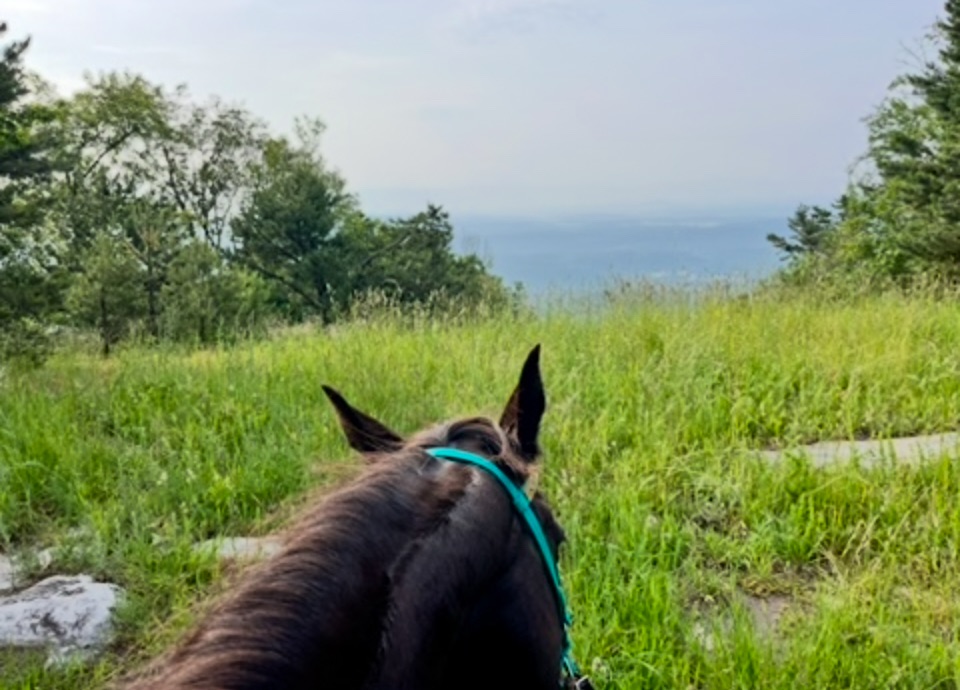
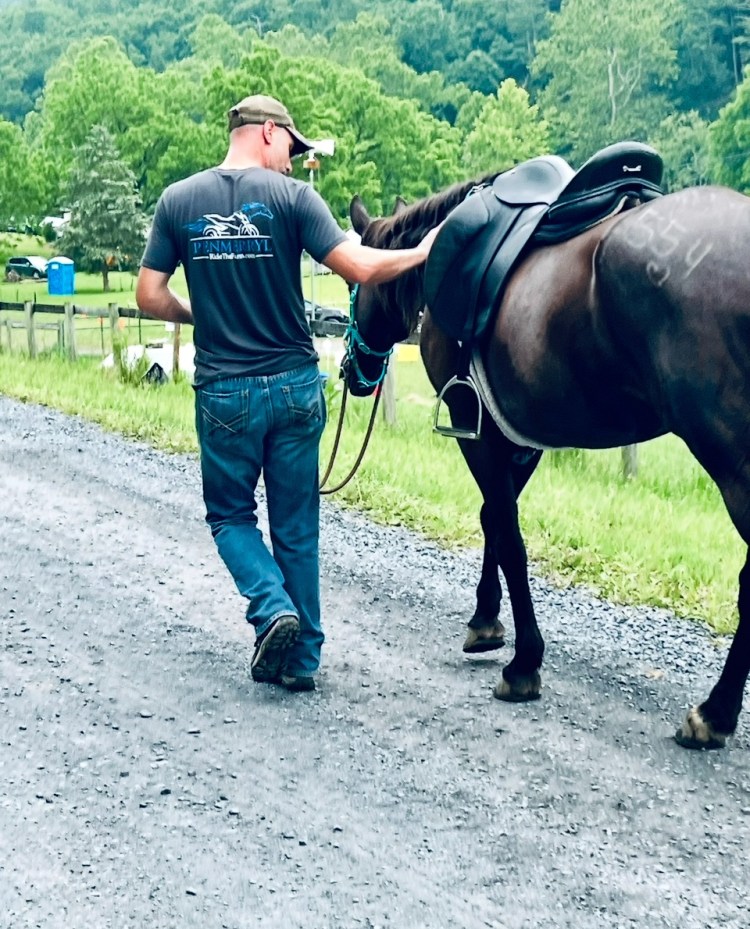
    This is a process I really enjoy. I’m still collecting tools on how to get my horse to think forward on down the trail. When that slightly lame gait appears, I don’t panic that a lameness injury is imminent. I shift my approach to get her mind thinking down the road, and when her mind straightens out, so do her legs. It’s amazing!

    This approach of working with horses is not only good for an endurance team, it has become a way of life, and the community around it is creative and engaging! It changes everything we do together from leading on the ground, loading in a trailer, getting better transitions, and certainly getting over a jump. If you want to join us to see it in action, we are meeting in Bath and Highland Counties the weekend of March 22-23. Contact me at Jaime@hopehorsemanship.com for schedule, location, and details. Tom Moates will be working with us and our horses, and he always has some books on hand that make great resources for further understanding on starting with a horse’s thought