Have You Ever Felt Bone Tired?
Recently I’ve noticed that my body seems to be struggling to keep up with me. I hear this echo reminder: the body keeps the score. I haven’t read that book, but it’s been recommended to me a few times. Maybe I should…
I have learned not to ignore the subtle things, and this week I sat with the question—what is it? My joints get stiff; I have these weaknesses in my hip or shoulder that come and go… I’m getting older each year, and I had a pretty bad case of Lyme’s in 2024, so that can’t be discounted as a factor. The spirit is willing, but some days when I get up in the morning, it seems the flesh is weak.
As I journaled and allowed myself to take stock of what is going on, I thought about how draining transitions are on us. I am definitely in a transition—in fact, I’m at the edge of the transition cliff this month, and as I get closer to the edge, the stress and fears are becoming more real each day. I sometimes get that feeling through my whole body—that tingling feeling when you’re too close to the edge and you look down…
You step back and say: It’s okay, I’m not going to fling myself over. I am safe here.
Only, actually, I am about to fling myself over.
I have never felt the need to bungee jump or parachute out of a perfectly good plane. The turbulence that drops you (safely seat-belted in) without notice, makes me queasy. I’ve been told there are only two fears we are born with: the fear of loud noises and the fear of falling. This thing feels incredibly primal when it shudders through my system as I lay in the safety of my bed.
As I considered this transition period, I realized I’ve probably been in some form of transition since 2019, but with a few seasons of stability in different areas of my life, I think moving to the rural mountains of Virginia in 2007 was the first real cliff dive that sent me into a way of life that has been constantly calling me to new growth and uncomfortable expansion. Looking back, there were numerous times I was pretty sure I wouldn’t “make it,” and yet each time, there I landed, in a better place than I left.
As I considered this, it occurred to me that transitions are the most meaty and challenging places, and they define our lives, the excellence, and how far we can go. Just yesterday I heard in an interview: The scope of your life will likely be determined by how much pain you can tolerate.
He was talking about how risky and painful expansion and growth can be. Those who can tolerate the pain that comes with being willing to press into places we cannot be certain of are more likely to expand their reach and see internal growth than those who have to stay in their comfort zone. Also I do not discount the reality that sometimes we are forced into transitions we did not volunteer for. Peoples lives are shifted through unwanted divorce, unexpected job loss, medical trauma, accidents and the like. That reminded me of a series I listened to on repeat, taking notes, by Tony Stoltfus years back, on going through transitions well—and how important the transition is to how the next season will be once we arrive.
In fact, I believe the transitions are the most valuable material and show the strength or weakness in the structure, and this is where I circle back to my horsemanship.
I spent a week with Harry Whitney and friends in Floyd, VA, a couple weeks ago, and in a few lessons he talked about the value of frequent transitions. Once we are established in a pattern, solid training and autopilot can take over, and we can look (artificially) pretty good. The part that reveals what is really going on under the surface, is in making a change together.
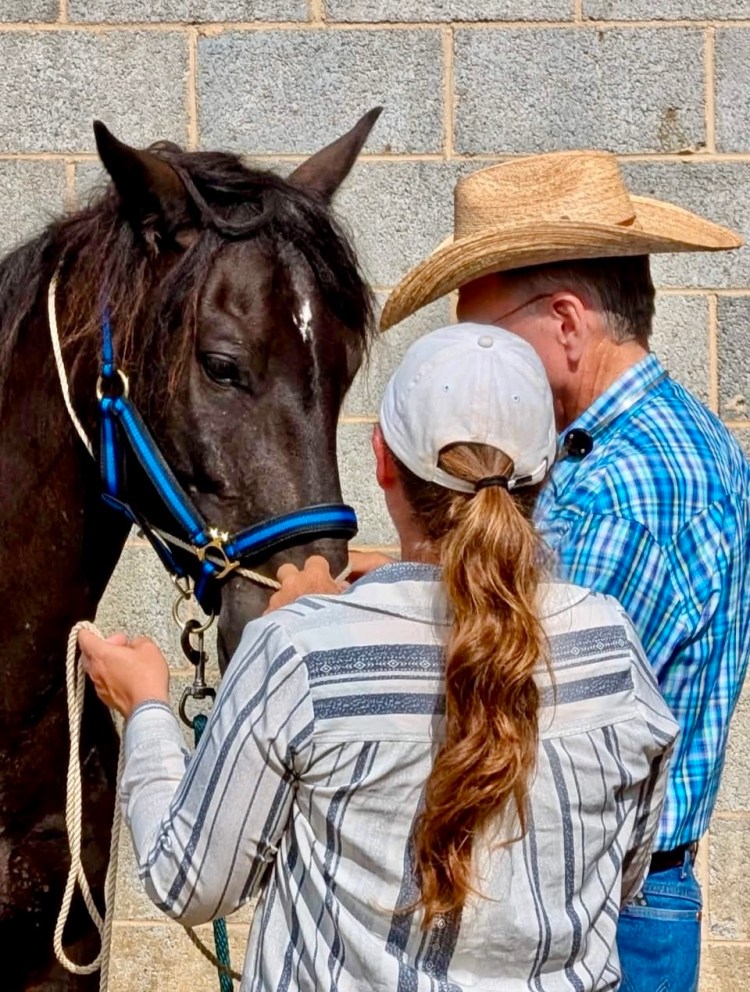
Change in direction and change in speed are the most common with a horse—but these always require (if done well) a change of thought. How quickly and how completely can we get into the change? How available is the horse to our input that we should make a change? The way in which the horse goes from halt to walk, or walk to halt, can tell a lot about the quality of the connection.
Humans have gotten adept at finding ways to make the body of the horse comply. We have the tools: reins and double reins; bits and stronger bits; martingales and nosebands; chains and cavessons when we need them. No matter how good we are at forcing the horse to physically take on a transition, their body tells the score if you look.
“Get better at seeing the motions that go along with the emotions,” Harry would say.
Once you see how the tension shows itself, you won’t be able to unsee it. The first level of unwanted tension from a horse in physical compliance without a mental change is a head raising. I have seen this from a subtle lift to a full-on head fling that could take out a rider if not wearing a helmet. Even if you fix this with a tie-down, the brace shows up in the muscles and the hollow frame still exists under the surface. Tension kills. Bracing against the work we are doing creates damage internally and externally. I have actually seen horses (multiple times) exhibit intermittent lameness of various degrees that no veterinarian or farrier could explain or heal come right after working in a round pen with Harry, whose first concern is to remove the tension that comes from the mind and body out of alignment. Not only have I seen it, I went through it with Khaleesi a few years ago, and getting her to think “forward” instead of being physically driven forward cleared out the uneven lameness I’d been worrying over. It will show up on occasion—always when she does not want to go forward (especially the last loop of an endurance ride from camp)—and if I get her mind lined out, the off-step lameness gait dissolves completely. Every time.
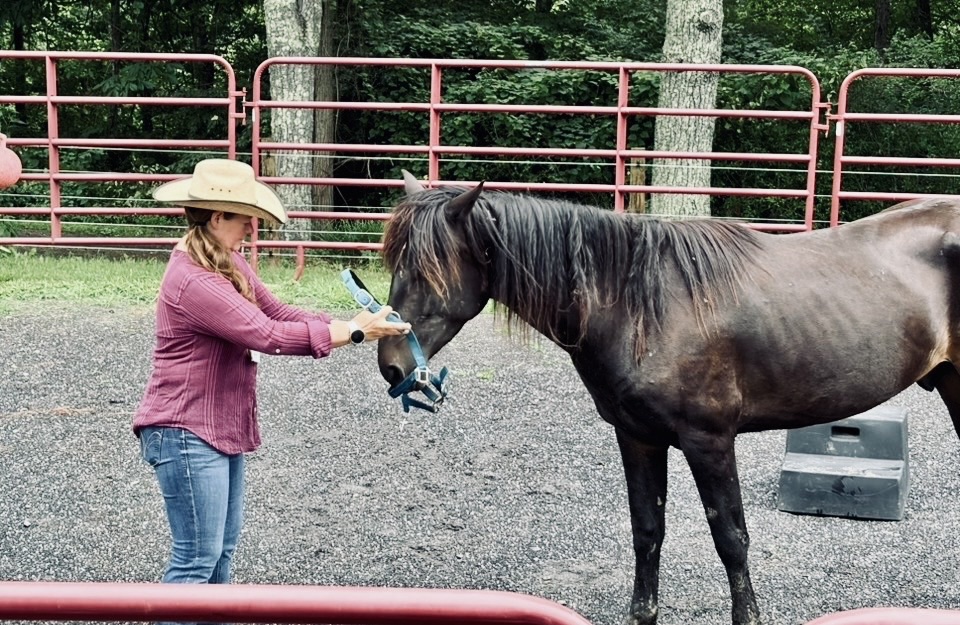
There are transitions all over our horse lives. Removing my horse from the pasture with her friends is a transition. Being groomed and tacked for an activity is a transition. Going from the ground to the saddle is a transition. How much attention do you pay to these steps? Does your horse fling up his head when you approach with a halter? Do you have to trick your horse into being caught with cookies or trapping him in a stall for breakfast? Do you use cross-ties to groom? Have you ever had someone hold your horse for you while you mount? Some of the ways we mitigate the weakness in these places are not bad if they are a temporary measure in place while the weakness is addressed so the horse can come fully on board, but they do reveal when something is broken in the connection.
Leaving friends or the barn for a trail ride is a transition, changing gaits in the arena… changing direction, lines, and circles in an arena… These are all places we can find out: how available is the horse to us?
I have found the first place to start, is to notice: whenever you stop your horse, does the head elevate? If so, you have tension in the transition and mental/physical disagreement—however slight. It is a weakness. Another place is going up a gait—when you ask your horse from walk to trot, do they pop themselves up into the trot with a hop in the front end? Or is it a smooth lift of the entire body driven from the hind?
Most horses exhibit some of these tensions. Perfection is rare—but the truth, if we are willing to see it, will set us free. Noticing is the first step! Doing more frequent transitions until the resistance dissolves will bring more availability, relaxation, and connection. I have never seen someone address these transition issues and not get some shifts from the attempt. We first must have eyes to see, then we can begin to ask how we can make this better.
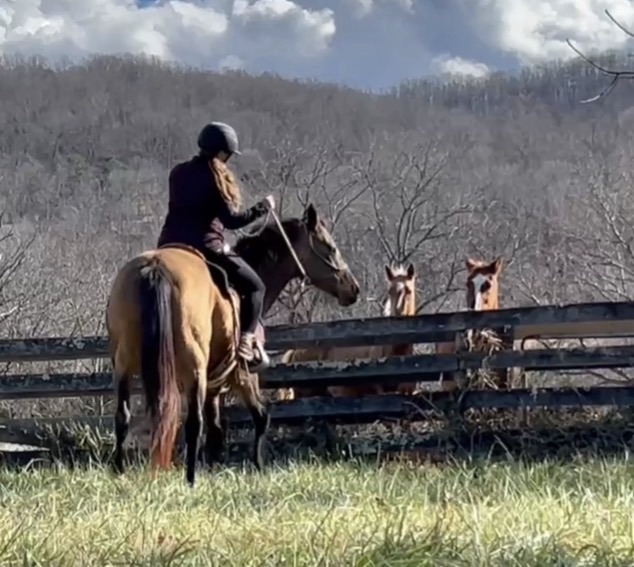
The best news is that focusing on the transition places makes a big difference in the whole picture. This is where greatness is gained or lost. Adjust the connection in the transition, and the connection in the execution of the whole is raised every time.
I think it’s like this in life too. The transition spaces are harder to stay connected. Self-protection stemming from fear disconnects us from each other, ourselves, and God. When we disconnect, we harden and brace, preparing for the worst and feeling alone in our survival. For me, it can be easy to barrel onward, knowing what I have to do and bracing for the trouble I perceive ahead. I force myself onward because I know it’s what I must do. When walking through hell, keep walking! (I am far from walking through hell, but the point is related.)
The fact that I’ve noticed I feel increasingly sore, exhausted, and with more on my mind that keeps me from interacting fully present with those around me is a signal to slow down and breathe. To reconnect first internally with myself: What is going on, and how do I feel about it? What am I most afraid of today?
When I expose the truth of what I believe in the transition, and what is bringing the tension and stress, I can reconnect with others too. I might need to share my fears with trusted friends who can remind me I’m not alone and remind me of the truth of who I am. This truth is always greater than the perceived truth the fear plants. For me, I need to slow down to hear what God has to say about this season as well. I hear him in the ancient writings, in things highlighted in the nature around me, I hear him in a word of encouragement from a friend that hits deeper than usual, sometimes in a dream, or an idea or image that comes to me as if completely from outside my own thoughts. We all hear voices! It’s just easier to accept the voice that says: You’ll never make it. You’re going to die here. Why would you ever risk it? You’re not good enough.
It is much harder to align with the voice of love that says: You are going to be okay! Relax and have peace even in the unknown—I promise to guide you through. No matter what happens, you’ll grow and learn—and you’re never alone! You can do it. Look how many times you thought you might fall and instead you flew! You can fly again!
I suppose if the parallel returns to the horsemanship—it’s my job when I notice the tension to slow down and remind her: You can do this! We are in it together, and you can trust me. Relax into my guidance and trust that when we do it together, it will feel so much better! You can have peace right here, with me! Trust me.
I know many people argue we don’t have time for that. But I choose not to believe in scarcity whenever I notice it creeping in. When we submit to the Kronos of the time clock and we believe that the scarcity of seconds, minutes, hours and days rule our lives, it always creates stress and tension and anxiety. When I enter into that transition space as a timeless product of Kairos time, everything expands and I have peace. What is more important than staying present in the moment, in the truth, and smoothing out the rough edges?
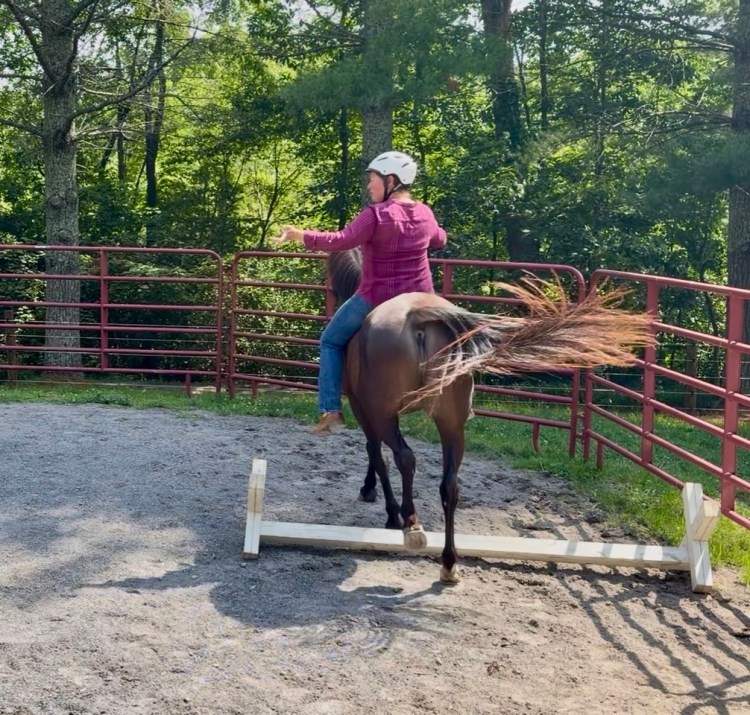
Yes, especially in the beginning, it takes time away from whatever agenda I have set. I have the choice before me to hurry in tension and disconnection to force something in order to check a box and get a thing accomplished, or I can step into eternity for a moment and reconnect, guide, and become a real leader that my horse will increasingly trust and depend on. The process is slower early on, but creates something of magical excellence along the years that is the thing I crave more than the buckle, the ribbon, or the record. It is more real than anything else I could produce, and it lasts longer too.


Leave a comment