

July 15, 2024
My eyes began to water in the heat of the afternoon as I stood in the large dirt arena watching the scene unravel. I was glad it wasn’t likely anyone would notice. My back was to the onlookers, and Mark was working with the wild mare, too involved in what he was doing to notice. I’m not so concerned about tears in public anymore, though it’s not my favorite, but I was pretty sure anyone who did notice would misunderstand the reason for the emotions gripping me in the scene.
They didn’t come from watching my mare rear violently in reaction to even feather light pressure on the halter. Particularly when she became so reactive she fell on her side in the dirt which was quite dramatic. (She wasn’t hurt).
The emotion didn’t come from worry that Mark was being unreasonable in his approach, creating unnecesary fear and stress, and watching him work with her might upset me. I knew he did not create any of what I was observing, it had been inside her as long as I’ve known her.
What grieved me as I watched Wyoming flailing on that lead rope like a fish on a line was a snapshot I had somewhere in my heart of how many of us go through life or seasons of life like this. We are fighting and we can’t seem to stop fighting. We end up getting hurt, and hurting those around us while we flail and fight against what we perceive as life threatening pressure but what is intended to be a comfort. I saw myself at times. I saw people I love at times. I saw humanity. I saw my beautiful mare react in dramatic fashion as if her life was in danger, unable to let go of her past experience, trauma, and fear to trust the guidance. It touched me in an unexpected way in that moment.
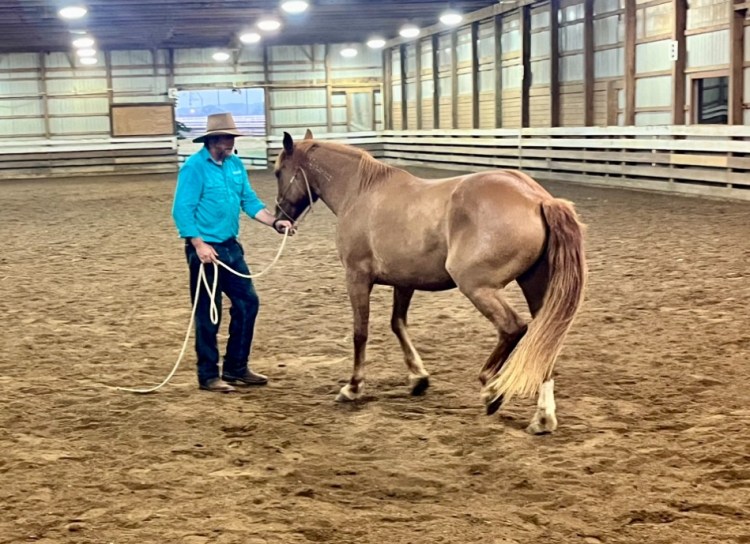
Mark Langley, who was instructing the four-day clinic on the last stop of his USA tour, cares deeply for the horses and this thing in her that overreacts to any pressure is a torment she does not need to carry. He was hoping he could help her get through it to the other side of this trouble. There is a physical or mental memory (maybe a combination) in her that was seared into her on day one of her mustang make over competition training.
I was told the history when I picked up the wild mare in Tennessee: the trainer put the halter on Wyoming, the mare reacted in fear and came aggressively toward the trainer, the trainer (in her own words) overreacted, putting excess pressure on the halter, and sent the mare up in the air. Her first experience of education with a human ended in a rear up, back flip, and injury to her neck that took her out of the contest and put her on a trailer to Tennessee to have a slower longer training process through the Bureau of Land Management’s (BLM) Trainer Incentive Program (TIP).
It’s likely with the trainer’s natural horsemanship approach: round pen, energy work and driving to create draw, the mare could be successful and avoid having the feel of restriction of the halter on her head. She became an amazing energy and body language reader. She became a punishment avoiding release hunter. When we picked her up as total strangers, just walking into the small arena, she would hook on to us or whomever it was, and follow closely. It didn’t occur to me that so much draw had been created in this mare that she felt the only good place to be was next to a human in order to avoid being sent out and driven.
Since I’ve had the mare, asking her to back up and out of your space brings pinned ears and stress. It’s a huge feat years later to ask her to comfortably stay just out of your bubble. If I do get her to step back three feet and stand she gets anxious and begins to try to offer a circle or creep back in. She has the expectation that the human is going to ask something of her and she throws out possible options anticipating what might come next. She has learned if she doesn’t comply quickly enough with a request, the enforcing punishment will come via escalating pressure: a lead rope to her hind end, a flag will touch her, the bump on the halter. She lives in the future of what might be coming, and how to avoid it. If she can’t avoid it she feels trapped, gets angry and fights back.

I stopped natural horsemanship style driving about 18 months ago when I watched Harry Whitney work horses in February of 2023. I think it’s begun to help change some of Wyoming’s experience and reactions, but the deep early formative work with her is still churning away at her core, and when it gets poked it comes out in big reactive displays.
The physical feel is only one thread of the knot which is inside this horse. Many horses comply to driving pressure (I have one who did), but Wyoming was one of the horses for whom the combination created a bit of a Jekyll and Hyde monster. She is either snappy quick, spot on with her reaction to a request or super angry and violent. Additionally in layer of wound up layers, she is a mare who has a hard time letting go of anxious thoughts.
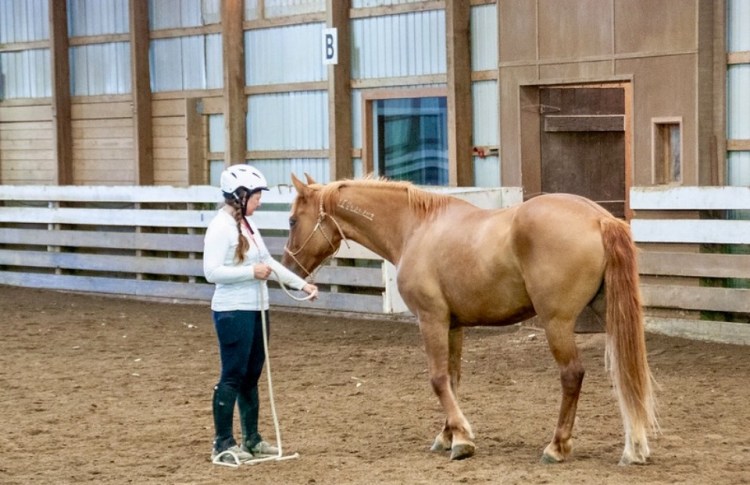
Not only is strong drive and draw set into her, but when she is very close to me she can keep track of me physically while keeping her mind out on the larger environment. Asking her to back off three feet also means the human become part of the larger environment and she has to give mental space to keeping track me as well as everything in the next three miles in every direction. She has yet to become truly mentally centered in the way she can let go of the “other things” she holds onto for her survival.
It’s stunning how she can be in this mental, physical, emotional place and still function to the level she does. If we could ever get to the other side of trouble there’s a phenomenal mare in there.
How do we get to the other side of trouble?
If I could answer this definitively I could have helped a lot more people and horses than I have to date. Yet somehow I’m still at this mystery even when I get discouraged. I wonder if I’ll ever know something definitely enough to be of value to a horse- or maybe even some of my fellow humans who are willing to take the mysterious journey into this wilderness of trying to understand how to help a horse feel better and be a more powerful willing partner.
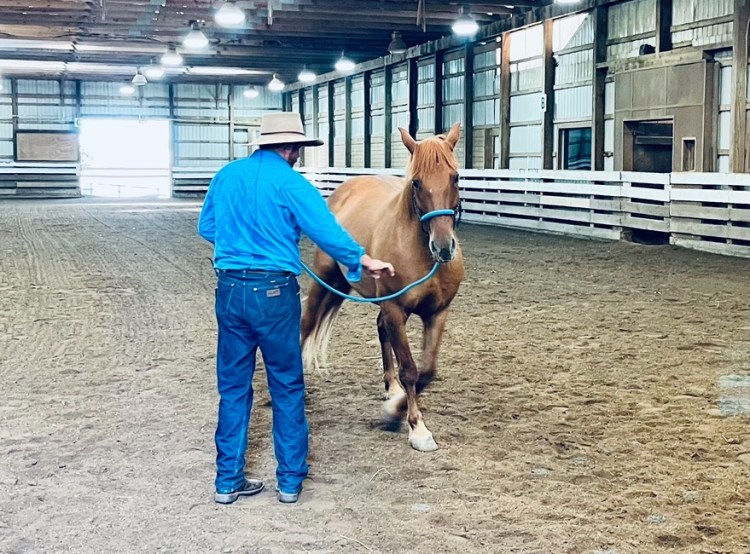
I do believe it is possible and so I don’t give up even when there are setbacks and it gets hard. I do believe with a horse like Wyoming it is a matter of going through to the other side of the trouble and not letting the trouble make her world smaller and smaller until she is afraid of any pressure at all.
It’s likely that Wyoming’s early training taught her that pressure meant she needed to adjust in order to get the pressure to go away. Unfortunately, anytime someone takes a rein in hand it creates a pressure or imbalance that the horse has to respond to – if done well it should bring the horse comfort through guidance, but if they have been trained to avoid pressure and seek release we have lost the ability to guide them through the reins or the lead rope. Very few people work their horses in the real world without reins or a lead rope. Nor do I recommend it as the ideal. Yet this means anytime someone picks up a rein to communicate with their horse, instead of relaxing into a guiding hand, many horses respond with anxiety to seek immediate release of pressure/imbalance which creates brace and tension through the body which works against strength, balance and grace in forward movement.
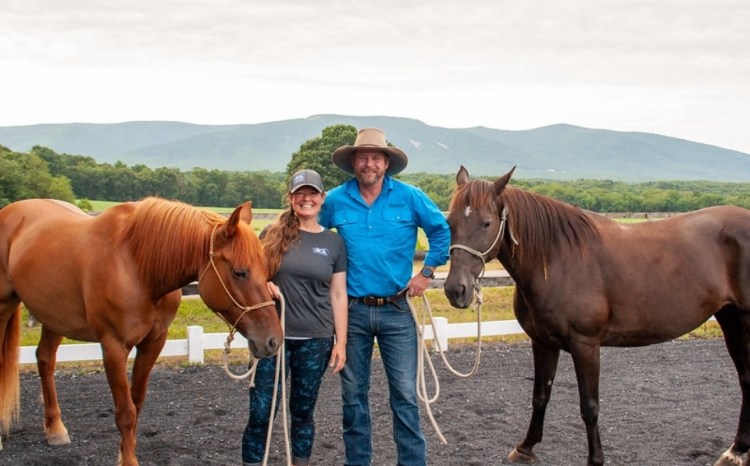
I have a hope that Wyoming can get through this extreme fear of pressure that was created early in her training (and solidified for a time by me) so she can trust me to guide her. I want her to feel the rein or lead rope guide her into where she will find peace and safety in my leadership. I want her to correct the imbalance she notices and in doing so find she has choices, and the freedom to choose a path of lease resistance that is fairly available to her because I am able to offer that. But I also want her to be able to stay connected at the end of the rope in appropriate balance of pressure like I would hold my dad’s hand to cross the street as a child.
She has to stop fighting first. If she would stop fighting she could follow that feel and see it would not bring her danger or pain, but comfort and safety. I asked myself if this deep sadness that came over me momentarily was indicative that this scene was playing out in my own life, or was a memory now. I’d like to say I’ve learned not to fight against the hand that guides me with strength, kindness and love. I know that my own journey through the wilderness is far from over, and sometimes I don’t even realize that I’m fighting the guidance that feels like pressure and imbalance and sometimes downright life threatening to me.
I’m sure Wyoming doesn’t understand what I’m trying to do in the bigger picture just as I really don’t always understand the big picture of what is going on in my own life while I’m in the middle of it all.
We were not able to get Wyoming to the other side of trouble in the four days of the clinic, but I learned some things that I hope will help me continue to guide her through. As with most worthwhile journeys, I feel like we’re deep into the wilderness, but in recent years I’ve learned something about the wilderness. I’ve learned it’s the place we least want to go, yet it’s the place where the transformation takes place. If we are going to get to the other side of trouble, chances are we have to be willing to be led into the wilderness.
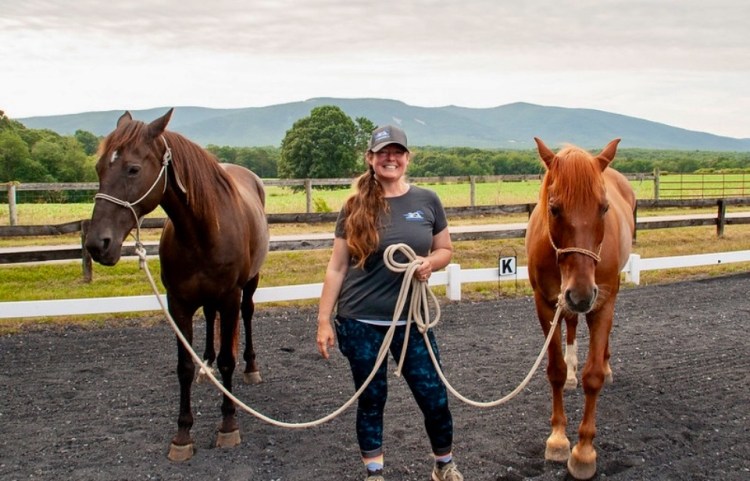
And so I go.
 Hope Horsemanship
It is taking a great deal of creativity to persuade my own colt that the holding pen hustle isn’t always the only option he has. Thankfully I got him before he had any more trauma inflicted in him than that. Since the whole predator/prey paradigm became popular I’ve seen a HUGE increase in reactive aggressive horses. Enough so that I realized the paradigm is actually perpetrator/victim. It is past time for a reset of the ‘natural’ horsemanship mindset.
LikeLiked by 1 person
Amen… thanks for reading and the response. Best of luck to you guys!
LikeLiked by 1 person
I think you made amazing progress toward getting to the other side of trouble. Thank you for sharing your story and I can’t wait to see what happens with this special mare!
LikeLiked by 1 person