

This is something I have begun to take for granted.

Connection has become a buzz word in the horse community, but looking at all the interviews and taglines that use the word, I wonder: what exactly are we all talking about? I don’t think we all mean the same thing when we talk about connection. I can’t be totally sure though because as I waited for it through even hour long podcasts… I have never yet heard it defined.
This brought me to consider what do I think it means?
To me, connection with a horse is when the horse is present in the moment in the physical space with me both in mind and body. The horse is available, responsive, and willing to try when I ask something — regardless if the request is known or new. With connection there is a calm mind, relaxed body, and sense of peace between us.
Connection is not 100% on or off, at least not in my experience. It is a place we find with increasing regularity as I honor the freedom of the horse and convince the horse through experience that I am a safe place to be available for connection. This means I cannot use force or punishment to get something done. This trust is established through clarity, timing, and patience. The higher level of these skills a human carries, the quicker the trust is established. Horses have a range of natural tendencies and while some horses demand close to perfection from a handler to relinquish their own plans, some horses are pretty forgiving of bad timing, poor clarity, and other mistakes that introduce various levels of confusion or negate feel to the process.
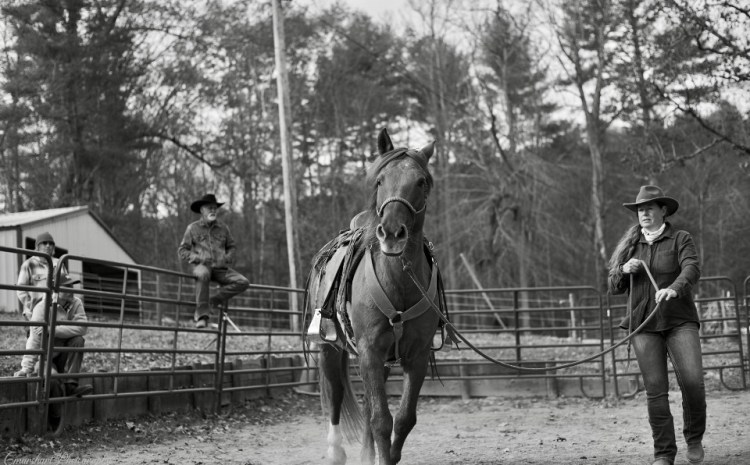
There have been years I thought I had connection with Khaleesi. She was the horse I started with the only tools I had at the time which were basically (for lack of better language) Natural horsemanship which I define generally as a horse training method built on the concepts of increasing and driving pressure. *Your definition of Natural Horsemanship may differ, but in this article I’ll give mine for clarity*
Direct, driving pressure and the punishment factor of increasing pressure until a response comes… well, it works. I was thrilled with how well it went as I used this approach to start four-year-old Khaleesi. I look back now and see I equated obedience and timely response to connection. Some people equate close proximity to connection. Some people have told me grooming a horse is a point of connection. Some people equate solid training to connection. *Grooming a horse, or having the horse respond in a timely way etc of course can be done in connection, but it can also be without connection, therefore they are not evidence of connection.*
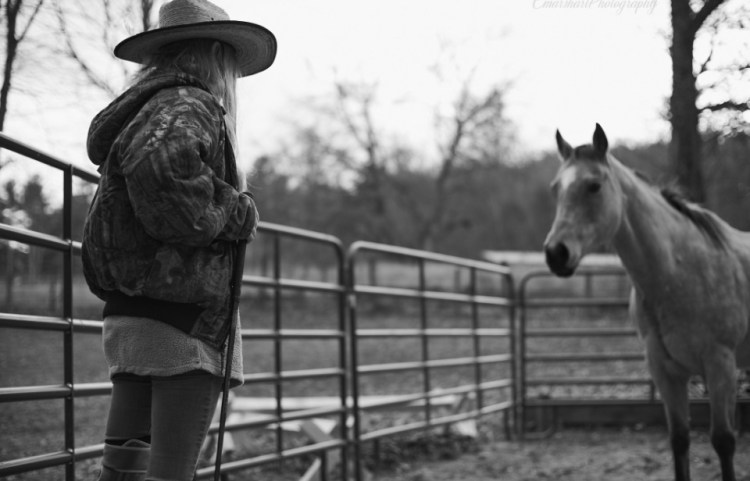
Though I don’t think it’s useful to anthropomorphize horses, I have found parallel examples in good relationships across the board that help my understanding and adjust my approach. I have experienced being at the same table as another person and yet be completely disconnected from them. I have been in a conversation with someone- even someone I like and have a relationship to – and been actively disconnecting from them, especially if the conversation feels intended to control or manipulate me.
I have seen examples of controlling parents whose children grow into very obedient, good kids and also clearly have little meaningful connection to their parents. Unfortunately I think many parents of the ideal obedient kids confuse good behavior and wanting to please with actual connection. I have seen this between horses and humans too. The more I’ve observed about connection the more amazed I am when a good connection is in place, and I’ve realized it is unfortunately rare both in human-human relationships and human-horse ones.
Real connection has to have choice, and cannot exist when there is fear of punishment. In humans or horses. The challenge I find is how fine the line can be separating consequences and boundaries from punishment, and indirect pressure from direct pressure. One way I discern in myself how I’m doing, is the concept that we only get two motivation choices in life: fear and love. Punishment and control comes from fear, consequences and true boundaries are rooted in love and have the primary goal of reconnecting when the connection is lost.

Disconnection is painful and stressful within ourselves, the people around us, and with our horses. Unfortunately most of us have learned to live in that as a way of life- look at all the anxiety and stress we endure day to day.
This leads me to the number one factor I have found in getting better connection: above all things, do not fear — seek the truth.
I write all of my blog posts from personal experience with the hope someone else might find it relatable and encouraging. If you experience this, you are not alone. I am getting better at accepting the bald faced truth as the years go on. In years past, I couldn’t always face the harsh reality and what it revealed about my shortcomings. I knew where I wanted to be and found myself looking for any tiny piece of evidence that I had already arrived, and built an alternate reality I preferred around those scraps.
Today I know that the opposite has been more life changing: I look for all the places where things are not what I hope for, and I dig deeper to find out why and how to clean them up and grow. In those former seasons I can see I had less confidence that the direction I was walking would ever actually bring me to the place I believed it would, and I realize I had too much of my identity wrapped up in this hope being truth. If it didn’t pan out… surely everything would fall apart around me.
Of course no one else out there reading this has probably ever realized they have way too much of their own identity wrapped up in something around a horse… the performance, success, good behavior, approval from others, ability to achieve a goal, etc. I’m sure that’s only me.
Over time I learned the truth always sets me free and I don’t have the be afraid of it. There is no failure, only learning. Ironically, operating under the fear of failure and fear of what could really be happening, kept me from the connection I desired most. Fear always destroys connection, within human and horse relationships. I doubt I’m alone in noticing there is a LOT of fear between horses and humans- on all sides of the conversation.
There is no failure- only learning
That being said, for at least three years now, my understanding of connection has been the goal of all my work sessions with any horse. Ideally above anything other goal. I still miss the point sometimes and get distracted by achieving something especially if we are so close. Still, increasingly, my horses have begun to experience this approach as a way of life.
I’ve begun to take it for granted.
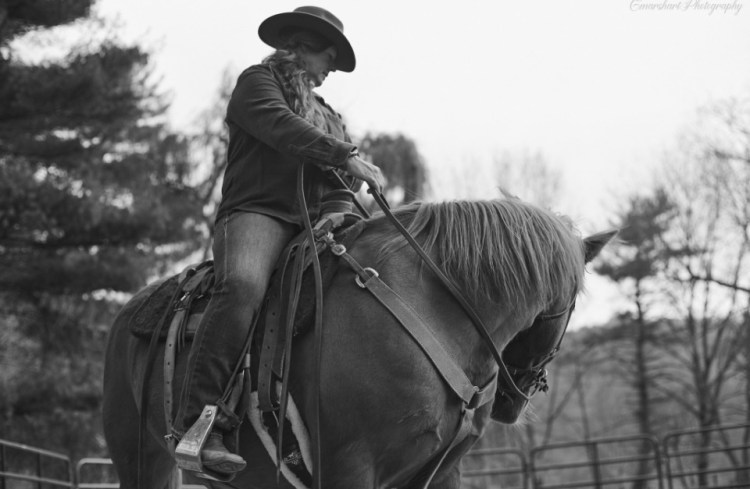
Then something came to light last weekend during a clinic with Tom Moates here at Hope Horsemanship. I invited a teenage girl who has an unusual drive to go deeper with her horse journey, to work with Khaleesi. She had never been here before, and never met K. Her horse experience has been riding horses in multiple training barns in her home area mostly in eventing and jumping disciplines, as well as a few endurance rides. She does not currently have her own horse.
We brought K to her in the arena and handed over the lead rope. This brave young girl stood in front of strangers having never met this horse, and never having worked with a horse in the manner we have been learning, and waited for some guidance of what to do.
Tom walked her through some basic activities and she tried to execute the concepts with this stranger in front of her with four legs and a tail. She picked up the concepts quickly and did her best to go through some simple tasks. Sometimes she was coordinated with good timing and the clarity was rewarded with a beautiful execution. Sometimes she was slightly off, a bit clunky with the request and not as clear. These had less than ideal results. Regardless, K was available to the two legged stranger holding the lead rope and stayed clearly connected to her as they worked.
What I noticed as they worked together, was the connection I had been building in the horse was actually available to a stranger, as long as she approached the relationship in good faith and a similar mindset. It was not about the right buttons of a well trained horse.
The girl was attempting to ask K to walk a circle around her and could have accomplished that significantly faster by pushing Khaleesi’s nose out and driving her hind end with a rope tail. Walking a circle however was not the goal. The true goal was learning how to direct the horse’s thought, and how to do a thing together without creating disconnection. Driving the horse with pressure at the hind end, which engages the natural flight mode of the horse, which is in the sympathetic nervous system, which brings up adrenaline and worry, would have weakened the connection they had established.
I think about the times when someone used manipulation or threat to engage me in an activity. I can think of experiences where this was done subtly, in nice tones, or even making it sound like it’s a good deal for me. I still feel the intent behind it and though I may decide to comply because it’s probably in my best interest, I don’t feel great about the relationship. Even at a low level, I know when I’m being threatened or manipulated. Horses do too. Driving the horse, EVEN IF it only took a small amount of pressure, comes with a different feeling from the horse. This quick response looks more impressive to an undiscerning audience. The ego likes a quick response, even at the cost of the connection.
The pair did magnificently, though the session was slightly boring to an onlooker, and I wondered if it may have been boring to a teenager. We often joke that good horsemanship is about as exciting as watching paint dry. The girl had a really beautiful session and clearly Khaleesi was relaxed and connected to her through the entire hour. Curious to know the truth of how she felt about the potentially boring work, I asked her directly later in the day. I was pleased and a little surprised as she bubbled over with joy. Her words were:
“I loved it! I’ve never felt what it was like to have that kind of real connection with a horse before.”
The girl was not short on various experiences with many horses. She had ridden multiple horses in various disciplines over years already, enjoyed grooming time with some, spent quiet time in pasture with domestic herds, had to count on an equine partner to navigate jumps and ride 25 and 50 mile endurance rides, and it was this horse she only had just met once where she saw a new potential in what was possible.
I was particularly pleased to see the long term shift in my own approach to my horses created an availability for connection that transferred to a stranger- even one “uneducated” to my way of working. I was reminded not to take that beautiful truth for granted. This kind of real connection is an amazing gift, between humans, but even more between humans and animals. I think it’s what we are wired for and desire above all else.
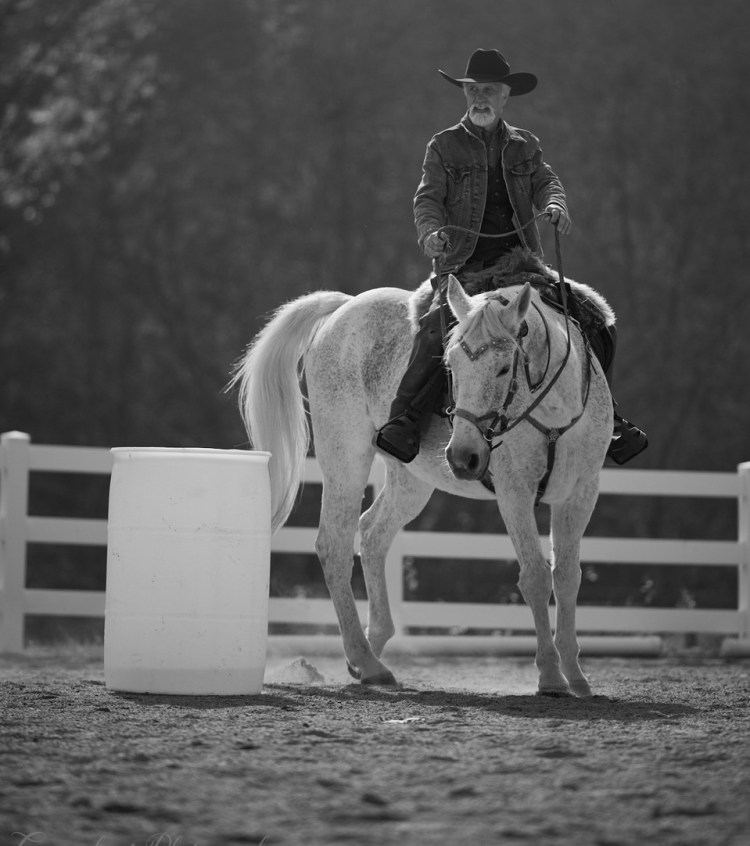
All around us, when true connection eludes us, we still deeply desire it. This brings confusion and displacement. We will settle for a poor substitute trying to convince ourselves it’s the real thing: obedience, control, achievement, positive outcomes at any cost. I have been guilty of mistaking those things for connection or trying to find connection with those around me through them. In this model, it’s like the horse has to “disappear” for our demands, and if they comply we think all is well.
There is an opposite swing equally problematic. In trying to fix my tendency to force things to happen, I swung through phases of letting my horse lead too much of the relationship. I spent time only listening to the horse, and accepting all of their input without showing up to question, lead, or direct. When I was in that mode, I “disappeared” and didn’t show up authentically to participate in the connection. Horses are desperately seeking good leadership. Over time in this mode, I see horses become harder and harder to interact with and manage. It’s confusing I believe when we “show up” physically but don’t “show up” in a meaningful way. When we pull horses into a human world and put them in our care, we owe it to them to lead and direct them in a way that honors them and is not afraid of meeting them in the connection with our own honest best.
The entire process begins when we are honest about our fears and face them. Fear isn’t bad or good- it is an indicator. If you are afraid of your horse, be real about it. There is a reason and there is a path forward. Maybe the horse has real issues that need higher level of experience to address in order to bring the anxiety level down to something more safe to work with. Sometimes our fears are that we will fail, and the horse ends up carrying all of that counterproductive weight. Sometimes the fears are completely unfounded and not based in reality, but in past experiences that never got cleaned up and dealt with. Those past experiences have to be dealt with inside our own minds and hearts in order to show up fully in the present, available to connection with the horse in front of us.
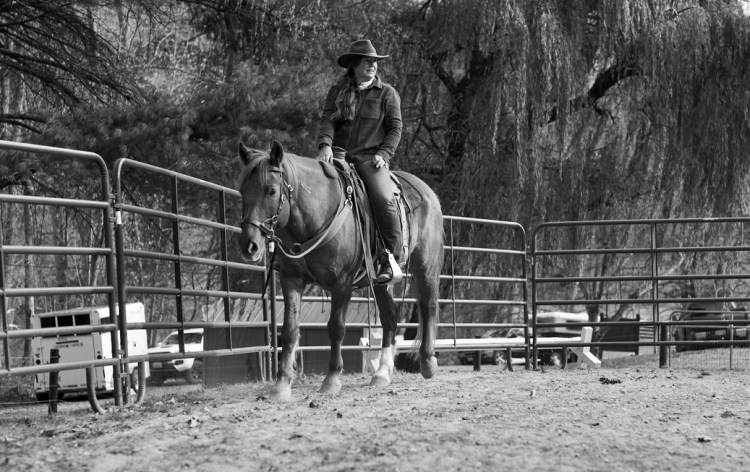
Fear can be valuable, and the truth sets us free.
This is the journey to connection. The great thing is, it’s available to everyone. The stronger we become in addressing fears, walking in freedom, and the confidence to love without fear, the more we have to offer those around us- horses and humans alike!
The photos in this blog post are all courtesy of Christian Andrew (Christian Marsh Photography) who was visiting with us one day of the clinic. Christian is working on a book featuring Tom Moates. Stay tuned for more information on that project!
 Hope Horsemanship