
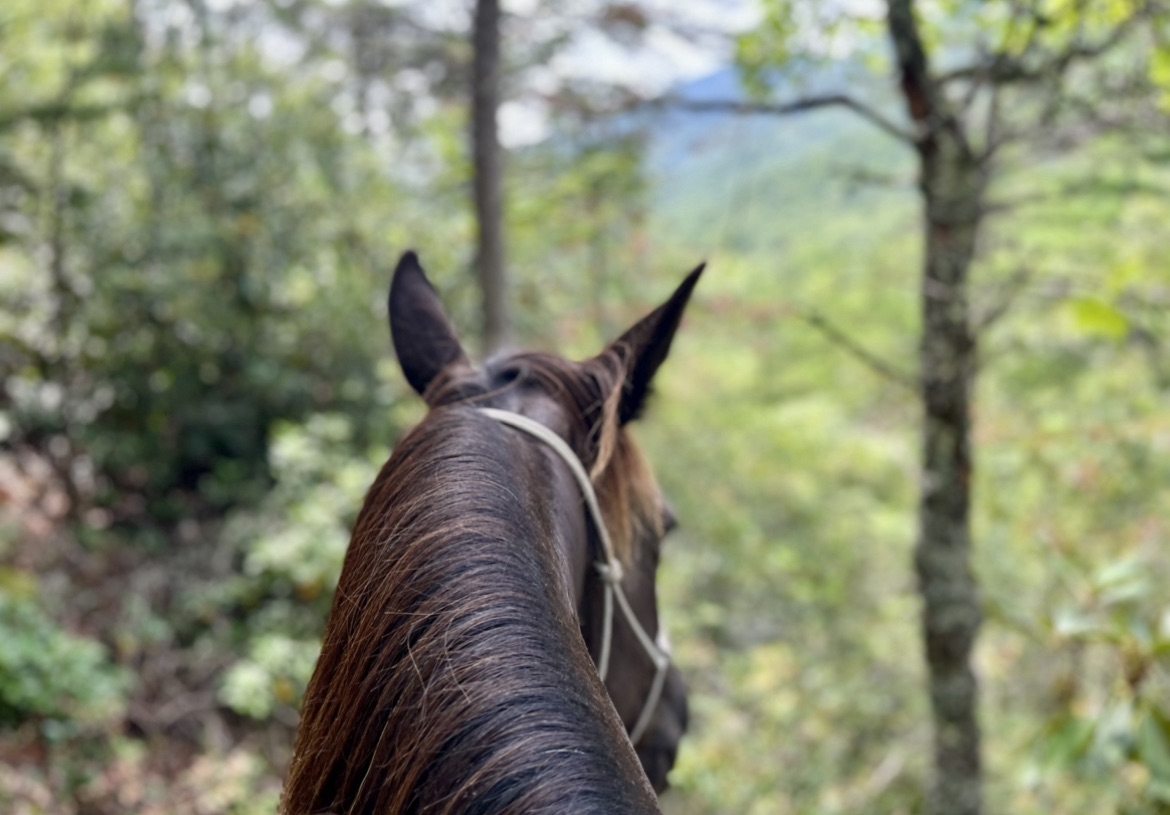
Endurance News Summer Extra just printed this article I wrote, since it’s been officially published I can now share it here for my own readers.
Anyone who’s attended an endurance event has heard the conversation with the rider who has the horse that pulls their shoulders out of joint, determined to run at the fastest speed possible, oblivious to any influence from the human and on the edge of control for the first loop or two. This scenario is common enough to have a name in the endurance world: Race Brain.
I haven’t ridden that horse, but I have ridden the one who wouldn’t leave camp after the first loop without a crop. I’ve known horses who can’t continue in an event if their buddy is pulled. These issues may appear unrelated to many, but I believe they share a common root cause.
Perched on the periphery of a round pen last year, I watched Harry Whitney work a troubled horse. “When the body is in one place, and the mind is in another, there’s trouble in the household,” Harry said, wanting us to understand this anxious horse who was pacing and calling to friends in a faraway stall, had quite literally lost his mind. The owner had brought the horse’s body to the pen, but the mind remained with his friends. The body and the mind needed to be reunited, but there was disagreement on how. The horse was expending great effort to take its body back to its mind, but Harry was determined to bring the mind to be present with the body.

I watched Harry do very little, but at the right time, in the right way, and saw the horse’s mind come present, and peace settled on the scene. I knew this was different but not sure how. Seeking clarity, I asked him a question, and I’ve returned to his answer time and again:
What it comes down to is your intention, are you trying to move the mind or the meat?
What Harry was explaining, is often people determine to mechanically manipulate the horse’s body. But Harry advocates engaging the horse’s mind, so the horse can move himself in a relaxed and willing way. These approaches produce vastly different results, and establish very different relationships between horses and humans.
Any time a human has trouble with a horse, Harry insists, it’s because a human had one plan and the horse had another which he could not let go of. It’s in the solving of this problem we have a myriad of techniques, opinions, and more disagreement!
We know it’s not good for the horse to run inverted and braced against the rider. This is one reason many riders choose to tie down the horse’s head in a martingale. Also, I haven’t met a rider who enjoys riding a horse with a lost mind. These horses run through even severe bits, so that is ineffective for extreme cases. Many horses, (and riders) on race day are high on adrenaline, and that brings excessive strength for the short term, but at a cost. The sympathetic nervous system is intended for quick reaction to life-threatening circumstance, not for hours in a day.
Mark Langley shared a story on his podcast of an endurance horse in Australia that finished in the top 5 in most races. Eventually, this talented horse was breaking down and experiencing muscle wasting. The horse had been competing on adrenaline, which was a factor in his success, and the stress was breaking his body down from the inside out.
The first step in solving any problem is identification. The fact we have the term race brain tells me somewhere we know this is a problem of the mind— we don’t call it race body. I’m not sure why it wasn’t obvious to me in years past, that we can’t effectively solve a problem of the mind with a mechanical approach. Approaching my horse with a view of where her mind is has meant changes to my riding. I no longer carry a crop and I’ve learned ways to bring her mind along with us when we leave camp. In some cases we can force the body to our will, but it puts us at a long term disadvantage. When we add a more severe bit, a tie down, or a crop we might get the job done, but the horse doesn’t move in relaxation, balance, and strength. They aren’t feeling good about the work or the relationship. The horse is running under stress and the effects will show up in the body.
This kind of mental approach isn’t a quick answer training plan; it’s a fundamental shift in my thinking. It’s a practice; a way of life. It’s also endless in possibilities— I get better every time I go learn from good horsemen who are further down the trail in this practice. I am increasingly aware of when her mind is with me and when it’s not, and it’s easier to make changes before the separation is too great. I’ve had to get creative and ask myself: how I can get it done through the mind and not the meat? and I still find myself trying to get things done by force more often than I’d like to admit.
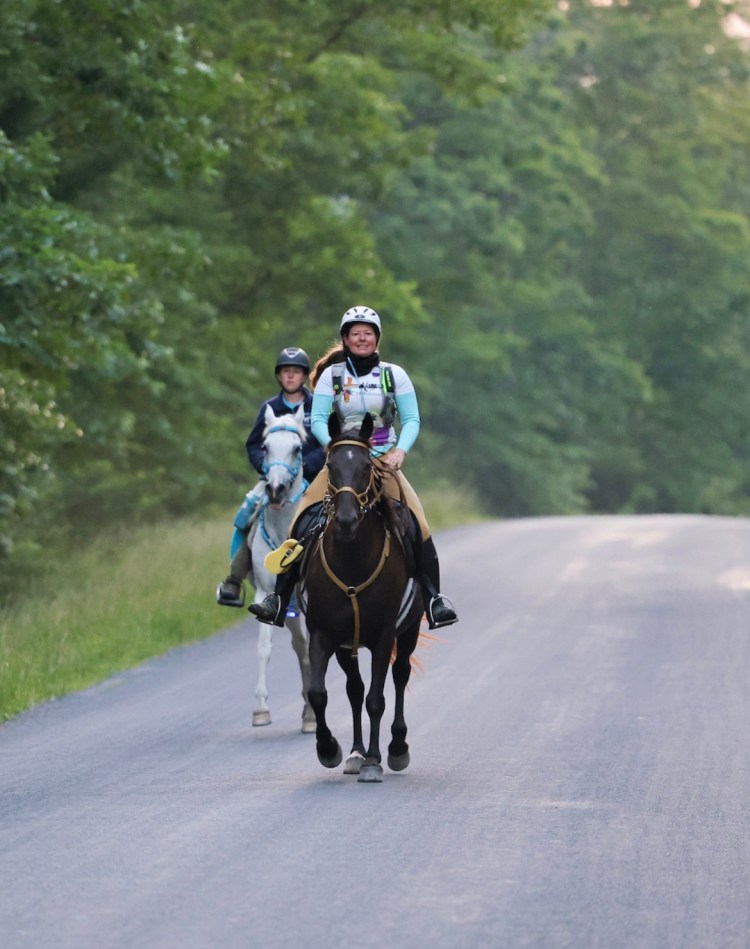
When my horse’s mind comes through and she is present in our work, I see and feel it in her body. Not only is everything more enjoyable, but I’ve seen these changes bring better performance in events over the last year. This is also a key to longevity. A horse moving in relaxation and balance will stay strong and sound over more miles than one mechanically driven. So next time you are problem solving a challenging horse behavior maybe you’ll also start with the question: mind or meat?
Though the ideas here are simple, they can take a lifetime of practice to truly master. What has helped me progress along this journey is finding good horse-folk to observe, learn from, talk with and work under. I’ve been fortunate enough to learn from Harry Whitney as an auditor and in clinic with my horse, invite Tom Moates to work with me in my own neighborhood in our special event roving clinics a few times a year, I’ve spent some time with Ronnie Moyer, and I have a unique opportunity to host Mark Langley on his USA tour in less than two weeks (July 4-7, 2024) here in Virginia! I have heard some other horsefolk thinking in this vein though I know less about them personally: Charlie Snell, Ross Jacobs, and Libby Lyman.
While you have to find Harry in person, he does extensively tour the US and you should be able to get to him in some corner of the US. I flew to California for my first visit with him for a 5-day clinic (auditing) and have never regretted the investment. I could have found him closer to home but I didn’t want to wait the six months until he was teaching in Virginia, but I brought a horse to that clinic and learned a ton.
On the other hand, Tom Moates has a myriad of great books walking readers through his horsemanship journey that are incredibly helpful. He’s also a regular clinician for Hope Horsemanship here in Virginia, so contact Jaime if you’d like to get in to work with him!

Mark Langley has a great podcast you find on Apple Podcasts and other podcast players. He also has a solid video library with a very inexpensive monthly membership ($15/month) and answers member questions — and does a pretty good job helping walk people through challenges online, which is tricky!
There’s no other way to fasttrack this kind of shift in human thinking that helps support our horses, than finding someone farther along the trail to learn from. Find the step that most suits your style and give it a go!
And stop in to say hello during Freedom Week at the Powerful Horse Expo and definitely if you’re in driving distance from Greenville, VA come audit the Mark Langley clinic July 4-7, 2024. Mark will give a demo on Friday evening, July 5 and tickets are available here: Mark Langley Demo. I’m still open for a rider spot for the clinic as well, though that could change quickly… but certainly contact me if you’re interested to see if it’s still available!

 Hope Horsemanship