
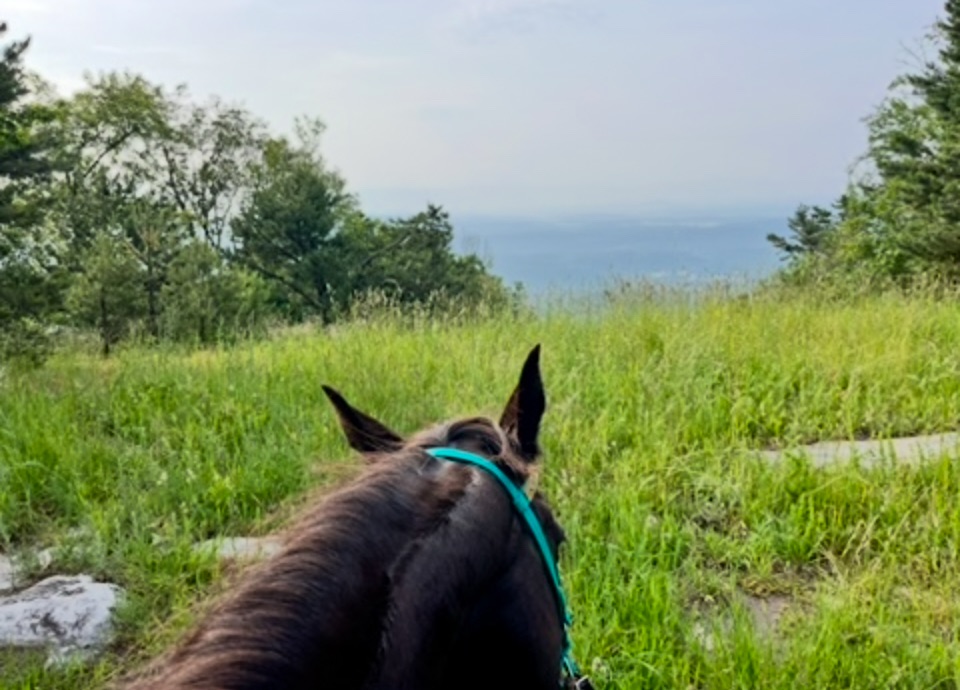
With a nickname like “The Beast of the East,” the Old Dominion 55 mile equine endurance ride is a real test to every horse and rider team that shows up to the starting line. While the “No Frills” ride in April felt like a great success — we may not have been flashy, but we were solid — the Old Dominion squeezed us hard enough to find out what we were made of. While we did technically pass the test, the “Beast” also revealed some weaknesses that I plan to address before we load up for the Vermont 100 in mid-July.
On a good day, the OD 55 is arguably one of the toughest rides in its class. My horse climbed over 10,000 feet between 6:30am and 7pm on June 13 with unrelenting rocks every step of the way. There are rock gardens, large and small embedded rocks, loose rocks, gravel rocks, creek rocks and river rocks.
The vet exam the day before showed excellent scores heading into the ride, including a resting heart rate of 36 which is a great indicator of fitness. Khaleesi’s body condition score was a “five” which is ideal, and better than the “four” she rated in April. I felt confident coming into the race, especially after the unseasonably warm No Frills 55 in April went so well as a first ride after a year off, and I think this lulled me into some complacency.
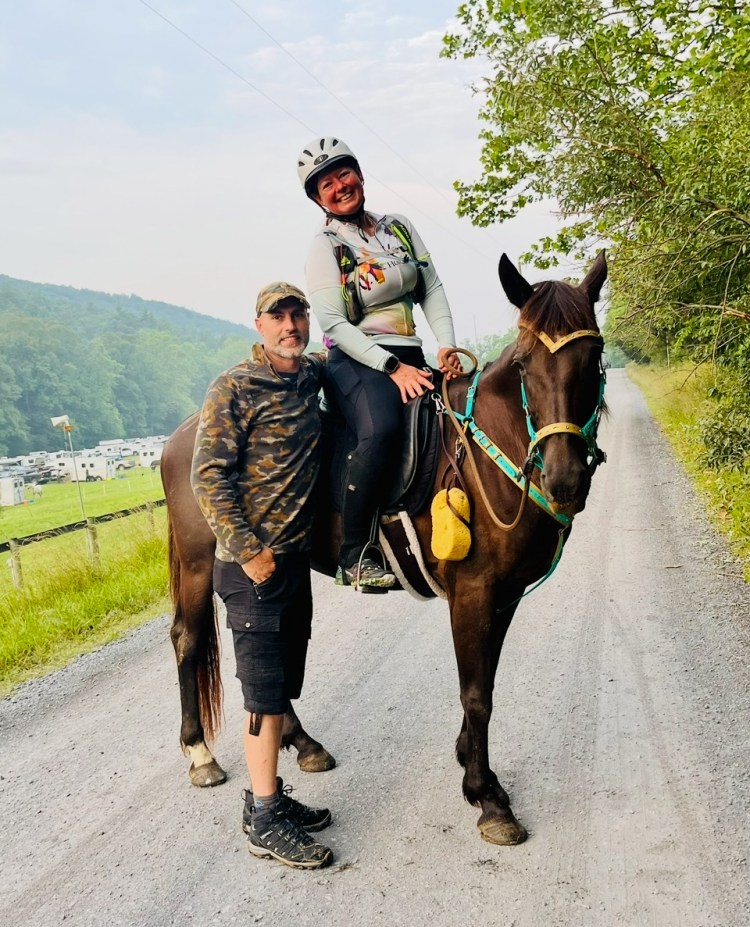
I might have noticed some warning bells when ride morning was so unusually warm and humid. The last time I was at this ride it was in the 40s at the start! I noticed within a mile that Khaleesi was not her usual “on fire” self. I knew she wanted to run with the pack, but she felt heavy and clearly unable to fly up the mountains like she has in years past. We were riding through thick humid air from the starting line, and her lack of energy concerned me from very early on.
The first mountain we cross is a long, tough climb. The vet check and crew area is nestled down in the valley, and after making it up and over the ridge, we managed a respectable trot down the gravel roads to finish the first sixteen miles with 2,500 feet of climbing in about two and a half hours. I assumed that because the ride felt like a heavy slog, she would require extra time to cool down in order to meet the pulse criteria of 64 bpm. I was wrong! She dropped past 64 into the 50s immediately and was ready for the vet inspection. Khaleesi had high scores, and the vets made a point to tell me she looked excellent. She ate and drank through the hold and we went out to face the longest loop with the worst of the climbs, and the heat of mid-day.
Loop two is over 17 miles and 3,200 feet of elevation— relentless climbing, some of it so steep I hike it on foot to help her conserve some strength. The heat was rising into the afternoon, with no breeze which meant the air stayed sticky and thick. It was miserable. The horse was giving me her best, but neither of us were thriving. I had to remind us both not to quit and die on the side of the mountain in the draining heat of the full sun. We were not made to be vulture food. It’s disconcerting to see your average pace grind down to less than 3mph. There is generous water right before the climb begins and water after it ends, but in between has the feel of a desert wilderness, which possibly encouraged me to not stop too long anywhere. The famous saying about going through hell I’ve heard, is to keep going!

And yet the mountain does give way to a crest, first there are lovely high meadows with some tall thick grass that gives the horse some fuel in the tank. Eventually, the water trough comes into sight, and the descent into vet check 2 (Laurel Run) is within grasp. Not long after the downhill begins, there is a single track, rutted out section, where I get off the horse again, and begin my jog down the loose dirt and rocks to make up some time. It’s too slow here if Khaleesi has to pick her way down balancing me over the loose and challenging terrain. When I get off she can jog behind me in the loose rocks without slipping as much. We shimmy down until intersecting with the gravel roads in the valley, and I get back on the horse to ride the last few miles.
Once again, with concern that pulse could take time to drop, I took an extra minute sponging her in the heat and humidity. Surprisingly, a trip to the pulse takers revealed that indeed she was at 60, which is below the required 64. We vet through with all A scores, and I settle in, alone at the Laurel Run hold where no crew is allowed. I take care of my horse and fill up my water. I continued to wet her with a cool water sponge through the hold, because I have learned her core may still be hot. I want her to leave this checkpoint cool and fresh for the mid-afternoon segments in the direct sun with still no breeze.
The worst of the mountains and rocks for the 55 mile course are in the first two loops. Once you pass through Laurel Run around mile 35, the way home via Bird Haven for your last vet check and 30 minute hold, is mostly gravel roads with some connecting single track trails. Usually my horse would begin to perk up as we head toward home. This year I found a steady solid willingness to trot slowly on down the road, there was no extra perking up available.
At Bird Haven, her pulse once again dropped quickly, but here she earned her first “B” scores for “attitude” and “impulsion.” She is tired and she was lagging behind in the jog. With that aside, everything else was very good and we had plenty of time to finish the last 6 miles. I could walk the trail back to camp and probably still finish in time. Walk we did, with some trot intervals. A light rain was setting in, and I welcomed the cloud cover and sprinkles. The cool wave brought her back to life and as we got within a few miles of the finish, she finally perked up. When we dropped onto the gravel road less than a mile out, she trotted, then broke into a run as we came into sight of the finish line along the base camp field. Our triumphant canter into the finish line brought many cheers through the camp below. I was simply thrilled it was over!
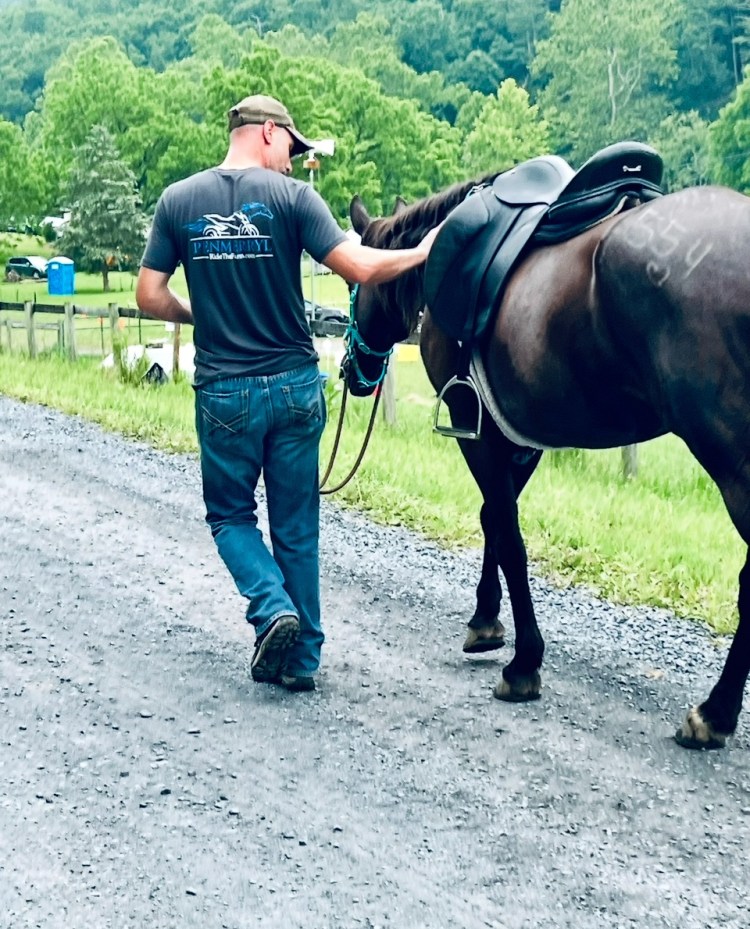
We made it through the final vet with no trouble, and walked back to the trailer. The horse looked surprisingly good, she meandered around her pen and ate and drank all night with minimal rest in between as if it were a normal night. This was the puzzle before me: a horse that seemed to be tired on course, that had less available energy than I’m used to, ending the ride looking the best I’ve seen her for being hardly exhausted or stiff and sore.
And so, this ride was technically successful, but left me with questions. It all seems to boil down to the worst humidity we’ve faced in my recollection at a competition. I had expected a stronger showing from Khaleesi based on the No Frills 55 and the training rides in between. Considering there’s a chance Vermont could have a similar high humidity day, it seems worth some exploration of what I might have missed, and what I might prepare for.
In the next article I’ll pick apart what I think might have helped support Khaleesi, as well as ask some experts for their advice. Hopefully this challenge will give me some new pieces to consider that will give us a stronger showing at the Vermont 100 just weeks away!

 Hope Horsemanship