

If you prefer an audio version of this blog, you can find it here:
Powerful Horse Substack: Training V Testing Post
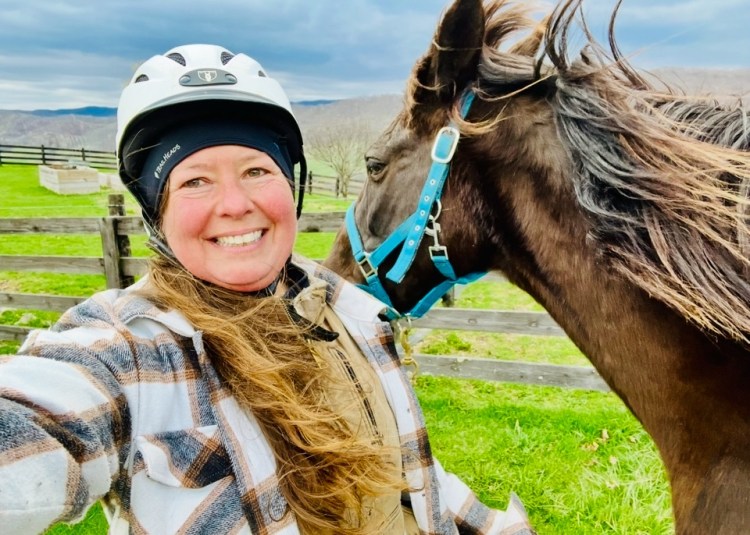
The first endurance event of 2025 is upon us, and we just passed through the most intense window for physical training. The preparation and training began in November. Now we are tapering down to a week of rest and recovery going into the Old Dominion No Frills 55-mile Endurance Ride on April 19.
When I was new to the sport of equine endurance riding, I remember hearing the advice to ride the race the same way I trained at home. At the time it made sense and was my strategy for many years, until I was trying to level up from 50 mile events to the single-day 100 miler. In that season, I found myself hanging around successful human endurance athletes, mainly endurance mountain bikers, and they approached training differently. The science in human competitive endurance was favoring a polarized training plan, and as I learned about this, I wondered if it would carry over into the equine system.
It turns out, aside from the fact that humans lose their base of fitness much faster than horses, horses and humans have many parallels in physical training. After some research, I made changes in my training plan with my horse Khaleesi. Looking back, I attribute this physical training change, alongside the mental centered horsemanship approach that I was learning from Harry Whitney and Tom Moates, as the two key factors that changed the game for us. I saw an increase in speed in the 50 mile distance and then a first successful 100 mile ride completion in 2023.

Polarized training focuses on the low intensity and high intensity ends of the effort and heart rate scale while avoiding the middle intensity zone. The years I spent training and competing with the same intensity approach is an example of working mostly in the middle zone that we now avoid.
Today, I dedicate roughly 80% of my training efforts toward low intensity workouts, which are often referred to as zone 2 training. On a heart rate scale of zones 1-5, zone 2 is around 60% of maximum effort. When an athlete spends a significant amount of time in this low intensity zone, the body becomes more adept at burning fat for fuel and builds endurance with minimal muscle fatigue.
The high intensity interval workouts use the maximum heart rate effort, zone 5, for short bursts. A polarized training plan utilizes fewer of these maximum effort workouts than low intensity training. The heart and lungs are taxed to exhaustion and when balanced with rest and recovery increases cardio fitness. They are highly effective in enhancing speed and power, but if overused, create more breakdown than build up.
Working at high intensity zones is hard. When I do this myself, as a human, I rationalize that it’s good for my health and fitness. Unless I produce a predator worth running from for a few minutes at an all out sprint, it’s hard to get my calm-minded mare on board with putting in that kind of unsustainable effort. I do have some motivational tricks that seem to work for her, but it’s not as easy to inspire her to run at her maximum capacity for a time, and if done the wrong way could create problems in our relationship.
I schedule most of our high intensity sessions at the Jackson River Scenic Trail because it’s basically flat and has consistent gravel footing. I ask Khaleesi to jog or run until I sense fatigue taking hold and she tries to break down into a slower pace. Then we walk to fully recover, and repeat. I alternate jogging (trotting) and cantering (running with more effort) with the walking recovery. As with most horses, her motivation increases on the way back to the trailer- it amazes me how much new energy she picks up when she thinks we’re almost finished. Knowing this, I wait until the end of the workout when she’s the most warmed up and motivated, to ask for the most maximum effort. I push her as hard I can get away with and still keep a connection between us, then finish with a snack and some water at the parking lot.

I currently use a fitness watch to track my heart rate zones. You might be wondering if there are heart rate monitors for horses that make tracking this as simple as it does with humans. There are, and I have one. I rarely use it anymore. Even if it reads accurately which sometimes I’m not sure if it is… I find the data on heart rate zones for horses less clear cut. Human heart zones adjust for age, and if you train with a smart watch or app, it will set your individual heart rate and percentages with your personal data, and adjust as you train. Human heart rate zones are calculated pretty specifically. For horses, I haven’t seen reliable equations to calculate heart rate zones that account for variables like age or fitness. There are generic equine estimates, but they appear to be one-size-fits all. Even so, when I worked with an equine, real time, heart rate monitor, I followed trends and norms for Khaleesi, and it was helpful. It adds a step and time in saddling up that doesn’t seem worth the effort lately. After many years training together, I have a feel for how hard she is working, and because she’s a living creature we have to work together regardless of the data, so I choose the training goal and then execute it to the best of my ability with the horse in front of me that day.
In addition to these workouts, easy days for recovery are beneficial, and for these I hike leading Khaleesi on foot. I began this practice while training for the Old Dominion 100 in 2023. I was concerned about balancing the amount of physical training necessary with the real possibility of overworking the horse. I also found riding too hard, too often, made her much less happy to see me each day (clear degrade in relationship). I started hiking with her primarily to shake up the routine and give her a break from carrying me around the mountains.
It was great confirmation to continue when later I heard an interview with equine fitness professional Jec Ballou. She explained the physical benefits from hand walking horses: without rider or saddle, the horse has free swing of the ribcage, and if walked consistently and rhythmically (which is not the same as grazing around a large pasture) there are positive changes in the muscles between the ribs and in the abdomen which adds postural strength and increased lung capacity. These hikes add significant value without breaking down the horse physically.

So what about that middle ground polarized training seeks to avoid? This zone 3 or gray zone as it’s nicknamed, is the workload that produces the most fatigue for the least physiological gain. Too much time in the gray zone leads to a fitness plateau, and the amount of days required for recovery is greater from a zone 3 workout. Too much time in this gray zone without adequate rest and recovery increases potential for injury.
On the flip side, zone 3 has another nickame: race pace. Elite distance athletes compete most of their events in this zone. I like to think now, unlike when I first began in equine endurance, I have clarified the difference between training and testing. My training program is centered on building the horse’s endurance, speed, recovery and efficiency. When the day of testing arrives, I enter the gray zone and push the limits to race pace. Here I ask for my horse’s best effort without crossing the line to injury or damage. Race day will exhaust my horse more than our regular training and take more recovery after the event. This is the test to see what the system is made out of and how effective the training has been.
Everyone has a difference comfort level of how often to run at race pace. I require a minimum of one ride that is appropriate loop length (18-25 miles), with a variety of challenging terrain, with the intent on realistic race pace approach a couple weeks prior to an event. Sometimes I’m able to get in two, but I avoid more than that.
I am satisfied with the training that we’ve put in for this ride. Fifteen days prior to the No Frills event, Khaleesi and I did our race pace training ride as we took on a challenging 20 miles of mountain single track with a total of 4,000 combed feet of elevation. It was hard, but Khaleesi held up well, and even offered trotting and cantering in the last miles which was significantly uphill. In fairness, I never get a true race pace outside of the excitement and structure of an actual event, but it’s a good effort.
I was pleased with how well she finished the ride, and barring something going sideways, I am hopeful that we will finish the Old Dominion No Frills 55.
Whatever comes, you can read about it here! Stay tuned!

 Hope Horsemanship