

I sometimes hear horse-folk say the most important thing we can do for a horse is to train it to be a good citizen. They have rational reasons behind this, especially like: “I may not (God forbid) be able to have this horse it’s entire lifespan.” Implying a horse that is not a good citizen is more difficult to re-home (which is true… most horses are tricky to re-home, throw in any complication — physical or behavioral — and this becomes exponentially more challenging). Then there is the embarrassed owner who finds the equine health professional’s life in danger just trying to help… In the end there is great agreement (which is actually rare in horse-folk) that anyone should be able to handle a good citizen with no trouble at all. I usually smile and nod along, because to disagree makes you seem like an idiotic crazy person. I mean how could one disagree on the one thing everyone generally agrees on? Just ruin world peace while you’re at it why don’t you?
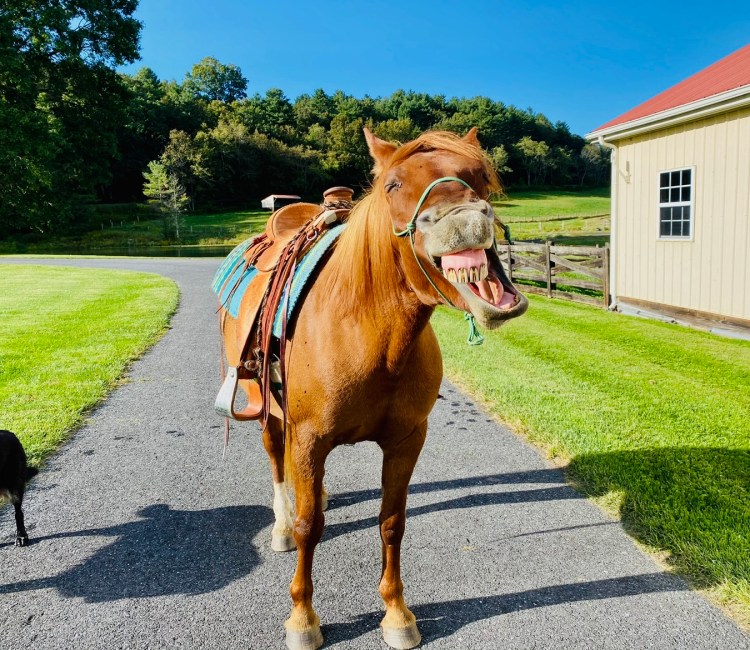
It’s not so much that I disagree as I’m fuzzy on the details. I think a more interesting conversation would be had about what the definition of a good equine citizen actually is. It’s easy to nod and assume we agree on a proper way to handle a horse in the first place, but that is far from true. I’m pretty sure I don’t want a horse that “is obedient” to a request from everyone exactly the same way. I’d bet the farm that no one is going get hurt handling Khaleesi no matter what you do with her… however, how you ask, and your ability to read a horse and interact appropriately is going to impact what you get out of her. Shouldn’t it be that way?
I have an illustrative story of a farrier years back who tried to help me out by checking on a lost shoe one day when he couldn’t get in touch with me, but was in my area. He was trying to do me a favor by grabbing a halter and going to see if he could tack the shoe back on for me. He left a message I got later, quite frustrated that no matter what he did including bringing a bucket of grain, he couldn’t catch her. Stupid mare. (I think she thought he was a stupid person thinking she would be lured by food!) I am pretty sure if you asked him, even today, he’d say my horses are not good citizens. But K never trusted him, and he used fear and intimidation with horses, telling me more than once that a good horse (his definition of a good citizen) has a healthy fear of humans and that’s the way it should be. He was considered one of the best farriers around, but we had to part ways. And I was glad he couldn’t catch her that day.
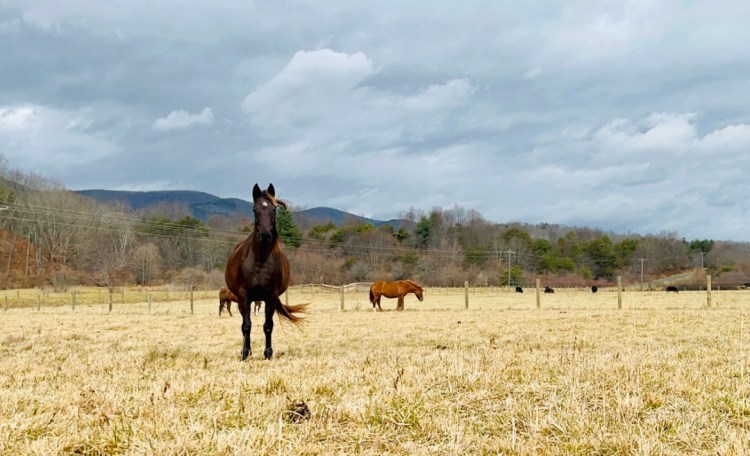
I thought this blog would expose my disagreement with the good citizen idea, but as I process, I see that it’s more the definition that separates us all. My ex-farrier thought a good citizen has fear of humans. Some call their horse a good citizen and then say things like “you can’t do anything with the horse on the ground but once you get on them it’s all just fine…” What I’ve been coming to see is the most important thing (as I’ve heard Harry Whitney say) to teach a horse, is that they can let go of a thought.
Over the two weeks I’ve been working daily with Wyoming to help her feel better, a simple truth has begun to rise in a new clarity. This mare has gotten good at hanging on — with a death grip — to her own thoughts.
There was a time I observed: you can get along just fine with Wyoming as long as you never require anything of her. If you exist with her on her own terms you can be best buddies. She’s friendly and fun, and the life of the party. However if you require something of her, she switches pretty quickly to what Tom calls “snarky.”

Regardless if my definition of a good citizen aligns with the general horse community, a horse willing to fight over something like “will you please take a step backward” is absolutely not acceptable. And yet… now what? We have already established in the last two entries that she doesn’t feel very good about her life. That’s what I’m trying to address.
In over seven years, by no one’s definition, has she been transformed into a good citizen no matter what kind of training I’ve practiced from harsh (becoming more scary than her threats) to compassionate (free choice and positive reinforcement). In all the places I’ve searched, so far I haven’t been able to break through for a real change.
Now I’m getting better at understanding where the horse’s thought is, and how they are feeling. Currently I am going in deep to see if I can change Wyoming’s experiences to change her thoughts, and then get a change in how she feels.
Begin at the begining?
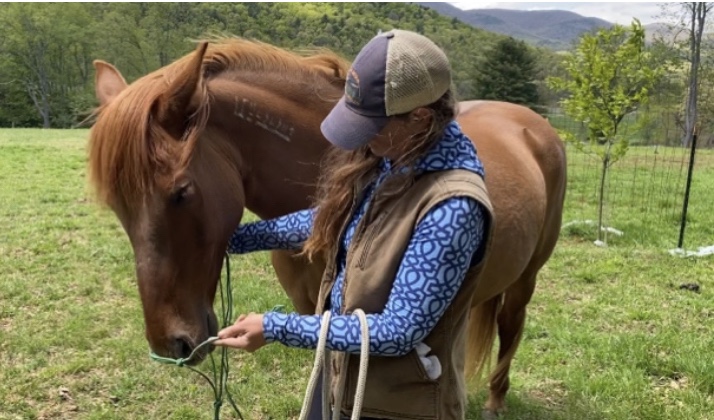
The halter. I have worked on getting her to accept being haltered willingly from many angles over years with her. I can put the halter on, but it doesn’t take a horse whisperer to know she is tolerating, but not relaxed or willing. I love linear rational thought: If I can’t get her to willingly accept the halter, is it a wonder the rest of it is like poison fruit of the tree? I wanted to go back to the source and work from the root.
When I walk into Wyoming’s stall she immediately comes to meet me at the gate. I offer the halter and she will grudgingly allow it to be pulled up over her nose. Gradients of messy depending on the day, but I get it done.
Something I found interesting is Khaleesi will not come to me in the stall and put her head in the halter, yet I never have a problem walking right up to her and offering the halter and she will dip her nose dutifully. (We are experimenting with this but that’s a different story right now) Wyoming coming to the gate to meet me, which on the surface seems “better” than having to walk over to halter K. However, actually putting on the halter is a totally different experience. Khaleesi is willing to cooperate, Wyoming tolerates and sometimes gives little threatening nips at the rope with her lips.
I began to grasp something that I had not thought through before: Wyoming was not connecting with me by walking over to meet me at the exit gate. If one was only reading action it looks pretty cooperative. Where was her mind? With me? Not at all. Her mind already left the stall. This is not good if one misreads the situation to think we’re working cooperatively. What I can get away with because it’s actually Wyoming’s plan isn’t going to give me accurate information about what’s going on with her. And if I don’t have accurate information we are going to eventually run into trouble.
The truth will set us free.
So being the truth seeker I am, I decided to try something different. I walked into the stall. She came over to me. Then I walked to the adjacent corner of the stall. This was going off script. She stayed at the exit. Standing with me in a stall corner, was not on her list of plans so she did not join me.
I made a light shuffling with the lead rope to get her attention and encourage her to consider coming over to me. Just think about it? I was asking her to add me to her list, maybe bump me up to a higher position there. She pinned her ears and looked over at me with a warning.
Nope. Not gonna do it. Don’t ask.
Interesting. The ear pinning threatening behavior I thought was reserved for asking her to put out effort. Simply coming two steps over to me in the stall did not seem worth the fight she was threatening. But somehow, to her, it was.
I paused and considered, if she was already threatening violence, maybe I needed to find a safer spot from which to press this issue. Her stall has an exterior barn wall, a partial wood wall with a four foot exit gate, then two farm gates that separate her from Khaleesi and from the other half of the barn which is storage for hay and equipment.
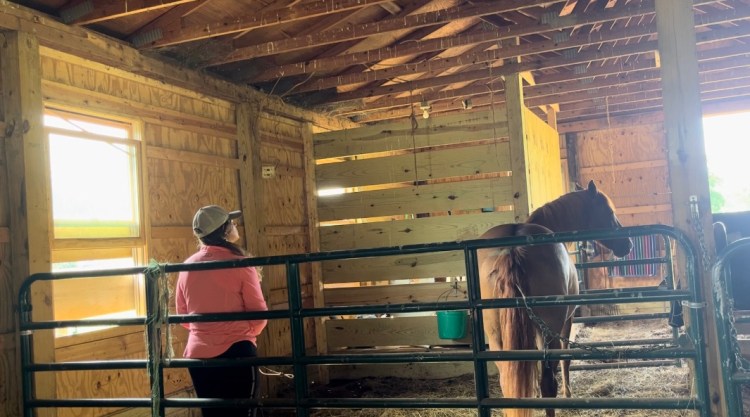
From this position, I asked again with more insistence: I see your brain is already out in the field. Let go of that for the moment, bring your brain back here to the stall, and find a place of peace with me.
I walked over to what makes the back “wall” of the stall which is a green farm gate, and climbed up to sit a moment. It seemed like a better place…but as I sat there now looking at her rear end (with her head still pointed out the exit), I realized that when I began to push the comfort zone there seemed a decent chance of getting a chunk taken out of my leg. And so I climbed over the gate into the safe zone of the barn outside her stall. With the open plan of this particular make-shift stall, I had great access to her with the ability to stay out of reach.
Let’s freeze frame a moment.
Before I get into the action to come, let’s walk through the present snapshot of the story. Wyoming is not at peace with her brain out in the pasture and her body in the stall. In order to find peace she has to reunite her body with her brain. She thinks she would prefer to put her body out in the field where her brain is. I must show her that since it is not always possible to get her body where she sent her brain, she can choose the real option to bring her brain back and engage in the present. She can find peace this way.
This is not so different from human experiences. Anxiety, which is at an all time high in the world today I’ve heard, happens when a human allows their brain to go places their body cannot. Sometimes into the future to worry about things they cannot control or even deal with because they are not yet real. Sometimes to a place they cannot actually be, to try to control things there. This is always a losing game, and it creates sickness in the mind and the body. We hear more often than ever the importance of becoming present where and when we are. Find something that can return you to the reality of the present, where it turns out, most of the time… you actually ARE ok.
Trauma, I think, without going out of my own depth which is not much here, is when you DO come back to the reality of the present location and time and find out indeed… you are NOT ok. Acute trauma usually has an end point, but the effects linger. If we don’t address it (which is painful), we will continue to suffer- which is more painful.
It’s a pretty good bet this horse has experienced trauma. She was wild for at least two years in Wyoming before being rounded up. She might have lost herd mates in that time to starvation or predators, or injury, or random barbed wire fence lines or suffered some of these herself. Being rounded up and penned is traumatic to a wild animal. In her first training-gentling experience she was traumatized by the halter, bit her handler, reared up, and flipped over. Some horses do not get so traumatized by being haltered the first time. I wish I could say her life has been carefree and perfect since she found her way to me, but that’s not true either.
I thought I was getting a green-broke mustang who was doing well under saddle and needed some consistency and mileage. Perfect for me! Instead, looking back, I brought home a traumatized animal whose personality was more fear based than most and I did not have the tools then to even recognize what was happening forget what to do about it. I delved into natural horsemanship type work and began driving the creature to her fight/flight mode in order to work with her and certainly added to her experience of trauma in the hope of helping her. The same work that created a pretty good citizen in Khaleesi by most definitions, did not create the same thing in Wyoming.
And so, armed with new understanding and some rough tools, we are back in the moment with the horse gazing out of her stall, with her mind out there and her body in here. She is not at peace. My presence was upping the ante on this and it didn’t sit well with her at all.
I’ve moved away from driving pressure, so my plan was to create a kind of “indirect pressure” in her environment that would not scare her to have to fight or flee, but to be big enough eventually that she couldn’t block me out or ignore me anymore. I wanted her to choose to put me on the list, because I knew her being present would bring her peace. Peace is what she wants more than anything, but she’s stuck in her patterns and doesn’t know how to get there alone. Now I had to be ready to not add to her fear/flight/fight system, but make it so her other choices to stay stuck didn’t work out so well anymore. Then, when she did come check in with me, I had to be ready to offer a place that felt better than she felt in vigilante mode. I had to find a way to offer her rest, security, and peace in my presence. It had to be real.
I made a noise with the rope. She turned her head and death glared at me, snake ears and flashing eyes. Then turned back to her field.
I made a larger noise. Same reaction but faster and more intent.
I swung the rope to hit the wood barn wall next to me with a bang. She swung herself around, dipping her head low and raising it like a dragon, ears flat against her neck and came at me over the top of the gate with her teeth bared threatening me that this demand for her attention was worth fighting to the death over.
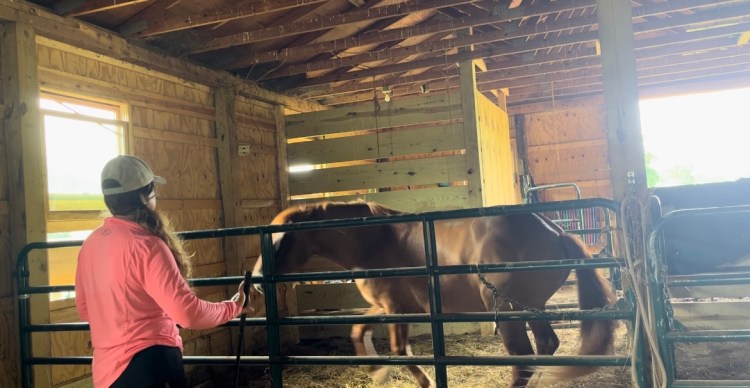
Well, I wanted the truth.
This is what’s been in there the whole time. I was now poking at it from a safe place in the hope what I stirred up and revealed, maybe… maybe we could release it and make a deeper change for the better.
Here I saw it more clearly: It is not that Wyoming is offended by any request to do a thing. This horse has a fear-based natural bent already, and has gotten a self-preservation life and death grip on the thoughts she manages about her environment and her herd. If you want her to let go of those, she is convinced her very survival is at stake. And though I believe that Wyoming basically “likes” me, she doesn’t look to me highly enough to let go of her survival mechanisms to give me her full attention (yet). If I ask her to let go of the other thoughts she is managing and put me in the center of her mind, she is kind enough to warn me that I’m stepping into a dangerous place. If I continue to press this, she threatens… I don’t think she wants to have to kill me. But in the end, if she believes its her or me, right now she would follow through to whatever extent she could in order to get me to understand and back down.
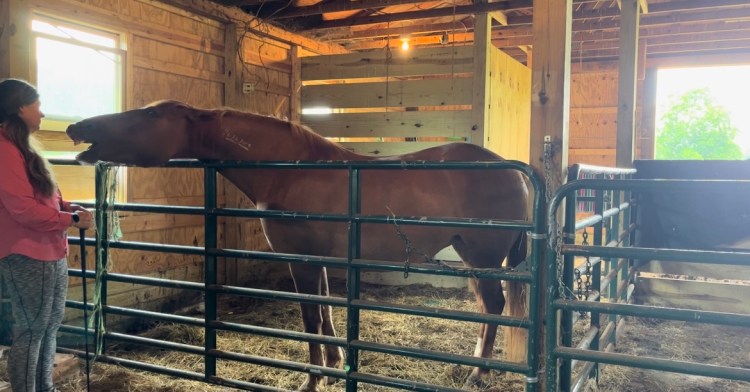
And so I began to press into Wyoming’s self protection mechanism. I don’t do it because I need her to become a “good citizen” (though I would love that to be an outcome). I don’t do it because I need her to become an obedient riding horse (that would be awesome, but I already have one of those). I am doing it because somehow this horse has come into my care, by ignorance, mistake, or willful stubbornness by the grace of God, she’s here now and we are going to have to find our way to a better place.
The truth (sometimes ugly when it comes out of the dark) is what will set us free.
I continued this basic program of making just enough noise to break her loose from her other thoughts and have to focus on me at least for a moment. I left a lot of time in between for her to search out this puzzle and to process it. I am not trying to use fear to manipulate Wyoming, the tool (whatever it is) will not come after her, just make enough noise and fuss to have my thing bigger for the moment than the other thing she’s trying to hold on to when she gets stuck.
When I did get her attention, it came with her best dragon impression. Today I wanted her to be “rewarded” for checking in with me even if it was with a massive wave of what looked like murderous rage.
Oh, thanks for giving me your attention! Good job!
I don’t know if that was the best response or not. I’m kind of in the wild myself here with her now. I’m learning by trying and trying not to get hurt in the process. When she comes at me with that kind of face, it does not feel good for her, but she has momentarily had to let go of that other thought, and she is present. The truth, it appears, is she is convinced being present will feel bad. I say that because as she would come at me with murder in her eyes, as the time went on, she would hang there a moment with her snakey ears pinned and eyes flaring and I just stood there two inches out of her reach and then we’d pause for just a moment, and she would begin to soften. She would look at me and start to relax, her ears would float back up, and I would be still and breathe evenly with as much peace as I could muster, trying to translate from every pore: I know you’re ready to fight, but I love you, you are mine, and we are going to get better together in time. I am here to help you.
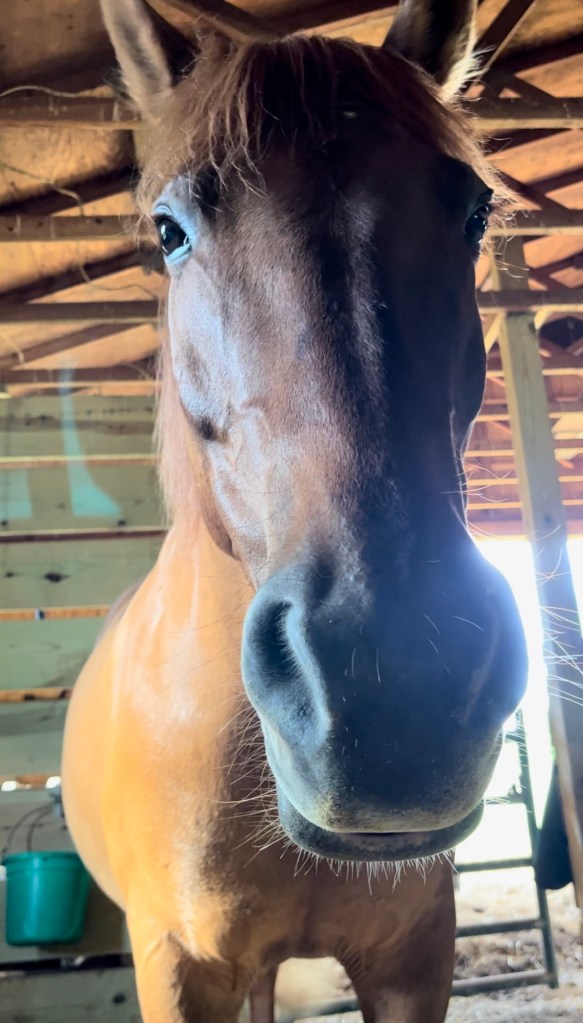
She would stand there and everything in her body would begin to soften until her lower lip would drop slightly and she would let go of the entire weight of the world she was used to carrying. The first time this happened in entirety, she stood in as much peace as I’ve seen her maybe ever, then she had a big release reaction. She shook her entire body and neck, she went into yawning that twisted her head both directions and her tongue would come out of her mouth in all directions.
It took two hours to come to this place where I could reach out and touch her on her forehead and she stood relaxed and peaceful, no fight in her. Not a hint of trying to send her mind out the gate or window.
I know this made a deep change in her, because after I walked away to do some things in the barn she began to eat hay. That might seem normal for a horse. However, I left the horses in their stalls for which is normal this time of year for a few hours a day. Khaleesi eats the most hay in these periods. Hope eats the next amount but less because she spends a portion of time laying down resting as she is not fully well. Wyoming always ate the least.
When I returned later to release the horses from their stalls, Wyoming had eaten every almost every blade of hay which is highly unusual. I always suspected it was because she was distracted with checking out her window and stall door, but she never paced or pawed or showed bigger signs of stress. She always went into the stall voluntarily. I think she would choose the stall because her herd was inside, so that’s where she needed to be- but her brain was in fact roving the field still on guard for danger.
As I worked with her for the two hours, not only did she gaze out the exit door, but there is a smaller window. She would cycle her mind out that window, to the exit, then with Khaleesi in the next stall. Those three places were all on her list to cycle through making sure all was in order. At some point she must have added in eat some hay to the list, because she did eat some of her hay. She’s not lacking for calories, has never shown sign of colic, and drinks her water, so I never concerned myself with addressing her low hay consumption over the 6-9 hours they would spend inside.
Now, if the herd is put in the barn, she eats all her hay and I keep adding more. This reinforces to me that the work I did with her over those two hours convincing her to let go of her thoughts to be present in the stall with me did not ONLY give her a few moments of peace while I was there, but she learned that she could find peace being present in the stall even when I was not there. She was finding more peace even on her own now.
That is a very big deal. That is a very big why to continue to try.
I wish I could say that in this first big day of finding a place of relaxation that we now have solved her issues and all is well!
Not quite. The journey has only begun, and so far this one promises to be one of plot twists, steps forward and sideways, and sometimes backward… one that will require patience, and the ability to notice the smallest things as landmarks along the way. However I am seeing evidence that teaching a horse they can let go of a thought truly is one of the most important things to helping them live as good equine citizens.
Right now, asking Wyoming to let go of a thought feels to her like an attack on her self-preservation and tips her into fight mode. In other horses, it is a reason they bolt, flee, buck off a rider, or try to kill the vet. If a horse can let go of a hard thought they have a better chance at working together with us in our own thoughts – like you need hoof care, or to come safely with me as I lead you somewhere you aren’t sure you want to go… These are things most people could agree a good citizen would be able to do.
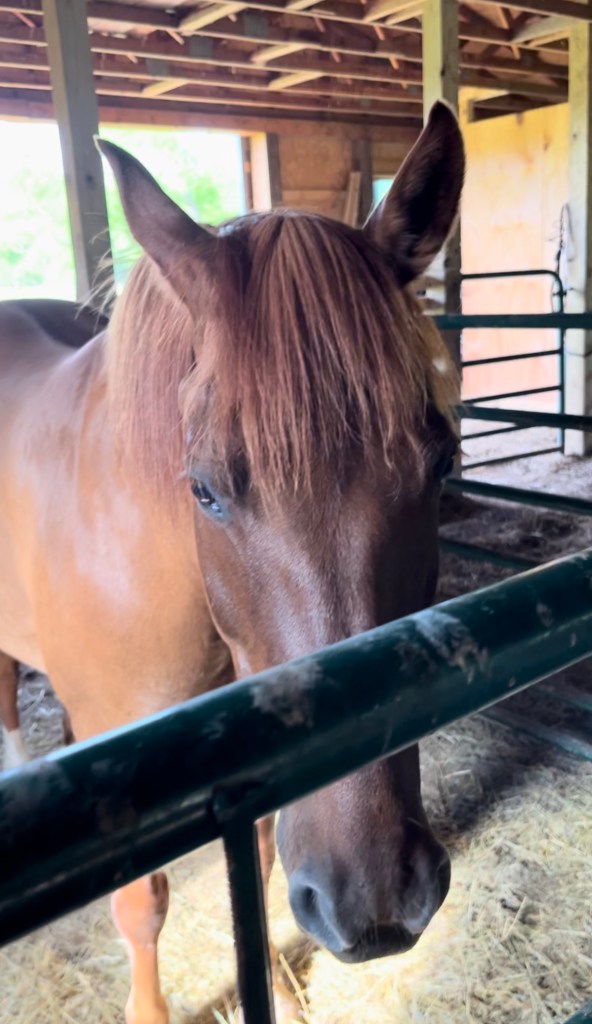
Stay tuned as I process the days I spend with Wyoming. The ups and downs of that journey will be the focus for now, and I’ll be back soon with another installment!
 Hope Horsemanship