Tag: natural horsemanship

  • Am I safe? (conclusion)

    Am I safe? (conclusion)

    In part 1 and part 2 of Am I Safe? I wrote about some observations and questions that connect to conversations I’ve been listening to around the neurological system and healing. Hopefully in the wrap up below (part 3) I can give some thoughts on what we can do with these questions.
    First the elephant… It is very hard to see borderline (or outright) abuse happening in situations where very clearly the people involved see it as normal. The more I learn the more clarity comes with my own herd- and the world around me. I am grateful for the horses in my own herd because they are constantly reminding me that humility is my superpower… this doesn’t mean I am amazing at humility, instead it means I can always choose humility and every time I do it empowers me and those around me where pride is ALWAYS ALWAYS destructive. I am convinced it is pride and ego that are the deepest roots of the pain we cause horses day to day.

    Early in my career riding endurance with Khaleesi I was certain she was not giving me her best  (she’s being lazy) and I was determined on this particular ride to insist she give me all she had to see what we were capable of. Around the last loop of the ride she really began to slow down. I INSISTED she get moving! We only had so many miles left: you can do this, come ON why are you slowing down you are not that tired! I know you! You have more to give!!

    The more I insisted the more she resisted. I can still feel the red-angry frustration that was welling up in me, I was not thoughtfully making a decision anymore I was infuriated that she was refusing to get this done. I grabbed a stick and whipped her butt- I MEAN IT!

    She began to comply and try (this story still breaks my heart to retell it) and I began to notice something…. When the ground got sandy and soft she ran and trotted her best, and she always slowed down when the ground got hard and rocky – still trying to show me she was going, but CLEARLY not as comfortably. She wasn’t softly giving me her everything, she was doing the whole thing with brace and not exactly an attitude (she never threatened to buck or fight me) but not a willing happy heart.

    It began to come together and I softened. No, I was right she wasn’t tired. Her feet hurt.

    She was in pain.

    We were now close to the finish and I let her walk every rocky surface and she would trot on sand- but the damage was done. Both physically and mentally. When we got to the finish, it was a hot day, but it took her 20 minutes to come down in heart rate. We used ice water and hand walked her. This horse generally pulses if she is fine in minutes after cantering into camp. The ONLY reason she does not pulse is physical pain. There have been three times in our career I’ve had pulse issues. We did get her down in enough time to final vet. She didn’t look great and got a “C” on gait but the vet noted it was not clearly a lameness- she was just looking all around exhausted so we got a completion. 

    Grace I did not deserve.

    We got back to the trailer and I was devastated. What had I done? Ego. Pride. Never again.
    I learned a lesson that day and in the years since I have NEVER repeated that by forcing Khaleesi to give me more than she was willing and able.

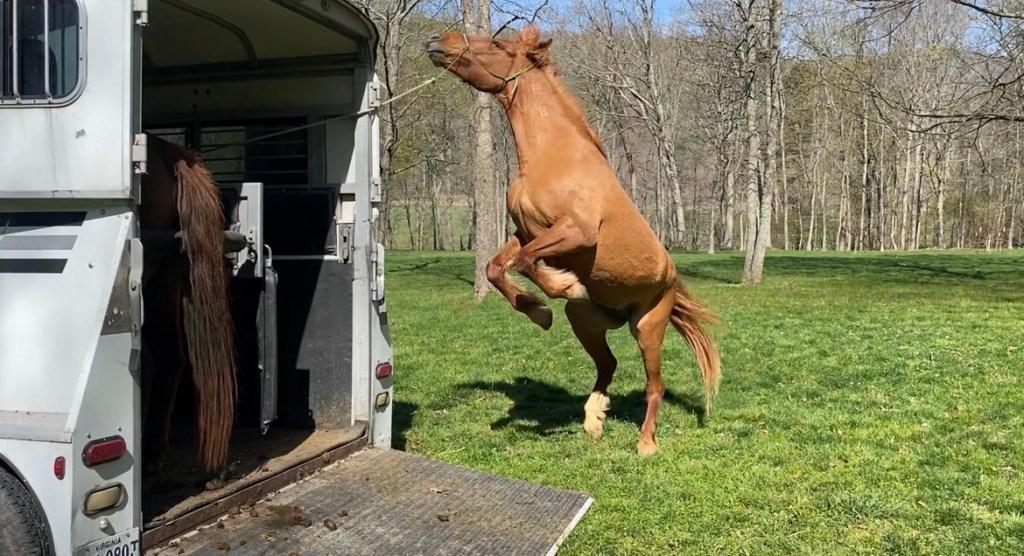
    The trailer loading debacle I wrote about in part 2 was that NEVER again moment between Wyoming and me. I tried to use force to move her forward in the process. That choice that jacked up my trailer, could have gotten her killed (as she broke off the chest bar leaving enough lead rope to hang herself over a hinge like a fish on a line) and left me some wicked rope burns to remember it by. Again I know I got off easier than I deserved.

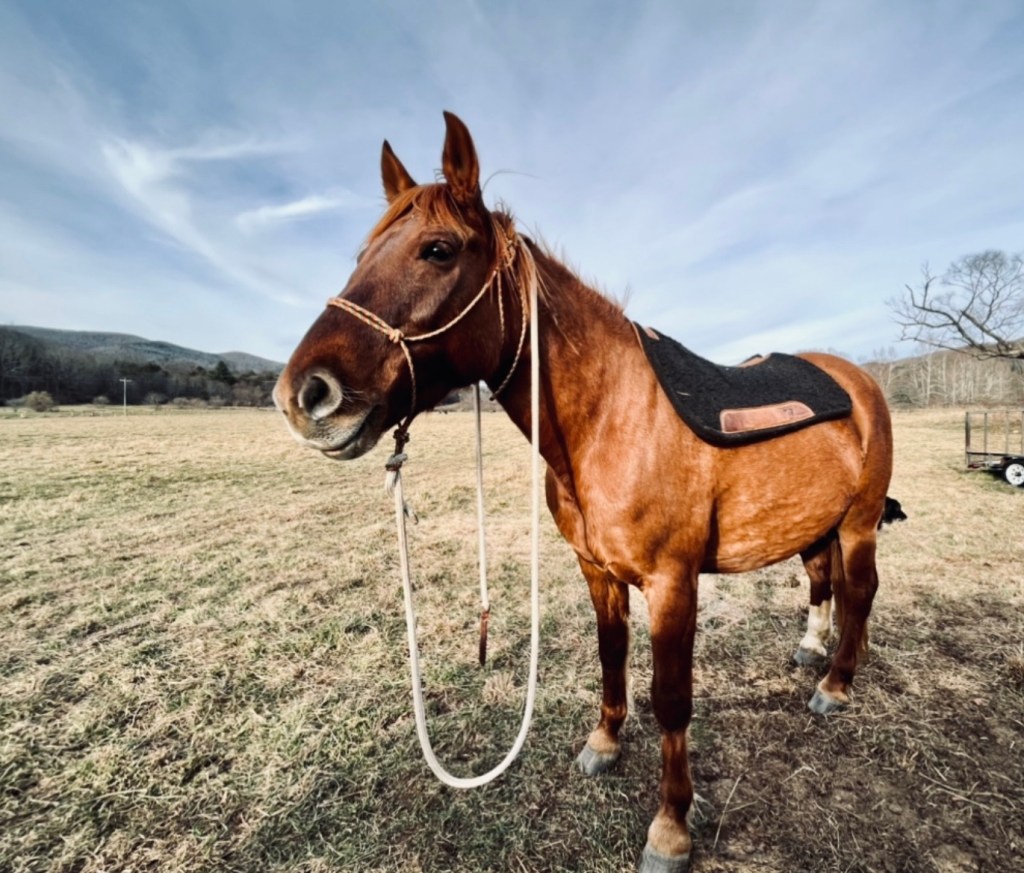
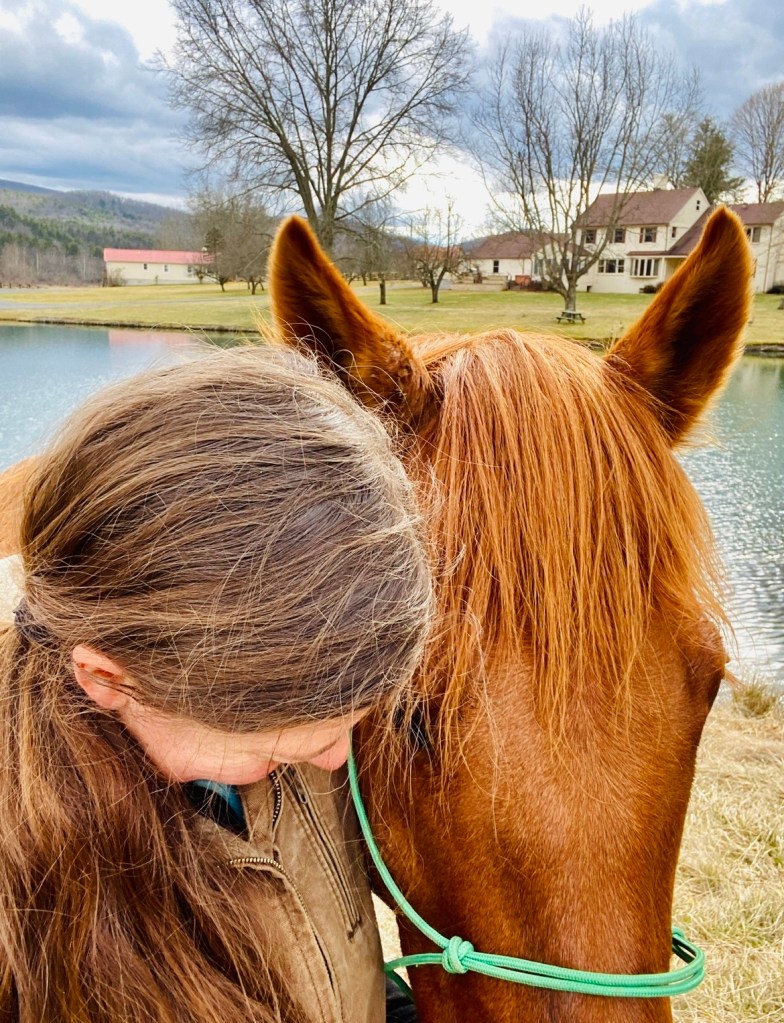
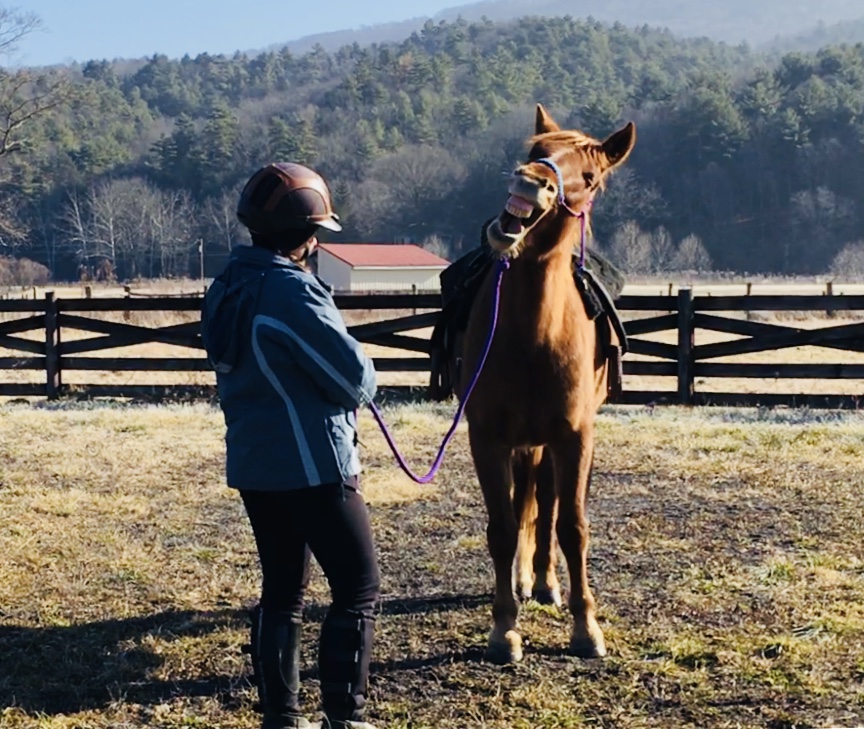
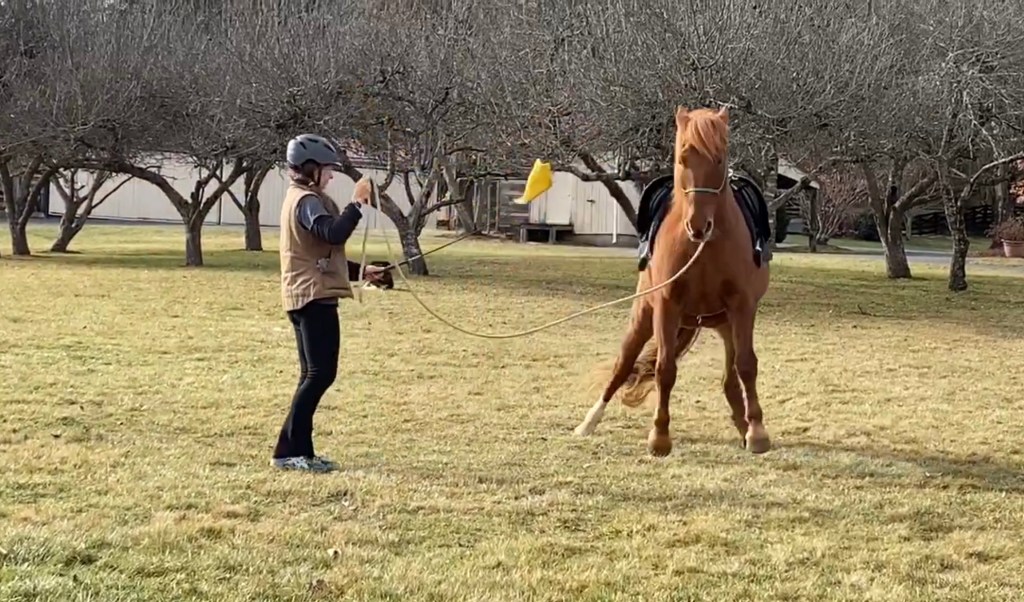
    I took this picture that day when I “hung up her halter” for a time. I comitted to work within her threshold regardless of what it was and not to listen to the voices that say I should just “get it done” by force, whatever the thing is. I did not use a halter with her for months.

    Now that I write this… some of that deep trauma in her poll and neck that she was resisting could very well be residual from that wreck I caused.

    So there are two of my most dramatic, but not the only, moments of when my ego or pride and ignorance created trauma for a horse in my own herd. But for the grace of God go I again over those paths and every year I learn more I can look back more recent than I’d like and see ignorance or impatience creating problems I preach so hard against.

    Humility is my superpower.

    Yet humility does not mean never speaking about what I see, and what I’m learning because it might create discomfort. It means I don’t do it in a “me against you” conversation, but always a “I am with you” conversation. With compassion. And with the knowledge that we can only do the best we know at the time. And pride is so insidious- it attacks at a deep root level and is very hard for any of us to see in the mirror, and easy for others to spot looking in. My best advice if you care to grow, is to find a few people you trust and give them a hunting license to help you see what you cannot. 

    In all fairness, I still fail a lot. But I refuse to quit. 

    In the case of Hope and other horses I see in broken down states, I don’t think any one of the people in her line was an evil genius trying to wreck a beautiful creature physically, emotionally and mentally. I think every one of them wanted what most horse people want with a horse. They want good things right? And yet people created the deep rooted problems in this mare by ego and ignorance. It’s how most problems start. Not one person in her line of owners took the time to listen to her and then do what it took to help her. They saw her as obstinate and unwilling. I can say she is neither of those. She had finally been… broken.

    What then can we do?

    I asked the question in part 2: What can I do to make Wyoming feel safe enough to let go of her trauma? I will never had a successful relationship with her while her nervous system is on overdrive. She cannot communicate, connect or learn if she is only on survival/react mode. Wyoming wears her emotions on her outside. We always know how she’s feeling, and she doesn’t have emotional stability and well being. On the other side of the coin is Hope. She is equally traumatized but her reaction is to withdraw and shut down, comply as much as she is able. She hides deep inside herself. Horses willing to go this route are often considered respectful and obedient. Bombproof and ideal… until they simply cannot.

    I had hoped to find another expert conversation to tell me in a nutshell how to fix all this for my herd. No such luck. Instead I heard another quote ringing in my ears: 

    You cannot come to a horse intentionally thinking you want to fix something. If you come with the goal of fixing it your horse will internally brace against it and you won’t be able to fix it. Instead let go of the idea that you are fixing something and simply find a little place to release tension here or help them to relax there and before you know it thinks get better and you have fixed things. You have to let go of your agenda in order to help the horse. 

    Jim Masterson

    I have three personal takeaways from all of this. The order isn’t key as much as they are all interconnected so they work together in a synergistic way. I trust you can sort out what it all means for you and your horse journey.


    1. Get better than you currently are at understanding horse communication. And put it into practice by listening better. Everyone says that of course they listen to their horse. Just as no one was setting out to destroy Hope earlier in her life, my experience is those owners would say the same thing- of course they understand horses and of course they listen, many many people who have own horses and ride horses do not have accurate understanding of what is going on in their horse’s communication. I see most riders- especially ones who have “been around horses all their lives” making assumptions about what they think the horse is saying that is often pretty inaccurate. This brings up another quote:

    Horses survive by being incredibly adaptable. They adapt to the way we work with them. They are so adaptive we often miss what’s really there because they are so good at accommodating.

    Jim Masterson

    Keep in mind have a real disadvantage in this from the start because of how accommodating horses are by nature, but that is a survival skill not a healthy way of being.

    Horse people have taken pure communication from the horse like ear pinning, evasion (evasion can be trying to step away from mounting, bucking, rearing, spooking, running away etc), pawing, pushing, nipping and kicking and turned those into “unwanted behaviors” that we train out so they can be “good horses”. This begins early on and then is continued through their lives. We have taken away their negative communication channels. We as a culture training our horses not to share when they have a problem. No one wants a horse to bite them including me. If we were more adept at seeing early subtle signs they wouldn’t have to bite us in order for us to understand. 

    Part of helping a horse to understand it is safe is ensuring a horse feels seen and heard. Accurately. Acknowledge when your horse is trying to communicate she is not OK and see if you can find out why. Then commit to a change- do something about the problem.

    2. Accept that one cannot separate behavioral (mental and/or emotional) from physical issues.

    Of course there are issues that begin behavioral and there are issues that stem from physical problem but it is always more complicated and they will always connect. If you have a physical issue that isn’t addressed it will always show up as a behavioral issue. If your horse is experiencing physical discomfort they will do things like refuse to make that jump, not be as eager to do upward transitions, try to evade being caught, pin their ears or nip while being groomed or saddled, etc.
    On the other side, if your horse is having mental or emotional issues (isn’t confident to leave the herd, confusion over what is being asked, feels like it will never get released or there is never a right answer, is over stimulated) that will show up in time in the physical body as ulcers, joint or tendon injuries due to not moving in a relaxed and proper form for the work, or acute injuries from flight responses when they aren’t thinking but reacting and get themselves hung up, cut up, or in some other wreck.

    If you always assume there are connections between behavior and the body you will have more data to work with in assessing what is really going on and have a leg up on finding problem before they are a big financial and time investment to sort out. 

    3. Assume your ego and pride are your biggest enemy and that both are working against you and then seek out ways to fight against them. Humility is your superpower too.

    We all see our horses as friends (well anyone reading this blog for sure does), and we want to do what’s best for them. That is our high value (high values are how we talk, core values are what we walk). I hear most people say “I always put the horse first.” It’s in the core value where things get dicey. Are you willing to do what is best for your horse when it costs you the resource you have least of… for some that is money, for some it is time. 

    I was fascinated listening to Anja Beran who has been teaching classical dressage in Germany for over 25 years. She has been a voice against poor training in modern dressage (at very high levels) and is a great to seek out in the conversation of creating a powerful willing horse that can compete in any discipline much longer than the norms we see today. When the interviewer asked her how long it usually takes her to work with a client horse that comes in with some trouble (when you get good at successfully fixing problems, you see a fair amount of them) and even I was a bit surprised at her answer: Well, you see usually we find it is a minimum one year, and often we will keep them and work with them up to three years to help them come back into a healthy way of moving again.

    Here in America we expect results in a weekend to maybe 30 days on the outside. Unfortunately you can get a horse looking to an uneducated eye (that would be 80% of the horse-person population if you go with the rule of the Pareto principle) in 30 days training, but there are so many holes in these horses that someone is eventually going to crash through physically, mentally, emotionally or all of the above- it’s only a matter of time.

    Anja explained that a very high level circus in Germany uses her exclusively to train their Lippizaner team and she says they bring them to her for seven years. The reason they are willing to invest that kind of time she explains is because they perform well into their thirties when they are trained properly. A healthy balanced horse will also cost much less over time in vet bills and missed work.

    Money is a limited resource for most of us. It is true we have to make decisions thoughtfully when it comes to how much we can allocate to a horse, but I have seen people throw tons of cash around if they believe they will get a quick fix to a problem. Time is usually the more treasured resource and we appear as a culture not willing to give our beloved horses the time they desperately need to learn how to carry their bodies properly, to think and make choices instead of hurry up and react to my pressure (obey) so we can get on with what I want to do. We also need time – to get better in our own knowledge and skills so we can actually help the horses instead of always talking about how they are so good at taking care of us.


    And so I circle all the way back to that first question… why is that horses — when they are given more supportive care and a place that will hear them ask for help do they appear to get so much worse?

    From the neurological perspective I have been learning more from, I think when they begin to feel safe they will begin to heal. And no healing can take place without the revelation of brokenness. One must feel in order to heal. With any person or horse or any living creature- survival often means setting aside a wound in order to get through now. When we are given a safe place to peel off the survival mechanisms the only road to wholeness is by revealing the brokenness and then letting it go or getting the professional help required to walk through the healing.

    It makes more sense to me now that it would take Hope some time to believe she was in a safe enough place to fall apart. It also makes sense that Wyoming has deep layers she does not feel she is safe to release yet. Knowing that means I can be more attuned to making her feel heard and that her worries and concerns while I might think on human terms are overblown and inaccurate, to her they are enough to jack up her nervous system and that’s all that matters.

    In both cases I have come to see that I cannot approach this as a new (oh that ego is tricky!) goal for them. I am a driven person and I can take their healing and turn it into it’s own goal that then becomes a new source of stress and pressure.

    When Hope first came back from her stay with Dr. Hancock I was very excited to see her bloom into a healthy mare. I was great at doing all the things I was told would help her recover. But she seemed to be getting worse after a week or so. I was able to recognize that I had dumped my expectations of her coming into health on her and she was straining under the pressure. I tried to let her know that I believe I had done all I could for her professionally and now it was up to her to get better. I would help all I could but she would need to go at her own pace in her own way. I was committed to be with her and support her. 

    She has good days and bad days, and stress is more likely to create a bad day. I don’t always have control over stress in a horse herd. My healthier horses are less affected by it. Overall I see clear trends toward better. She more stable in her balance. She is moving better in her body. She has less mucous and infection recurrence. She is brighter in the eyes. She has more “personality” and preferences coming out. When we brought her home in December of 2020 I would never have guessed she could have so many deep layers of brokenness it came close to costing her life; she held it together pretty well for months. The very limited work she was for a few months in could not have caused the depth and seriousness of her condition. The downhill freefall actually came while she was in pasture rest with her herd through her second winter here. A place she probably felt the most safe in a long time.

    I look forward to what healthy Hope will be like. I look forward to her becoming more her own horse and getting to know her. And I will continue to find ways to help Wyoming believe she can let go of the trauma her past life and I have caused. I will get better at hearing their concerns and answering how I can. I will assume less and be curious more. I will honor them with the time they need and set aside my own goals and plans for them regardless of what people on the outside think. And hopefully I will look back at this series someday with a more complete picture and have some corrections to make- 

    For now, I think that is the best I can do.
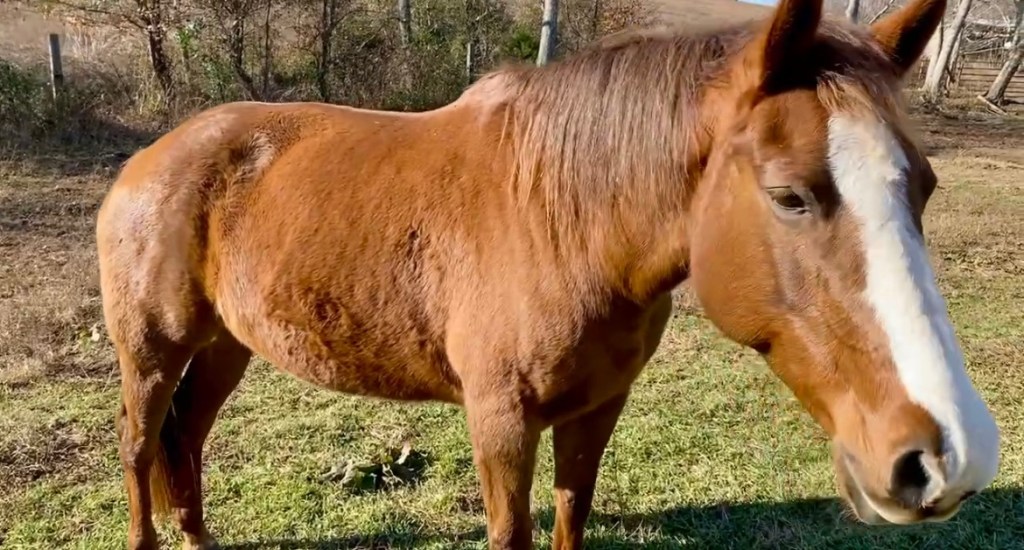
    Hope before I brought her home December 2020
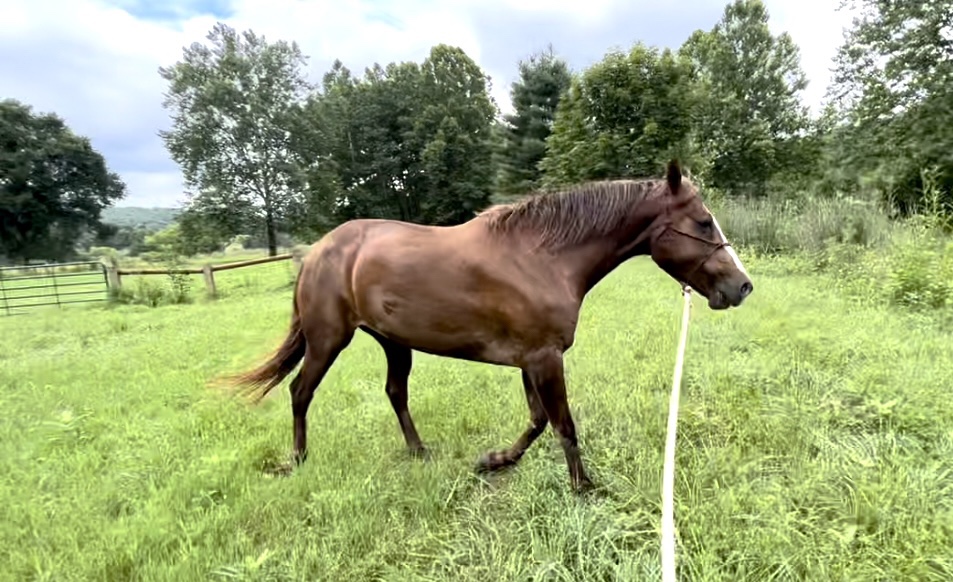
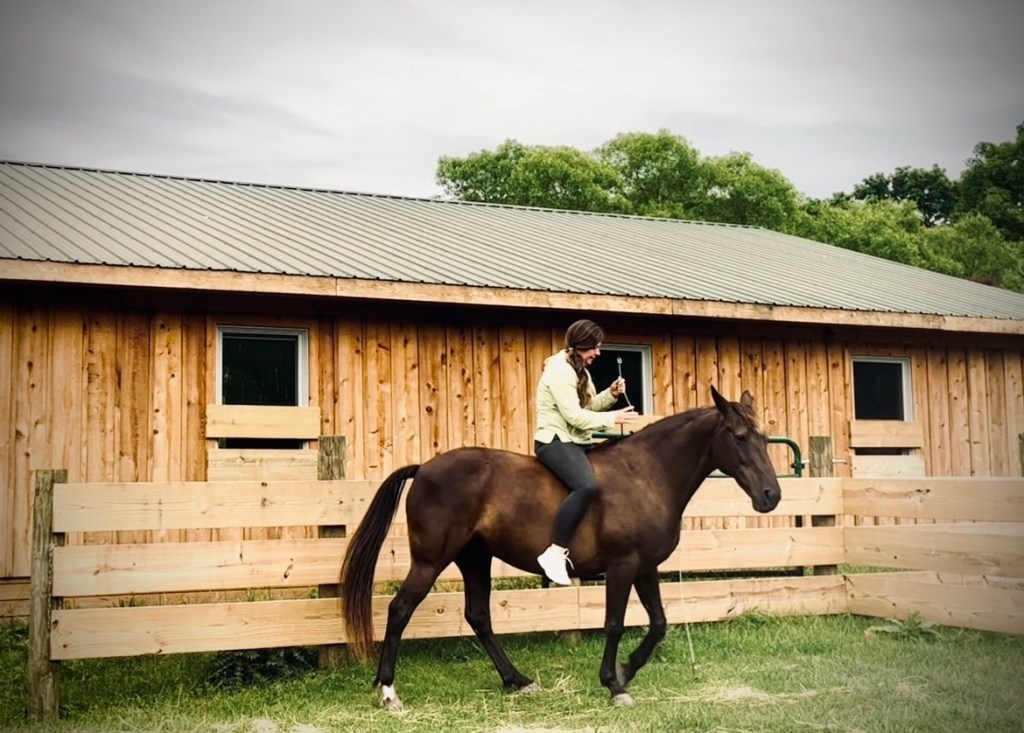
    A little morning trot in July 2022 after returning from functional vet care
    Hope now (October 2022)

    I would like to conclude by bringing up that one cannot give what one does not have. I also have seen in myself wounding and brokenness that made it hard for me to be the whole healthy balanced person who could set aside my ego and goals and the external pressures at work on me to have the grounding and confidence to allow these horses to fall apart. Because there was a time when them falling apart was too close to my own identity and I could not be the stabilizing factor and have the patience and grace to not need the horse to perform for me in order to make it’s life worthwhile. I also consider the complexity of a world of wounded people who are part of the cycle with traumatized horses. I hope someday HH will be able to help encourage increasingly more powerful horses AND powerful people in richness of mental, physical and emotional health.

    Thank you for reading this series and I hope it gives you some things to chew on and encouragement to find ways to improve your own herd toward increasing excellence, connection, and deeper relationship.
  • Am I safe? (part 1)

    Am I safe? (part 1)

    I have asked myself the question of why I have seen a horse on multiple occasions move into a home better suited to its needs and watched the horse go from not particularly thriving (meaning none of the horses were in peak physical condition at the transfer) to pretty seriously ill or lame… broken down in a much more serious way than would have been expected over a period from months to a year.

    Why (I kept thinking) am I seeing this pattern, and experiencing it myself (specifically with Hope, but in a more emotional less physical way with Wyoming as well)? I would think that the horse moving into an environment better suited to helping it thrive should mean the horse improves in condition, not worsens. I have asked myself if I am wrong about what makes for a better environment for the horse to thrive? Are these horses getting better or getting worse? What is the truth?

    Someone working with our functional equine health care told me they see this quite commonly and explained to me that it is an honor when a horse will choose you to fall apart. Ok I thought, I sense truth in that, but what is really happening?

    I had an early theory that these new owners took on the horses knowing they would find some issues under what I call the duct tape that had been holding them together previously. When you are willing to take on a horse that is not in peak physical condition, and you begin to take off the “duct tape”- you’d better be ready to find (like in a project house) things behind the layers behind the layers that always are more serious than you realized on the surface when you did a walk through. 

    Sweet Hope finally on the mend… I think.

    I had a sense there was something to this but not real clarity.

    Recently I stumbled across an interview with Jim Masterson who developed what is called The Masterson Method which is a body work that is simple to begin, anyone can start, and builds connection between you and your horse while also encouraging the horse release layers of tension and trauma that are held in the body. I liked his story and this method work was based on observation, listening to the horse as you went, and a light touch paired with patience to wait until something changes. It was a low risk – high reward experiment. So I did some investigating on his website, watched a couple demo videos and thought I would see what happened in my own herd.

    This is where things began to get interesting.

    One caveat from Jim Masterson was that as prey animals, some horses would resist releasing tension in the body because it is a vulnerable state and reveals even momentary weakness. If the tension spot seems clear by observation, and in waiting you sense they are resistant, one suggestion was to be sure you were not looking with too much intent at the horse (expecting release) or possibly try looking away entirely for a moment. Sometimes Jim noticed that after a small release, if he turned away for a moment or gave the horse a break, the horse would have bigger releases that continued on their own.

    This podcast binge where I stumbled on to Masterson also led me into some interviews that began with training concepts and wove into equine behavioral neuroscience and trauma and healing. One of the interviews with a neuroscientist included discussion of some studies that revealed: the nervous system must find rest in order for healing to occur, a being (horse or human etc) cannot heal especially in the deeper levels if they do not feel safe.

    A different interview along the same subject brought up this point: tolerance and willing acceptance are not the same. Many of our accepted even natural horsemanship training methods include a psychological double-blind where no good options exist.

    An example of this is when pressure is put on a horse intended to bring a response. If the response the human is seeking is outside the threshold of the horse they are now in a psychological double-blind. They can choose not to respond which will result in increasing pressure until the pressure is worse than the discomfort of the response they are being asked for. In this case the increased pressure is used to force horses into situations they are not ready or properly prepared for, put them in pain, or do not understand. Under this pressure they are not in a relaxed learning state, but in self-preservation.

    In self-preservation the most common reactions are flight, fight or freeze. We rarely allow flight from a training session, in fact most horses are hard wired to choose flight first. When we don’t give them an out we force them to fight with us or freeze. A horse who fights will generally run into a human with access to tools that can win the fight (though humans and horses are often hurt in the process) these horses are quickly labeled bad and disrespectful and problem horses. The freeze response is not only a stoic stillness, but can be when a horse shuts down or withdraws inside themselves to a certain tolerance level in order to survive and function. They are in a heightened nervous system response even though they look docile and calm. 

    Pressure and toleration are not inherently bad. Simply walking toward a horse is pressure. For a wild horse just an approach will send it into survival mode flight. For my herd they more often greet me with curiosity as they graze feeling generally unthreatened by my approach. I might ask my mare to tolerate the annoying flies for a period of time while we try to do some work under saddle, I’ve asked her to tolerate my lack of grace and occasional mistakes or imbalance in learning a new movement with the expectation I will improve. We work with green horses to learn to tolerate things like saddle bags, water bottles, raincoats being put on or taken off, or tolerate riding in front or back of a group when it isn’t their preference. Different horses tolerate different levels of discomfort depending on their personality. The problem comes when the human decides to (or is ignorant to) override the horse’s threshold and we don’t go at the pace where their comfort level is pushed on but not broken through. To work at this pace as with most things, takes time investment and patience and our fast paced world the value of the art of slow development has gotten lost in the rat race.

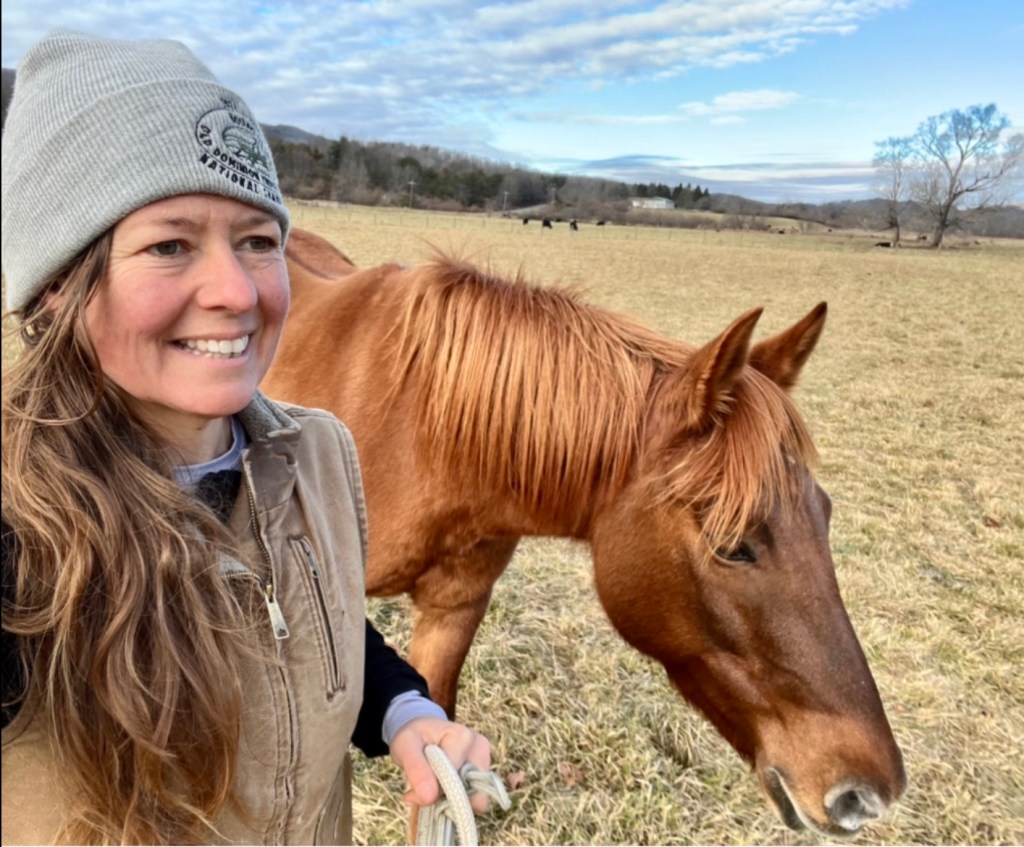
    One of my favorite moments with Wyoming

    I heard Karen Rohlf (Dressage Naturally) recently say that power (or strength) in a horse is energy plus relaxation. If you take a look at her horses, her courses, and her talk-walk integrity she is building powerful horses that have been trained to do high level complex physical movements and they have to push the comfort zones in the horse, but done in such a way that no shortcut tools or force are levered against the horse allowing the trainer to push past their ability to comply with willingness. Something I particularly like about her training is the emphasis that the horse feels good about what they are learning and how their body is moving so they seek the correct form naturally because it’s where things feel good to both the horse and rider. The attention to miniscule changes in the horse’s posture and how to feel this as a rider and then encourage the horse to seek that feel again seems overwhelming to most riders but if we were to embrace the process over progress we might even come to enjoy the art of horsemanship instead of getting to a finish line, a ribbon, or a new level of competition.

    In order to thrive and move in power and strength, the basic question a horse or human needs answered is:

    Am I safe?

    Unfortunately this question is better translated Do I FEEL safe? Because we have all been in a position where our thinking brain has sorted out the fact that it is irrational but yet we don’t FEEL safe and I have seen some instances where the person has FELT safe and it was pretty clear from the outside (or what came next) that they were not actually safe. We know that if we are in fear or pain and the person who can help us ignores our concerns, that rarely feels safe.

    I do not suffer from anxiety but I have met many women who do. I have a long time violin student who recently explained to me that she can go into a freeze state of high anxiety and appear like she is listening and even do what I’m asking of her. She shared with me that for years this has been happening to her in various intervals in different situations including her lessons from time to time, and what is going on inside of her (which I did not see from the outside she had gotten so good at being functional in this state) was panic and the inability to take in information. She might ask me to wait a moment while she got a drink, or went to the restroom just to get outside the situation and find a way to come back to calm. She did not dislike me or blame me, something had tripped her brain into overwhelm and internally she was having a panic attack. She fully realized this was irrational and knew that I was her friend and she wasn’t in danger, it didn’t come from me being particularly demanding either. In her case it was a mental disorder that would take over from time to time that she has learned to manage in recent years. 

    Human nervous systems and minds are more complex than the horse. I do not think horses have the same issues with anxiety disorder in the way humans do. My point in this example is that she felt unsafe even though she knew in her mind it wasn’t true. The fact that she FELT unsafe was what tripped her nervous system and she was unable to learn or take in information in that state. From the outside it would be easy for me to think she was being ridiculous and irrational; if I didn’t understand she had a legitimate struggle that I was not experiencing in the same way at the same moment I could try to force her to just get with the program and stop being so difficult.

    What I see with horses is many times the human doesn’t believe the horse has a legitimate concern instead I hear things like: you should be ok with this… or you have seen a tarp/cone/tractor/bike/mud puddle fill in the blank before and that is enough that you should not be afraid ever again… or we learned this yesterday you are just being difficult… don’t be stupid… or we see new behavioral shifts and assume the horse is being a jerk, taking advantage, or lazy instead of seeing the behavior as information and wondering why is this happening? is there pain somewhere? Does the horse possibly not connect the pieces as I assume he should? Could my horse be confused? is it possible he really is afraid of the cone because it is in a new place…

    Instead of curiosity, taking the information as real data, slowing down, listening to the horse’s concern and trying to address it from their perspective (ain’t nobody got time for that….) We push through with force or shortcut with a tool heading ever onward toward the goal we have for the day or week or year and when the horse complies or is forced into a physical frame without relaxation and understanding we assume they are ok with it.

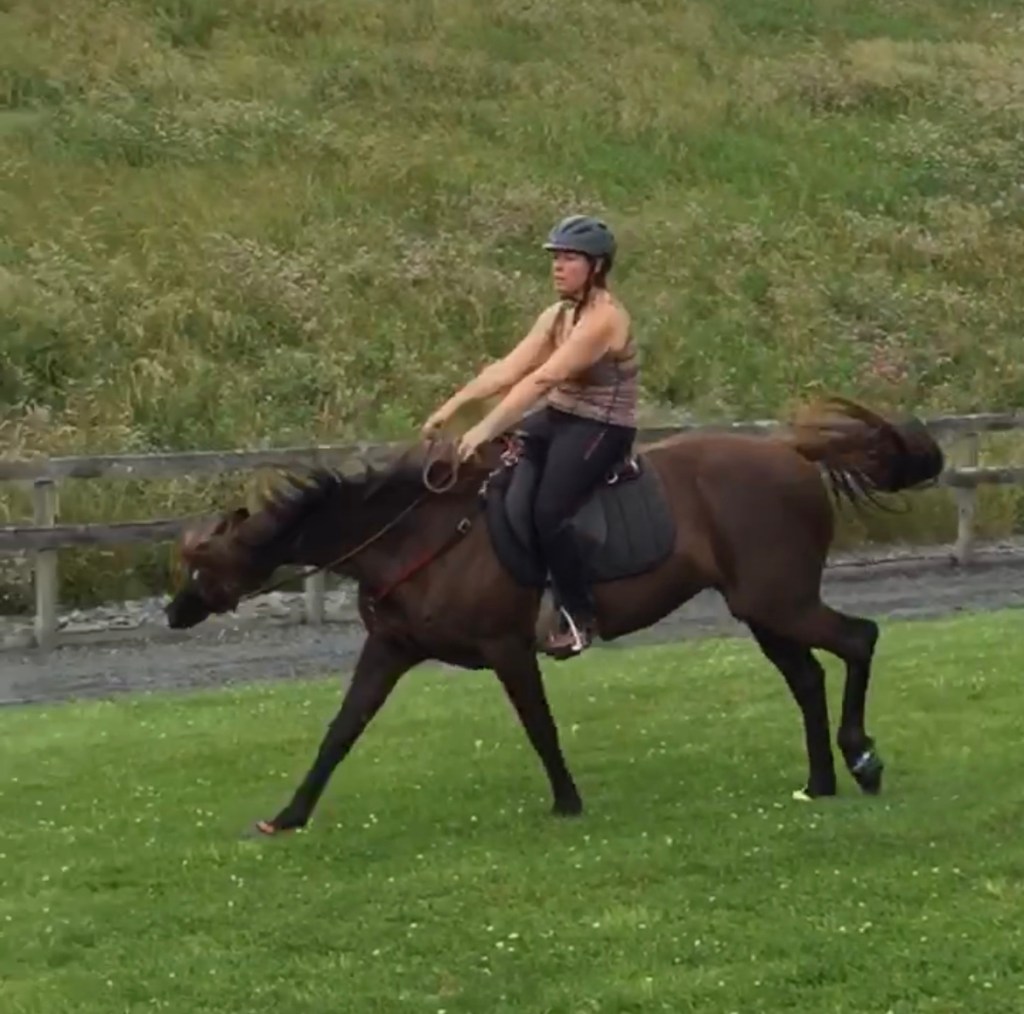
    Moment of disconnect where the work I was trying to do was not working for K on any level. Many things were going wrong here but if this is what a canter depart looks like it will not be balanced and strong! From 2018.

    This potentially creates long term mental, emotional and physical wear. Eventually it will reveal damage that gets pressed under the surface until either the duct tape is pulled off or it just cannot hold together anymore and that “out of nowhere” blow up comes or the injury makes it way to the surface and is forced to be dealt with. I am increasingly astounded at the amount of things going on beneath the visible surface of the horse (in my own herd) both physically and emotionally that we will not see (if we don’t make the effort) often because they will hide it especially if they do not feel safe. When we do finally see it arrive at the surface is much more deeply rooted and harder to heal.

    What is also very clear in my observation is that everyone I know that has horses loves and cares for them very much. Not one of them is intentionally being abusive or making a decision to cause them deep rooted harm. Every one of them is doing their horse program the way they were taught by someone else who had been taught by someone else and so it goes.

    Ironically I have found the same people who tell me that horses are not intelligent enough to make good choices, partner with us on a willing level, saying they must be completely controlled at all times in order to be safe also will tell me the horse is taking advantage of them or premeditating bad behavior. This is an odd disconnect. You can’t have a dumb animal incapable of deep emotions or the ability to make good choices also be an intelligent creature who premeditates bad choices in order to get out of work, faking injury, or the complexity that comes along with taking advantage of us.

    So with this background that’s had me thinking. I will pause and post this precursor to the experiences I had digging deeper into my own herd, and some of the surprising revelations that make sense out of some lingering patterns I haven’t previously had answers for.

    In part 2 I will begin with what Wyoming had to say….

    Read part 2 here

  • Equine Love Languages

    Equine Love Languages

    Do you know your horse’s love languages?

    In relationship counseling, there is a concept about the five love languages (website inspired by the book by Gary Chapmans) where we see that if a couple has different love languages they can be telling each other just how much they love each other, and yet not receiving the love and going through life with an ever more depleted love tank. 

    In human terms the love languages Chapman delineates are:

    • Physical touch
    • Quality time
    • Gifts
    • Acts of service
    • Words of Affirmation

    And so if you’re a physical touch and quality time kind of guy married to an acts of service and words of affirmation woman you’re going to feel super uncared for when your wife is too busy trying to “do things” to help you and leaving you cute little notes to find in your car, lunch and briefcase and doesn’t stop to hug or touch you while she’s running out the door with the kids and doesn’t really have the time to sit down and hear all about your day while you do something fun together.

    The problem isn’t that they don’t LOVE each other. The problem is they don’t know how to see the world from the other perspective and the communicate in the language the other can hear.

    I’ve been thinking for a while about how this relates to my horse herd. 

    Do you know your horse’s love language?

    Sure- just about everyone can answer: Of course… grain, carrots maybe or apples… peppermints… But is that all you’ve got? Is there more? How would you know? Something I’ve noticed is the tendency to assume that if you’re an acts of service girl that everyone would appreciate getting helped out… right? And gifts, that’s so materialistic! Why would someone want to get stuff to be shown love… I don’t need THINGS I just need you to come to the barn and move the hay with me, that’s real love right there…

    However the gifts person is often trying to get the point across- it’s not the THING, it’s the fact that you thought of me, and you KNOW me and you choose that for me because it’s perfect for me. The gift person isn’t materialistic- they just want to feel known.

    In the end it’s about trying to see the world from a different viewpoint. It can be a challenge to see it from your friend or spouse or teenager, but I think it’s ever more challenging and takes more time to see it from your equine’s eyes.

    I have three horses in my current herd. Without question they have different love languages. I recently heard a challenge to see how many things you can list that your horse loves, and then I’d add- see if you can give them some kind of weight or rank.

    Wyoming loves to be surrounded by touch

    Wyoming is wild. She is so easy. She has never really been shut down by humans so her voice is always close to the surface. Some of Wyoming’s favorite things are:

    • Scratches….
    • Head scratches
    • Inside leg scratches
    • Outside leg scratches
    • Neck scratches
    • Side scratches
    • Back scratches
    • Chest scratches
    • Butt scratches (you get the idea)
    • Grooming (brushing specifically- this is kind of like being scratched)
    • Learning something new
    • Being very very close to you
    • Resting her head on your shoulder
    • Touching you
    • Killing flies for her she can’t reach
    • Underbelly Rubs (related to scratching)
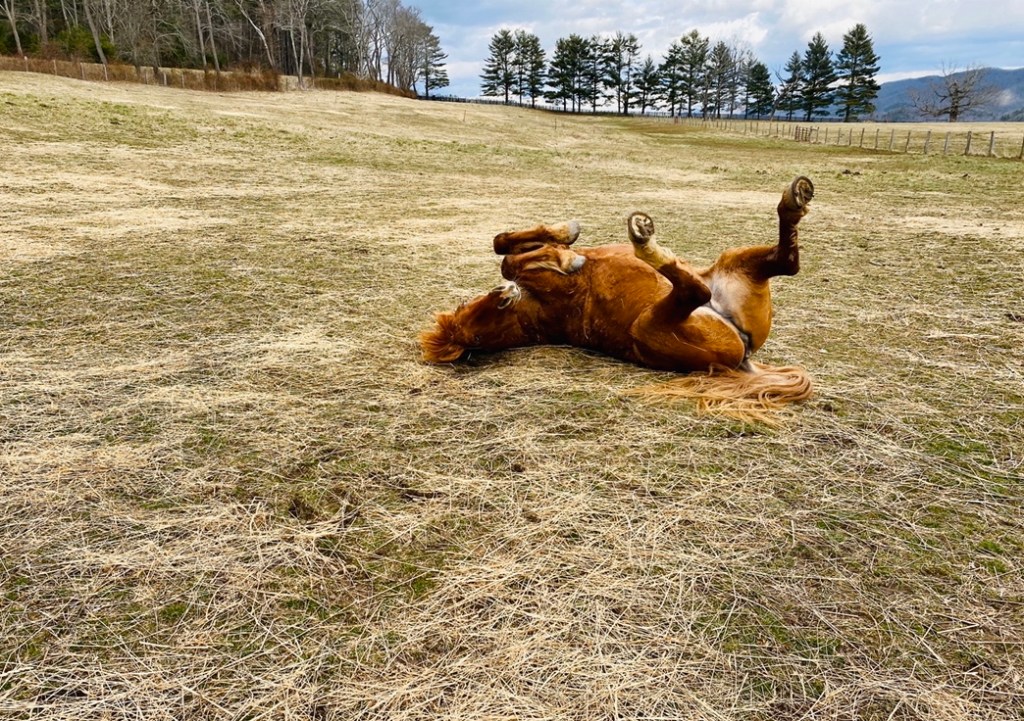
    • A good roll
    • Being allowed to come on an adventure
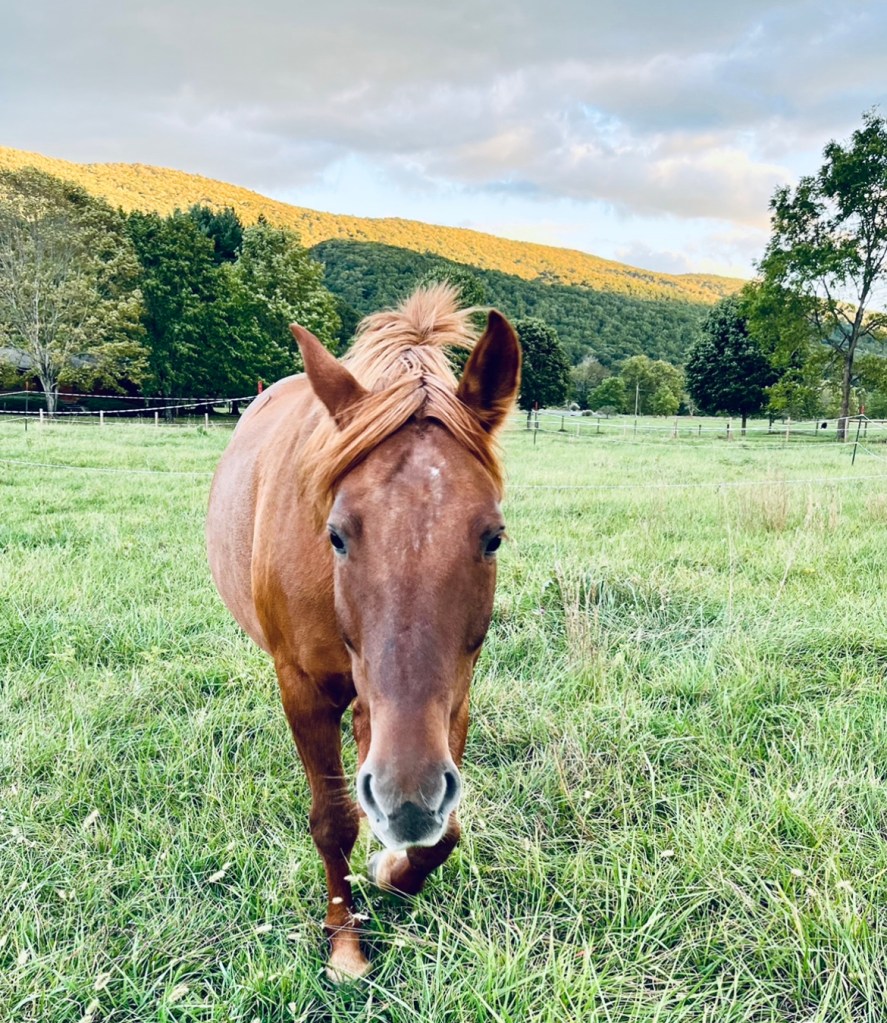
    Khaleesi quietly greets a new friend

    Khaleesi was “feral” and she is pretty clear on her communication but she is domestic by breeding and she will tone it down a little more than Wyoming. She is also more “compliant” by nature so you have to listen more closely and be more observant to know her loves:

    • Hay pellets
    • Carrots
    • Apple juice (in a syringe… this is jackpot)
    • Killing flies for her
    • Wild blackberries on the mountain (in season)
    • Bonus if you pick the good wild blackberries so she doesn’t get thorns in her lips
    • Grazing time
    • Grazing time on the clover in the yard
    • Space (love me at a distance)
    • Reliable patterns
    • Clear communication
    • Underbelly scratches (not rub)
    • Butt Scratches
    • Being trusted with choices and responsibility
    • Being told she has done a good job
    • Being thanked
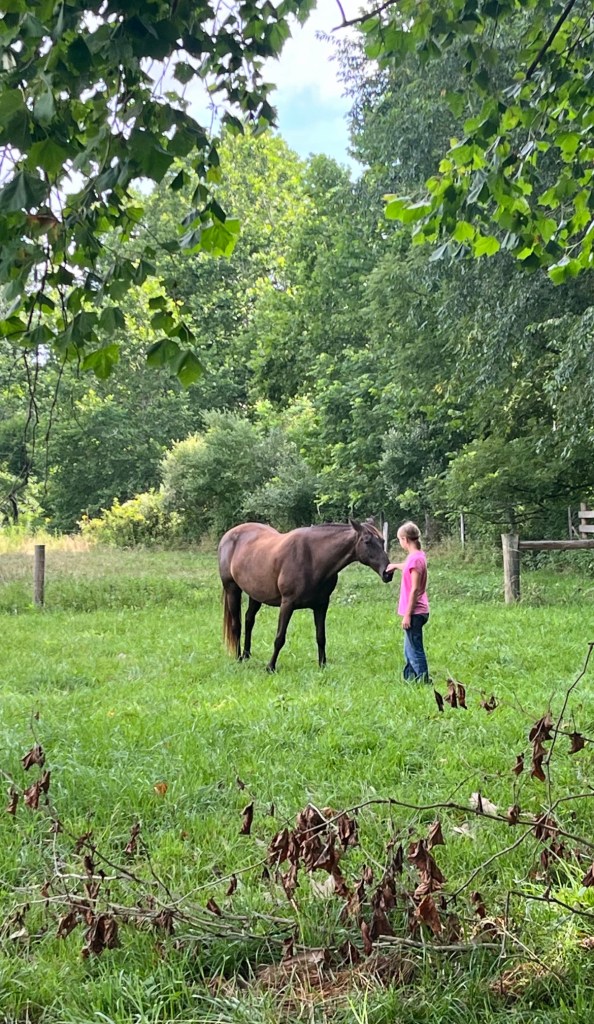
    Super gentle with Hope

    Hope is the most difficult for me. She spent many years in situations that appear to have been hard on her. Since she was returned to rescue twice and then failed out of being a lesson horse (also twice) she came pretty shut down and dull. It seems likely she was in situations where no one really cared what her thoughts and feelings were- they expected her to perform a job without much communication that would slow down the process. So it takes significantly more effort to coax her out of her shell to trust a human with any communication. Here are a few things I’ve figured out that Hope likes:

    • Hay Pellets
    • Apples
    • Carrots
    • Gentle rubs
    • Being told she’s a good girl (gentle soft tones, not high energy)
    • Grazing
    • Grazing on the clover in the yard
    • Being near the herd
    • Those cornflower blue weeds that come up in August

    You may notice I did not add grazing to Wyoming’s list. Wyoming does graze of course, but she will 80-90% choose human interaction over grazing. Khaleesi will only choose the human over grazing if they human is interesting her with something she likes better than grazing (a sweeter food or a fascinating activity where she is learning something new). Hope will almost never choose anything above grazing except if you offer her a food and then when she’s finished eating she will go back to grazing- the exception for her is the herd, she would stop grazing to follow the herd. She doesn’t yet believe that human interaction could be as good as eating grass. And in an opposite nature both Wyoming and Khaleesi are clearly appreciative of killing especially the biting flies. Hope is still on the side of dullness that she is basically tolerant of the flies and if you take care of one for you, she may be grateful but she does not show any evidence of even acknowledging (the other two clearly do).

    Additionally, Hope is the newest horse which means I’ve had the least amount of time to get to know her. She is also the most subtle about showing her likes. Here is what I look for- spend time with your horse in her environment without any halter or lead rope or tool for control, ask questions:

    • what do they do if I’m not controlling them?
    • what distance do they prefer me at?
    • do they have a side they prefer me on?
    • do they ask me to scratch or help with flies?
    • if I offer something (to brush, or scratch, or help with flies etc) how do they respond?

    If you aren’t sure what you’re looking for, here are some things to notice (when you try something different):

    • Does my horse move (even slightly, like a weight shift) away from me or more toward me?
    • Does my horse pin her ears?
    • Does my horse tense any part of her body?
    • How is my horse breathing (regular? Deep/shallow? Watch for holding breath!)
    • How are the lips? Tight? pinched? Relaxed?
    • How are the eyes? Soft? Worried? Wide? Alert?
    • Is the horse blinking normally (not breathing or blinking is a sign of being frozen!)
    • What about the tail? Swishing? Relaxed? Held to one side or other?

    How observant are you? What are their “favorite” things? Then check and make sure! Or you could end up being the guy who comes home to your “acts of service” wife with chocolates for valentines day and is confused in counseling the next month when she says: I don’t even like chocolatesbut if you’d pick up your underwear I’d be over the moon!

    Knowing what your horse’s love languages are could be a great start in improving your relationship in small but foundational ways!

    I’d love to hear your comments on what you found or what you thought and found wasn’t really true!

  • I’m not asking.

    I’m not asking.

    In my last blog [Sacred Cow BBQ] I wrote about the decision to honor Khaleesi’s choice to say “No thank you” to my plans for the day. I think it was the first time ever I came with a plan then completely abandoned it and left when she walked away from me a few times. I have come to the field with no plans or expectations except to have some conversations. I have adjusted my plans depending on what a horse responds with, but I’ve never gotten a “no” three times and then simply walked away.

    This week I did just about the opposite approach. 

    It was the right day all around for a long ride. I had the time and decent weather (lots of thunderstorms here lately). I arrived with an entirely different thought…

    I’m not asking.

    I fed the mares and got some things loaded into the truck. Then I returned to the field with the halter and approached K. She stepped off and shifted her weight, not dramatic and continued to eat grass. I thought in my mind: today I’m not asking. And I simply put my arm over her neck to halter. She picked up her head and looked at me then offered her nose.

    Then I began to walk and she did not. I paused, turned back over my off shoulder and without hesitation I popped her firmly with the end of the lead rope.

    I’m not asking.

    And she popped in response right forward with me. She walked in by my side and we approached the trailer. She stood and looked around a moment, I gave her that short pause, and then I asked again and when she hesitated I (more gently this time) brought up the lead rope end to her body (Yeah, in case you haven’t noticed today… I’m not asking) and she looked at me and walked on the trailer.

    We ended up having a great 16 mile ride (actually it was without stirrups!! You can read about the ride itself on the greento100 side here: No Man’s Land). But as I drove (and drove a little extra) I pondered all of this.

    Which is right? I am seeking freedom and power in our relationships. So one week I give her total autonomy to say no (and the night before, in that same autonomy she said a very big yes as she came to me bridleless and invited me to get on her after our short work session). And then today she has really no choice in the matter, it’s a day to ride and it’s part of what we do. How do these seemingly extreme cases coexist in a horse program? Doesn’t the fact that many horse owners live in the “I’m not asking” paradigm bother me? 

    Yes it does. 

    So am I not doing the same thing today?

    It kind of seems so.

    I continued down this line of thought to realize a few key points.

    The simile between horses and humans is helpful but incomplete. I cannot treat the relationship with my horse exactly like a relationship with a human friend or family member. However there are important real parallels that can teach us about ourselves and about relationships. If I’m going to see parallels in horse-human and human-human relationships one consideration is the horse is also not a child, or a teenager and should not be treated like a child, but there are truths in those stages with them as well.

    If I imagined what the human relationship K is most like at the moment it might be closest to a teenager. I hope that I have put in a good foundation that my teenager is going to have increasing amounts of freedom and success should look like exactly that: increasing amounts of freedom. In this freedom it’s not preferable that my teenager should be just like me or think just like me, but we should have connection and the ability to communicate and work together even if we see things differently or disagree. Ideally there is even some appropriate give and take available.

    In this paradigm there will be days when the system gets an override. In my imagination, a scenario could come up where I have a guest coming who will need to stay overnight in my teenager’s room with them maybe on the basement couch (where the fun sleepovers happen anyway right?) and so that morning I notice the room is a mess and there is laundry everywhere. My normal paradigm might be working on freedom to make choices and walk out consequences with a developing teenager, but that day it would look more like:

    Today your room needs to be clean, sheets changed, and laundry done, folded and put away by 3pm… and… I’m not asking.

    This is not negotiable and it’s not contingent on how anyone feels. It just needs to get done.

    However that big picture looks different from the teenager who from childhood was never given much freedom or choice in their interactions with adults. The child has learned to do what they are told when they are told it and how they are told it … or else.

    The “or else” is not natural consequences, it’s punishment from the parent. Natural consequences when they can be employed are the best teachers. Similarly when a horse can be masterfully set up to think that they caused something to happen they learn quickly, when they see they did not comply and we punish them so they won’t do it again they learn quickly too… but they learn different things in consequences than in punishment.

    One system is going to develop a child into a teenager and an adult who can “self-carry” in life. One system is going to create a mind that isn’t trying to avoid punishment, but to learn about their environment and thrive within it. One system is creating a healthy (barring other issues!) mental and emotional system, then other is going to have fear, shut down and compliance over investment.

    One system brings internal change and growth, the other institutes external force.

    One system encourages connection, the other distance and space whenever possible.

    One system is going to take thought, time and will probably be kind of messy as it’s taking root. The other is a lot faster, cleaner and … controlled.

    That is the biggest difference. Do we cultivate a freedom environment as much as possible and mix in times of I’m not asking on the occasions where it’s really necessary?

    Or are we really never asking and looking for complete external compliance which usually looks pretty good if you don’t know the difference?

    True enough… they are horses not teenagers. I know many people would say this entire conversation is a waste of time. Some don’t acknowledge that more is possible than controlled compliance, some don’t see the point in it… horses exist to serve us right? A life of enslavement is a gift to them- they get fed. Then there are many in the gray middle ground zone who just haven’t really put much thought into it. There are just the way things everyone does it, right? And there are those out there with connections that look like magic to me, when the tools and the treats are gone the connection is deeper than compliance.

    I suppose in the end it depends on what your goal is.

    Do you know what your goal is?

  • Hopes & Dreams

    Hopes & Dreams

    May 1, 2022

    If I am being completely transparent, I do not have all the answers.

    In fact, as things tend to go, the longer I live the more I realize the less I know.

    In case I ever thought I had something going for me on my own, I was given a gift that would always serve as a reminder of the wonder and mystery of creation and our imagined control over it as humans.

    Her name is Wyoming.

    I wrote that description a little tongue in cheek but as I reflect on it, the weight of the truth of it sits too close to my heart to ignore. I have thought she is a gift to me many times, but I am coming to KNOW it. The kind of knowing that goes deeper than the mind and no matter the circumstances in the fullness of time, it can not be shaken.

    Wyoming is one of my greatest teachers. And today as I reflected on the outside help I have gotten, or hoped to get that would somehow be “the answer” I was looking for, the thing to make clear what has been unclear over time… the “shortcut” to the long term relationship… the thing that would flip the switch from sketchy to solid… the mindset, the technique, the piece I seem to be missing that would take this wild thing and allow her to be able to choose to trust me all the way. The detail I need to see that would allow her to put her life in my hands and work together without flee or fight constantly cycling through the process… come to work on the same page as mine.

    A year ago I came to accept that if she doesn’t make the decision herself, it will not come. She will not be forced like most horses eventually are. There is something deep in her spirit that will not let go of her perceived thread of freedom. She has a wildness in her heart that will not be tamed, but maybe someday will be rechanneled into something beautiful and not destructive.

    In fact. Maybe she’s a lot like me.


    From my journal, Sunday morning, May 1, 2022

    I lift up my eyes to the mountain- where does my help come from?My help comes from the Lord, the maker of heaven and earth.

    Psalm 121:1-2

    I look to my surroundings and wonder… who will help me?

    I know that alone I am insufficient for the task at hand. I have a wild horse I cannot seem to get on the same page with. You see, everything has to be her own idea or she isn’t interested. It’s always about her own hopes and dreams. She refuses to accept that my plans truly are better.

    Take for instance yesterday when she had two ticks crawling around the tip of her nose. I asked her to hold still so I could remove them before they embedded somewhere, and everytime I got close to the tick, gently moving my hand with low energy and rubbing her head working down her nose so she would see I was trying to help her… at the last second she would jerk away and we would have to begin again. Eventually I gave up the losing endeavor but found an opportunity later where she was distracted enough that I was able to grab them without her being as aware. The back door approach since she is always suspicious of the front door.

    Grabbed the ticks while she was curious about what I was doing with Khaleesi in the barn.

    Also, her feet need more attention that I can do in the small amounts lately she has the patience for. She would be better off if she trusted me to do what I know to do to help her.

    She hates being left alone, and yet she refuses to carry a rider or ride on the trailer, and so she is always the one left behind.

    Her limited vision of what freedom looks like, the value of her independence, her own hopes and dreams, these are not only limiting but the have the potential to cause her physical and emotional pain. 

    We are currently guests on a beautiful farm, but someday we will have a home of our own, and if she still will not accept what looks like “death” (getting on the trailer… into the tomb) she won’t experience the real life of moving into her own home with her herd. She could potentially be left behind without her family. Yet her limited equine vision cannot imagine anything good coming out of giving up her freedom to go into the death box.

    Some suggest what would have been best would be left alone to a true wild horse life. If only she could be released back to the plains of Wyoming- or never removed. That would be ideal, so now she is stuck in this human realm of captivity. The romance of the wild horse running free. The pictures look amazing, and the video is stunning.

    In the “garden of Eden version” this would make sense. The perfect world that was intended in creation, but we don’t live in a perfect world, we live in a broken world where the harsh realities of nature are not the romance we want to see.

    The truth is these horses are fighting for resources, not only among the cattle ranches (and I’m sure no one who loves wild horses also likes to eat beef…) but even in ranges without fights for grazing rights, the resources of the west are at a premium. The people charged with monitoring and managing these resources see starvation in the harsh winters and dehydration in the dry summers. They see animals running other species off from treasured water sources, they see predators also trying to stay alive eating the weaker of family groups of all animals. There are man made highways at times with high speed trucks and traffic to contend with. And the deaths that come from eating inedible plants before starvation poisoning or painfully killing the horse with brambles and sharp dry plant matter in the intestines are deeply sad to imagine.

    My wild horse had a microscopic chance of living the romantic life of freedom running beautiful green plains of wild grasses in all seasons and plenty of water – especially since the wild horse numbers alone grow every year well past sustainability in every management area- forget about elk, eagles, rabbits, wolves, and cattle. 

    No. Her options are a shortened life in harsh conditions, living in heightened alert and fear and/or lack, but basically free OR a life in a containment facility, an orphan spirit in captivity with basic needs met as best they can with the problem they are facing to manage these herds. An impossible problem.

    She will never be in want for a herd, forage or fresh water with me.

    Yet, this wild mare was chosen. She is not an orphan anymore. She has been removed from the system where there were few good outcomes and put into my kingdom (I wrote about that Kindgom in March) where she is part of the royal herd of Khaleesi… She has been set apart from the thousands of others who will face a tough life. She is cared for, has a stable healthy herd, 100% pasture turn out on many acres, medical care when required, always adequate water and forage, and someone who sees her as immensely valued regardless of her performance.

    When will she stop fighting? When will she step more fully into her purpose and destiny? 


    The truth is- I’m not even certain yet what that looks like for her, but God knows. God created this mare for a purpose, and while today she is already walking in that purpose in part as my teacher, there is more. I am convinced of that. 

    I am also convinced that horses are special. Horses thrive when honored and given honest work. Work they are capable of and can excell at. Retirement comes at a point and can be good, but a horse who doesn’t and has never have some job and purpose does not thrive the same as one who is in appropriate work.

    One of my favorite moments together.

    I don’t yet know what her work will be as we learn together what her creator had in mind, but I do believe it will come. In the fullness of time, it will come.

    And as I reflected on this, I thought about how often we humans are set apart, and called into a purpose to work together on God’s hopes and dreams on planet earth. For some it may look like raising a family, for some providing medical care in Africa, for some writing books that entertain or help, for others it’s politics and bringing better policies to school boards and government bodies, maybe it’s playing music, or stewarding the wilderness, forests and waterways… but God does have hopes and dreams to bring redemption to this planet, the people and the systems he loves, and they are always bigger than our own.

    Have I stopped fighting or fleeing his ideas yet? Am I willing to step into the “death box” and see what kind of abundant life might be after the trailer ride? Do I trust him?

    In my journal I asked who will help me? And I have come to see that “alone” I don’t have what it takes, but the good news is I am not alone. I have partnered to share in God’s hopes and dreams, and I do trust him. So I can be assured that I have every resource I need exactly when I need it to accomplish exactly the purpose at hand. So I look around and ask “where does my help come from” well, it comes from the one who made me, and made these creatures, and has all the answers to every problem. So now I get to walk out the blueprint that was set in front of me at the foundations of time and enjoy the process and the relationships, with people, with the horses, and with the creator King as well.

    And as I finish this blog, I pause. I am again reminded of the grief of the wild horse impossible problem, I take a moment to ask: Is this one of God’s hopes? That his precious creatures the wild horses will someday not suffer this way? Who is willing to ask him for the impossible answers and walk out the path that might lead to abundant life for those thousands of horses suffering today?

  • Kingdom

    Kingdom

    March 11, 2022

    With the onset of spring: thawing ground, sunny days, and shedding horses, the survival mode of winter breaks into more time with the herd. It’s now been about four months that Khaleesi has been on a #nohalter break in the experiment of true choice and the challenge of me leaving my predator nature behind as much as possible to create a new dynamic in my “kingdom”.

    I’ve begun to bring Khaleesi back to riding, Hope is looking well coming out of winter and I am sorting out what kind of work will help her mental/emotional/physical healing process, and soon I will begin to make time for more than basic survival and horse-care with Wyoming.

    Today as I intentionally and systematically took care of some basic grooming and put my hands on each horse, patiently and in the field with their cooperation, I took a moment in between some curry shedding and grabbing a hoof pick to stand and watch them at a distance.

    The question came to me: what kind of kingdom do I steward?

    If Khaleesi… or Hope or Wyoming… met up with other horses out there in the rest of the world and they compared notes on equine living arrangements what would my horses say about their lives?

    Would they tell the other horses they should all try to get access into the Hope Horsemanship Kingdom? How wonderful it is and why?

    Or would they lament the negative effects of my human leadership?

    As they grazed and meandered around yesterday, I imagined horses pausing at the water trough saying things like: It’s ok, I mean they work me really hard, but I get fed 3 squares a day and they call the vet when I’m sick. It could be worse for sure.

    What would I hope my horses could say about my kingdom?

    It is a safe place.

    It is a place of peace.

    A place where horses are protected

    There is stability- the expectations are clear and reasonable to the horses.

    Their work is demanding, even challenging but not overwhelming. 

    They are set up to succeed.

    A kingdom where horses are valued regardless of their performance, they are loved.

    Their intelligence and sensitivity is recognized yet they aren’t expected to take on more responsibility than they can handle.

    There is mutual trust- they are not constantly controlled or micro-managed.

    Horses in the HH Kingdom are seen- each is unique and treated as such and they areheard – their opinion matters.

    And even sometimes there is humor, fun and joy.

    Maybe the most important, transformative would be that in this kingdom, the law of predator-prey between humans and horses has been broken.

    If I am entrusted this kingdom to steward and manage, to rule in a sense as it’s queen, how can I use my power and authority not to get what I want, but instead to create this kind of place that serves my horses first? 

    Is it possible that creating this could give me out of love what I might have taken in force before?

    Then what are the larger implications of this in my world? I have been given a kingdom to manage, steward and rule. Do I know what it is? Where do I have authority? In my home, in my family, in my work, in my social circles… How intentional am I of the environment of the kingdom I create?

    I encourage you to consider this- in your horse herd, in your family herd, in your work… what kind of kingdom do you want to be known for? What kind of changes may need to come in order to create that place for those you serve?