Tag: horses

  • The Live Wild Beating Heart

    The Live Wild Beating Heart

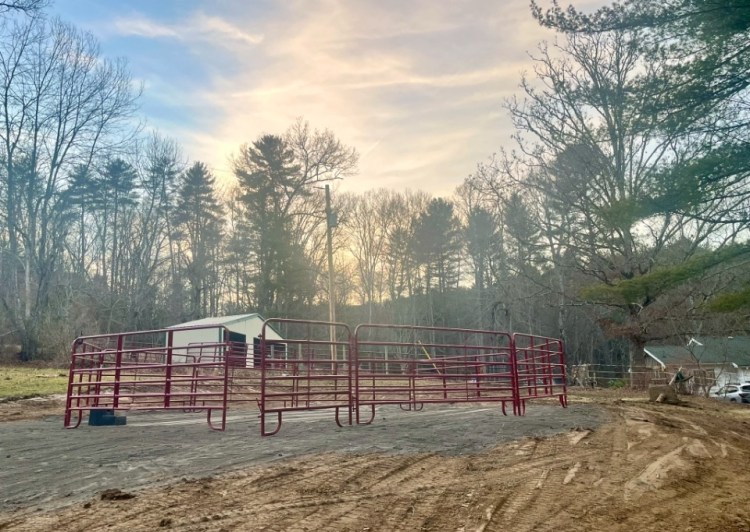
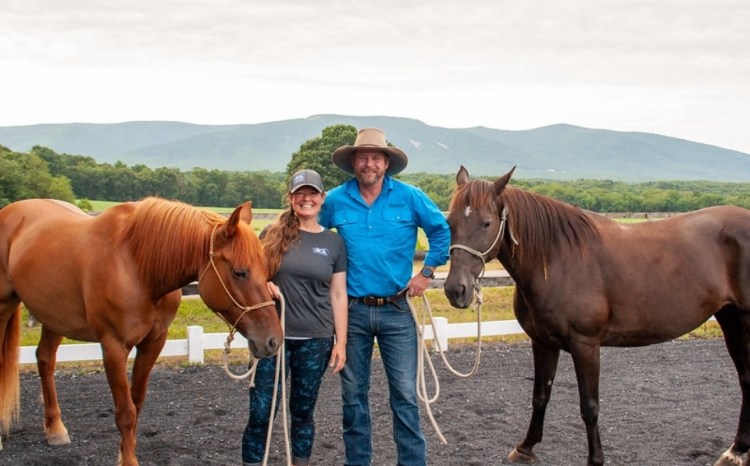
    We seem to be entering a new season here on the ground at Hope Horsemanship! Over the winter we have done a lot of work breaking new ground and with the emergence of Spring, we have facilities in place to do more activities right here at home. Over the weekend we hosted our first Roving Clinic with the majority of the activities right on the ground on our tiny little horse farm. I took a video tour and will include the link at the end.

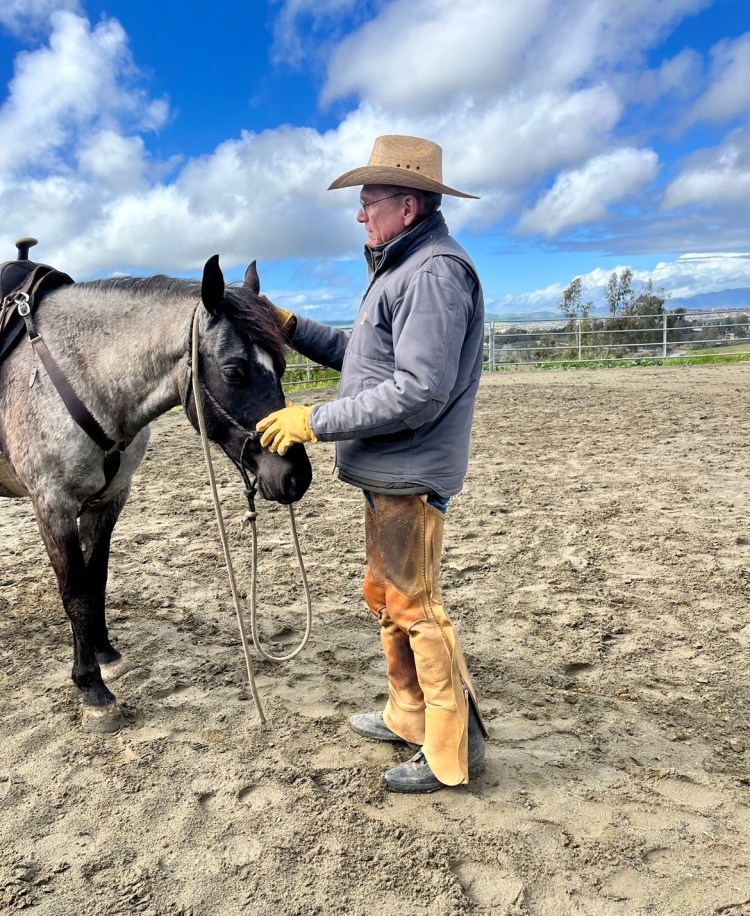
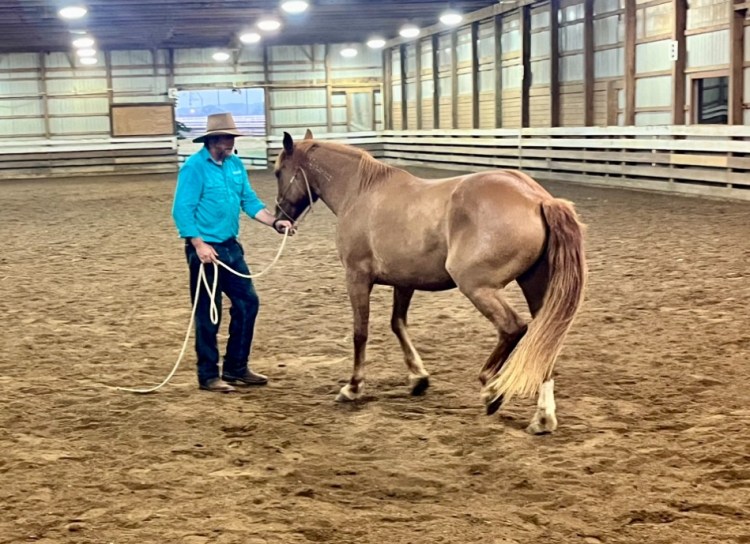
    Sunday at the Hope Horsemanship Clinic with Tom Moates coaching Abigail

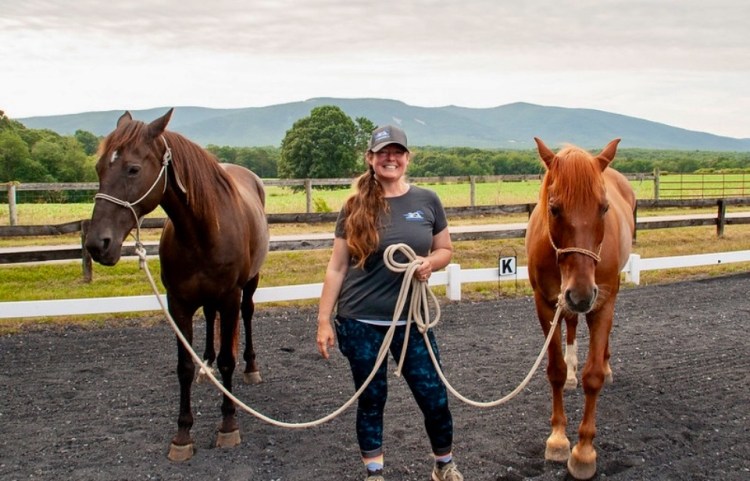
    As the clinic approached and a new season seemed so clearly springing up, I considered Wyoming who I would be working with on both days. Where were we and what did I want to focus on with her sessions? How is it possible that after seven years there is still so much trouble in that mare? What was her life about here with me, and have I failed her? 

    When I found her online through a TIP trainer in the Mustang Heritage Foundation, I was looking for a companion for my small herd that could be a solid trail riding mount and teach me more about horses. I considered her- born in the wild – a native so to speak. Who better to learn horse from than a wild mustang who should come with pretty pure horse language and instincts? 

    Her description was a well-started mare who needed some miles and experience. She was a pretty and nicely built red dun, and seemed like exactly what I was looking for. That was seven years ago. Things did not go as expected.

    I have since come to see the horse you will learn a lot from is not usually also the horse that is a solid nice trail horse anyone with a little experience can enjoy. These are two very different kinds of horses!

    There is a saying in the Bible from Paul that God can do anything- far more than you could ever imagine or guess or think to request in your wildest dreams. He doesn’t do it by pushing us around, but by working within us… (the Message edition). This is certainly true.

    God has a sense of humor and loves me, so he didn’t give me a solid riding mount. I already had one of those. I got the learning horse and I got it big. I brought home an enigma that catalyzed an epic adventure I would probably not have agreed to had I seen it coming. Of course that’s the best kind, and the more steps I take into the wild, the more I realize this is the only kind of life I want to be engaged in. In fact, if I thought at this point things were settling down into a predictable solid life I could maintain on my own devices, I’d likely fall into a hopeless depression at this point. How boring that story would seem now.

    Wyoming did not comply with the accepted natural horsemanship style training that I was immersed in. Even if she may have been able to function within that paradigm, to ensure our journey, clearly I did not possess the skillset to get it done, and in the area I live no one I found was offering anything much different. The mare would not travel in a trailer, so the possibility of sending her farther out to someone who might have been able to jam her into compliance with more creative tools was off the table as well.

    We were stuck with each other, and if anyone was going to help this horse- it was going to be me- and we were not going anywhere. I was going to need help, and it was going to have to come to us. Somehow help was going to have to travel to the most remote, least populated counties in the Virginia Mountains. To add layers of complication, I did not even have my own property to hold these education events, and I didn’t have the kind of funding it would have taken to simply hire a good professional from afar to come and give me a private training window. Clearly it would take a community here in the remote mountains and looking back, it has been a substantial miracle.

    It became pretty clear to me that if God could feed thousands with one kid’s lunch, he could bring the help I needed to this little tiny community and give us a place to do the work. If He was really there, and He cared about this mare, and me, He’d have to show up and do something. 

    He did. Seven years later I am looking around my tiny horse farm, the same place I was living when this all began never imagining it could be a clinic hosting education center- I didn’t even believe until a year ago horses could exist and thrive here. 

    We began this journey with the favor and ridiculous “luck” of the free use of a massive private horse facility! We went from 3,000 acres, indoor arena, outdoor arena, massive barn and large turn out to 3.5 acres and only exactly what we need to come together and grow. On the outside it looks like reduction, but on the inside it’s a huge expansion and a new beginning of a growth season. It’s like a seed that contains everything a massive tree needs to flourish has been planted, the roots have been reaching down and now is beginning to sprout above the surface.

    All because of a red dun mustang mare who wouldn’t get with the program.

    It was just last week the truth flickered to life in front of me as the truth hit me like a stone. This mare is the living, beating heart of Hope Horsemanship. She is the thread that has stitched it all together. She is the reason I’ve delved into approaches including natural horsemanship, the “Ray Hunt” lineup, positive reinforcement, clicker training, “pure” liberty, old school just get it done by force, and anything else I could experiment with because something was going to get a real change. Everything had moments that looked like a shift, but none of them stuck and made the difference. Regardless of what I could get her to do, I still had a horse with deep anxiety and massive brace toward working with people, and who would try with a willingness that I still find unbelievable, and then come to an “I can’t” moment and break down into a chaotic wreck. It’s a miracle neither of us have gotten killed in the process!

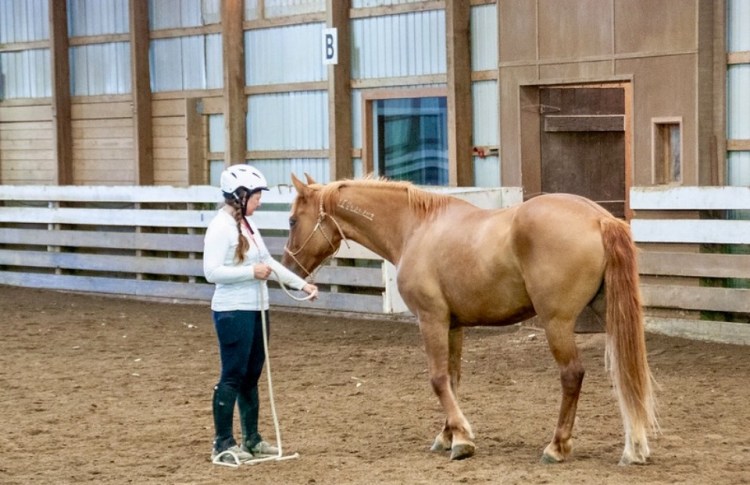
    Working on a right direction circle a few years back

    After finding Harry Whitney then Tom Moates I see the path straightening out, but now in her teens there is so much baggage she carries- a significant amount of it before her arrival- but in all my best efforts I too have added to the weight she carries.

    This is also a lesson. Best intentions are often laced with unintended very real negative consequences. Such is life. We do our best to unravel the tangles we make in our attempts to grow, we trust God to redeem it, and we have grace with others who are making tangled messes in their own efforts. Then I also remind myself to keep trying even though in a time to come I’ll look back on the tangles I’m still making as I try today. It’s ok. Change is possible and growth does come to those who don’t give up. Let grace abound.

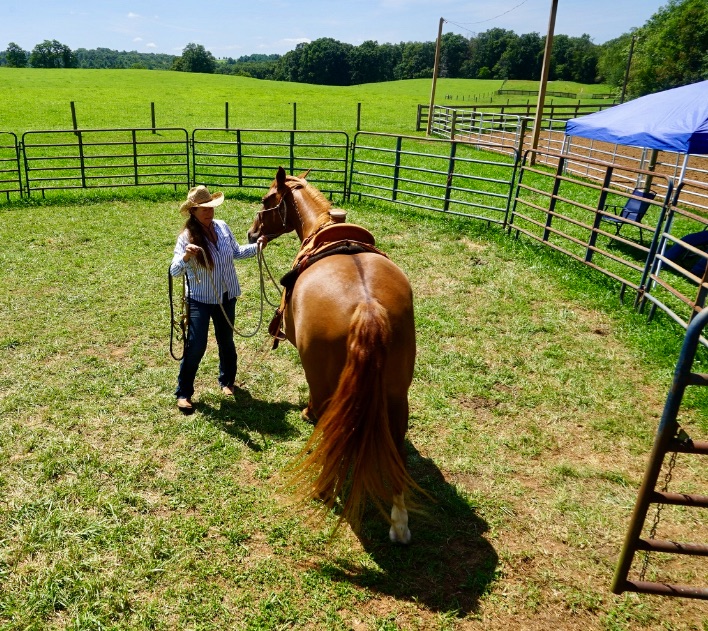
    I always learn deep things when I spend time with Wyoming. Sunday, I was pressing on anxiety she carried walking around me, loose in the pen, to the right. She could tolerate walking to the left, but when asked to the right she showed various degrees of trying to displace her attention to not stay present with me, (sniffing the ground, looking outside the pen).  When I continued to (as gently as possible and still get her mind) bring her attention to our present work and relax and see she will not die… she would break into a trot- movement to dissipate the deep anxiety- and would sweat way more than necessary on this cool breezy day. She was in fight or flight and she chose fight just as many times as flight. Even when the entire pen was available to her she would come into the block I had made in a corner and try to force her way to go back in the left direction before she would consider walking to the right. 

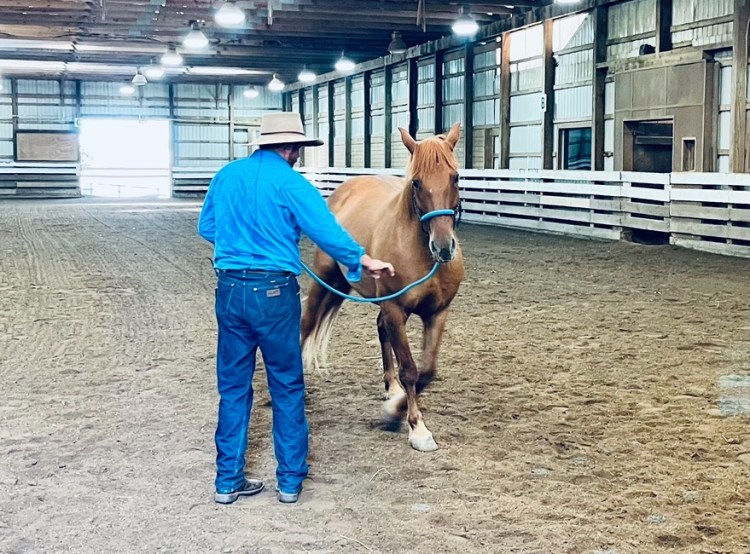
    Wyoming bunched up and anxious about moving in a right direction circle

    We have spent a lot of time over the years making circles on and off a lead rope looking for various things over those years, and in the last two years, relaxation and peace has been a high priority. I can imagine bystanders thinking this is crazy- at what point does one brand the horse broken and move on… leave her alone in the pasture to eventually die or as others have suggested to me: give her to someone who is adept enough to do something useful with the mare, which is clearly not me. And here are the shadow voices echoing in my own mind the same thoughts. 

    Yet I’m borderline belligerent with determination that there is YET hope. Maybe that’s due to my middle name being Hope. Maybe it’s why this enterprise is called Hope Horsemanship. If there is ever a foundational change in this horse it will be the success story of my lifetime. Any sane horse person would have probably walked away from this tangled up knot of anxiety and brace when after three years she still threatens to take me out on a regular basis. So clearly… I am not a sane horse person. I guess I’m ok with that. At this point, I have to know. If she’s not dead yet, there is still hope. 

    Isn’t this what we want to believe about ourselves too? The ones we love? The things they carry that create problems and weight us with anxiety… that while we breathe there is hope for light, love and life to increase?

    Here we are in the pen together on a day of new beginnings, and Wyoming is sick with worry about doing this very simple request, after many years of variations of doing this and not dying. Still she was not “being dramatic” or “making it up” – somewhere in her primitive mustang brain this felt like a survival issue. Still. This was clear to me. To a human it doesn’t make sense, however I know people who deal with severe anxiety and isn’t it the same? Don’t the humans I know with anxiety disorders know somehow that the thing they are about to go into cardiac arrest over is not actually a survival thing, but it doesn’t matter because the reaction is still very real to them?

    I was filled with compassion for this mare. This beating heart of my vision for transformation. I continued to insist that she find the right circle and encouraged her with peace whenever she got even the slightest change, first by taking the direction, then whenever a split second of breathing and relaxation set in. She still couldn’t walk, she had to trot or even canter going that direction, but she began to not fight me every time I asked. She began to choose the open door over the closed one even if the open door felt like death.

    One reason this still felt so life or death for her was because in all the years we have picked up this right circle, she may have complied to avoid the fight with me, she may have made an effort to do the thing physically, but she never broke through to a fundamental change in her mental and emotional systems that she could be ok and relax going to the right around me. She was still deeply unconvinced. The only thing that would change this was experience. The only way to get the experience was to get through it to the other side in a way that was not only obedient, but also relaxed. She would require a handler that could not only get the thing accomplished physically but would be able to help her past the physical into the mental and emotional place before taking off all the pressure so the place she would be left with, after the thing that felt like death, would be a true peace. 

    Chatting with Tom about our riding challenges

    In that pen with me, she is safe and nothing can harm her. Still, she doesn’t know that yet, not really. Not in the way that it is experientially real, and for a horse that is the only way they can know anything. She had to experience the fear of survival, then the submission to it, and then the reality that she is safe and ok.

    How often is this true for me?

    Lately I feel inundated by growth opportunities that feel like a threat to my very survival. I have a sense that God is insisting that I learn in a deeper level that nothing can harm me when I’m in his care, and then remember I’m always in his care. Nothing can take away anything that matters. Nothing can touch me without his consent and only because it will mean I emerge in strength, confidence, and peace having experienced that truth that even though it feels like death, submitting to the storm experience only reveals that I’m completely safe and have nothing to fear. And we are assured that even through death we still have nothing to fear. Even death is not a threat. Tell that to my amygdala!

    A fearless life is a powerful life. Fear is what brings about control and bullying. A fearless life doesn’t have to be so protective and choose to fight, a fearless life walks through open doors that look like death with confidence and find new life, new seasons, and great peace. 

    When Wyoming is in fear of her survival, she chooses to fight me. When she trusts that she is safe she, can hear my direction and walk out to the open space I have prepared for her and carry herself relaxed with confidence. I have seen glimpses of it, and on Sunday she had a significant change when after a gentle request she walked off to the right without displacement, without distraction, and relaxed. She can’t hold this for long yet. Once she begins to walk on water (figuratively) she starts to lose her mind, worry, and go back to her old ways, but it’s a start!
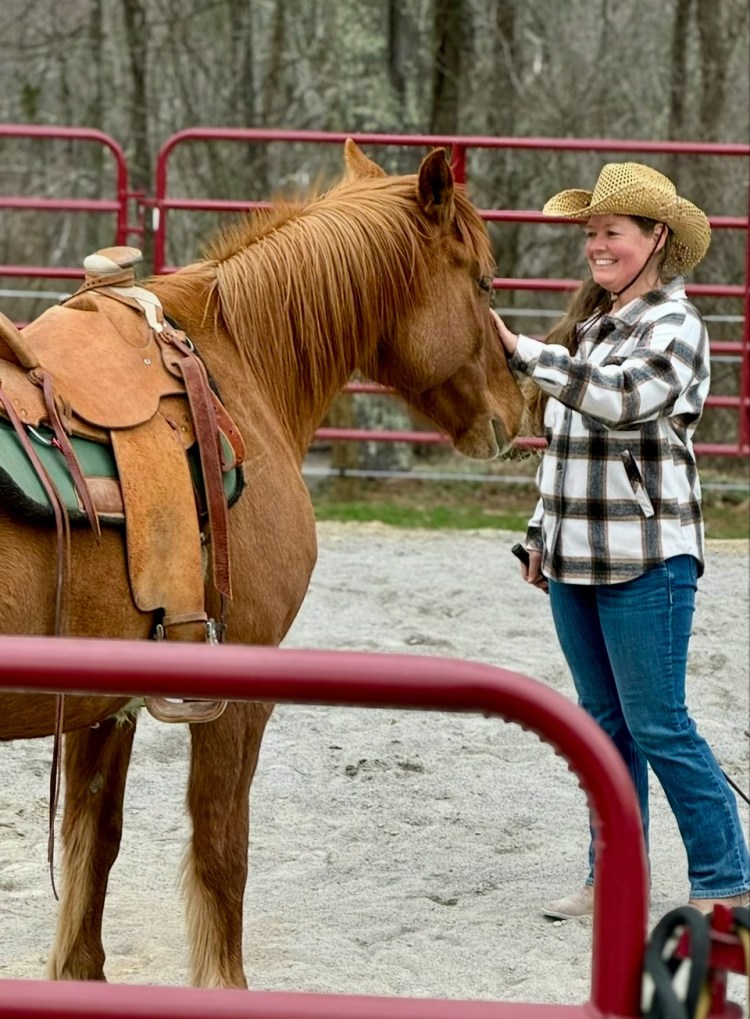
    Change is possible. For Wyoming.

    I believe that Wyoming can continue in the direction of being a horse less anxious about things. I believe I can continue to improve my skills to help her get there. There is not a clear answer to how to do this work. This horse takes more sophisticated observation to know when to do more to press through the hard place, and when to do less because it is going get worse. She’s incredibly sensitive and quick to change for better and worse. The bottom line is I have to get better. The good news is, I can.

    Change is possible. For me.

    I love our community. It’s tight knit and small, but it’s welcoming to new friends. We have folks entering and exiting the circles depending on their season. Many people are hopeful that the horse can be fixed to adjust to their needs and goals when things aren’t working. I have come to believe it’s us that usually needs to adjust to help the horse by finding what they need and supporting them. The change has to start in us, and it must be led by us, and most horses come into alignment with that. Sometimes the horse has enough trouble packed in that it’s too wide a gap to bridge with the time and ability of the owner. As stubborn as I am to commit to bridge building- staying in over a decade is not the right call for everyone. Sometimes it’s just a poor fit and finding a horse you enjoy is really important.

    I am beyond grateful for the companions who are on the epic road with me, because it can get lonely! I am encouraged by the community that continues to grow in support of the long term vision and the commitment to walk together for seasons and for life. I am grateful for the changes that have come to my own heart and life and excited when I get to participate and see first hand the changes that bloom around me. 

    I thought I wanted some training ideas. But what I’ve gotten seven years later is more than I had ever imagined or would have dreamed to ask for.

    It’s not about training for us around the pen and in the arena as we learn together. It’s about transformation.

    And it’s still only the beginning!

    The peaceful quiet after the clinic activity ends and everyone hauls out
  • Path to Vermont Series: Change the way you think

    Path to Vermont Series: Change the way you think

    A local newspaper here in my town has picked up an article series I’m writing about the process of getting a horse and rider prepared for a 100 mile ride. I’m going to repost this (third in the series) article here and remind anyone within driving distance that we’re having our first Roving Clinic of 2025 this weekend, March 22-23, 2025. The fun bonus of this clinic is my amazing husband has been working tirelessly to create a space for us to come together right here on my own land. I had been looking around for a place to do more education events, and Matt looked around and said: let’s just get started here!

    Turns out, he is right! We may be small, but we are a community of powerful horse people who are committed to changing the way we think and helping our horses change the way they think as well. We love to add to the family, and we aren’t “cliquey” – we have a wide variety of people who come to participate and to watch, observe, and learn.

    Now, without further delay, here is the third article about the horse’s mind and why it meant so much to me in my endurance journey.


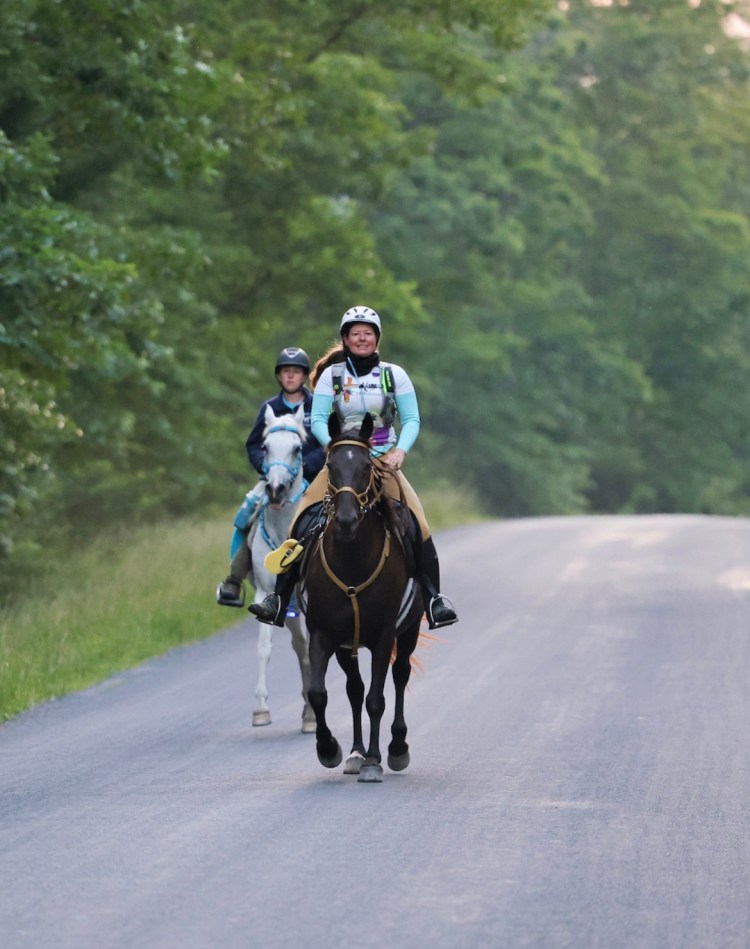
    It’s amazing how many endurance miles Khaleesi and I have completed without her having a forward thought. I suppose that reveals how much one can force a horse through on sheer willpower and drive. Early on, as I was learning to work with horses, I learned a lot about driving horses around. No, I don’t mean in a truck! I mean the energy or force applied to make a horse move away from pressure. To ride any horse on the most basic level, you have to communicate effectively that a horse go forward, and have the horse do so in response. In my experience, most people approach this by driving the horse. The reason this is such a common approach is probably because it is so effective. Yet, I have since learned you can drive a horse forward without the horse having a forward thought, and this is actually a problem!

    Horses are prey animals and come with the built in response of: run away first, ask questions later. It is pretty easy to get a horse to flee from pressure, however, we don’t actually want them to run away, so we also have to contain them. Generally we do this with a halter and rope, or a round pen. The message is: flee, move, evade, but also, you’re trapped. It’s not a stretch to imagine most horses don’t feel very good about this kind of work. I am now amazed at how many horses do become obedient and responsive to the pressure. I do not think I was alone in mistakenly thinking my horse was doing great with this system.

    I flew across the country a couple winters back to watch Harry Whitney work horses in California. He says that it is good to learn what motions come with a horse’s emotions. Due to the prevalence of working horses in this driving pressure system, it has become less common to see what a horse looks like physically when they are truly relaxed and confident in their work with humans. This was true for me. I remember seeing quick, snappy, obedient responses to my requests, I was sure the horse was happy and life was good. Looking back, I understand now that my horses were moving in tension and avoidance, not soft responsiveness. Their bodies were rigid, braced, and tense.

    This may seem like a tangent for an article series about an endurance team heading to a 100 mile race, but it’s one of the most important things I discovered that led to increasing success at this sport. 

    When driving a horse “away” from pressure, the horse’s attention is on the thing it is fleeing from. If I want my horse to run freely forward over the many miles, I need my horse to be thinking about going forward, not thinking about what is driving from behind. Using the sympathetic nervous system to propel a horse (even at a walk) adds adrenaline to the system which is supposed to be for emergency use only. To compile trouble from the driving approach, the horse is also trying to avoid punishment as he/she anticipates a tap or kick and braces against that force as well. 

    This means a horse driven forward is carrying some level of tension. Strength in movement comes through relaxation, flexibility, and good form. Working for extended time and intensity in tension brings diminished performance and increased injuries. These can be metabolic, like a heart rate that cannot drop for the vet check, or lameness from sustained tension in muscles and joints. This kind of lameness is difficult to diagnose because it doesn’t come from an obvious injury.

    Once again, I speak from experience. For a couple years I wrestled with a mystery intermittent lameness in Khaleesi. I took an entire season off from competing after some disappointing events where we did not complete due to lameness pulls. The trouble was, no one could pinpoint the problem and how to fix it. I had professionals check her hooves and legs, and shoulders, to no avail. I had radiographs done on her feet to see if she had unusually thin soles or signs of arthritis. She had no evidence of problems in the tendons or joints. The lameness would show up both with and without saddle; it would randomly appear when asked to trot on a line or around a circle.

    The reason I now believe it was a result of many miles moving in tension, is because I still find it today, though it is very rare. If I address her thought, the lameness dissolves instantly. In those early years, we were severely lacking a forward thought. I am now convinced a lot of physical problems are a product of the mind resisting the work, which creates brace in the body, leading to physical injuries that are difficult to diagnose and treat.

    After spending some time with Harry Whitney and Tom Moates, I came to understand what a major factor the horse’s thought is. I am amazed at the things that will improve when the mental system comes into alignment. When I began to work with this understanding, it brought the final key that changed our endurance team to stronger finishes and eventually completing our first 100 mile event. 

    Modern horse training, for the most part, teaches people to drive a horse first from the ground by adding pressure to the horse’s hind end. We chase the horse with the tail of a rope or a flag.  Eventually, we move into the saddle and drive either with legs to kick or a crop to tap. Anyone who is about to be kicked or tapped is going to brace in anticipation. That brace in the body acts like a brake, making it hard to move easily. You can drive using the gas and brake at the same time. It works, but is there a better way?

    A better way?

    I want to create a desire for my horse to move freely toward something. Helping a horse create a forward thought is more complex than chasing it to run away from pressure. Once I was able to see the difference of a horse moving in relaxation and strength, I could not “unsee” it. I knew this was the way my horse could have longevity and success in her sport.

    I hear a lot of talk regarding the necessity of moving a horse’s feet. Strangely enough, we rarely put a rope on the feet to ride. We put a halter on the horse’s head and use a lead rope, or a bridle and reins. I’m pretty sure we do this because the horse’s brain is housed there. While I have seen people get a horse to move it’s feet without it’s brain engaged in the same movement, this is not a horse I want to be attached to in any way! I don’t want to crank on a horse’s head for steering, and then drive it with pressure from behind to go. With strong enough levers applied, it can create compliance, but there are some horses who never break into this obedience. These non compliant types become the “problem horses” no one wants to work with. Their future is bleak as they fight against a pressure that does not make sense to them and become dangerous, sometimes even aggressive. Yet, even for the many horses who comply with the driving pressure system, their performance doesn’t compare to the brilliance of a horse who is present and engaged mentally in their work. 

    Khaleesi was, thankfully, a compliant type horse, and I spent years driving her before I knew there was a better way. She was smart enough to get out of punishment by doing what I wanted, but it showed up in her body over time. When I learned how to work with her mind and change her thoughts toward something, I saw the change in her body too. We are now erasing the brace and tension she used to carry, and the flexible strength we are developing is really encouraging. 

    This is a process I really enjoy. I’m still collecting tools on how to get my horse to think forward on down the trail. When that slightly lame gait appears, I don’t panic that a lameness injury is imminent. I shift my approach to get her mind thinking down the road, and when her mind straightens out, so do her legs. It’s amazing!
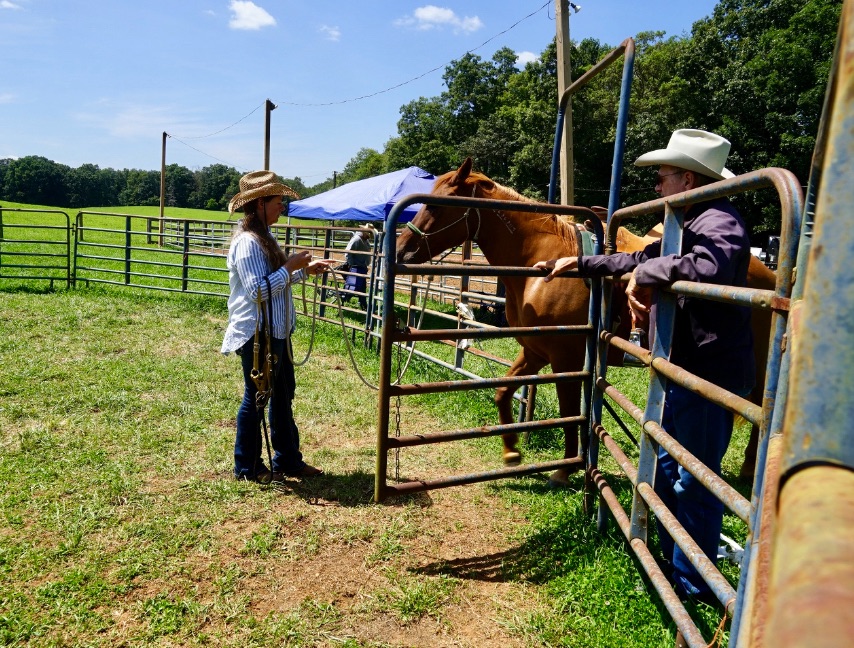
    This approach of working with horses is not only good for an endurance team, it has become a way of life, and the community around it is creative and engaging! It changes everything we do together from leading on the ground, loading in a trailer, getting better transitions, and certainly getting over a jump. If you want to join us to see it in action, we are meeting in Bath and Highland Counties the weekend of March 22-23. Contact me at Jaime@hopehorsemanship.com for schedule, location, and details. Tom Moates will be working with us and our horses, and he always has some books on hand that make great resources for further understanding on starting with a horse’s thought

  • What we don’t say: RESPECT

    What we don’t say: RESPECT

    I’ve heard we all have personal algorithms that are used to feed us opportunities and advertisements that align with our interests. One might imagine I get a lot of horse related nudges anytime I’m grazing the internet. One would be right. 

    Something occurred to me as I read through the ad copy, target written to sell me something. I noticed a few buzz topics, words I remember having a certain weight in past years, and as I read, I pondered: I haven’t had a conversation about some of these things in quite a while. In fact, is it my imagination, or are they missing in the horse community I’ve settled into? As I read questions like: How is your ground work game? Or Does your horse respect you? It was a bit like hearing about someone I used to know well and thinking: hey, yeah, what is she up to now anyway? It’s been forever since we’ve talked.

    I love words. Words matter to me. Sloppy language bothers me. Sometimes I fail at getting just the right word, but I try to express as clearly as possible what I want to communicate, and I spend time and effort to do so. It’s common for communities and industries to share language- terms that to insiders, have particularly meaning often deeper than the surface definition. I love that the current group of horsemanship enthusiasts I have found myself in community with seem to have a similar interest in using words that best express what we intend and not using words that carry a layer we don’t intend.

    One such word I noticed was:

    RESPECT

    I was following a conversation about a horse disrespecting the handler, and realized the “respect peg” was not on my brain wall where I’d last noticed it. Do you think about having “pegs” to hand ideas and information on? I know it’s hard to take in information if there’s no “peg” for it, you have to sometimes start by creating one when learning new things. Once you have a peg, or some might imagine it more like a drawer or a file… you need somewhere to house the information and process it. I think of pegs to hang a concept on. When I read these conversations and questions regarding a horse respecting or disrespecting a human I thought it should have a peg. I have had plenty of past conversations about respect or disrespect in horses, this isn’t new to me, but as I scanned, sure enough, the respect peg was missing. Where had it gone? I hadn’t remembered pulling it out. It was now glaringly absent from my current process of working with horses. That’s odd, I thought. Is this on purpose? Or have I simply not noticed it?

    I put the thought to one of my horse education mentors with the question: is it just me, or do we not talk about “respect” with our horses in this community? 

    No… it wasn’t just me, we don’t tend to use that word. 

    We don’t use the term respect because both respect and disrespect add a layer of emotion that is probably not accurate for the horses in question most of the time. Horses rarely show disrespect in the same way that humans do. In our cultural usage, to disrespect contains a sense of offense or insult. Adding that layer unnecessarily brings an emotion to the table that gets in the way of helping the horse and human find a better connection.

    Horses do have emotional systems. Horses do have feelings, preferences and opinions, however horses are far less inclined to make things personal than humans. When we assign these more human attitudes, we add problems that are not real. This is why our horse community tends to move away from the words respect and disrespect. I don’t think that means it’s impossible for a horse to show disrespect, only that it’s much more rare than the horse world at large seems to believe.

    I took a moment to consider what horse behaviors have been categorized as disrespect in circles from my past. It looked like a horse that invades personal space, possibly stepping on someone, or even runs them over, or ignores a handler completely when their attention is required. None of those behaviors is acceptable, but are they disrespect

    I thought about a child and a mom walking in the mall, and something takes the child’s attention (it could be a distraction like an inviting toy store, or a fear, like someone particularly scary looking) and this causes the child to lose track of mom, and run into her, maybe even trip her while walking. Most people would not berate the child for being disrespectful. Probably they would give a short lecture on paying attention and keeping better track of their surroundings- including not walking into people. Some moms would never have gotten tripped because they are prone to notice when the child is becoming distracted and are always three steps ahead. That mom might bring the child’s attention back before the wreck even happens.

    I remember being in a round pen with Khaleesi while Harry Whitney watched us interact. She walked off from me, then paused to smell a poop pile from a previous horse. I was trying to get something done together and she completely checked out on me. She doesn’t tend to run me over, we’ve clarified that pretty well over the years, but in some circles this complete disregard could easily be interpreted as disrespect. Harry observed: Right now that poop pile is of more importance to your horse than you are… I’d probably do something about that.

    That line still rings in my mind and makes me smile. It comes back to me in what appears on the surface to be very different scenarios, but at the core they are the same problem. My horse is more in tune to a poop pile has a similar root issue as another horse about to trample me because of a distraction that took her full attention leaving me of very little importance. In either scenario the problem is that the horse mentally severed our connection and made something else of higher importance. This is not offensive, it simply needs to be addressed. I do not need to add an emotional layer that my horse has just insulted me, rather do something to remind the horse that I need to be the most important thing in her world right now. If she stays mentally present- with me – she is aware of me, and she is not likely to run me over, drag me off, or step on me.

    Ideally I want to find ways to keep the connection, not instill fear. For a prey animal, fear is easy to conjure and use. It takes more thought, creativity, and attention to draw into something that feels good than to drive with something that creates a threat. When we don’t give our horses a reason to stay connected, it is not surprising they are more concerned with their environment and disconnect with us in order to connect with something they think IS important. This can look like keeping tabs on a lawn mower in the next field, or eating grass as we try to walk from barn to arena, or calling to it’s buddy who brings a higher sense of security than we provide.

    In that round pen, as my horse smelled the poop pile, I had some options, this time I banged my flag on the ground next to me. I did not chase her with it or direct it at her as a threat. I used the flag to make an unexpected sound in the environment to interrupt her thought about the poop and get her to ask what was that? It would be similar to yelling hey there! to someone whose attention I was looking for across the yard. I am learning what it means to be of importance to my horse, and hopefully without my horse feeling constantly threatened by me. I want to give my horse repeated experiences that connection with me is the best place to be. I want my horse to find peace, security, and confidence there. This process assumes that I exhibit those things myself (peace and confidence), and I am developing myself to be a leader sufficient for my horse’s needs. Horses are wired to seek a leader they find sufficiently competent to follow. The definition of sufficiently competent can vary widely between horses. That’s an entirely other wormhole for another day.

    Is this about respect? I suppose it depends on your own sense of that word. If respect simply means to you that someone else gives you consideration and attention, and stays in connection so you can work together, then I suppose the word is not a problem. But if you find yourself singing along with Aretha about R-E-S-P-E-C-T… find out what it means to me, and with that word you have shades of offense or insult, it is likely creating a dynamic that won’t help either of you sort out the behavior issues in question.

    Some may eye roll and say it’s about semantics- it’s all the same thing. Some will hold onto the term as a useful way to describe unwanted horse behaviors, but I think my work with the horses around me has become more productive without it. Today if I have an issue with a horse invading my space or checking out, I’m more likely to see it as a lack of attention and connection, and find something that works to bring back the focus and connection in as little threat language as I can.

    If I’m back in the mall with the child who gets distracted, I might call their name in a regular speaking voice and when they check in with me, crisis is averted. However if the child is in the yard and gets focused on a ball across the street and I notice a truck approaching, I might have to get pretty big, yell in a firm voice, and even seem threatening in order to get their attention back. I’ve seen some horses who have become really good at tuning out humans and protecting their disconnection as if their lives depend on it. I’ve seen Harry Whitney get pretty big in his efforts to get that horse to snap into the present and consider making a better choice. The goal, however, is always to bring the horse to a safe place, a place of peace where they feel good about the connection and seek it out- not for fear, but because they feel better there. 

    I can see why we don’t address horses’ disrespect and I had not noticed the concept was missing. We just don’t see truly disrespectful horses very often. I may have never yet seen one in person. We see horses who have strong thoughts about things other than the work we want to do. We see horses who have left their mind with their herd, or the last place they felt safe. We see horses who are afraid, possibly in pain, or don’t believe they can be at peace when connecting with a human. These are the things we begin addressing, and we see what we can do to bring a change for the better. I suppose until I see a horse that is truly disrespectful, I’ll just keep on addressing the problems as they stand and see where it leads, and I’ll leave that respect peg off the wall until I find a need for it.

  • The Winter of Discontent…

    The Winter of Discontent…

    Winter is terrible and beautiful. I love the quiet, and the landscapes of snow and ice formations are stunning to look at… for a time, however when this frozen landscape drags on for “too” long it becomes the winter of my discontent!

    This year our endurance activities are coming back into focus alongside the community that has been forming around horsemanship clinics and whole horse approach to having powerful partners in whatever we do. After a long winding journey to get through a single-day 100 mile ride, I took some time off and this winter finally, after a little space, have gone back to revisit the long-running blog greento100 from the beginning. 

    The upside is being able to recognize growth. Growth in my writing (the early blogs were hard even for me to slog through), growth in my approach to both the horses and the people around me, growth in my understanding of how to help a horse develop and prepare for a goal… the downside is looking back to the 10-year-ago me and seeing the view before the growth! I’m exhausted from spending so much time with her lately… she was hard to be around. I’m grateful for the ones who saw the potential of who I could be, and gave me the space to develop, and stuck with me through the process. 

    This year, as the future path comes into focus, I’m both excited and much more relaxed about the journey. I saw my desperation as an early endurance rider to find the commonly accepted riding calendars and mileage and speed goals to preparing a horse and the constant pressure I felt to do my part. I feel much less pressure now- even after almost a year between my last competition event and our first one to come, with much less riding in between. I am picking up in the most challenging time to add fitness in the mountains: Winter. To add a layer, it’s a particularly tough winter due to lingering snow that has meant a lot of ice and really hard snow crust that can irritate a horse’s lower legs if too much time is spent crunching through it. The risk versus reward equation looks different to me now than it did ten years ago.

    This year I look outside when the temps are below zero and the ice layer is thickening and I add a log to the fire, go back over more old blog posts in order to understand where I’ve been, and figure we will get out there, when it’s time. I’m far less worried about miles and miles per hour today. I have learned that over training is a thing, and as I review my endurance beginnings, I see it’s a thing I once did too well!

    Still, not getting any exercise is an equally poor plan, so I take a day here and there when the weather cooperates enough to make the risks less adverse and we either go for an in-hand hike up the hollow or if it’s favorable enough saddle up to get into the woods from home. I am very fortunate to have options right from my doorstep and am grateful for them because my trailer is snowed in for going on three weeks now.

    While there is less happening externally, I’m focused on some internal things. I am looking for a framework over which to tell the Green to 100 story- if there is one – in a way that entertains and enlightens. It has also timely for me as I begin a new adventure to visit how the old one began, and remember the things I would not do again. I am living proof that Ronnie Moyer is right when he says: Change IS possible!

    I am pretty excited about the year to come. The community around PowerfulHorse is organically beginning to form and I truly enjoy the family that is coming together around this approach to horse life. We will be sharing time this year around some horsemanship clinics as usual, but I am working on some fun bonus days to meet with other professionals such as Stephanie from Indigo Ancestral Health, Deb from Optimal Posture, Dr. Hancock (Osteopathy) from True North Equine, and USDF Dressage Bronze Medalist Mattalyn Rogers who has shifted from a very successful dressage career to exploring how to do better for the horse combining her dressage experience with the horsemanship experience that aligns with our approach based on more thought and freedom and less force and pressure. 

    So as January turns (a bit too) slowly toward a close, I greet you dear reader with a warm spirit, for those who have journeyed long and far with me- a thank you for your grace and patience. For those who are newer- an energetic welcome and my own expectation that this connection should require slightly less grace and patience than some of the long timers. I am also excited that our local newspaper has invited me to share our current journey to the Vermont 100 with the local community in a print series, so I’ll be doing a bit more writing than usual!

    And so I am spending more time by the wood stove, with my new favorite camping blanket and my laptop, but also ramping up my gym time because I have lost fitness in the last year that I spent falling in love, getting married, and dealing with some personal health challenges along the way. It was a good year for rest and celebration! Now we have work to do and the gym seems a good place to start while the world around me is iced over. 

    Meanwhile I look for the few days above freezing and where the terrain is less crusty or slick or deep and get a little riding in. I’ve been posting some videos of us out in the wild on our YouTube channel so you can check those out if you’re also frozen in the house this January!

    Stay tuned, and invite some friends to the party! I love the family that is coming together – everyone on their own adventure – finding a place to share the stories and learn from each other. Currently we are an in-person ragtag bunch that come together around horses, clinics and good food, but I foresee an online group will be hatched as well to help us stay connected during the “in between” times, and include some who cannot get to in person events. I will keep events updated on the PowerfulHorse.com site and we invite new friends to come, even without a horse, to enjoy the camaraderie and discussions of ideas and approaches.

    Now… to get off the couch and get outside, it’s one of those above freezing days, and I have to get to work later!

  • Does my horse love me?

    Does my horse love me?

    I love my horse, but I’ve been asking the question recently: Does my horse love me? Followed by the related questions of do horses love anywhere near the way humans think of love? Does it matter? Can we be friends? What DO I want from my horse and what can I give her? What is best for her needs as a creature in my care?

    I came across an article by Australian horseman Ross Jacobs (Why Can’t I be my Horse’s Best Friend?) where he considered if we are looking for horses to fill an unreasonable expectation of relationship, or if we expect to fill an unreasonable relational position in their world. 

    Today, horses rarely exist as a necessity for our daily lives. Few of us rely on them for life and livelihood. Most of us keep horses by choice for enjoyment. We might participate in an equine sport, trail ride for pleasure, or even use our horses in some chore or farm job, but rarely do we in the developed west depend on them for primary travel or farm work. Most people I know who have horses care for them as a large outdoor pet. Most people I know love their horses. Regardless of the actual statistics, I don’t think I’m alone in saying I love my horses and admitting the desire for my horses to be my friend. 

    With an animal so different from a human, is this possible to the extent I wish it? How would I measure this friendship? Is it a reasonable wish?

    I am also a dog person. Dogs already have the nickname of “man’s best friend” and there must be a reason we gave that title to the dog and not the horse. One thing we share with the canine is the predator nature. We both work for food, and have the instinct to survive by overcoming and climbing as close to the top of the food chain as possible. Horses are not like us, in fact they are naturally a direct opposite of us in how they perceive and process their environment and how they go about their day.

    My dog Samwise really is my little buddy. He regularly chooses to be close to me, he is always excited when I come home. When I sit in the mornings to read and write with my coffee, he always comes and sits as close as possible, if he isn’t touching me he isn’t close enough. If he engages in a behavior that disconnects our relationship he is quick to repent and is always seeking to reestablish connection. These are evidence for my case that Sam is a kind of animal friend to me.

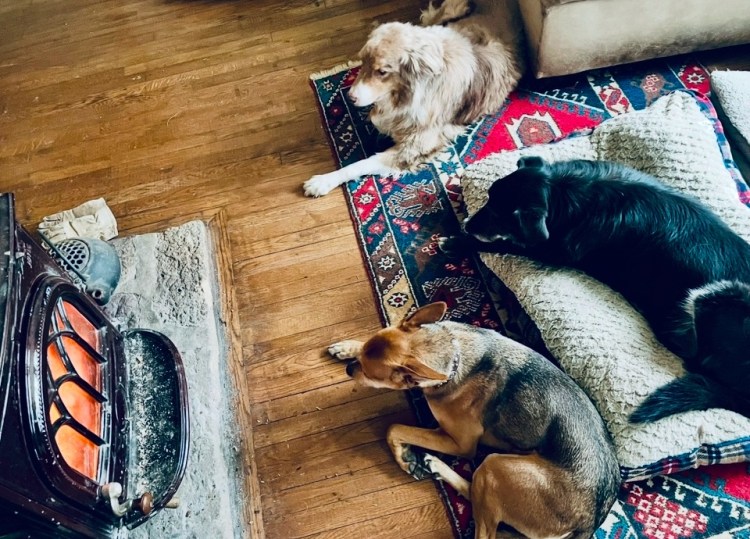
    Samwise and Peggy Sue cuddled up by the warm fire… friends!

    When I look at horses, they don’t generally want to touch each other, at least not unless there is a reason- usually being the need to correct a horse for inappropriate behavior. Occasionally there are mutual grooming sessions, but this seems more like meeting a need than the dog attribute of laying close together in a puppy snuggle pile.

    I am certain horses are capable of thought and emotion. I don’t know how complex these systems get. I believe horses don’t lie, and they don’t plot and scheme together for future barn take overs. I don’t believe they think over how to complicate life for us on the next trail ride. They learn by experience what works out for them and what does not. They are fabulous at observing and learning patterns and can be incredibly smart when it comes to connecting and even chaining together patterns. I believe as prey animals, they are wired to flee problems, discomfort and imbalances in their environment in order to survive another day. I also think horses have preferences and distinct personalities.

    What would it look like for a horse to love a person? I remember Iva talking about her experiences at various local schooling barns as a young teen. She has a quiet spirit and has always been keenly observant. She told me that she would look around at the horses and the horse girls and see them cooing about how much their horse loves them and to her eye it seemed clear to her that the horse was rather uncomfortable or unhappy in their time together. Horses are subtle creatures. Would a twelve year old girl who wanted to believe her horse loved her and was her friend be able to tell if this were actually true? Do we still do this as horse girls grown up? Do we really want to know?

    This essay by Ross Jacobs grabbed my attention because I had been thinking about my own connection to Khaleesi and how it has developed over time. I started her from an unhandled four year old without much human baggage, but she has still had about four different owners in her fifteen years, all of them being me. She was my first horse to start as a filly and the process of growing up with her certainly impacted me, and I’ve experimented with a few different horsemanship avenues along the years that have impacted how she felt about spending time with me. 

    In my earliest years with owning horses as an adult, I remember considering my first horse (Faygo) my friend, therapist, confident, and adventure buddy. Today I see that was an immature starting point of understanding these majestic creatures and how we might relate in a way that is good for both them as us. 

    Now I cringe at the memes that claim horses are therapists. In fairness I know it is therapeutic to be in nature and it has helped me grow as a human being to understand my horse and how we relate on a more simplified relational level and truth about myself has been revealed in the process. So if you would champion those truths as a reason to call horses “therapy” then I stand with you. However I can’t get behind the practice of subjecting my horse to carrying my emotional baggage for the long term, and fix heart issues I don’t want to put the work in to resolve. I attempt to bring my honest, best self to work with my horse as I want to see her honest best as well. In nature, horses do not want other horses in their herds who have emotional instability, and I think it’s quite rare in nature. Emotional instability is inherently dangerous to survival. I think most emotional instability in horses we see comes from experiences with humans.

    As I ponder the behavior of my main working horse, Khaleesi, I have been on a journey to increasing her freedom and choice within the confines of the fact that we always have limitations within our freedom, and every choice comes with consequences. Still, I have been letting go of trained pattern auto-pilot behaviors (push-buttons) in favor of as conversational real-time communication as I can get between two such different creatures and she and me. What is the impact of this between us? I will admit I do not think that horses (or dogs for that matter) have the kind of love that humans are able to engage in, however I want my animals to want to spend time with me. I am not sure if I would call this friendship today with my horse, but I certainly want a solid positive connection. 

    What does this look like? Maybe take a moment and ponder this yourself and consider your own answer? 

    Would it look like her coming right over to me in the pasture when I arrive? Seeking to be close to me when I’m in her space? Putting her head in the halter ready to go do something together? As I look at my short list, I see they are all physical signs. 

    What is the reality of our experience? It varies. If I don’t have a halter she is often curious because usually I have some form of food. She comes right to me when I’m carrying hay or a warm meal. Is this friendship and connection? Possibly! But it’s not about me, it’s friendship and connection with hay and feed!

    When I do have a halter, sometimes she stands in place while I approach her and when she is ready she always dips her head at least slightly into the noseband. But some days she runs around like a maniac and kicks out her hind legs with clear messages of: NO! I’m not going with you right now. If I am not clearly carrying food, she almost never approaches me looking to go into the halter and see what I had in mind. I think there are times in years gone by this horse was more reliable and easier to catch in the field. That was when I had more training and conditioned responses built in. Is this good or bad? What is behind these behaviors?

    I do know horses like patterns. When I had the approach of more natural horsemanship, direct pressure driving, and there’s right answer- let me increase the pressure until you give it to me, I think she was slightly more likely to be caught sooner. Maybe horses appreciate the confidence of a right answer and a conditioned response they don’t have to engage in thinking. Humans are not much different in that respect. Apparently most of us spend a vastly higher percentage of formulative conversations than generative ones. We prefer the how are you? I’m fine thanks for asking… exchanges. We get uncomfortable if someone takes what is supposed to be a formulative and quick exchange and turn it into a generative conversation that is less predictable. And yet there is almost no true connection in a formulative conversation. Connection is more time consuming and risky. I find myself drawn to generative conversations and a generative life. Maybe some horses find the formula, rules and auto-pilot way of life a bit simpler. Maybe my horse, on some days, would rather stand at peace in the sun than have to work out together how to get something done. Is that so wrong? 

    Maybe even that assessment is too complex. When we set up patterned behavior and horses learn that compliance is the best path, they seem to be agreeable. They don’t have much freedom of thought or choice when we enter the picture. If we have a halter, they answer is go with the person and do the things. Conditioned response learned from patterns in experience. I do think horses some horses who are trained to respond in a way an owner prefers is seen as the horse being willing or being a buddy/friend. It may or may not be true if the horse has learned this is the response that means less trauma. They can respond with the “right” answer and still not feel very good about it and still have their mind over with their buddies in the sunshine. I’ve found the horses are actually pretty good at pretending to be present where the body is, going on autopilot, but actually having their mind somewhere else. This works out ok, until it doesn’t! Easy, simple, and routine doesn’t mean bad or good. In any relationship, lack of conflict does not equal strong connection. Of course regular conflict does not equate a good or strong connection either.

    On the other hand, the horse who does always approach me in the field regardless if I have food, a halter, or a rake to clean the run in, is Wyoming. For many years I could assure you this horse was NOT my friend and we did not have a good connection. I would guess she approached me because I was an invader of their space and their current life situation and she had the curiosity to find out why and possibly intervene if she could. This horse taught me that the act of approaching in the field was not an indicator that the horse wanted to be my friend. We have come a long way, she and me, toward a more positive relationship, but it’s in her nature to come greet me whenever I enter the field, where its’s still Khaleesi’s quieter nature to watch me from a distance and conserve her energy as she stands in the sun or munches on hay. 

    Some horses simply seem to have different personalities and different ways of reacting. I’ve known some people who are constantly looking for a different horse, sometimes they finally seem to find one that suits them. I think they have in mind what a “good horse” is like, and the horse that fits that mold in how they approach the world is the type of horse that will work for them. 

    What about the days when Khaleesi stands quietly as I come in with a halter and then when I approach her, hold out my hand and she touches with her nose briefly, and then waits while I step over to her neck and offers the halter- she lowers her nose and then walks with me when I lead her out? She doesn’t approach me, but is the fact that she is calm and relaxed enough to wait for me to come to her a sign that we are, if not actually friends, at least on good terms? My presence did not disturb her relaxation in peace. So far in her life I have observed she is a naturally aloof mare, maybe this response aligns with her honest nature.  Maybe it’s similar to the truth that there are people who naturally greet and hug everyone and people who tend to stay in place until the new arrival makes their way over to them and then has a pleasant conversation without feeling the need to physically touch with a hug? Is one bad and one good? Or is one simply preferable to certain people and less inviting to others?

    What about the days when K is downright difficult to catch and tries to evade me at least for a time? Do we have a bad connection? Or do we have a strong one? Does she know she has the freedom to express her thought about leaving the pasture? As a lead mare, she usually has reasons on these days that might have nothing to do with me. She may sense a dangerous presence nearby and doesn’t want to leave Wyoming alone. She may sense something in the environment and would prefer the safety of her yard to going for an adventure where the danger lurks. The fact that she is communicating clearly she does not want to be caught and haltered may not mean she doesn’t like me today. However I think if she ran every time I came to find her, that would seem an indication of how she feels about me, or the work she is going to be asked to do.

    I don’t have confident answers to these questions. I am also not sure if they have any relevance. Is it ok that the twelve year old girl thinks her horse loves her when someone with a little more experience can see the signs that the horse is incredibly uncomfortable? I’ve known people who always carry some kind of treat for their horse when they go out in the pasture, and they will tell you their horse loves them. I’m both a little jealous because who doesn’t love their horses always coming to greet them, but I know too much to allow myself to think the horse loves me in that case, so it wouldn’t work for me anyway. From an outside perspective however, when the horse comes running to them it sure looks more convincing than my horse jogging away with two hind feet kicked up in my direction.

    It might be fun and make us feel good to convince ourselves that horses feel the warm and fuzzies about us, but then what? What happens when something tests the connection? Will it survive? Does that matter?

    Yes. This I do know. Our connection to the horse will be tested someday when their brain or instinct wants to do something very different from what we need them to do where our safety could be on the line. If we don’t have a strong, healthy, real, connection we can lean into, it’s likely the horse will not be able to stay engaged when things go sideways, we can end up on the ground, in the hospital or if we’re lucky just a good scare. I think a fair amount of equestrian injuries come from deep misunderstanding of what is going on between the person and the horse. In fairness, even with a good connection things can go wrong quickly leaving us injured, but there are times that connection can save our lives because we need the horse to set aside it’s instinct to stay with us and think through what we are asking. If the connection is true, it makes a big difference when the turkeys (or grouse) leave the road. If we aren’t honest about what’s really going on between us we may not know the kind of thin ice we’re actually walking- especially if we are lucky enough to not fall through the cracks very often.

    Just like between people, this kind of connection and relationship has to be built through experience over time.

    Ross asserts that one challenge we face in really becoming a friend to our horses, is that they do not see their days as meant for flying lead changes, trail riding for hours, having their hooves trimmed, or whatever else we want to do with them… He observes being a horse is about grazing, drinking, snoozing in the sun, chasing away a pesky new herd mate, and etc. One problem is we are generally an interruption in their day, not a true part of their lives. They might be willing to engage in our desired activity, but take care not to automatically equate obedience with willingness. 

    Ross asserts that it is not bad to want to be your horse’s friend, or hope your horse wants to spend time with you. I agree for sure. I suppose I wonder how much a predatory human on two legs can provide in terms of what we look at as a true companion to a horse. He found the times he went long-trekking for hundreds of miles were the closest he came to possibly becoming enough a part of his horse’s life experience that they had a bond that became almost a friendship. He was not an interruption anymore, they were doing life together 24/7 as they moved across the landscape each day. I suppose folks who actively work their horses in real life jobs have a tighter bond than I am likely to even have with my horses, even as an endurance rider who occasionally spends entire weekends together.

    Yet this is also ok. Is it possible I might go too far in what my expectations are for a willing partner to be also a best friend (when I have time for that friendship)? Does a horse have to love me in order to be a great partner? 

    Maybe these answers are as unique as there are people with horses. For me, I am beginning to question if we have to be friends the way humans think of friendship. Some people might feel the need for their horse to come running every time they enter the scene or their feelings are hurt. For me, right now, I think it’s more honest that my horse doesn’t have the same response every day, and I do want her to be have integrity of thought and feeling more than a compliance mindset. There are probably people not ready to have generative conversations with their horses, and compliance and obedience is going to be the best they have in this season. When you begin to allow your horse a real voice in the conversation, like with any relationship that enters a deeper level, we may hear things we don’t really want to hear. Ignorance can be bless! Sometimes when my friend Tom Moates helps a horse come out of a shut down and compliant place the people don’t really like what had been safely buried down in there. They’d prefer the shut down, dulled out, compliant horse, in many ways that’s easier than having real conversations and figuring out that the horse needs more than we have the tools to provide yet.

    One thing I am sure of, I want my horse, even if she sees me as an interruption in her day, to not find our time together painful, confusing, or anxiety creating. I do want to know what my horse thinks and feels, and I want to be able to have influence over those thoughts and feelings. I want the work I do with my horse to leave her in a better place physically, mentally and emotionally better than she was before. I fail at this from time to time, but I believe it is possible. I want our connection to be based as much as possible in truth and reality. May I honor my horse for the wonderful creature she is and not who I want to think she is, as I know I have done in years past. My understanding of this over time may shift with new experiences, but may I always be curious and open minded to see what is actually in front of me and not a projection of what I wish were so.

  • We’ve got plans

    Hello readers-

    I’m working on a blog today that will publish ‘soon’, but in case you haven’t seen our video about plans for the 2025 season I’m sharing that here!

    Plans for 2025

    Stay tuned!

  • Letting go…

    Hello readers,

    My apologies for the lack of original content in recent months, I’ve been finding my ponderings more internal and less ready for publication…

    However that is shifting as we move into a new year and a new season.

    Meanwhile, here is a video of K and I taken recently as we breached the gap of 2024-2025.

    Enjoy our little personal note and… stay tuned for more to come!

    New year message

    And if you’d like to check out some of what we’ve been up to at HH this fall, I have some videos on the YouTube channel you can check out here:

    Wyomings journey channel

  • Adverse Conditions

    Adverse Conditions

    If you don’t have something working really well in ideal conditions, you don’t have much hope of them working out in adverse conditions…

    I’ve heard Harry Whitney remind people of this as a fundamental answer to various questions they ask about trouble spots with their horses. It pairs well with another quote, which was my own take home from two days in June watching him at Mendin Fences (TN):

    In my experience, most people don’t know what it looks and feels like to have a horse truly mentally centered and present with you, and so most people don’t really get there, and this is a reason many people can’t seem to get a real change come through. The horse was never really centered up and present.

    It’s been a priority to address Wyoming’s mental centeredness since I’d met Tom Moates early last year.  Tom has been learning from Harry for years, and attention to the horse’s mind is a central focus for him as well. This doesn’t mean I’ve been successful it. We’ve made some significant strides in helping her become more relaxed, less angry, and significantly more cooperative than the other approaches I’ve tried over years. Yet I sensed a trouble in her that I had not gotten to the other side of, even as of this summer and the clinic we hosted in July.

    Harry Whitney, Wyoming & Jaime in Floyd VA, August 2024

    In mid-August, during Harry’s five-day clinic in Floyd (hosted by Tom),  the question came to each participant: what is it you most hope to address this week with your horse?

    I had one request: show me what it looks like to get Wyoming mentally centered and present.

    Harry was willing to guide us through this, and on day one, our lesson hour was spent, from the field to the work space, on learning what she looks like when she is fully present and how to require that she make that a way of life for now

    Additionally, my job was to make the times she was present and relaxed as sweet as possible. This is the place that feels good. At first, any time I asked for her attention, she would start throwing out options I might ask her for, like walking a circle. It was as if she had a hard time believing I could ask for her to be relaxed, ready, and present and then just breathe a moment and find peace in that space. Probably I don’t find as much peace with these creatures as I could, and a change here will serve us both. This was all we did.

    Harry & Wyoming finding a sweet spot with her mind present.

    At the end of our session that day, Harry suggested I take her all the way back to her paddock walking backward and not taking a step she wasn’t “with me.” It took a lot for me to stay that present and focused. 

    It took a lot of focus on day one to walk backward to the gate connected at every step to release Wyoming from class. But I was committed to the process. Harry helped me to be able to see when she was present, and bring her back when she wasn’t. The entire week I did not take a step without expecting she would come back to being mentally centered. This is not to be confused with being “hyper focused” on the human at every second for fear of punishment. There are training methods where a horse is ambushed or punished for looking around. Though I use a flag for some of this work, it is built around creating an indirect distraction or sound or movement that draws the attention back to me. The key difference is intention: the actions is not at her – not a threat toward her. I need to become more important or interesting than the other distractions. Working with Harry, we don’t use fear or force as a motivating factor. Doing this takes a shift in thinking.

    Once this becomes a way of life, the horse can look around and notice the environment because they have learned to quickly make note, let it go, and return to the place of peace which is back mentally centered with the human in the work. It is part of learning to let go of a thought that doesn’t serve the horse.

    Wyoming is a highly sensitive horse that has her attention split, keeping everything around her in check in order to survive each day. When she is distracted keeping tabs on everything within five miles, she can throw out autopilot training moves, but she cannot stay present in the active conversation I want to have with her. I don’t want push button autopilot. This has not served us at all. I want actual communication, in real time, addressing the present moment we are in. In order to do this she has to let go of the other things and stay with me. As Harry helped us make this a reality, secondary issues began to dissolve on their own. 

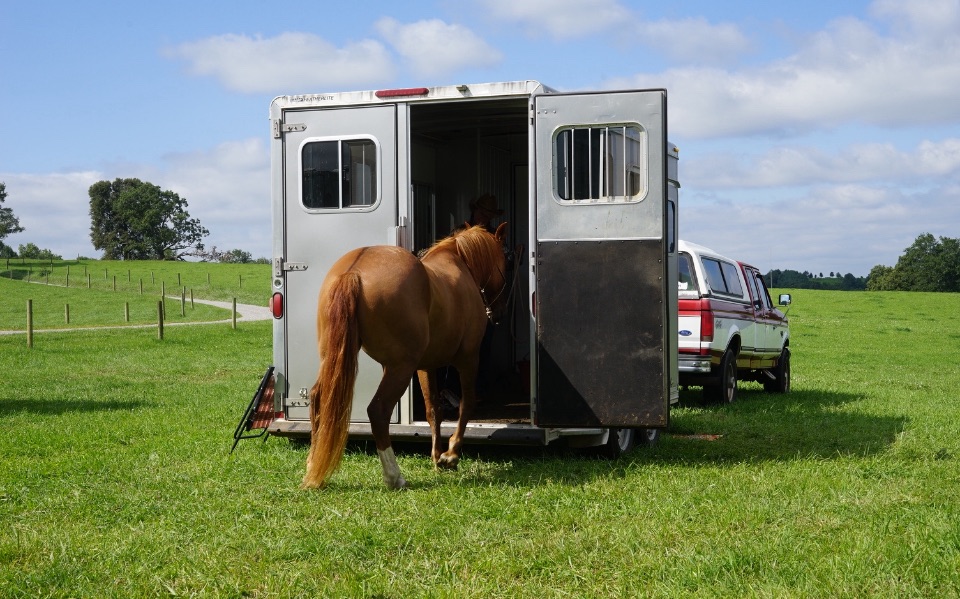
    During the week we addressed some different challenges I had been working on. We loaded her onto a trailer that was darker and had a step up entrance (instead of a ramp).

    Borrowing a strange trailer

    I worked on “knot work”- addressing the claustrophobia from early halter trauma that’s been present in some form the entire time I’ve had her. The day we explored knot work, I expected to see at least some extreme reaction to the halter, but it simply never came.

    Knot work

    I rode her in the round pen; I’d had trouble in the past getting a forward thought to walk on without driving her. We came up against a little drama here, but worked through it in short order, and had a nice shift in riding as well.

    Finally I felt a shift that seemed a significant change and I’ve continued this work at home. If this mare is not mentally present or centered up things do not go well. She gets annoyed at having her thoughts interrupted when she’s concerned about other things. Sometimes she still gets dramatic when she shares her feelings about her own ideas being interrupted or blocked. When she is mentally centered she is like the wonder horse I’ve always wanted. She is soft, adjustable, responsive, and willing. 

    I’ve been riding her at home in my round pen, enjoying great sessions where we are building like one would a green colt, forward, steering, stopping and backing. 

    I am trying to start this journey in as ideal conditions as possible. I continued to prioritize mental connection. I can put on the halter without fuss, load her on the trailer, and ride her in the pen. Each day more positive experiences and progress. Last week, Matt and I took her on a solo adventure, loading her on the trailer for a short drive to our local recreation area. We unloaded her, took a walk, then loaded her and returned home. It was a great success.

    Matt, Wyoming & Jaime have a successful adventure

    My next plan was to bring her to visit my farrier for Khaleesi’s shoe visit on Friday. I want to keep building on experience a real horse can have and farrier visit seemed a great next step to me. I trim Wyoming’s feet myself, and if we were able to get some trim work done or not was not important. Simply the experience of going on the trip successfully was the goal. Keep it simple.

    What I did not account for was hurricane Helene.

    Adverse conditions.

    First, Hurricane Helene turned tropical storm was making her way through the South and though we never had the destructive storms, we had almost 2” of rain and gusty winds. All this boils down to prey animals on high alert. The mares were spring loaded by the time to get going came.

    Second, the weather was crummy enough that though I was minimally willing to do what seemed necessary to have this adventure, I was less willing to go out early enough to assess her mental state, and intervene to find a working mindset before even considering loading. I gravely underestimated the effect of these adverse conditions. I might normally have planned a few minutes to shape this up… What I really needed in these conditions (in hindsight) was an hour of focus… and still, it might not have brought success.

    Third, we had a soft deadline. I highly value my farrier and drive an hour over the mountain to haul to him. He was at home, and happened to be flexible. Still, night would fall at some point, and though I had a time window, it wasn’t endless. Time restrictions always feel like pressure. Pressure brings fear of failure which often makes for poor decisions.

    To make a painfully long story shorter, Matt and I did the things that were successful in the past for about an hour. Over that time I watched the stubborn mare I used to know show up stronger to the forefront and dig in her heels. The more we insisted she join us with the trailer plan the more she resisted.

    I made a pretty good mess of it as I became desperate to get it done. Matt was a phenomenal help, and he never got frustrated though things were not going well. When our best efforts and closest moments dissolved into escapes off the ramp in panic, I saw I was doing more harm than good and creating problems I was going to have to fix. I knew the frustration I kept at bay was getting closer to the surface, and I knew that would only make things even worse. 

    I made one good decision to set aside my own stubbornness. I made the call to abort the mission, put her back in the lot, and take the horse who needed shoes before we had to abandon altogether. Wyoming did not have to make this trip. 

    It was hard not to consider this admitting defeat and total failure. Because that’s exactly what it felt like, and I am not one to admit defeat easily. I told myself years ago I would NOT allow work with my horses to become a win-lose scenario. I am not in this to make my horses into losers. How I want to function is a growth model, and it’s a long journey. I was recently reminded by Adam Grant in his book Hidden Potential:

    though straight line growth feels faster in the short term, it’s been proven many times that growth curves and loops are the only way to get farther over the long term.

    For a straight line thinker I have to remind myself of this intentionally, often.

    The mare was not with me, and we were way too deep in adverse conditions to swim out- especially considering it wasn’t necessary. Hopefully this was a loop in the long term trajectory that would carry us farther than my preferred straight lines of success ever would.

    My biggest miscalculation was to think I could get her out of the field after a half day of being jacked up by her environment, and then load her as if we had already mastered this because we had a few successful trips in ideal conditions. If I would have stopped to ask myself if she was mentally centered up sooner it would have been obvious that she was not. For some reason I thought I could overcome this deficiency by sheer willpower. Strangely enough eight years of trying to overcome her inattentive mind to get her to do anything never worked. Why I thought I could revert to my old ways and get a different outcome is… mostly embarrassing.

    After over thirty minutes of this idiocy, I saw it clearly. I realized she was minimally mentally present and that was my biggest problem. She wasn’t running me over or creating a danger and so I accepted it as good enough- but she was still highly distracted. After starting the process and getting very poor results I took her away from the rig to address her mental connection. 

    This was the most challenge I’ve ever had getting big enough for her to let go of every outside distraction a stormy day could bring. She would look at me and immediately avert her eyes, head, neck or even her body, to a sound or rustle or leaf in the air. To her this was survival and self-preservation. I couldn’t keep her mind for more than two seconds at a time. I worked very hard to get very big and very loud and very active and I could get maybe five seconds. If so I would take a few steps do it again and get a few seconds and take a few steps. In this mode I got her all the way onto the trailer, but as soon as matt touched the butt bar she would explode off because even though I could get her body on, her mind had not settled there. 

    It was a lost cause. I might have stopped after I realized she was not capable of staying present, and I should have realized that within five-ten minutes. I could have asked that question sooner and I might have realized that I was into depths we could not swim successfully. Possibly if I’d have addressed the mental state better in the first few minutes I might have had a chance. I don’t know.

    As always there are the growth opportunities. I get to experience once again as a reminder what many people I care about are also experiencing when they get some momentum with their horses and then skip over – sometimes purposely and sometimes without realizing it- to the deep end and get into a bad situation. Not only is it humbling for me to hit a place I cannot overcome in one fell swoop, it’s good for me to have to experience what people around me are going through. I am willing to go through challenges in order to learn things that might be able to help others. And so as James tells us in his letter: Count it all joy when you meet trials of various kinds! For you know the testing produces steadfastness, and let this have its full effect that you may be complete, lacking in nothing! 

    Also, it reveals to me me the dark, stubborn, frustrated part of me I hope to identify and eradicate. If I could have done so, I would have picked up that horse, hog tied her into that stall, and forced her on the journey. At some point I lost most of my compassion for her and the real sense of threat and pressure she felt.

    Working in ideal conditions

    In ideal conditions I have grown so much! I have tons of patience and empathy for what the horse thinks and feels. I can say I am here to help you and mean it. When the conditions squeeze me, what comes out? Eventually frustration and the desire to beat her with my flag until she complied by force, broken mind and broken will. I did not go there, but it was because I know that doesn’t work- not because of my stunning maturity and grace. It’s good to be reminded of the garbage that remains in the darkest corners that still need cleaning out. Lord help me, and thank you for exposing it without me acting on it.

    Something encouraging I considered in my personal debrief: this mare has a history of going to fight mode unusually quickly. She has threatened violence when she feels treated unfairly, with punishment or force. Friday, her stubborn will engaged, refusing to be loaded on the trailer, however, she never threatened with dragon ears, rearing, or nipping. She refused, but she didn’t fight.

    In the end, the conditions didn’t seem adverse enough to me to create this trial. I was wrong. Also, I had thought that our ideal conditions work was going well and it was. But I’ve learned from Harry that me, and many of us who are pursuing excellence and a higher working connection, are not aware enough yet of the subtleties in the ideal conditions that his eye would be. I can hear him say: you’d better get that working better because it won’t hold when things get adverse. The same as he has observed: most people don’t know what it looks and feels like for a horse to be fully present and truly mentally centered.

    Practicing going forward and back through the gate keeping her present each step.

    It seems many of us have to feel in mortal danger before we dig into what seems good enough. Apparently, for each person, there is a different threshold for working good enough. All foundations have a certain amount of weakness. Will it result in a tragic wreck or only sub-standard performance? It probably will depend in part on what kind of conditions you face. For Khaleesi, these adverse conditions were not a huge deal, for Wyoming they were a deal breaker. I want to be someone who digs deeper even when things are not downright scary and grow even when things seem good enough.

    Harry… the ‘Coast Guard’ Whitney

    I still having a long way to go. This means more time in the ideal to expose foundational cracks and more gradual steps into incremental adversity so the cracks are patched up before being totally overwhelmed beyond hope without a rescue effort from the coast guard. Someday I hope to see morelike Harry. Because of his experience and attention to details, time for him is shorter in the shallow end, and he has more tools and experience in the deep end- I suppose in some ways Harry is the coast guard.

    Today I am grateful that horses have memories and experiences, yet they also shift quickly with their experiences. I am pretty sure I caused problems I’ll have to fix, but if I show up fresh the next day, I believe she will as well, and if I bring my A game she will respond. Nothing is beyond repair, even though repairing damage I’ve caused isn’t a good way to proceed. 

    Epilogue.

    The following day we had a break in the rain and I spent some time with Wyoming to assess the damage. She was more difficult to halter in the field, but once I had her on line she came with willing softness and keeping her attention centered was easier in the calm sunny afternoon. I struggled to load her as easily as previous, but Matt had been watching and asked if he could try. It took some communication and patience, but he was able to load her twice fully on where she felt relaxed and calm. We did not close the bar, but took the progress and moved on.

    Matt and Wyoming regroup after the storm

    Matt then kept her attention and held the rope while I attended to her feet which did need a trim. She did so well we also put on her saddle and did some work in the round pen. All of this went well and Matt took the lead (literally) on much of it. He has a grace and patience for that mare I sometimes struggle with, and she responds well to it. 

    Yes there are some setbacks, there was a price from the poor choices and miscalculations I made, but these things will pass, the growth will continue in loops and curves. As always… Hope continues.

  • The other side of trouble

    The other side of trouble

    July 15, 2024

    My eyes began to water in the heat of the afternoon as I stood in the large dirt arena watching the scene unravel. I was glad it wasn’t likely anyone would notice. My back was to the onlookers, and Mark was working with the wild mare, too involved in what he was doing to notice. I’m not so concerned about tears in public anymore, though it’s not my favorite, but I was pretty sure anyone who did notice would misunderstand the reason for the emotions gripping me in the scene. 

    They didn’t come from watching my mare rear violently in reaction to even feather light pressure on the halter. Particularly when she became so reactive she fell on her side in the dirt which was quite dramatic. (She wasn’t hurt).

    The emotion didn’t come from worry that Mark was being unreasonable in his approach, creating unnecesary fear and stress, and watching him work with her might upset me. I knew he did not create any of what I was observing, it had been inside her as long as I’ve known her.

    What grieved me as I watched Wyoming flailing on that lead rope like a fish on a line was a snapshot I had somewhere in my heart of how many of us go through life or seasons of life like this. We are fighting and we can’t seem to stop fighting. We end up getting hurt, and hurting those around us while we flail and fight against what we perceive as life threatening pressure but what is intended to be a comfort. I saw myself at times. I saw people I love at times. I saw humanity. I saw my beautiful mare react in dramatic fashion as if her life was in danger, unable to let go of her past experience, trauma, and fear to trust the guidance. It touched me in an unexpected way in that moment.

    Mark Langley working with Wyoming

    Mark Langley, who was instructing the four-day clinic on the last stop of his USA tour, cares deeply for the horses and this thing in her that overreacts to any pressure is a torment she does not need to carry. He was hoping he could help her get through it to the other side of this trouble. There is a physical or mental memory (maybe a combination) in her that was seared into her on day one of her mustang make over competition training. 

    I was told the history when I picked up the wild mare in Tennessee: the trainer put the halter on Wyoming, the mare reacted in fear and came aggressively toward the trainer, the trainer (in her own words) overreacted, putting excess pressure on the halter, and sent the mare up in the air. Her first experience of education with a human ended in a rear up, back flip, and injury to her neck that took her out of the contest and put her on a trailer to Tennessee to have a slower longer training process through the Bureau of Land Management’s (BLM) Trainer Incentive Program (TIP).

    It’s likely with the trainer’s natural horsemanship approach: round pen, energy work and driving to create draw, the mare could be successful and avoid having the feel of restriction of the halter on her head. She became an amazing energy and body language reader. She became a punishment avoiding release hunter. When we picked her up as total strangers, just walking into the small arena, she would hook on to us or whomever it was, and follow closely. It didn’t occur to me that so much draw had been created in this mare that she felt the only good place to be was next to a human in order to avoid being sent out and driven.

    Since I’ve had the mare, asking her to back up and out of your space brings pinned ears and stress. It’s a huge feat years later to ask her to comfortably stay just out of your bubble. If I do get her to step back three feet and stand she gets anxious and begins to try to offer a circle or creep back in. She has the expectation that the human is going to ask something of her and she throws out possible options anticipating what might come next. She has learned if she doesn’t comply quickly enough with a request, the enforcing punishment will come via escalating pressure: a lead rope to her hind end, a flag will touch her, the bump on the halter. She lives in the future of what might be coming, and how to avoid it. If she can’t avoid it she feels trapped, gets angry and fights back. 

    the potential for pull back is serious in a trailer

    I stopped natural horsemanship style driving about 18 months ago when I watched Harry Whitney work horses in February of 2023. I think it’s begun to help change some of Wyoming’s experience and reactions, but the deep early formative work with her is still churning away at her core, and when it gets poked it comes out in big reactive displays. 

    The physical feel is only one thread of the knot which is inside this horse. Many horses comply to driving pressure (I have one who did), but Wyoming was one of the horses for whom the combination created a bit of a Jekyll and Hyde monster. She is either snappy quick, spot on with her reaction to a request or super angry and violent. Additionally in layer of wound up layers, she is a mare who has a hard time letting go of anxious thoughts. 

    Jaime working with Wyoming during the clinic

    Not only is strong drive and draw set into her, but when she is very close to me she can keep track of me physically while keeping her mind out on the larger environment. Asking her to back off three feet also means the human become part of the larger environment and she has to give mental space to keeping track me as well as everything in the next three miles in every direction. She has yet to become truly mentally centered in the way she can let go of the “other things” she holds onto for her survival.

    It’s stunning how she can be in this mental, physical, emotional place and still function to the level she does. If we could ever get to the other side of trouble there’s a phenomenal mare in there.

    How do we get to the other side of trouble?

    If I could answer this definitively I could have helped a lot more people and horses than I have to date. Yet somehow I’m still at this mystery even when I get discouraged. I wonder if I’ll ever know something definitely enough to be of value to a horse- or maybe even some of my fellow humans who are willing to take the mysterious journey into this wilderness of trying to understand how to help a horse feel better and be a more powerful willing partner.

    I do believe it is possible and so I don’t give up even when there are setbacks and it gets hard.  I do believe with a horse like Wyoming it is a matter of going through to the other side of the trouble and not letting the trouble make her world smaller and smaller until she is afraid of any pressure at all.

    It’s likely that Wyoming’s early training taught her that pressure meant she needed to adjust in order to get the pressure to go away. Unfortunately, anytime someone takes a rein in hand it creates a pressure or imbalance that the horse has to respond to – if done well it should bring the horse comfort through guidance, but if they have been trained to avoid pressure and seek release we have lost the ability to guide them through the reins or the lead rope. Very few people work their horses in the real world without reins or a lead rope. Nor do I recommend it as the ideal. Yet this means anytime someone picks up a rein to communicate with their horse, instead of relaxing into a guiding hand, many horses respond with anxiety to seek immediate release of pressure/imbalance which creates brace and tension through the body which works against strength, balance and grace in forward movement. 

    Jaime & Mark with Wyoming & Khaleesi

    I have a hope that Wyoming can get through this extreme fear of pressure that was created early in her training (and solidified for a time by me) so she can trust me to guide her. I want her to feel the rein or lead rope guide her into where she will find peace and safety in my leadership. I want her to correct the imbalance she notices and in doing so find she has choices, and the freedom to choose a path of lease resistance that is fairly available to her because I am able to offer that. But I also want her to be able to stay connected at the end of the rope in appropriate balance of pressure like I would hold my dad’s hand to cross the street as a child.

    She has to stop fighting first. If she would stop fighting she could follow that feel and see it would not bring her danger or pain, but comfort and safety. I asked myself if this deep sadness that came over me momentarily was indicative that this scene was playing out in my own life, or was a memory now. I’d like to say I’ve learned not to fight against the hand that guides me with strength, kindness and love. I know that my own journey through the wilderness is far from over, and sometimes I don’t even realize that I’m fighting the guidance that feels like pressure and imbalance and sometimes downright life threatening to me. 

    I’m sure Wyoming doesn’t understand what I’m trying to do in the bigger picture just as I really don’t always understand the big picture of what is going on in my own life while I’m in the middle of it all. 

    We were not able to get Wyoming to the other side of trouble in the four days of the clinic, but I learned some things that I hope will help me continue to guide her through. As with most worthwhile journeys, I feel like we’re deep into the wilderness, but in recent years I’ve learned something about the wilderness. I’ve learned it’s the place we least want to go, yet it’s the place where the transformation takes place. If we are going to get to the other side of trouble, chances are we have to be willing to be led into the wilderness.

    And so I go.

  • Mind or Meat

    Mind or Meat

    Endurance News Summer Extra just printed this article I wrote, since it’s been officially published I can now share it here for my own readers.

    Anyone who’s attended an endurance event has heard the conversation with the rider who has the horse that pulls their shoulders out of joint, determined to run at the fastest speed possible, oblivious to any influence from the human and on the edge of control for the first loop or two. This scenario is common enough to have a name in the endurance world: Race Brain

    I haven’t ridden that horse, but I have ridden the one who wouldn’t leave camp after the first loop without a crop. I’ve known horses who can’t continue in an event if their buddy is pulled. These issues may appear unrelated to many, but I believe they share a common root cause.

    Perched on the periphery of a round pen last year, I watched Harry Whitney work a troubled horse. “When the body is in one place, and the mind is in another, there’s trouble in the household,” Harry said, wanting us to understand this anxious horse who was pacing and calling to friends in a faraway stall, had quite literally lost his mind. The owner had brought the horse’s body to the pen, but the mind remained with his friends. The body and the mind needed to be reunited, but there was disagreement on how. The horse was expending great effort to take its body back to its mind, but Harry was determined to bring the mind to be present with the body.

    Harry Whitney in Vista, CA

    I watched Harry do very little, but at the right time, in the right way, and saw the horse’s mind come present, and peace settled on the scene. I knew this was different but not sure how. Seeking clarity, I asked him a question, and I’ve returned to his answer time and again:

    What it comes down to is your intention, are you trying to move the mind or the meat?

    What Harry was explaining, is often people determine to mechanically manipulate the horse’s body.  But Harry advocates engaging the horse’s mind, so the horse can move himself in a relaxed and willing way.  These approaches produce vastly different results, and establish very different relationships between horses and humans.

    Any time a human has trouble with a horse, Harry insists, it’s because a human had one plan and the horse had another which he could not let go of. It’s in the solving of this problem we have a myriad of techniques, opinions, and more disagreement!

    We know it’s not good for the horse to run inverted and braced against the rider. This is one reason many riders choose to tie down the horse’s head in a martingale.  Also, I haven’t met a rider who enjoys riding a horse with a lost mind. These horses run through even severe bits, so that is ineffective for extreme cases. Many horses, (and riders) on race day are high on adrenaline, and that brings excessive strength for the short term, but at a cost. The sympathetic nervous system is intended for quick reaction to life-threatening circumstance, not for hours in a day. 

    Mark Langley shared a story on his podcast of an endurance horse in Australia that finished in the top 5 in most races. Eventually, this talented horse was breaking down and experiencing muscle wasting. The horse had been competing on adrenaline, which was a factor in his success, and the stress was breaking his body down from the inside out. 

    The first step in solving any problem is identification. The fact we have the term race brain tells me somewhere we know this is a problem of the mind— we don’t call it race body. I’m not sure why it wasn’t obvious to me in years past, that we can’t effectively solve a problem of the mind with a mechanical approach. Approaching my horse with a view of where her mind is has meant changes to my riding. I no longer carry a crop and I’ve learned ways to bring her mind along with us when we leave camp. In some cases we can force the body to our will, but it puts us at a long term disadvantage. When we add a more severe bit, a tie down, or a crop we might get the job done, but the horse doesn’t move in relaxation, balance, and strength. They aren’t feeling good about the work or the relationship. The horse is running under stress and the effects will show up in the body. 

    This kind of mental approach isn’t a quick answer training plan; it’s a fundamental shift in my thinking. It’s a practice; a way of life. It’s also endless in possibilities— I get better every time I go learn from good horsemen who are further down the trail in this practice. I am increasingly aware of when her mind is with me and when it’s not, and it’s easier to make changes before the separation is too great. I’ve had to get creative and ask myself: how I can get it done through the mind and not the meat? and I still find myself trying to get things done by force more often than I’d like to admit. 

    Photo by Becky Pearman: Start of the OD 100 2023

    When my horse’s mind comes through and she is present in our work, I see and feel it in her body. Not only is everything more enjoyable, but I’ve seen these changes bring better performance in events over the last year. This is also a key to longevity. A horse moving in relaxation and balance will stay strong and sound over more miles than one mechanically driven. So next time you are problem solving a challenging horse behavior maybe you’ll also start with the question: mind or meat?


    Though the ideas here are simple, they can take a lifetime of practice to truly master. What has helped me progress along this journey is finding good horse-folk to observe, learn from, talk with and work under. I’ve been fortunate enough to learn from Harry Whitney as an auditor and in clinic with my horse, invite Tom Moates to work with me in my own neighborhood in our special event roving clinics a few times a year, I’ve spent some time with Ronnie Moyer, and I have a unique opportunity to host Mark Langley on his USA tour in less than two weeks (July 4-7, 2024) here in Virginia! I have heard some other horsefolk thinking in this vein though I know less about them personally: Charlie Snell, Ross Jacobs, and Libby Lyman.

    While you have to find Harry in person, he does extensively tour the US and you should be able to get to him in some corner of the US. I flew to California for my first visit with him for a 5-day clinic (auditing) and have never regretted the investment. I could have found him closer to home but I didn’t want to wait the six months until he was teaching in Virginia, but I brought a horse to that clinic and learned a ton.

    On the other hand, Tom Moates has a myriad of great books walking readers through his horsemanship journey that are incredibly helpful. He’s also a regular clinician for Hope Horsemanship here in Virginia, so contact Jaime if you’d like to get in to work with him!

    Jaime & Wyoming with Tom Moates in Virginia

    Mark Langley has a great podcast you find on Apple Podcasts and other podcast players. He also has a solid video library with a very inexpensive monthly membership ($15/month) and answers member questions — and does a pretty good job helping walk people through challenges online, which is tricky!

    There’s no other way to fasttrack this kind of shift in human thinking that helps support our horses, than finding someone farther along the trail to learn from. Find the step that most suits your style and give it a go!

    And stop in to say hello during Freedom Week at the Powerful Horse Expo and definitely if you’re in driving distance from Greenville, VA come audit the Mark Langley clinic July 4-7, 2024. Mark will give a demo on Friday evening, July 5 and tickets are available here: Mark Langley Demo. I’m still open for a rider spot for the clinic as well, though that could change quickly… but certainly contact me if you’re interested to see if it’s still available!

    Mark Langley