Tag: horses

  • The Wild One

    The Wild One

    Khaleesi was the first horse I started. She was what I’d consider basically feral. She was intentionally bred then born on a massive mountain property and handled minimally spending her first four year running with a large herd. I thought she would be the perfect project for me- a horse without a lot of human influence. After enjoying that process and the things I learned from it I was inspired by my past (living in the west) to the plight of the wild horses and was inspired to adopt a mustang. I wanted to do one small part to help the overwhelming issue of unwanted wild horses, and I knew a native equine would teach me even deeper layers of horsemanship. I had met a couple other mustangs in recent years that were fine horses with great connection to their humans and so I looked into finding one of my own.

    The night I met Wyoming after a long drive to TN

    Wyoming (then called Wild Heart) was in the TIP (Trainer Incentive Program) and so was supposed to have a solid start and good foundation and only needed some finishing miles. Somehow I had enough sense to realize it would not be best for me to start with an unhandled wild horse after only one experience in colt starting. Lets begin with one that has a good foundation-

    I think I can take that on. I thought.

    I had no idea what was to come.

    Over the few years I’ve had Wyoming I have seen “success” in moving forward and then always sideways and backward in progress. I won’t attempt in this post to cover all the layers of our time together and my journey as a horsewoman. There were significant holes in her foundation, I’m certain some trauma I will never know, and there were plenty of shortcomings in my own communication skills and observational accuracy.
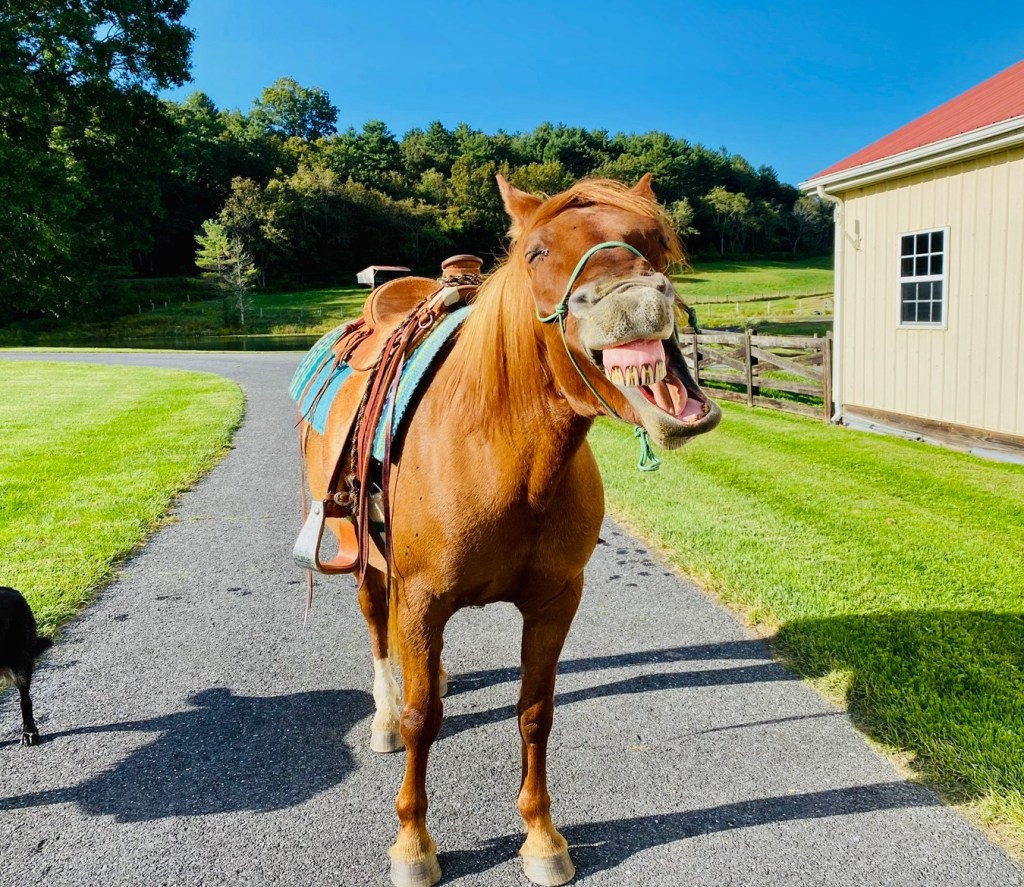
    And so here we are beginning once again as I have a few times in the past. Another opportunity to learn from this mare, a horse of lifetime… I hope… because I can’t imagine having another one this challenging for me to uncover what she needs to become my partner.

    I think this is the third time I’ve taken time off to re-evaluate and begin again. The first pause was for over a year where I left her with the herd for the most part and didn’t ask much of her except good manners. She is a friendly mare and enjoys to be close (sometimes too close) and I had hands on her regularly but didn’t do anything that would require more than basic cooperation. This first break came on the heels of working with a friend who was interested in the mustang project as well. If the fit was right the mare could eventually become her horse, but for the start we’d share the responsibility and work together. I was committed to her for life regardless how things went.

    We brought her home and began some simple ground work sessions to get to know each other, introduced her to her herd, did some ponying on trail, and in a few weeks got her under saddle (she had been started and ridden by her TIP trainer) and began to move forward in a slow but steady way that normally would have built confidence and trust.
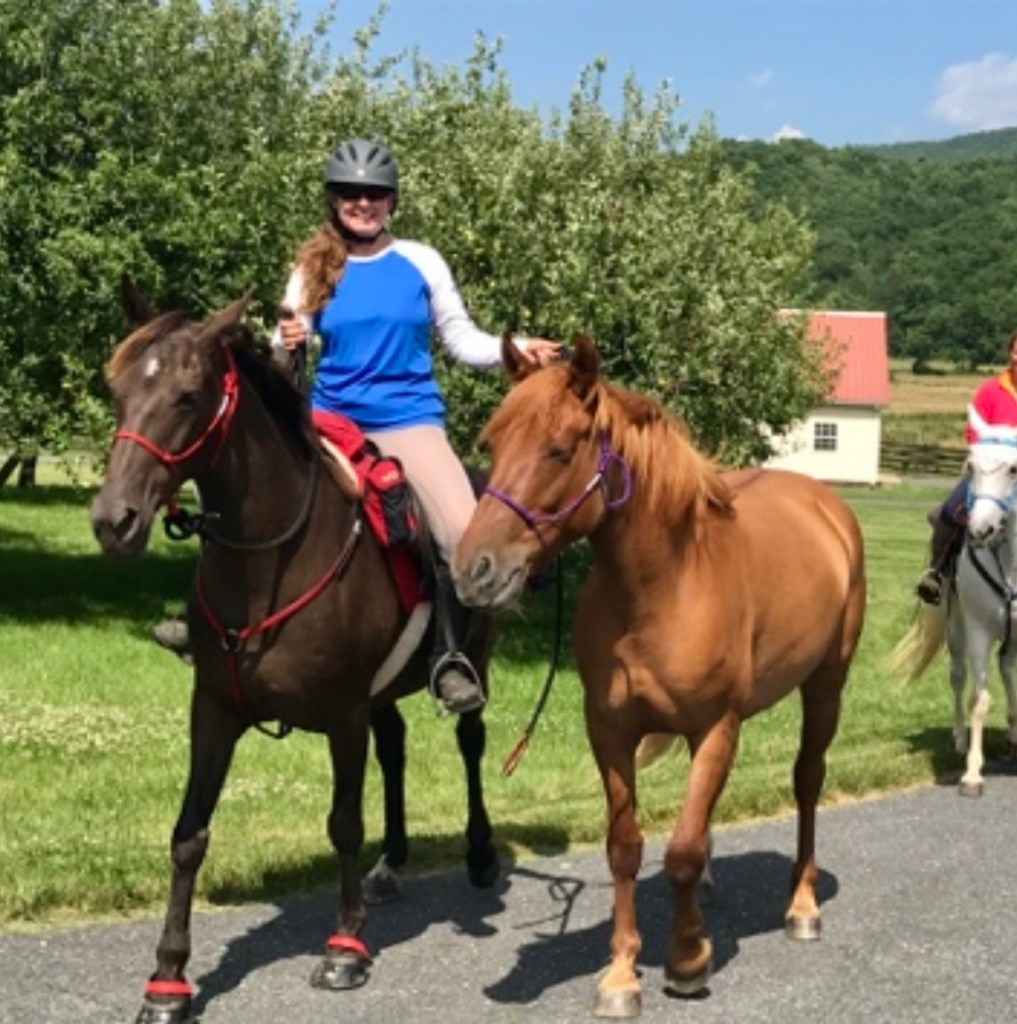
    Things progressed at first, then after a certain point she began to refuse to go out. We checked saddle fit, made sure we had a French link bit that wouldn’t be harsh, my friend was an experienced rider, we had her physically evaluated, we took her out with herd mates for confidence. Yet she would turn around on trail and get more and more forceful when we would press through… she began to rear up and crow hop and buck if we insisted. This wasn’t a ride through it and she’ll see it’s ok situation.

    Both of us worked on various levels in as many creative ways as we could come up with, we added hand walking, sometimes I’d pony her for a time from the lead mare, (please don’t give me suggestions, I promise we put a LOT of thought and asked for ideas from trusted sources, and in the end- it always got worse, not better). Finally one day I hopped on her when she began her refusal as my friend was not feeling so confident and I have less fear (maybe less sense). She turned rodeo horse on the trail without a lot of room to maneuver. I was able to ride her straight up the mountain (no trail) but back toward the barn making life much harder than if she were to just continue on the nice trail as we’d asked. I worked her through trees and around rocks in an attempt to connect her feet and her brain, and she didn’t put me off, but she never changed- she never softened or come to me. She put up with it and then eventually we went on home. She wasn’t the right horse for my friend that was for sure, so we dissolved that partnership – and yet I wasn’t sure what to do to help her. She was beginning to get more frustrated and occasionally going into fight mode as we worked with her. Things were going backward, so she went into the field until I could figure out what to do that would change things for the better, not continue to make them worse. In the meanwhile a reset seemed like the best starting point.

    It was in that time I renamed her. I told her one day in the field: you aren’t Wild Heart anymore – you belong here, you have a herd, a “family” and you don’t have to be wild anymore. You can trust this home for life. You are no longer fending for yourself, for resources, for a herd, for your life, for survival. You are “home” now. What do you want to be called? I was reminded where she came from… Wyoming. It had traces of heritage in it, but didn’t brand her with the “wild” streak which I’d like her to let go of in time. It seemed like a good name for her.

    Wyoming it is.

    We began again. I’d done some work with her, had a fabulous horsewoman come help me get her out of kindergarten in our ground work and begin to prepare to take a rider again. A crash course due to time limitations of restarting her, but at least helping me get more tools to help her in the process. I’d also been working on trailer loading (this has been a very long term process with mild success and failure). Christmas of 2019 I had a clear sense it was time to put on a saddle and try riding her again.

    I began with some ground basics. Got some conversation sorted out and then got on her. It was a beautiful Christmas gift.

    I only rode her for 20 minutes or so, in the front yard, but it was hopeful. She was willing to try, and no western show.

    I continued the slow gradual work and eventually had some help from Emily Kemp once again in a spring clinic. I inherited a really great western saddle that suited our purposes better, and we were progressing together — building small steps toward her becoming a solid riding horse.

    Eventually she was on the trail again, I was enjoying her though never truly confident she felt solid.

    Once again, very gradually, things began to go sideways. First she would try to roll (while I was riding her on trail) and then she would be reluctant to leave the property, if I worked her in the yard she would stick her feet and not want to move. Eventually she would refuse to leave altogether and began to go western in the yard. I have limits to my riding skills, but in the bucking and rearing I sat through as calm as possible (I did not think she was trying to kill me, she was trying to communicate) it never got better.

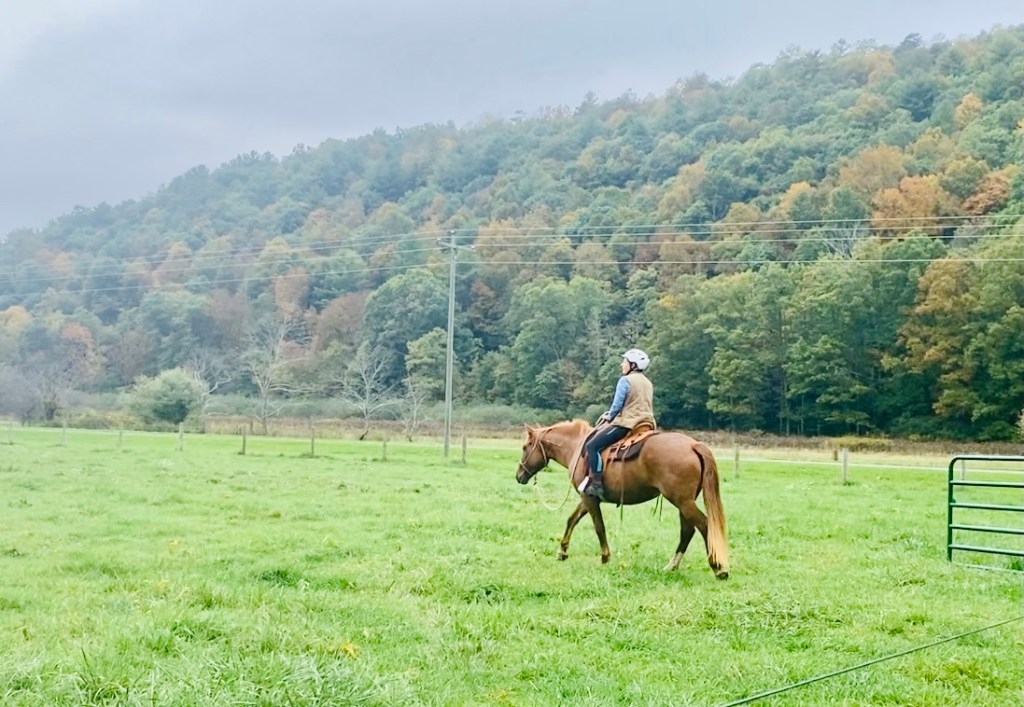
    During her trail riding season

    Riding it out or even making her work harder to show her just walking along is much less effort- it didn’t help. She only escalated each week. And I became aware that though with other horses you can push through the sticky points, build their confidence and move forward, with this horse once she got to the “I can’t” she would eventually stop thinking completely and do anything to get out of whatever situation she felt was overwhelming her in increasing drama and volume until the “pressure” was removed. It wasn’t a choice anymore. It was like blind instinct, or raw emotion.

    And yet. The horse seems to “like” me. She never seemed to want to hurt me (she absolutely could have), and she was always willing to try to work with me again. This mare was quite a puzzle, a lot of try in her and a desire to please, but a point gets crossed where she simple cannot do it anymore.

    Everything continued to go sideways or backward and I used every creative thought process I had to help encourage her, build confidence, go back to fundamentals, try to go forward into a new challenge that might inspire her, more groundwork, less groundwork, lots of encouragement, more demands (she is incredibly intelligent and physically athletic and balanced so maybe she needed to be challenged to use her gifts more?). Everything had limited success… everything went sideways or backward by the second or third time.

    Finally a barn move meant she had to be loaded up or left behind. I tried a larger stock trailer which was worse because of it’s unfamiliarity. In the end she loaded onto the small 2-horse we had worked on for at least a year or two. She’d had one semi-successful ride a few months back and then went backward not wanting to have to do that again… After an hour or so where she actually went under the chest bar and squeezed herself out through the front human door once (that was a terrifying moment for us all), I was able to hard wrap the lead rope to the chest bar and she stepped up to release herself and she was locked in for the short 7 minute drive up the road to her new home with the herd.

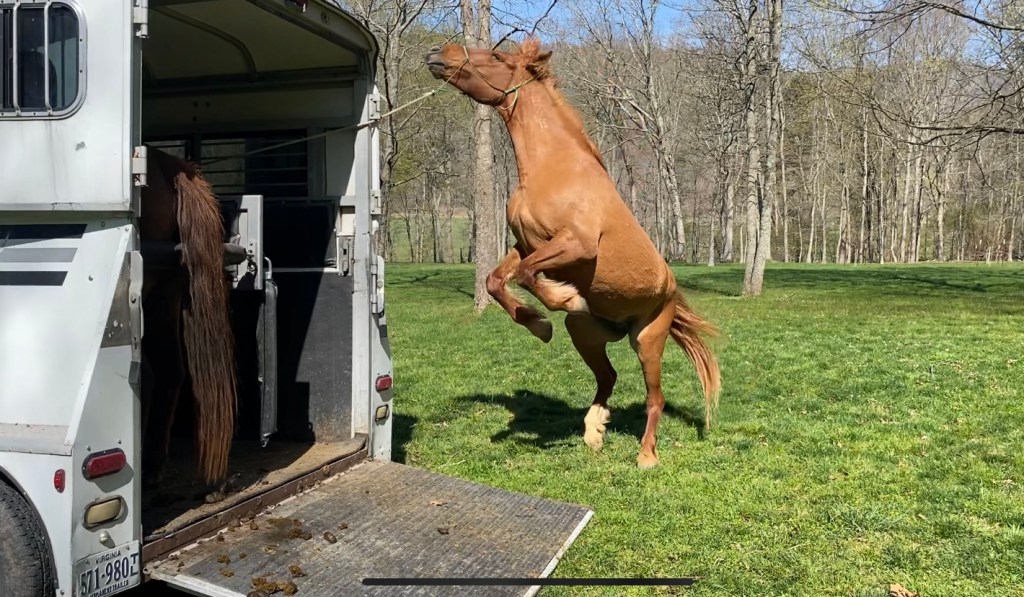
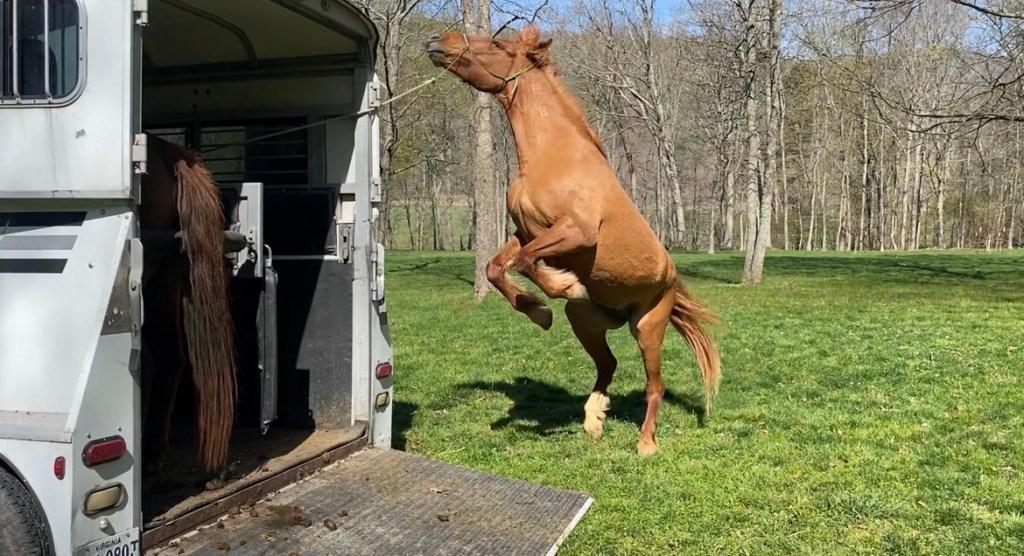
    After this I decided to try to continue the trailer work with her to solidify that experience and build on it. Wrapping the lead line to the chest bar had worked to create a scenario where she pulled against herself and could release by coming forward. Let’s try that again. As so often happens with her, you can get it done once, but she’s had a week now to consider how she might change the outcome… and she did. She put all that mustang strength into pulling and as I stood there waiting for her to come forward and be able to release her – instead she bent the metal, broke out the chest bar which gave her another 3 feet of treeline which then put her outside the trailer (NOT GOOD) and rearing up. She tried to go sideways and hung herself over the upper door hinges and now was strung like a fish and the rope around the chest bar pulled tight enough to not want to come loose either.
    My beloved sidekick Iva was watching from outside and had also been first witness to the mustang coming through the front door like toothpaste out of the tube a couple weeks before… stood calmly and said to me:

    Jaime, this is not good.

    Indeed.

    I was able to loose the rope and free the mare. I had rope burns and she was basically unharmed, shockingly no one was seriously injured- except my trailer which did go in for some repairs after this session.

    We returned to the field. I tied her to a tree while I reflected for a bit, and she stood quietly. I eventually set her loose and took a few months off to think.

    What am I missing with her? Every success so far in working with her like I would any other horse has always gone backward over time. There were periods where much was going so well with us. She’s a fine mare… big personality, athletic, balanced, smart, responsive. When things are good they are really good…

    One of my favorite riding sessions with Wyoming

    Was her purpose in life to humble me and remind me how limited I am? Show me that in fact I have much less control than I ever thought over things? Maybe every puzzle does not have a solution? What is her purpose in my life?

    I quietly reminded myself that I wanted a mustang to learn how to be a better horsewoman, and so regardless if she turned into a working riding horse or not, she is amazing at teaching me. The day I freed her from the trailer fiasco I was calm on the outside, knew to control my breathing and reaction, but deep down incredibly frustrated. In that moment I considered the term “breaking” a horse that many of us horsefolk have moved away from. And I asked myself, could I “break” this horse? and if I even thought I could… did I want to? Did I want her spirit broken if it meant I could control her? In this moment… frustrated as I was… was the closest I have ever come to wanting to break a horse’s will. And in the depth of my heart I knew… if I could do it… I would not.

    I knew that day that I wanted Wyoming to be her vibrant, wild, beautiful self and I wanted to have a relationship with her, but regardless if I ever got her on a trailer or under saddle, I did not want to break her. Because that would break something in me in the process. Something neither one of us would be able to ever recover.
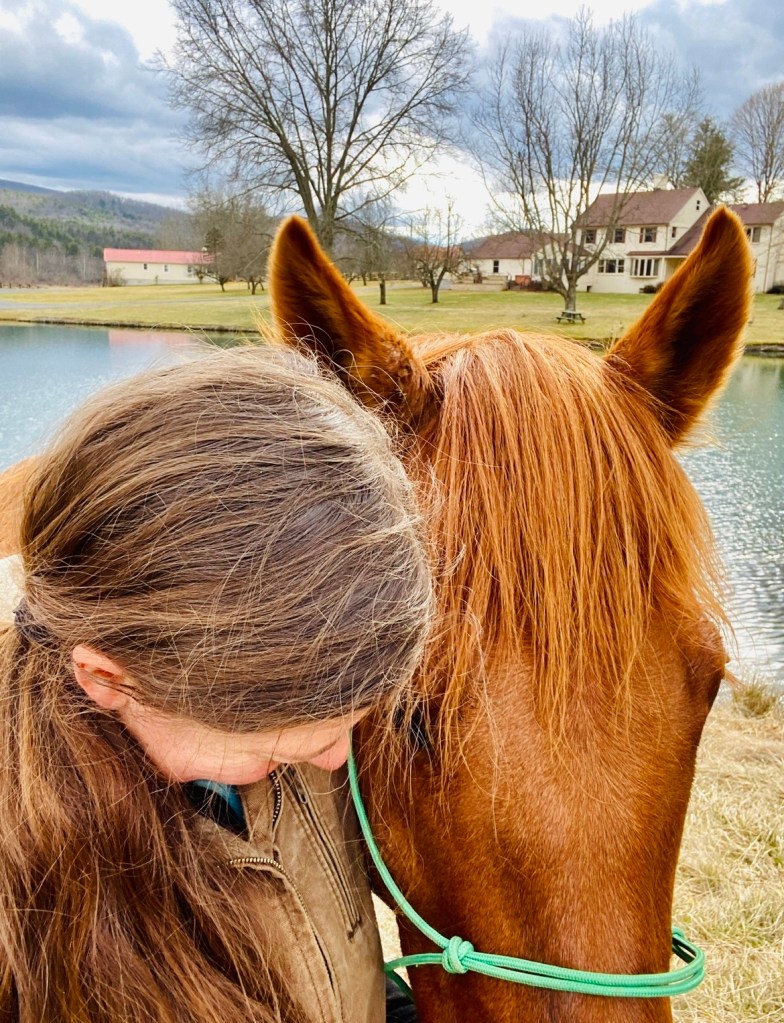
    And after a couple months of down time to reset, I returned again this fall to the work… of learning how to work with this wild heart in a way that we could both live with.
  • What do you have going for you?

    What do you have going for you?

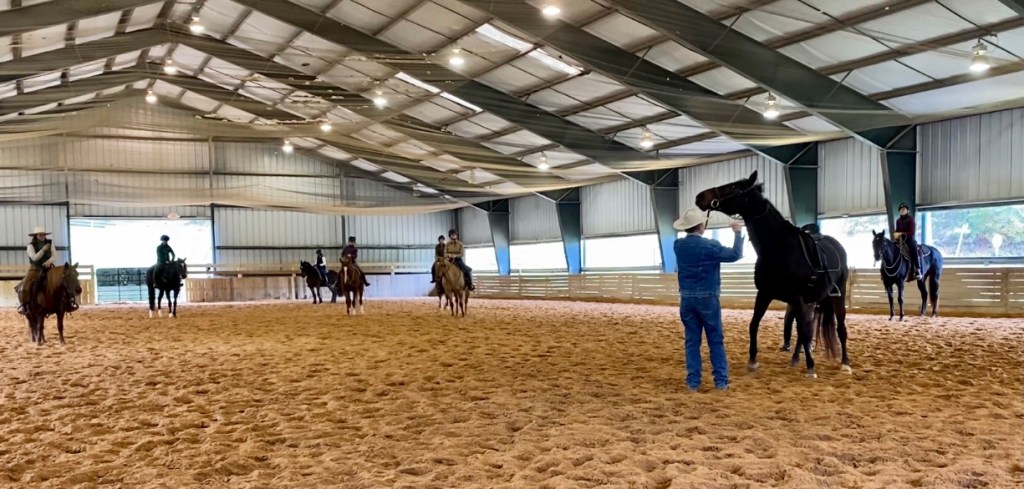
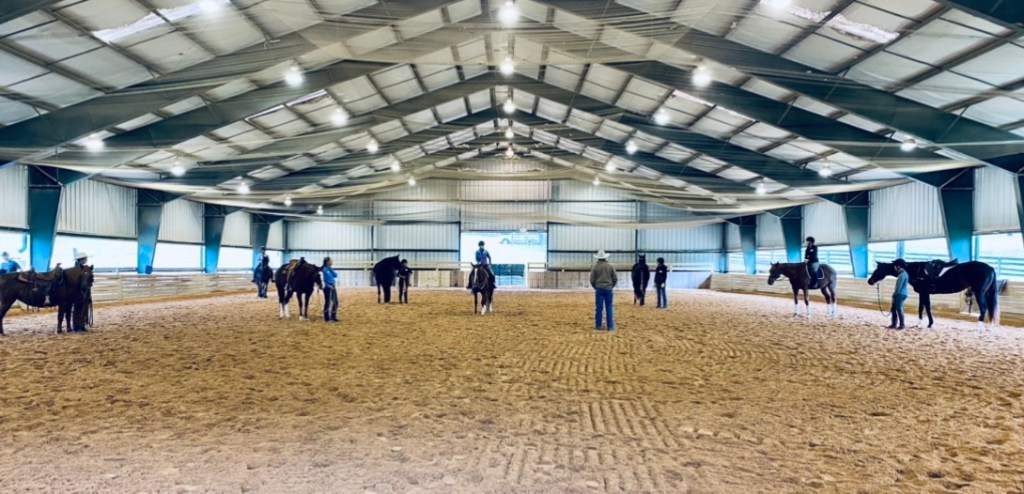
    I spent the past weekend in Colfax, NC at the Piedmont Saddle Club learning as much as I could from Joe Wolter.

    I enrolled in this clinic in February and had hoped I might take Wyoming but I knew in my heart that she was not adequately prepared for all the pieces and parts that would need to be in place for the weekend, the first of which being able to travel on the trailer without it blowing out her mind and emotional system. So it seemed when Susan Hopkins sent a note that the colt starting was cancelled due to lack of interest it was confirmation that this clinic was going to be for K and me.

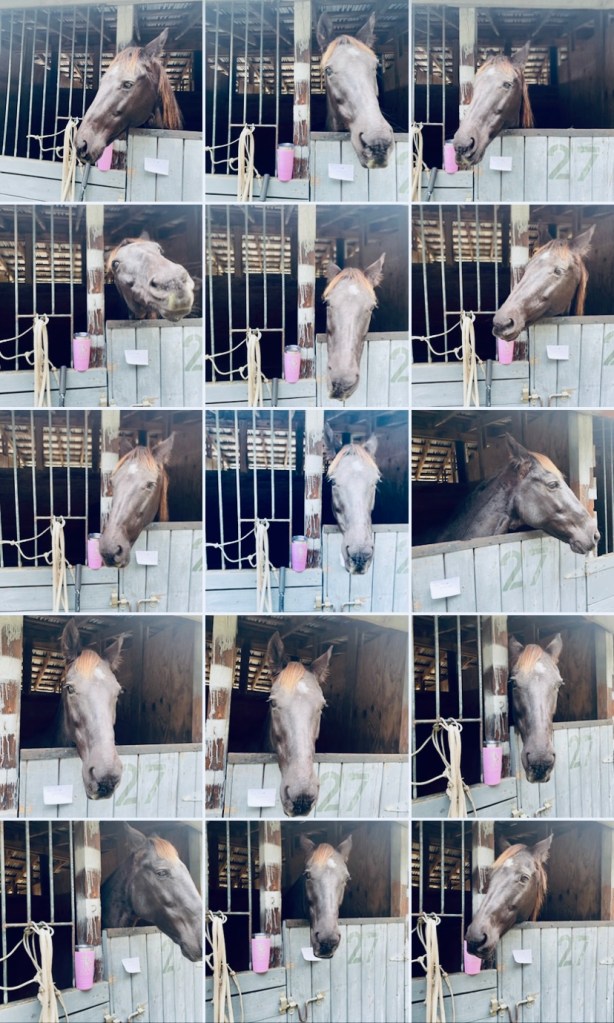
    The many faces of K in ‘jail’ while at school

    Joe said many things that were not new, but timeless, through the weekend. For this post I’ll go over a few of the concepts that stuck out to me at this time.

    You’ve got to get the whole horse committed in their body to what is in the mind. There’s a difference between a horse that’s putting up with the human and one that’s committed, you can see it in the whole horse. It’s especially clear when the hind end is sticky. Many people get the front end working ok, but the hind end isn’t coming through. That’s a horse uncommitted.

    The idea of riding and working with the “whole horse” seems obvious but it really isn’t. If the horse is truly committed to working with the human their whole body works together to try. It was really interesting to me to see the couple of horses that look pretty good much of the time, then would “blow up” in a canter transition, or not lead well, or fuss about being asked to do something- these horses often had a “sticky” hind end on closer observation. Once my attention was drawn to it I could see it, but so much goes on in the head, the eyes, the ears, the neck and the shoulders that the hind end wasn’t drawing my attention. Maybe because it was doing the least in the whole picture, but that was part of the problem, the part we are focused on can be moving around or even fussing (ears pinned or mouth tight) but the hind is heavy and stuck in the movements. The horse wasn’t moving smoothly and in balance. When a horse doesn’t feel good physically (and balance is key to a horse feeling good!) they often will become sticky mentally too.

    I suppose it depends on the horse/human which of these comes first (mental or physical), but working on a horse finding balance and getting to move through all the way to the hind end can really help the horse begin to move through mentally as well. At one point Joe noted that the mare became more committed in her mind and you could see she “fixed it in her feet”. When Joe got the horse convinced that it was a good decision to commit to his request the whole horse moved more balanced through the change of direction or the leading or even a transition.

    When things aren’t working and you start to get frustrated you have to ask: what do I have going for me? Capitalize on what you do have, and then put the fun back in it.

    This idea of finding what you DO have going for you and building on it is really helpful. If we don’t feel good about what we’re doing it’s for sure the horse doesn’t either. And if the horse doesn’t feel good, what’s in it for them to be with us? And if the horse doesn’t want to be with us we have little chance of getting anywhere.

    Joe has a way of taking anything the horse offers (even if it is something most of us would consider ) and figuring out what to do with it. He said at one point, “I had to change my mindset to think: I don’t really care what happens I just want to see what happens.” It’s tricky as a human to have a clear goal (because if you don’t know the direction you’re heading you have little chance of getting anywhere) and then when the horse seems to be taking us away from our clear goal, not to think “this isn’t working” but Joe continually says: if you are getting something unexpected, or something different from what you thought you were doing… we just change the subject and I have a chance to figure something else out now. You have got to stay flexible and creative. Take what the horse is willing to give and see what can you do with that?

    I had a nagging question from working with Wyoming recently. I know the idea is to Get with the horse, so then the horse can get with you. Yet I found when trying this is real life I had concerns that when I focused on getting with Wyoming it ended up being zero leadership and no plan from me. I don’t think that feels particularly good to a horse either. My personality can see two distinct options: 1) my plan my way; 2) I have no plan– do whatever you want and I’ll tag along.

    During the clinic I wondered if I’d have an opportunity to ask how does this work? The last time I rode Wyoming I tried to direct her and that went poorly… then I tried to just sit on her and see what she’d do at which point she took over in a way I don’t think was helpful for either of us. After three days of sitting on my question and never really seeing a door to asking it I feel like Joe answered it through many of his statements over the hours of class. It’s so simple I could felt an internal facepalm.

    Take what the mare is offering to do, and MAKE IT YOUR IDEA.

    The biggest frustration I can imagine people having with this horsemanship is everything depends. Each horse is unique but there are also patterns horses get into that fall into similar tracks. At one point Joe said:

    Just present a puzzle to her. She’ll try hard to figure it out. (But) The horses that are cranky and ready for war they need you to go with them and change the pattern. The horses who are full of try can work out a puzzle so you set it up for them to find release. 

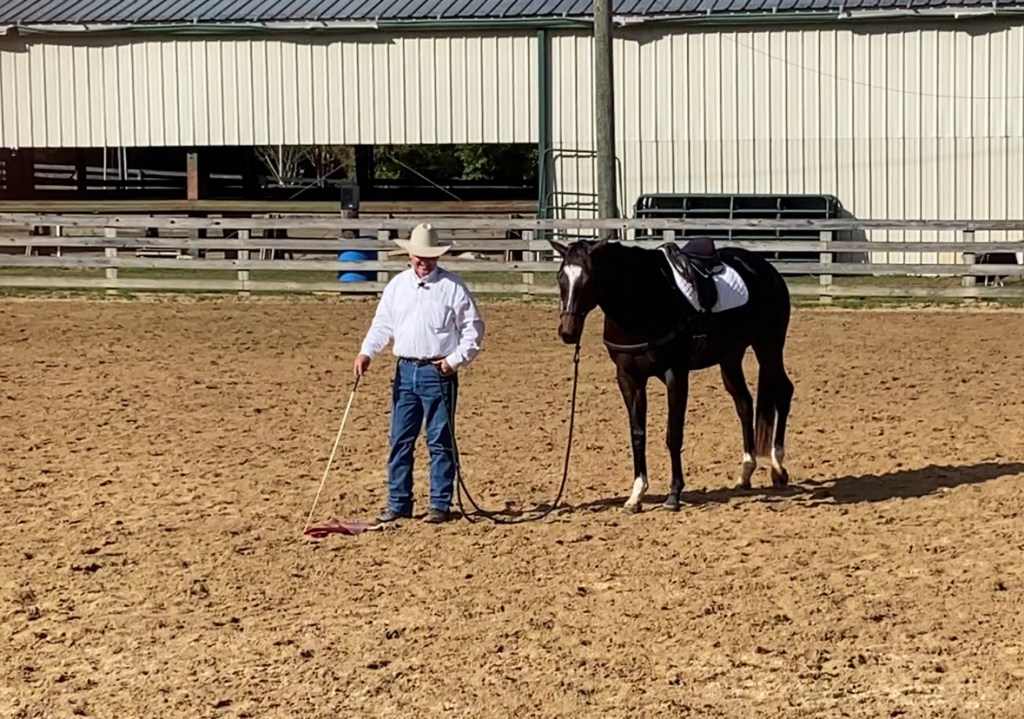
    Joe Wolter

    Some horses were already committed and interested to figure out what the human wanted to do, they were all in. For the most part this would be Khaleesi. She’s willing and she trusts me and most days she will give me all she’s got. Some horses were “cranky and ready for war” these horses for whatever reason expect to find a fight. Wyoming and I have had this dynamic in our relationship and looking back I can see evidence of what that does. I am pretty good at giving clear direction and leadership – always improving, but my personality lends itself well to these things. Early on with Wyoming I was working on clear direction and leadership and I created a war zone with Wyoming without understanding what I’d been doing.

    One of the mares who was ready for war

    This mare still needs me to get with her, take what she offers and begin to build on it as my idea. Now the whole application of that does not seem clear to me, it’s not my strong suit. I’m better naturally at pushing through, this takes much more finesse. Circling around a thing until she’s doing what I would like, in her own way, thinking it’s her idea.

    Let the horse do your thing in her way

    Joe Wolter from Ray Hunt
    She was very athletic

    I understand what I need to do, but how to do it will probably be messy and full of learning opportunities for me. The trailer loading process is coming along really well now and is stress free. I’d like to see her begin to feel comfortable enough to choose to stay on there but I’ll need to find some incentive because who wants to sit in a car for a long time without purpose? Why would she hang out on the trailer without a purpose when she could be not in confinement. I might have to find some alfalfa… I hear horses love that and if she could get that only on the trailer it might be worth it…

    What I still see cranky and ready for war is in riding. This is the place I haven’t changed her mind to see I am willing to be with her. I can saddle her pretty easily and she’ll stand for me to mount, and when I sit in the saddle she stands just fine. It’s the moment I begin to direct her things go sideways. So that will be my next steps. Experimenting with riding this winter and finding ways to take what she is willing to give and MAKE IT MY PLAN.

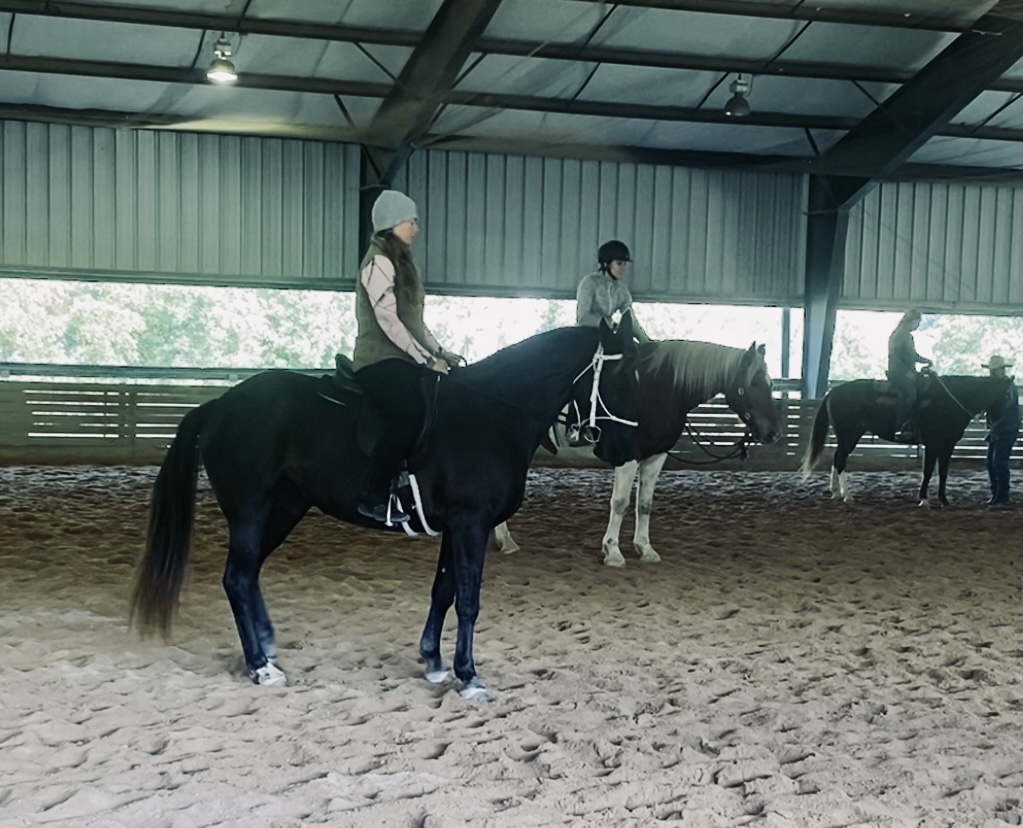
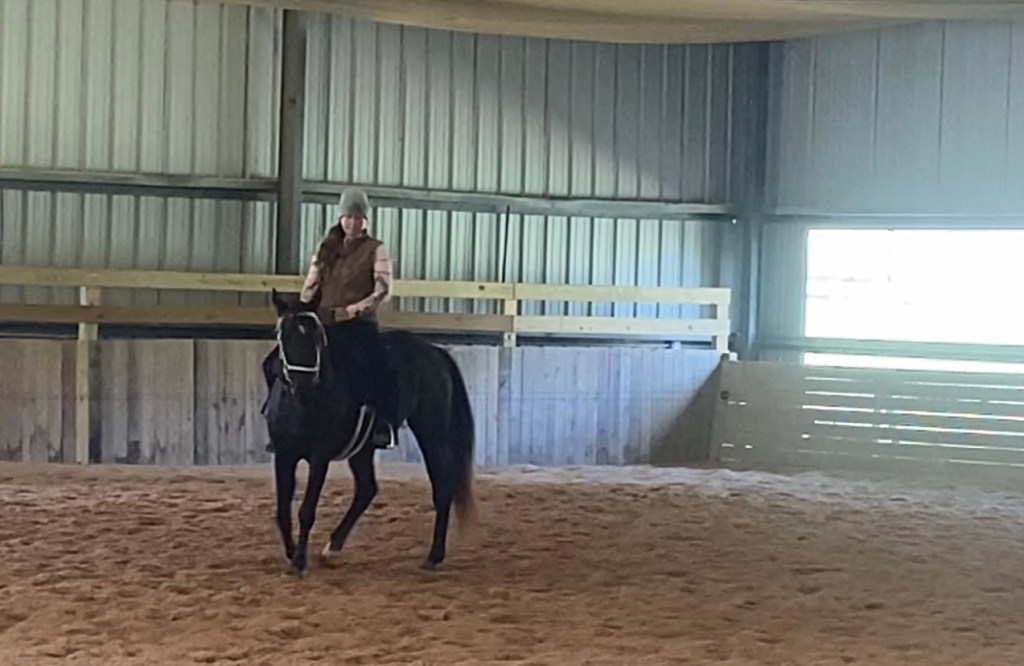
    After a little work she made some nice changes
    A horse must be balanced to work well. You’ve got to get all four feet underneath the horse. What happens when you pick up your reins? Is your horse preparing to position to do something or is your horse bracing and getting ready to pull against you? How sensitive are they? When do they notice you’ve picked up the reins? What is their pattern? What is your pattern? Before your horse takes a step do they get balanced so they can move in straightness? If you aren’t starting in balance you will struggle to find it, and the worst thing I can ask my horse to do is a transition when they are out of balance! Don’t ask a horse to speed up when it’s crooked. Get the horse ready to walk, ready to trot, ready to stop so they can do it in balance.

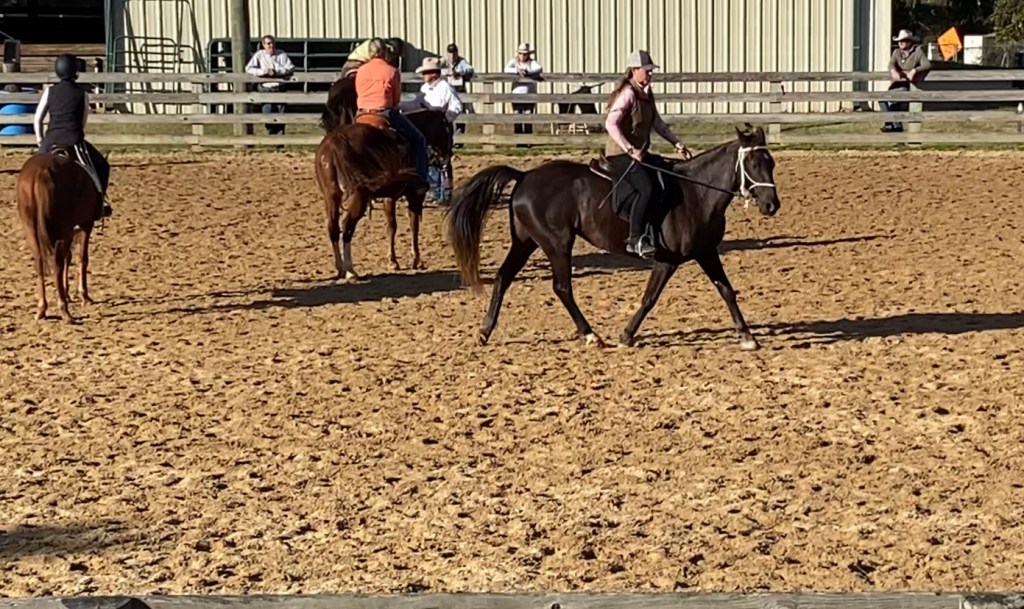
    For Khaleesi and I as a pair this was the biggest take away, and it built beautifully on the work Emily Kemp has been doing with us in her clinics this year. When Joe took a little time to work with us individually he noticed that every time I picked up my reins K turned her head to the right (I have also noticed this and wondered what to do about it). He observed my reaction was I used my left rein to suggest she get straight. He offered me an idea: don’t give her the answer, don’t use that left rein but instead hold tension on both reins equally and see if she will search for it. She did. She tried a few things and eventually she got her head and neck lined up and I released. Then he asked me to try again and when she was straight to walk her off. I did. He noticed that I’m having to ask her to walk off… this time he offered, “Let it be her idea, allow her to walk off when she’s ready” Like magic I picked up my reins the way Emily showed me, gently with smoothness, I held them both equally and she searched around for the release, when she was straight I released her into a really nice walk, and she went straight ahead like an arrow.

    Seeking straightness and balance

    I spent the following two days building on this one simple thing. I have been seeking straightness and balance for at least two solid years. Pieces have been coming together, but this clinic something really clicked for me.

    I felt it.

    Finally it seemed I could feel when her body was crooked, when weight was shifted here or there. I could pick up my reins and wait and wait (not at first, of course I had to release her for each try toward more straightness) but by the third day I’d hold there steady and she would get her neck straight but I knew her body wasn’t balanced and if I released her she would go “straight” forward but like a snake not like an arrow!

    I began to feel when I released her she would feel like an arrow heading straight forward.

    Then I began to work on walking a straight line to different points of the arena. The first day I did a little walk and trot for Joe to watch and I knew we were all over the place. By day three I began to find a few moment where she felt really balanced and straight in the walk and then ask for a trot transition and she could pick it up so smooth. At this point sometimes I could find a straight line and other times I’d have to do a lot of adjusting- but like Joe said: That’s ok! It’s an opportunity to work on getting back in line.

    K loves to be in school. She likes to solve puzzles and to learn, and I am pretty sure she really loves it when I learn because then we are better together, and we begin to move increasingly in harmony.

    I’ll close for now on these ideas with the first quote I took down on Friday morning. Something that is a great start, and a great end.

    Any living thing wants to be somewhere. What do horses want? They want enough to eat and room to move and someone to be with. I just catch the horse and then try to get him to want to be somewhere other than where they’re at then I’ll work on that. And when we get somewhere else I’ll see if I can get them to want to be somewhere other than that. If I can change their mind on one little thing- what can’t I change their mind on? 

    Joe Wolter

    I leave you with that fantastic idea…

    If I can change their mind on one little thing- what can’t I change their mind on?

  • Gates

    Gates

    Wyoming is in boarding school this month… For various reasons she is in a field by herself temporarily (about a month) and though at first it was a necessary transition, I quickly came to see it as an opportunity to spend some focused time with her while she wasn’t “on the job” with a herd. For the month of October her only friend (though she could see other horses not far across a driveway) was… me.

    I “gave up” on Wyoming in the late spring when a follow up trailer loading event went sideways and ended us both almost really injured. I had severe rope burns on my hands to remind me of the epic failure to communicate and she was temporarily hung up on a door hinge– which could not have felt good — though the wild one didn’t seem the worse for wear. One good thing about a mustang- I don’t think you can actually kill them.

    The very bad day of trailer loading practice.

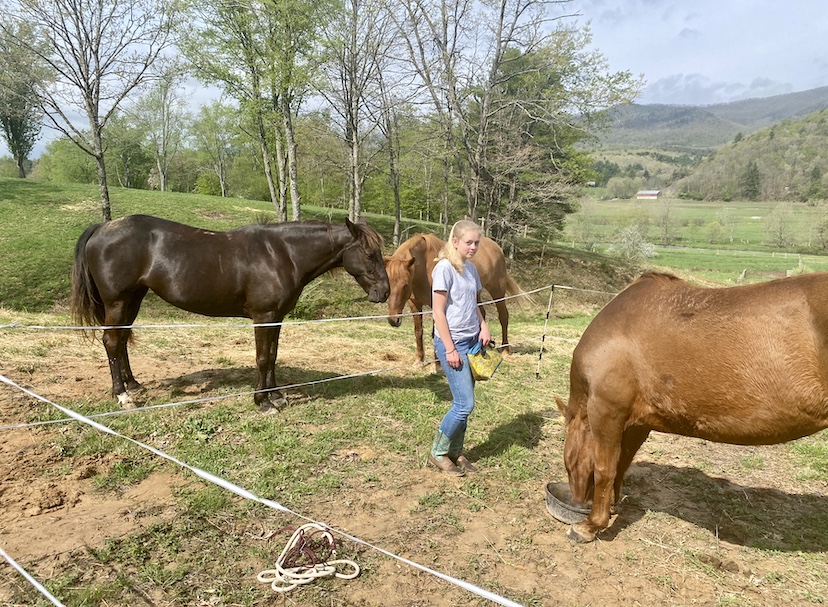
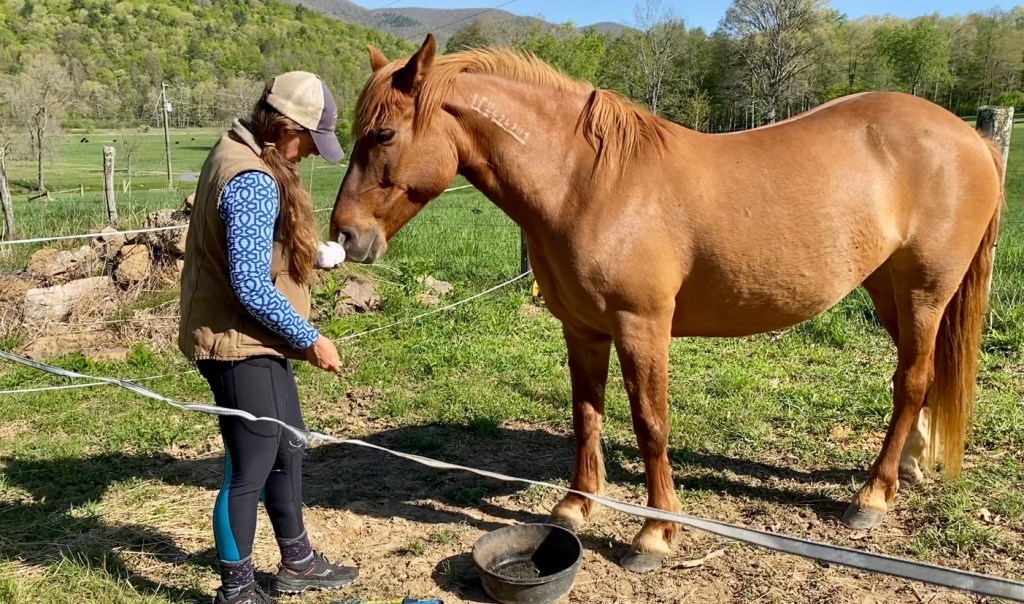
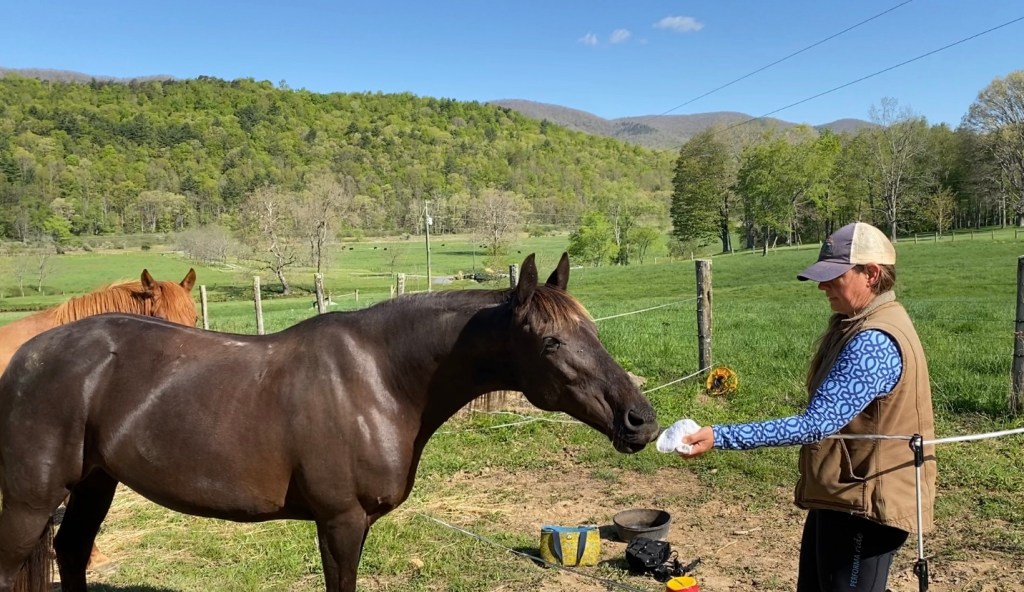
    I gave the work with her a rest and began looking for ways to dig myself out of the doghouse of stupid, deaf (to horse language), untrustworthy human and spent some time dabbling in positive reinforcement. I think this was a really helpful step in our relationship. In positive reinforcement (R+) a major pillar is choice, and I began to give her total choice to work with me or walk away. I used hay pellets as a reward and she’s on massive pasture so she wasn’t starving for dried up grass. She was suspicious at first but Khaleesi helped me out by loving the classroom so much Wyoming couldn’t help but want to get involved.

    I used R+ to reintroduce the halter in the field and a new fly mask and we had a lot of fun with touching various objects and learning to learn with hay pellets this summer. I also began to get more serious about the idea of “thin slicing” my way to a desired behavior. As a goal minded person I naturally break down things into steps, however I tend to start small and then as things begin to work, I make impatient leaps. I began to see that horses- this wild red head in particular- needed a lot more small steps all the way through the process than I was willing to give her. This took A TON of time I didn’t want to admit could possibly be necessary.

    New fly mask

    One day I wanted to trim Wyoming’s feet and thought inside the barn would be easier. It’s a large roomy barn with huge doors and she had been in and out of the old barn more times than I could count, yet she would NOT enter this barn. It was this moment I began to see more clearly from her perspective. Khaleesi or Hope would enter about any barn I asked them to, depending on the space they may pause or need a smell or a look, but Wyoming was very suspicious of this space even though she had walked by the doorway to be fed for months. I found this interesting. The fact that she might be wary is understandable, but she was 100% not entering this space.

    Let me make clear a vitally important assumption: She was not “being an idiot” and she was not “acting stupid” or “refusing” for the sake of being difficult, she was not “being mare-ish”. If I believed any of these things things forward progress would be practically impossible. I know this horse is none of those things, there was a reason she would not enter that barn, and instead of slamming her through that “gate”, wisdom necessitated that I find out either why, or how to change her mind.

    In truth she didn’t have to come in, I have worked on her feet in the yard already. The barn was only marginally easier for me. This meant I had no goal that was more important than the curiosity of why this particular horse would be unable to walk inside a barn. Forgetting about her feet I began to experiment with inviting her closer, then inside and observe as she would try, focus her attention past the doorway and disappear into a deep processing time for minutes on end. I could tell she wanted to do it, she was willing, but there was something that had her convinced it was possibly a death trap or maybe a time machine in the least. I kept this simple, I asked her to stay focused on the barn entrance and only added minimal pressure if she turned her focus elsewhere, and I found over time she began trying to cross the threshold on her own.

    I think about 20 minutes went by with what seemed like zero progress but I observed a lot of deep inner processing often with her head down nose brushing the threshold, and just stood there with her curious. After probably 30 minutes she was taking a step or two in and then backing out and trying again. I think it could have been 45 minutes before she willingly walked into the barn, looked around, turned around fully to investigate and began to get comfortable.

    What fascinated me is I didn’t have to pressure her to walk in. She knew it was what I wanted even as I stood quietly occasionally gently lifting my lead rope arm. When she was ready she began doing it herself- taking steps in and then steps back out then immediately trying again until she could manage to get all four feet into the building. It was completely calm and even fun. She wasn’t panicked or stressed. I saw that if I simply gave her the time she needed to process (it seemed like eternity in comparison to other horses) she would figure it out and she would comply.

    Even more intriguing was the next day this same entrance took almost the same amount of lead time. Where I’d have thought she might pick up closer to where we left off, she spend about 20 minutes again processing the open barn door. Day 2 I might have taken 10 minutes total off the process. Day 3 still better but not by nearly as much as I would have expected. Each day was progress, but surprisingly for me how many steps back we would have to restart.

    It became perfectly clear this is how I was going to work the trailer. Only at that rate it could end up being 2 more years! The good news was I’d already given up, so two years from now is still an amazing improvement on never!

    Not long after I was able to invite her into the barn without trauma and confusion I decided to begin with the trailer. This isn’t a cavernous new barn, it was the baggage box! We have not racked up good associations with the trailer so I felt it was likely we’d be behind the zero.

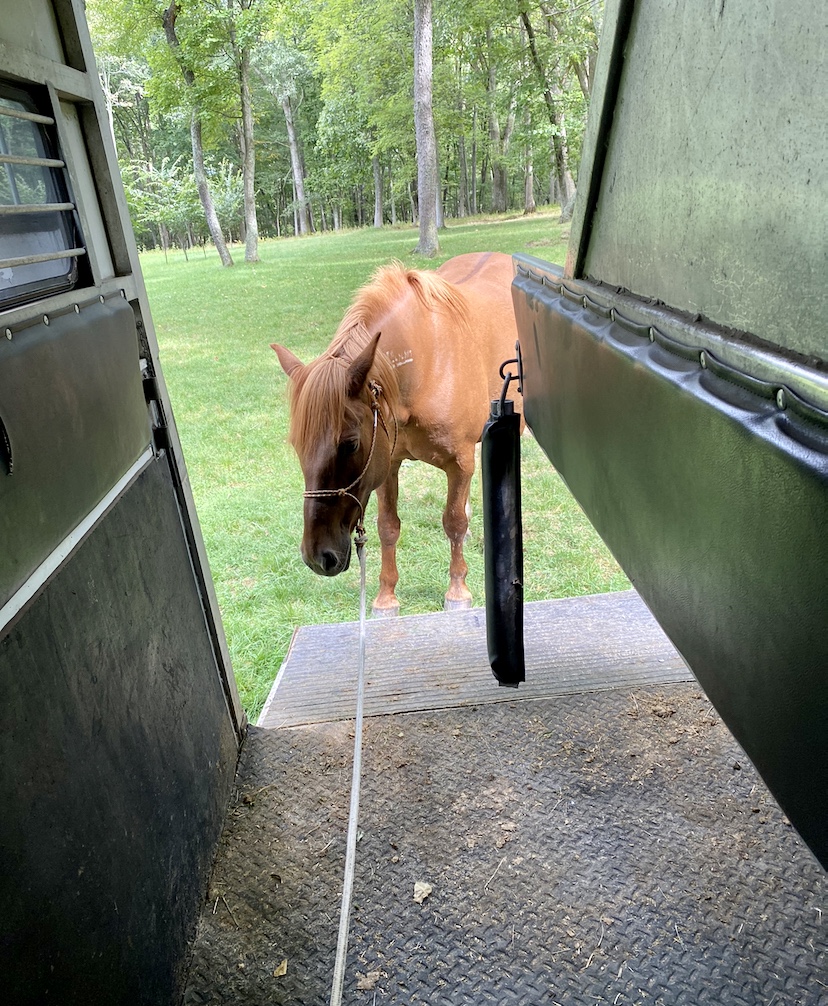
    The first day over the summer of remedial trailer loading, it took an entire 90 minutes of her processing, standing outside, occasionally trying to evade to even begin to come up the ramp. After 90 minutes If I remember correctly, she came up the ramp and agreed to put her head in the trailer. In case you’ve never watched paint dry, I’m about done after 5 minutes. An hour and a half is eternity. And then I think she put on a foot or two so not even all the way on the trailer, but I was determined to see where this rabbit trail would go. Two things I observed:

    1. This was very non-stressful, she wasn’t upset at all.
    2. She was completely engaged the entire 90 minutes even if she was standing with everything still and processing for many minutes at a time, she didn’t not try to eat grass or ignore the work. She was invested.

    Over the couple of months I’ve come to appreciate the value of understanding threshold in a much more subtle way. I think everyone can appreciate the concept, and everyone who has worked with a horse probably would say of course they understand threshold, yet my guess from knowing a variety of horse folks that it probably has a different meaning to each person. I know a few people who can see the threshold from well in advance of it in very subtle signals like a tightening of the skin or a change in the jaw (and they respond accordingly- you actually get negative points for knowing subtle threshold signs and blowing by them!), and I know some people who are aware of the threshold because they are now on the ground and the horse is up a tree or gave them a kick out before running off. For some people it takes injury to the person or the horse to realize that’s where the threshold, well, where it “was” because at that point you’ve blown past it, in fact probably blown past a few of them.

    Yep, I know that person. I am her sometimes.

    Most people are probably a little like me, most of the time somewhere in the in-between. I think it’s more valuable than we give credit to- recognizing thresholds sooner and finding ways to help the horse through the gate instead of blowing through them with force until someone, or the horse, is hurt.

    Sometimes it takes this for me to stop and reconsider

    With Wyoming, and I think this isn’t completely unusual for horses, you can bust through some of the early gates with a moderate amount of force because the creatures at heart are so generous and willing. My lessons with this mare is that I’d think we were doing pretty well and finding success together and then over time it would start to go backward. I’ve begun to suspect that I missed the early “gates” and she wanted to work with me so she would try, but something wasn’t addressed properly and we would eventually come to a gate that she just couldn’t keep going with me through and then we’d come apart.

    Also I think there was a certain amount of pressure I let get to me that this mare had some kind of reasonable time line and I was so far outside of what was reasonable that I must be completely ineffective… if I would just stop playing around and push through, get it done, we’d “move forward” and I wondered if maybe that was right? Could I be wrong? Certainly. I tried it with riding her and pushed through some pretty intense rodeo action, and I tried it with the trailer which could have had us both really hurt but for the grace of God who seems to want me to learn these lessons alive to encourage someone else to maybe try a different way.

    What if we really did begin to love the process? What if we began to slow down and ask the horse: are you ok with this? and then care about the response especially if it’s “no, not really” and then what if we began to offer support and help even if it meant the only answer that would really solve the problem would be the gift of time? The most valuable thing we have… so valuable we rush through and force our horses often to get onto our timeline so we can do the things we want to do with the horses. What if we entered their world more often and really listened when they needed time to process, time to heal coming back from an injury more slowly or gradually, time to trust us, time to believe that we are actually asking, time to even answer us?

    What if we didn’t blow through the gates by force as long as we could get away with it?

    So many people I know say they enjoy the time with their horse, but when I look closer at my own behavior and I suspect I’m not alone… that really means I enjoy the time the horse does what I want her to (perform, trail ride, even get on the trailer). What my month of solo time with Wyoming brought more to the surface was that I wanted to enjoy the time I stood with her while the paint dried. I wanted to give her the gift of standing by her side when she stood on the trailer ramp for the 25th day and put her head down to process the idea of going into the box. To encourage her when she began to look around, but to allow her to decide when she’d go in, and to trust that she was giving me her best.

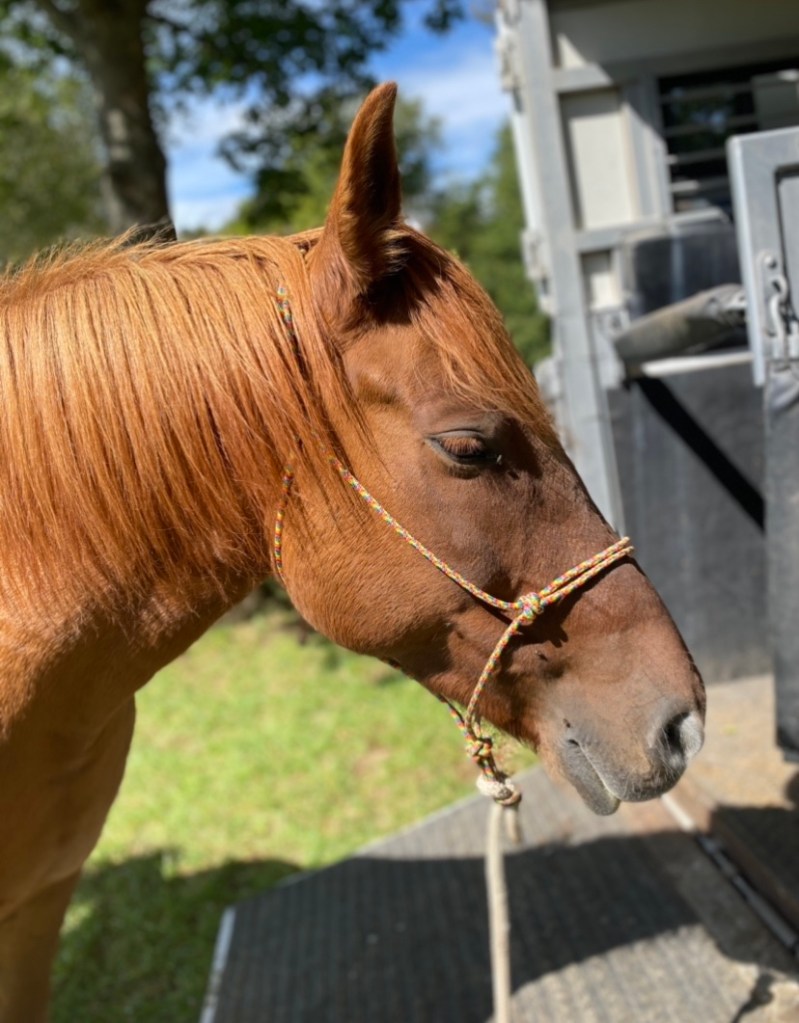
    Wyoming does go on the trailer now and it doesn’t take an hour, sometimes 5-10 minutes lately before she’ll put all 4 feet on. She only stands quiet for a limited time depending on how deep in she goes, and I don’t close her in yet. It’s clear to me she is not ready to be locked in. But she is very calm about the whole thing and enters and exits without stress and anxiety. She is begging to trust me again.

    I don’t know what the next steps will look like, I’m finding them as we go. But for this mare, I’m going to trust that the process will continue and someday she will ride on the trailer without the stress and fear that had her lathered in sweat that last time I got her on over a year ago. That process was a little faster but it was not nearly as honoring to her own unique thresholds and took advantage of her generosity and her try. I got it done but it only ended us up eventually backward and almost hurt.

    I hope I’m taking this lesson and applying it to my slightly easier creatures. I’ve been working on asking Khaleesi for permission for a while now and not forcing things on her even though I can. I try to balance that out with the reality that she’s a working animal that sometimes has a job to do, but I don’t use that card any more often than I have to, and if I find myself getting there too often I have to step back and ask why?

    Hope is more tricky because she’s been forced into so much over her life she doesn’t always engage in bothering to answer. She’s been trained to comply and go inside herself and shut down for survival. She has a lot of brace mentally and physically we are trying to release and free up for her. She’s starting to come out more and more and that’s a fun process to see. I love that the very easy and kind kids’ lessons are part of that story!

    It seems to me this is something that can continue to improve regardless of what level and where we are with our horses. I sense I’m getting a better feel, but I have far to go. And for anyone with multiple horses I think they have unique tells of when they are coming to a gate that isn’t free. It’s nice to have a horse that is super vocal about it, but most people don’t really want that horse! Often the cues are much more subtle.

    The next challenge becomes what to do. Horses and human both share a benefit from growth, we do want to go through the gates! However we have to find a way to support them in the growth. I think sometimes even acknowledging and letting them know you’re with them is a great start. There is no one answer that fits all, but isn’t that exactly the process we can enjoy? Getting to know this unique creature along a lifetime of communicating and experimenting and listening along with guiding or asking them to come along with us?

    Is there anything better than that?

  • Alternate Universe

    Alternate Universe

    So far my greatest teacher has been my mustang mare Wyoming. I’m a “goal oriented” type and tend to be good at moving forward toward progress. Of course our greatest strengths can also be our greatest weaknesses; with Khaleesi, this goal setting personality and refusal to quit the relentless march toward progress paid off. I started her with the very limited tools I had, and though it was a bit messy with holes here and there, today she is a fine partner and my go-anywhere trail companion and endurance horse.

    However with Wyoming….

    I have gone forward, sideways, backward and in circles with her and this has created much confusion for me. I can’t understand why it seems impossible to build on any kind of foundation with her. Each time I make a kind of breakthrough, at some point it goes sideways, and then often backward and I find myself in some negative momentum place farther back than I was before.

    Of course along with this goal orienteering mindset comes stubbornness and refusal to give up so I tend to take complete failure as a minor set back. I lick my wounds and try again, willing to learn what it was in me or my approach that caused the crash. Each time I find opportunity to grow.

    And with her… lots and lots… and lots of opportunities to grow.

    I have had this mare riding miles on trails successfully (or so it seemed) only to have her eventually begin a habit of laying down on me that got so quick and subtle she’d outsmart me even when I was ready for it… she carried me along at a great walk and trot only to eventually start a bucking fit whenever I asked for the trot- of course I did all I could to rule out pain or physical issues – I found the way I was asking (which was mostly with my energy!) was apparently offensive to her sensitive mare system. I began to have great success loading her on the trailer until she broke two welds on my butt bar and chest bar- once she went underneath the chest bar to exit the front human door in order to escape the pressure she felt.

    Well meaning friends when they hear some of the stories helpful suggest things that… Yes. I’ve tried that… is probably the answer.

    Is she aggressive and dangerous someone asked of her recently?

    No- actually she’s about the friendliest horse I have and she loves to interact. She wants a job, just apparently not a job that I’d like to see her engage in! She’s like the brilliant kid who wants to play and design video games when I’d like to see her just engage in some kind of standard boring gainful employment. Regardless, the truth is I adore her. She’s beautiful, bright and friendly, and surprisingly willing.

    Yes. Willing- despite all I’ve said I think it’s her willingness to try that might be the downfall. I can see her want to try, but something in her eventually just can’t. And then we get into trouble. Once the pressure builds… the expression of it can be… wild.

    I began to wonder if the murmuring peanut gallery might be right. What if I’ve refused in my natural relationship non-violent horse training attempts to simply get it done. I mean she is a horse right? There comes a point when the spoiled child has to comply, for everyone’s sake. Maybe I just refuse to close the deal with her. Like an irresponsible indulgent parent?

    I decided that trailer loading and taking a ride up to a friends nearby farm to do a little fun work then come home would be the test. I was able to get this mare on the trailer (blood sweat and tears included) to move her, maybe it was time to build on this with a purpose- turn the trailer into the adventure box! Not just an exercise.

    If I look back on how well riding out the bucking to go on a trail ride worked for me (I’m not afraid of her, she isn’t trying to kill me… yet the bucking did end up escalating to rearing and trying to bite at my foot when I ignored her, stayed calm and simply asked her to get over her concerns and go on the trail… Just riding her through it was not the best answer to that question.) ….. so if I were to l look back on how that closing the deal worked out for me with her in other situations I might have thought differently. But I am stubborn and somehow we both are going to have to learn.

    The short of the story is we did not load the mare and go work at my friend’s property. I ended up with the second broken weld, terrible rope burns (yes gloves would have helped, I hate gloves) and thankfully though it seems she made it clear she would chose to the death rather than comply, the horse did not die, and if she hurt herself it seems nothing long term.

    That day was a low point for me, but in a moment of slight danger to herself, me, and my trailer, I was certain of a few things now that I might have suspected before, but I knew them in that fleeting moment:

    • This horse was not ever going on this trailer by any kind of force. She’d only get on when she decided to on her own.
    • I hate the term “breaking” a horse… but if ever I was tempted to consider that breaking was necessary this might be the moment.
    • I wasn’t sure I could cross that line, but felt fairly certain if I wanted to I could not do it with this horse- I did not have the tools, and regardless if given the option she would die first.
    • Nothing that had worked for me with other horses was going to be the solution to working with this horse.

    So. I released her from her precarious situation she’d gotten into. I calmly decided to accept failure for the moment and walked her back to the field and left her tied to a tree for a while giving me a chance to think and do some barn chores. She waited there mostly patiently and eventually when I had finished the things I needed to do, I set her loose.

    What would I do with her I wasn’t sure, but even in this there must be some good. I was at ground zero. I had nothing to offer except surrender. Everything was on the table… shoot her? leave her as a pet? enjoy her antics as a pasture ornament? Get into liberty work? Learn the classic lesson of failure? There are just some things no amount of tenacity will solve?

    Though I don’t need her to be a solid riding horse, I have seen she is not really a pasture pet. She isn’t looking for a life of early retirement. She’s too engaged. I just was missing it. Missing what?

    Exactly.

    As I thought, prayed, and talked this out with a friend I heard that still small voice reminding me of the well timed interview I’d just heard the day before. The interview I almost turned off because I found it to be a little too fringy. It was with a young woman who loves mustangs and had found success working with the ones hardest to gentle and train. She eventually went from wild horses to working with zebras and found them to be even more difficult to work with in traditional pressure release horsemanship. She explained that at least wild horses come from a domestic equine genetic line, zebras do not. She had to find a different way to get to both the zebras and the particularly challenging wild horses.

    Maybe there was a reason that interview came at exactly this timing. Maybe the lady who can work with the mustangs other saw as ‘untrainable’ and undomesticated zebras had some things I might be open to hearing now.

    So I began a dig into the world of positive reinforcement and it’s been quite a mind shift. I’ve only started dabbling and learning and I’m so far from being an expert I’m hesitant to even talk much about it yet. It feels like entering an alternate universe for me and one I’m not certain how to navigate, not certain how the world works, not certain how long to spend there, and not certain how to exist in both somehow. I don’t see myself leaving the pressure-release horsemanship system (negative reinforcement) completely– especially because horses use pressure release in their own language, and horses living alongside humans need to understand giving to pressure so we can work together for the horse and human’s best interest.

    Yet there are things I’m beginning to seeing this alternate universe that are sucking me into a vortex that is all at once exciting, fun, and a little frightening. For today I can say the horses respond to it quickly, they have a lot of buy in, and I can see how giving them more choice is both scary to a control freak human like me, but empowering for them in a really beautiful way.

    I woke up one morning recently with the whisper asking me: What makes you think if you allow them more choice they will choose not to partner with you? They are horses, they are looking to connect and partner…

    And true enough, I’m already seeing them choose to do things I want them to do – better than my pressure release techniques ever worked. Wyoming is coming around a little slowly but she is definitely responding. Considering what we went through and the breech of trust I caused it’s a testament to her generous equine heart that she is still willing. And Khaleesi is eating it up literally — I can hardly work with any other horses without her trying to cut in and join the game for herself.

    In fact when I go to the classroom my greatest struggle at the moment is not wanting to close any horse into the area so they get the total choice of leaving when they want to, but I have to close OUT the other horses because I can’t work them all at once and it’s like kids trying to break into the school room for their turn in class. It’s a little overwhelming actually.

    I am seeing more and more opportunity and possibility each day with this and it’s engaging and invigorating work… it’s downright more FUN than any way I’ve worked horses before. I can see how it becomes a way of life, and the proponents of this “method” explain that it

    • Gets horses to learn how to learn and enjoy the process more.
    • Is a cleaner learning process for the horse to know when an answer is correct so they can learn more quickly with less frustration.
    • Associates the human/handler/rider with positive activities as opposed to just work.
    • Empowers the horse to have more control and choice which tends toward them offering more to the process and the rider, not less.
    • Creates better relationship for the long term (yes, at first the horse is excited for the treats or the food, but I’ve read that over time that association becomes greater than just reward but the time spend together is enjoyable for both and that deepens more than simply the food/reward which is a starting point)

    It is way too soon for me to share advice or direction for someone else in this realm. I am certain I will find some pitfalls and I am trying to learn what I can so I fall into less of them. I don’t know if this is a helpful process for every human and every horse or if there are specific situations that will benefit more, but for the moment, just a few weeks of dabbling, my horses are changing. The changes are good, but also I find myself a little freaked out… by this alternate universe. The unknown.

    Ironically I began this process for Wyoming, but it’s been K that has had the loudest response. I’ve come to the barn to find her standing in the classroom as if waiting for me. I’ve finished with her and given her an extra treat to end the session and 10 minutes later still found her waiting in the classroom for me. And she’s so quick to learn that I have struggled to keep up with her challenging her with new parameters and ideas.

    Wyoming is smart, but she has needed (not surprisingly) to exercise the right to engage or disengage. I think this is the most important thing to her for now so she will work with me then decide to walk off and eat some grass. I don’t chase after her, I just watch her a while and wait. She always wanders back over and re-engages. This cycle will continue until I disengage and walk off putting my “tools” away. And ironically sometimes at this point Khaleesi is still waiting in the classroom!

    Hope gets the least time though I still work with her. She is the most withdrawn and she will engage a minute or less and then stand deep in though processing. She will come out and re-engage, but I have to make the puzzle super easy to solve for now, she has little threshold for wrong answers or me changing parameters. She is more like the shy kid who needs a lot of confidence building with easy questions. If I shut her into the classroom and the other two walk off too far she can’t “stay” with me. She is incredibly herd bound for safety being the lowest and least confident horse. Finding a place she is comfortable, feels safe, and keeping the other horses nearby if they aren’t engaged can be tricky. I can see she won’t let down her guard and trust easily. Yet when I can find a way to work with her a few minutes at a time she responds and engages.

    Each of them is unique. The more I work with horses, the more I see that though there may be answers that work more often than others, the real answer on how to connect is varied as the horses and humans creating the equation. The real answer truly is: it depends. Working in this universe gives me so much more feedback because they can walk away, so I have to find ways to help them be successful, not too challenged but not bored, and see if they have gone toward fear or stress (which shuts down learning) or can stay in curiosity mode.

    With Khaleesi at the moment I am finding ways to apply the positive reinforcement to almost everything from haltering to standing while I tack up, while I mount at the block and even when I choose a trail she doesn’t want to go up… I can help sweeten the deal turning almost anything into a puzzle she begins to look at it differently.

    I’ll keep you posted here as I play around with these concepts and let you know what I find. If you’ve used positive reinforcement training let me know how it’s going (or gone) and how it’s worked for you!