Tag: threshold

  • Death and Resurrection

    Death and Resurrection

    Everyone dies… but not everyone really lives.

    William Wallace

    As I pondered an appropriate title for this recap I thought it fitting that, on the road to Vermont, my husband stopped to pick up a Garmin Fenix Smartwatch for me as a birthday gift. Next time I might ask if they have a model named: Garmin Victory Lap, or a Garmin Nailed-it…

    Pair of Garmin Fenix Watches

    The Vermont 100 starting line had an eight month lead up from conception to reality — if you don’t count the nine years it took us to crest the first 100 mile finish line in 2023. This was clearly the biggest overall investment in a goal over my decade engaging in equine endurance events. 

    As the event drew near, I realized the larger the investment, the more pressure to produce a favorable outcome builds. What is the point of doing this if it isn’t to ride over the finish line? Most of us know on some level this is not the whole truth. Still, it is a struggle for the goal driven to not only believe there is more to life than a favorable outcome, but to live (and ride) in the peace that larger reality brings.

    I have been binge listening to Jaime & Donna Winship interviews  this year and they have been transformational in my life. The insight and questions have challenged me to up my game when it comes to walking in the truth, and it’s meant being real about what I want to believe, what I know in my head, and what is being lived out in my actions – revealed by my emotional system. I have come to realize, that regardless of what knowledge I have accumulated, my emotional system tells on me, and if I slow down and address it, like it or not, I will find what I really believe, and what I’m actually afraid of.

    I thought the Vermont trip was a test of what my horse was made of, what I was capable of, and if we had what it took to take on an unknown 100 mile ride, and succeed by crossing the finish line. I was probably wrong. 

    As the departure neared it seemed like the resistance grew. Vehicle issues, dog fights, horses escaping in a storm, an entire massive batch of dog food is ruined (this was a huge problem actually!), then bad traffic on our first day of travel leaving us sitting in unseasonably hot temperatures for over an hour— which is not ideal for a horse on her way to a 100 mile event. Each disruption gave me pause and as I wondered “what is this about?” I always heard the nudge: Keep going, do the next step until you don’t have one.

    Shady grass yard for Khaleesi in PA

    I am grateful for the warm welcome from Matt’s family at our layover in PA. Khaleesi had a lovely shaded back yard with grass where I set up her temporary pen, and we enjoyed family time with eggplant and cheesecake!

    The second day of travel brought new territory for both of us as we continued onward and on my birthday we arrived in Vermont— through dark clouds and a rain storm that gave way to a cool evening and stunning colors in the sky. We set up camp alone in the area set aside for smaller trailers, near the start and finish line. This evening I will always remember as a moment of beauty and quiet as we had the entire field to ourselves and the glory of Vermont stretched out on all sides of us. 

    We had arrived.
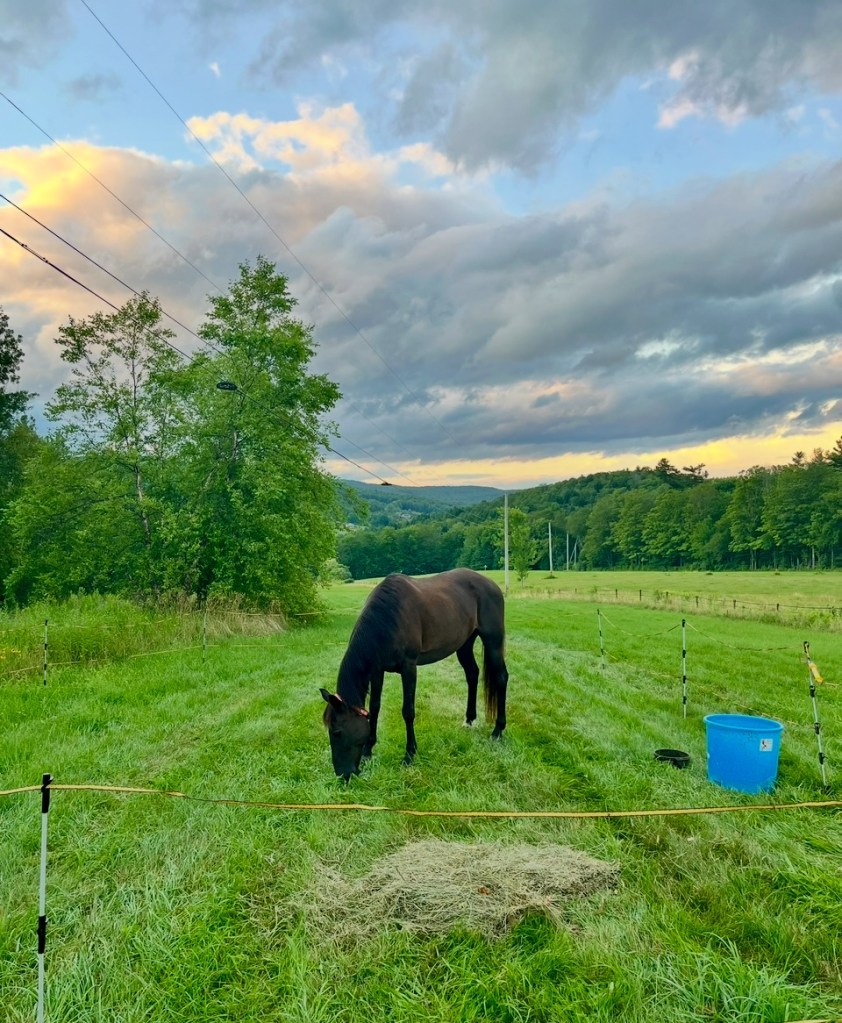
    Ride camp Thursday evening after the storm

    We woke up to cool breezes and peeking out the tent we watched the grasses dance in the early light. It was sublime and Matt and I took a moment to take in the glory of the last moments of peace and calm we may have for a while. Check in and Vetting in was not available until Friday afternoon, so we puttered about with details, and found a delightful little market and cafe with home made bagels and much needed ice. Camp began to bustle through the day as 450 runners came and went to register for the foot race that would share the trail with us horse riders. When the time came, we checked in with the ride management, then took horse #109 (that’s Khaleesi) to the pre-ride vet inspection. 

    This is where things began to get disruptive again. K had a resting heart rate of 36BPM which is excellent, and her hydration and overall condition earned A scores. The head vet saw something slightly off in her trot out and asked us to try again. We did. He still thought something was questionable and asked us to trot a third time and included another vet to watch. Not enough to hinder us, but enough to plant a seed of doubt, they marked her card with a “B” and suggested I stay aware of the potential something might be off. 

    Checking out the starting line the day before the race.

    This is not what you want to hear the day before you embark on a single-day 100 mile endurance race. 

    I mulled over what it could mean. We visited the ride farrier, Howard, who became a new friend! Marcus had warned that her feet were getting soft from such a wet summer, and I wanted to have her nails clenched in case they were getting loose. Howard chatted with us freely in his Scottish lilt as he checked all four feet and added one nail for good measure in a weak spot. He was a positive and kind guy, and didn’t charge us for the time he spent checking the nails. He wished us the best and promised he’d keep his eye out for us through the day. 

    Still, I had concerns. 

    It clouded my evening. I was nervous. Do I go out with concerns? Once again I asked the question: what should I know, what do I do about it? And I sensed the reply so clearly: You do the next thing you know to do, until there is no next thing

    We spent some time looking up references for #109 and I held onto the words from Joshua 1:09 that reminded me to have courage and do not fear because God goes with you. Ok then. We show up to the starting line, and we go. We do the next thing until there isn’t a next thing to do.

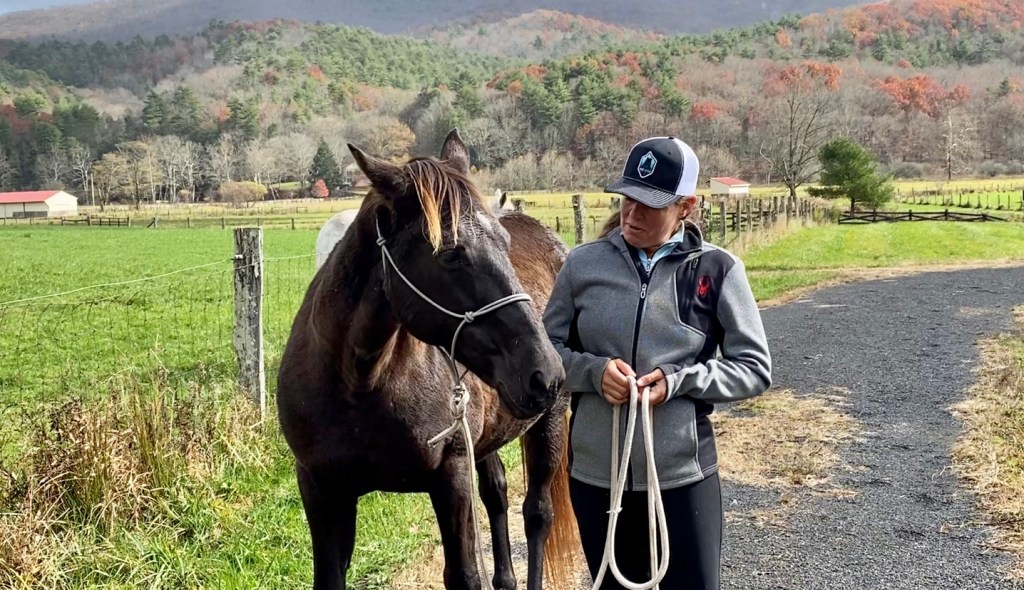
    The runners leave at 4am, and what an experience that was! They line up and hundreds of headlamps jog under the starting line turning up the dirt lane past our camp site with cheers and cowbells. Khaleesi was beside herself with the experience! A line of cheering mass in the dark with headlamps bouncing to and fro. She had never seen anything like it. I had been warned of this and she was walking on lead with me when they departed and it took a moment to get her settled back down. 
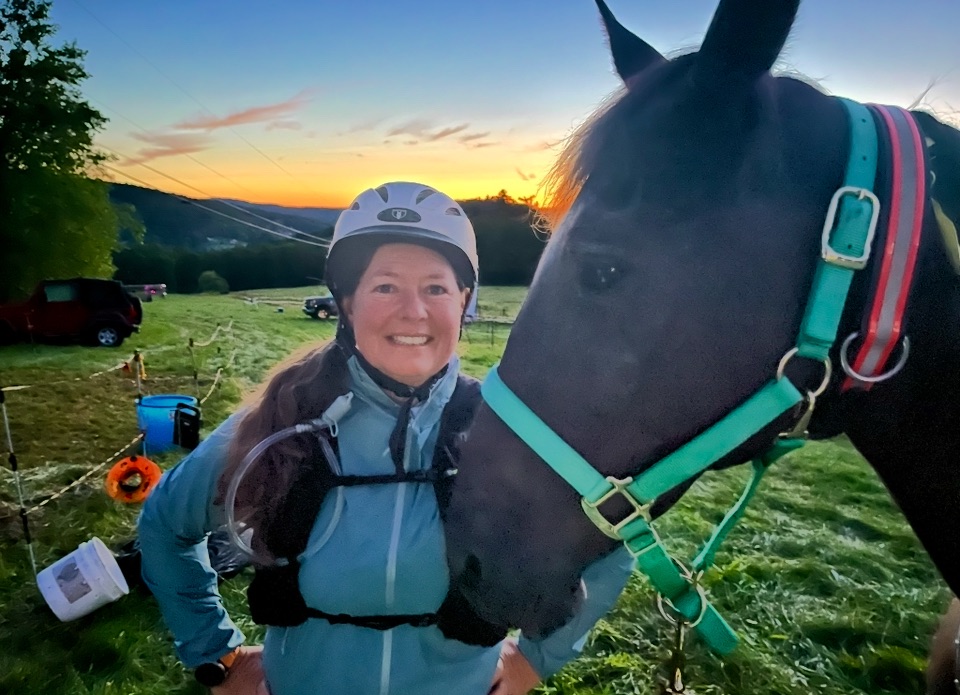
    Before the start

    The trail opened for horses an hour later, and the eleven, 100-mile equine competitors left camp with my mind on the only problem I thought I was facing: would I end up with a lameness issue today? The trail is monstrously hilly from go. The exit from camp is significantly downhill on a gravel road. I had been walking Khaleesi around camp for 15 minutes, but she was not adequately warmed up for these hills and to make matters more concerning, her adrenaline was way up. Her head was in the air like a llama, and her trot felt like a jackhammer. If I had reason to be concerned she might hurt herself, the tension she was packing along with us trying to race at a high speed in the cool pre-dawn was not helping. 

    I unloaded all my tools to bring her mind back to the present and not run as if for her very survival with the other horses. I was mostly unsuccessful in getting her to relax into the work and had to negotiate with her the best I could. It is common for her to run faster in the morning and I work with her to find a good speed where she is moving freely and soft through her body. Considering the morning was cooler than it had been and her adrenaline was up- I now also worried about potential tie up. Tie up is somewhat mysterious, but the root is usually associated with a horse over running their ability through adrenaline and going into a metabolic state that can be dangerous. This is not something I have worried about with this horse previously, but something about this morning had her running on more adrenaline than I’ve seen. 

    It took almost 30 minutes to get a more relaxed mental state. We rode on this way for a few miles, now in last place, but I have been there many times and wasn’t concerned. She had leveled out, was trotting beautifully, strong, and relaxed.  We may cross the finish line last, but a finish was my goal. We had launched past the danger zone and were well on our way to the first checkpoint at mile 16. This was not a true vet hold, but a 10 minute pass through where the vet gave a quick look as you departed to make sure all systems appeared to be sound.

    It was about mile 13 when the unraveling began.

    Flying along with a beautiful balanced trot I was enjoying the early morning and greeting the runners we passed, when things went into slow motion. First I felt my left foot was not catch the stirrup bar. Then I realized I was coming off balance and wasn’t able to recover. I reached around Khaleesi’s neck and when it was clear I was going down, I swung myself around her neck and landed on the ground in front of her. She was aware something went wrong and when I landed at her feet she came to a stop above me. I remember my calves both going into a tension spasm, but otherwise I was perfectly fine and so was she. How embarrassing, I thought, and assured the runners who had witnessed the crash that I was totally fine. Next I saw my left stirrup and it’s leather on the ground and realized I hadn’t simply come unbalanced in a poor riding moment, the stirrup had come off the saddle. 

    My hope as I stood up, was the leather had simply worked its way off the bar it attaches to. The truth was worse. The metal bar itself had sheared off and there was nothing on the saddle to reattach the left stirrup.
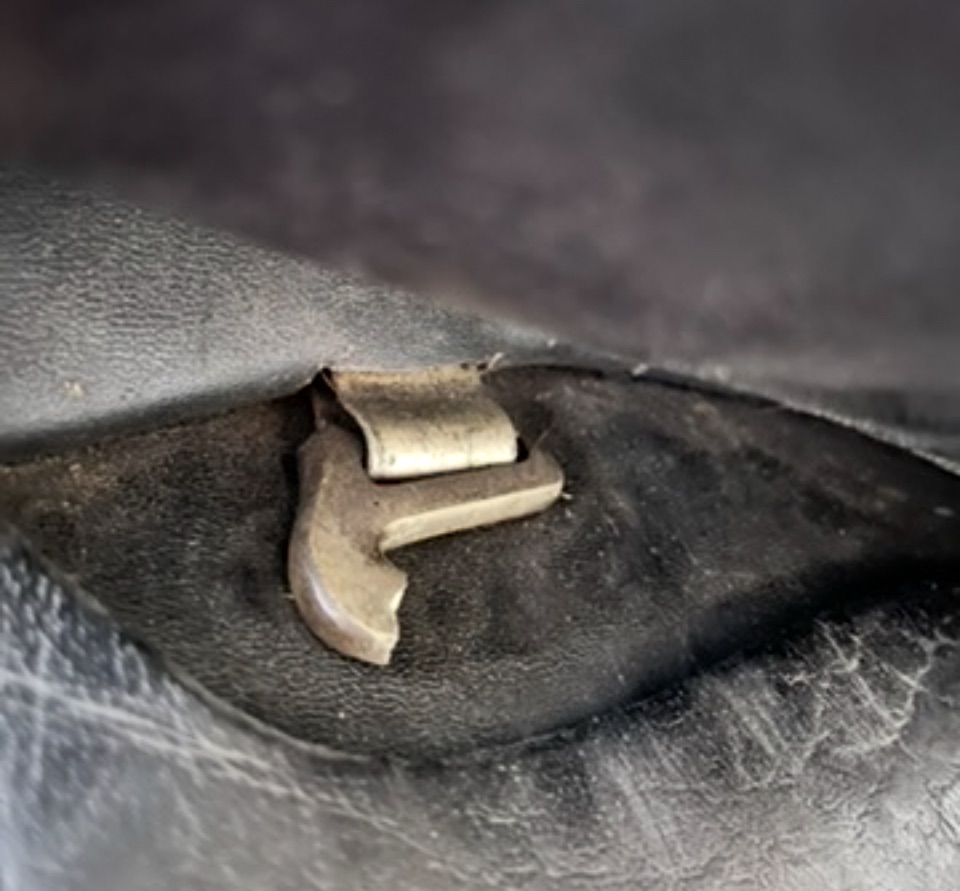
    Broken metal stirrup bar

    I had not planned for this.

    In all the potential things that could go wrong. This was not one of the things I had even considered. 

    I began walking next to K, carrying the stirrup leather in hand and wondered: is this the end for us? Already only 13 miles in? Can we recover? 

    Again I heard the reminder: do what comes next, until you cannot make another move. Do the next thing. Keep moving.

    Service in this area of Vermont is notoriously horrible, but miraculously both Matt (already waiting at the checkpoint) and I (three miles out) had service. The only thing I could think was to try my alternate saddle. However, there were issues:

    • 1) the saddle was in the horse trailer at ride camp. Ride camp (I learned then) was 30-35 minutes away from the check point by vehicle. At least an hour round trip.
    • 2) the alternate saddle was the exact make and model, but it was a “regular” width. The saddle that I was using that fits her properly with the ideal pad set up is an “X” or a wide width. 

    The broken piece of metal would cost us around an hour, and it would mean riding in a saddle that was not the right size. An analogy would be if I had two pairs of identical shoes, the ones that work best for me a size 9, and the other pair a size 8.5. In this example we could say I wear the size 9 with thick socks that help protect my feet from blisters and give the comfort I need to run at my best. If I have to switch to the size 8.5, I will have to use thin socks with less protection and will not be as comfortable running. 

    I walked the three miles into the pit stop and chatted with the vet and land owners while waiting around 30 more minutes for Matt to return with the saddle. We changed the saddle quickly as possible, and trotted down the hill with a green light from the vet to meet everyone at the first vet hold at mile 22. 

    My first go with the other saddle I had left too much padding and had to stop and get off twice to adjust as the pads, but we moved as fast as we could and arrived at Vet Check 1 to find everyone waiting to help us. The vet was taking the heart rate of the horse as we were pulling off the saddle and her pulse dropped very fast to get our hold clock starting as quickly as possible. She looked great and the vet wondered aloud to us why we had a “B” score for her trot the day before, he thought her trot looked great. 

    Arrival at vet hold 1

    After the 30 minute hold we left with almost zero padding under the saddle, and 22 more miles until the next hold. The “rolling hills” were relentless. I had expected hills, but these were mini-mountains. Thankfully she is aces as trotting down the hills and staying in a relaxed form, but every time I thought we hit some level ground, around a corner was another brutal climb. I could feel the saddle impeding her free moving trot and meant a shorter stride. We were running against the clock, and doing it alone except for the runners which did keep us company. The drawback was they often would walking up the big hills, and when I could inspire K to get some trotting intervals up the hills, and as soon as we came to a walking human she put on the brakes and walked with them instead!

    Still, we ran into vet check 2 with a few minutes to spare and met again with the royal treatment. She was pulsed immediately to the parameter of 64 while pulling tack and they started our hold clock immediately. Here we saw Howard again who offered to trot out Khaleesi while a volunteer brought me iced water. He even checked her nails and gave a quick tighten up to be sure. It was wild to watch the whole team working my horse while Matt helped me with my own needs. She passed with all perfect scores and was surprisingly tolerant of all the pampering. They even brought over a pop up tent and fed her apples while continuing to sponge her as we were going into the heat of the day. 

    Volunteers swarm around the royal steed helping us at vet hold 2

    This hold was 50 minutes and then we were pushing the clock to do 17 miles with more nasty climbs (one I think was called suicide!) to make it to mile 62. I had my doubts we could sustain this all the way to the finish line, but the reminder came: do the next thing until there isn’t a next thing to do. 

    The climbing had been grueling and I kept wondering if it would level out. The total elevation we climbed from starting line to Vet Check 1 was 3,200 feet. The 22 miles from Vet Check 1- Vet Check 2 was 3,786 feet. I suppose we got a little relief on the third loop as the 17 miles brought just under 3,000 feet of climbing. The hour we lost in the cool of the morning to get ahead was very costly.

    This mid-afternoon is where she generally begins to drag. It’s hot and here the bugs were voracious. When the flies got really bad she would stop and shake her head and refuse to move onward. She kept begging me to stop in a large grass patch and eat.
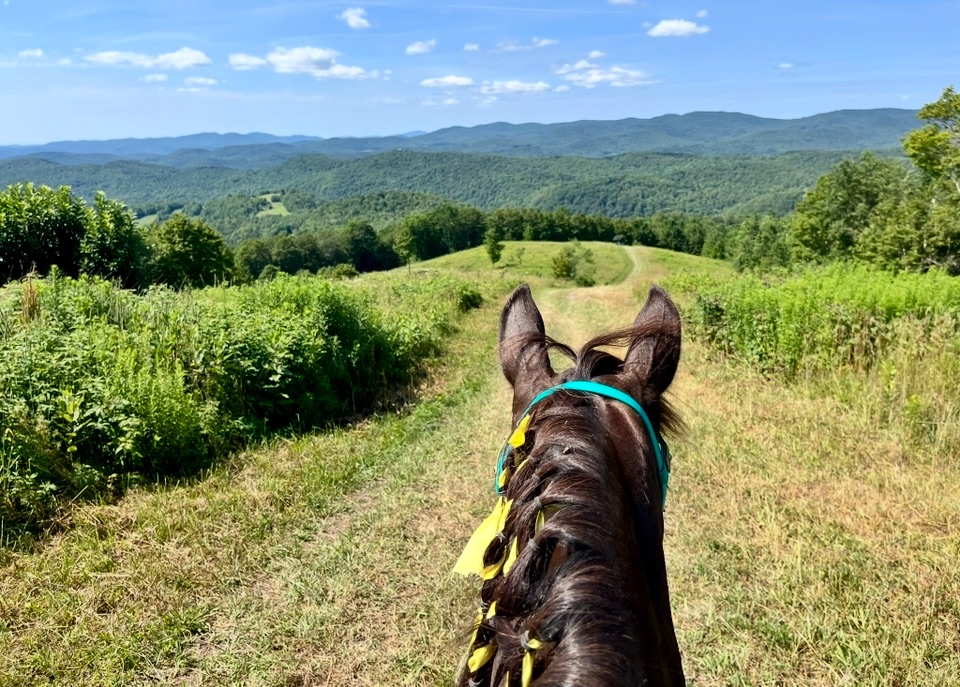
    Gorgeous views from the high meadows

    Unfortunately- we did not have time for that while also racing the clock (she had great gut sounds – this was not an issue). I wanted her to be able to graze and go, but once she started eating it’s all she could think about. I could tell she wasn’t exactly “tired” she was hot, distracted, and irritated. 

    And in the background, the clock… always ticking away.

    It was about three miles more to the next vet check when we passed by the runner aid station they call “Margaritaville,” one other frustration was not knowing where the horse vet checks are and for example Vet check 2 showed up almost 2 miles late according to my GPS which had me concerned. If I had been familiar with the course I might have had more confidence, I might have pushed through here, but I wasn’t even sure in 3 miles the mirage of vet check 3 would actually appear. 

    After the hills, the heat, the clock, the flies, and the constant nagging to give up and only eat the grass… I faced the gauntlet of Margaritaville. We had just gotten a little steam rolling and then there are people lined up on both sides of the road waiting to crew for their runners, canopy tents set up, and cheers and chaos and actually lots of fun for humans- but it’s a potential death zone for a horse not used to such things. Each one of these aid stations slowed us down as K navigated what to her was totally new and concerning, and truthfully it about took all the hope out of me as we walked through the town with her worrying about the cowbells and the little kids running out in front of us excited to see the horse, waving flags or shaking bells. 

    It is possible if I had gotten through the Margaritaville gauntlet and ran her up the hill into the checkpoint, we MIGHT have just made it and gotten out for one more loop. It is possible if we had gotten out there we MIGHT have taken the slightly easier next 11 miles and found the day cooling off, and her second wind coming up, and we MIGHT have begun to beat the clock that was breathing down our hind end. I’ll never know.

    Instead, when I saw a house that offered horse water and carrots, I stopped and got off my horse. This act was basically where the white flag came out and went up the flagpole, because I think I knew getting off and taking time here would mean surrender to the clock. I had not taken the time to electrolyte during the 17 miles and I wondered if that was working against us. I allowed someone to offer K a carrot, and I took a glass of cold water (my hydration pack wasn’t empty but it was warm). After a few minutes I got back on Khaleesi and I insisted we keep moving, but I didn’t push. We got into the hold about 4 minutes after the pulse time had passed and were considered “OT” or Over Time, and no longer in the race. 

    After pulling her tack, the remaining vet checked her and with a heart rate of 48 and all A scores, we loaded up on a trailer to base camp. She was healthy and her gait remained solid through the 62 miles without a hitch. All the things I had prepared for and been concerned about did not pose a problem. The extra calcium plan for the heat and humidity was in place, no metabolic issues came. Her shoes held up great. No issues with her gait. Looking back I did a pretty good job getting this non-arabian ready for a challenging 100 mile ride. Regardless of that, equipment failure still turned into a failure to complete. 

    It was disappointing, but I think I had a pretty good outlook. In retrospect, the day before when we heard a vet tell us we might have a problem, I asked: please let me start this race, and please, I want to see some of the trail… we’ve come so far. And as if a response to that request, we saw over half of the trail. We got three full hard loops in and saw 62 miles of the Vermont 100. 

    I thought the test was going to be about getting across the finish line, but in looking back, I think it was a test to reveal what is under my own skin when the cost is high and the outcome is loss. The only way to see what is there is when things get real. The investment has to be real, and the loss has to be equally real.

    The night before the ride, as I stressed over the potential lameness, I looked squarely at the fear that if I did not finish this ride I might feel like I was a wasted investment. I felt if I could not pull off a finish that I was unworthy. That I had less value. I was worried I might carry the label: Failure. I think that “B” grade helped prepare me, because I sat with my devoted husband and in tears I admitted that I felt I will have let him and everyone down if I can’t get this done. 

    And we both knew that was not true. The pressure was internally generated, and completely unnecessary. 

    He assured me that regardless of the outcome, he was here… WITH me. And I kept hearing a reminder over the months and in that moment that also God was with me. Regardless the outcome. As I navigated between the lies and the truth, like a sharp double edged sword separating bone from marrow, tendons and joints, I think the lie was cut away and the truth remained. 

    Jaime & Matt give K a break at a rest stop in NY

    The truth transforms us. The truth sets us free. The truth allows us to respond to what comes and be disappointed without being devastated.

    No matter what came in the test of the event, I had reached for something beyond what my comfort zone could claim. I had dreamed big and made plans. I walked out those plans day after day, and not only did the preparations, but wrote about them and shared them transparently with others. I took the risk because my real identity was not tied to the outcome and I knew I would still be “me” if I shared a victory or a defeat with the stakeholders.

    In the end, only a few days of hindsight, and hours of being able to process, I can see that I carry a failure to complete on my public record, but I am not a failure. My identity is a bold, adventurous daughter of a creator king. That Father created a beautiful world for me to explore. I love a challenge. I want to live fully the life I have been given, and I’m willing to take a risk that things may not go as planned, and then pivot and roll with the next steps. I want to be fearless and free in the truth, and to walk in grace and love as I run and fall, as I encourage others, and help pick them up along the way. 

    I have heard it said that it is only in being willing to die that we may fully live. As Dr. Luke wrote centuries ago: Those who seek to preserve their lives will lose it, but whoever is willing to lose their life will find it.
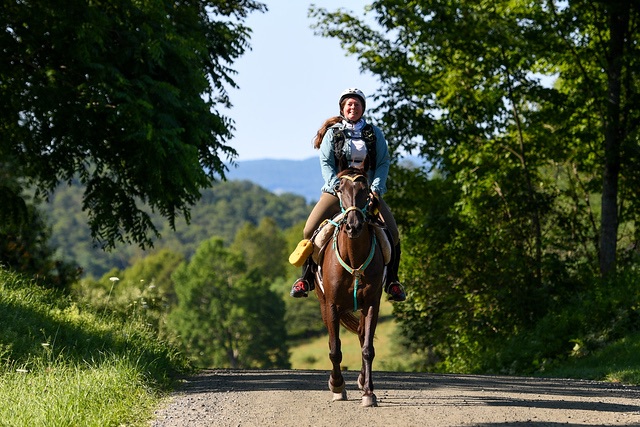
    Photo taken between checkpoint 1 and vet check 1. Makes me smile as I imagine the hope we held after the trouble began. Ben Kimball Photography.

    In a way, the trailer ride home from mile 62 was like a death. The death of a hoped for outcome. But I have experienced that to move from empire building to living in the kingdom, death is only a door to resurrection. Like the Phoenix (Fenix!), there is a level up that only death of the old can bring forth. I do believe that this story is a good one, and the little voice that came as I looked at my broken saddle from the ground at mile 13 (“Don’t be afraid, this is a gift!”) is somehow right… Even this is a gift, bigger and better than I can see at the moment.

    Possibly the most interesting question that still lingers, floating up in the aftermath of the great adventure, the one I am not certain how to answer honestly… remains… 
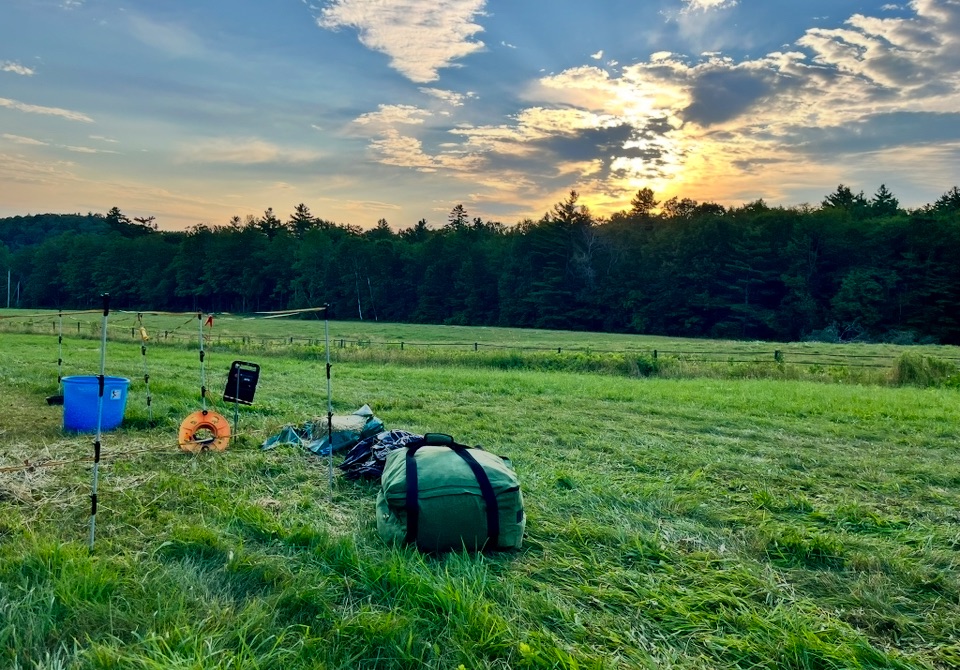
    If I knew then how this would play out… would I still have gone?
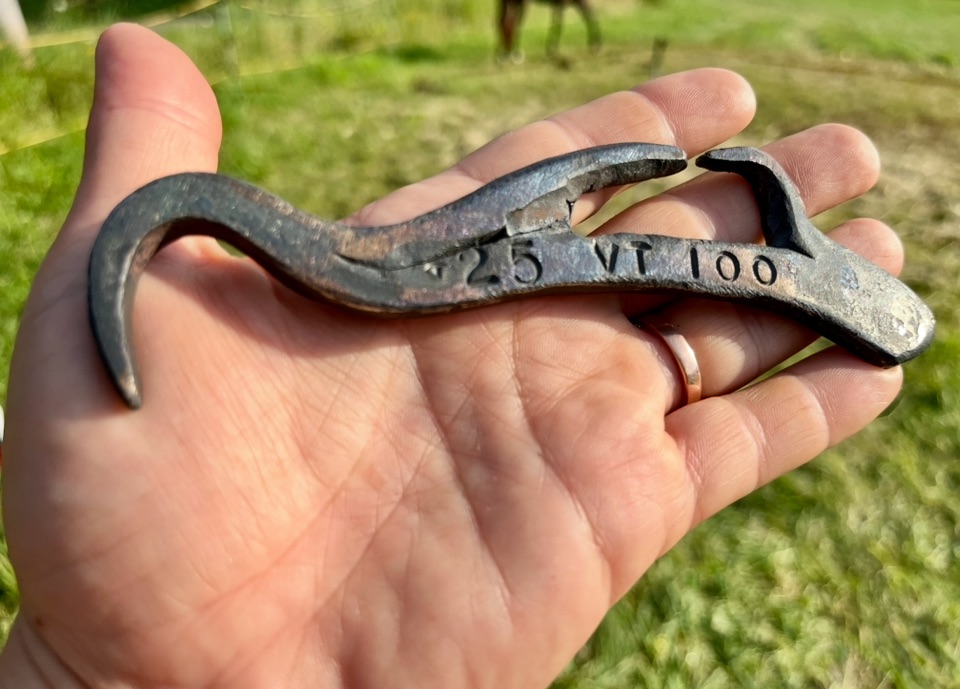
    Howard the farrier brought us a special momento to honor our spirit with the ‘Broken Tack Challenge’ award. I treasure it!
  • Adverse Conditions

    Adverse Conditions

    If you don’t have something working really well in ideal conditions, you don’t have much hope of them working out in adverse conditions…

    I’ve heard Harry Whitney remind people of this as a fundamental answer to various questions they ask about trouble spots with their horses. It pairs well with another quote, which was my own take home from two days in June watching him at Mendin Fences (TN):

    In my experience, most people don’t know what it looks and feels like to have a horse truly mentally centered and present with you, and so most people don’t really get there, and this is a reason many people can’t seem to get a real change come through. The horse was never really centered up and present.

    It’s been a priority to address Wyoming’s mental centeredness since I’d met Tom Moates early last year.  Tom has been learning from Harry for years, and attention to the horse’s mind is a central focus for him as well. This doesn’t mean I’ve been successful it. We’ve made some significant strides in helping her become more relaxed, less angry, and significantly more cooperative than the other approaches I’ve tried over years. Yet I sensed a trouble in her that I had not gotten to the other side of, even as of this summer and the clinic we hosted in July.

    Harry Whitney, Wyoming & Jaime in Floyd VA, August 2024

    In mid-August, during Harry’s five-day clinic in Floyd (hosted by Tom),  the question came to each participant: what is it you most hope to address this week with your horse?

    I had one request: show me what it looks like to get Wyoming mentally centered and present.

    Harry was willing to guide us through this, and on day one, our lesson hour was spent, from the field to the work space, on learning what she looks like when she is fully present and how to require that she make that a way of life for now

    Additionally, my job was to make the times she was present and relaxed as sweet as possible. This is the place that feels good. At first, any time I asked for her attention, she would start throwing out options I might ask her for, like walking a circle. It was as if she had a hard time believing I could ask for her to be relaxed, ready, and present and then just breathe a moment and find peace in that space. Probably I don’t find as much peace with these creatures as I could, and a change here will serve us both. This was all we did.

    Harry & Wyoming finding a sweet spot with her mind present.

    At the end of our session that day, Harry suggested I take her all the way back to her paddock walking backward and not taking a step she wasn’t “with me.” It took a lot for me to stay that present and focused. 

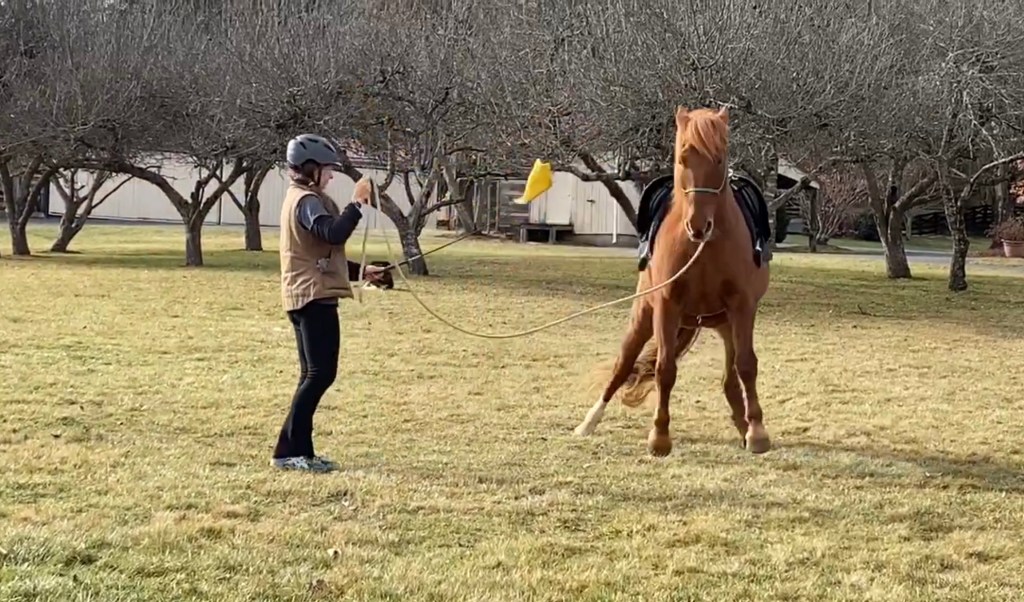
    It took a lot of focus on day one to walk backward to the gate connected at every step to release Wyoming from class. But I was committed to the process. Harry helped me to be able to see when she was present, and bring her back when she wasn’t. The entire week I did not take a step without expecting she would come back to being mentally centered. This is not to be confused with being “hyper focused” on the human at every second for fear of punishment. There are training methods where a horse is ambushed or punished for looking around. Though I use a flag for some of this work, it is built around creating an indirect distraction or sound or movement that draws the attention back to me. The key difference is intention: the actions is not at her – not a threat toward her. I need to become more important or interesting than the other distractions. Working with Harry, we don’t use fear or force as a motivating factor. Doing this takes a shift in thinking.

    Once this becomes a way of life, the horse can look around and notice the environment because they have learned to quickly make note, let it go, and return to the place of peace which is back mentally centered with the human in the work. It is part of learning to let go of a thought that doesn’t serve the horse.

    Wyoming is a highly sensitive horse that has her attention split, keeping everything around her in check in order to survive each day. When she is distracted keeping tabs on everything within five miles, she can throw out autopilot training moves, but she cannot stay present in the active conversation I want to have with her. I don’t want push button autopilot. This has not served us at all. I want actual communication, in real time, addressing the present moment we are in. In order to do this she has to let go of the other things and stay with me. As Harry helped us make this a reality, secondary issues began to dissolve on their own. 

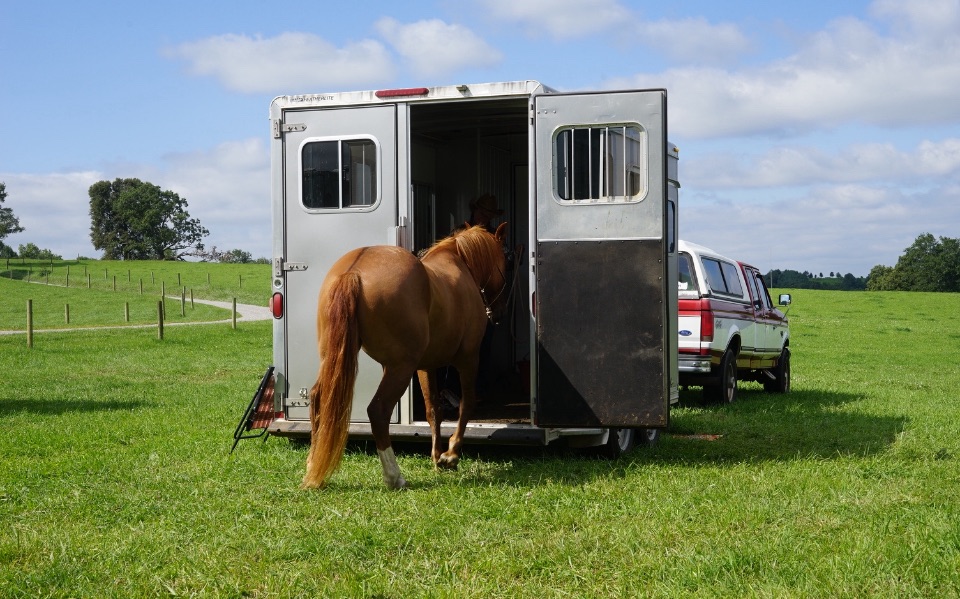
    During the week we addressed some different challenges I had been working on. We loaded her onto a trailer that was darker and had a step up entrance (instead of a ramp).

    Borrowing a strange trailer

    I worked on “knot work”- addressing the claustrophobia from early halter trauma that’s been present in some form the entire time I’ve had her. The day we explored knot work, I expected to see at least some extreme reaction to the halter, but it simply never came.

    Knot work

    I rode her in the round pen; I’d had trouble in the past getting a forward thought to walk on without driving her. We came up against a little drama here, but worked through it in short order, and had a nice shift in riding as well.

    Finally I felt a shift that seemed a significant change and I’ve continued this work at home. If this mare is not mentally present or centered up things do not go well. She gets annoyed at having her thoughts interrupted when she’s concerned about other things. Sometimes she still gets dramatic when she shares her feelings about her own ideas being interrupted or blocked. When she is mentally centered she is like the wonder horse I’ve always wanted. She is soft, adjustable, responsive, and willing. 

    I’ve been riding her at home in my round pen, enjoying great sessions where we are building like one would a green colt, forward, steering, stopping and backing. 

    I am trying to start this journey in as ideal conditions as possible. I continued to prioritize mental connection. I can put on the halter without fuss, load her on the trailer, and ride her in the pen. Each day more positive experiences and progress. Last week, Matt and I took her on a solo adventure, loading her on the trailer for a short drive to our local recreation area. We unloaded her, took a walk, then loaded her and returned home. It was a great success.

    Matt, Wyoming & Jaime have a successful adventure

    My next plan was to bring her to visit my farrier for Khaleesi’s shoe visit on Friday. I want to keep building on experience a real horse can have and farrier visit seemed a great next step to me. I trim Wyoming’s feet myself, and if we were able to get some trim work done or not was not important. Simply the experience of going on the trip successfully was the goal. Keep it simple.

    What I did not account for was hurricane Helene.

    Adverse conditions.

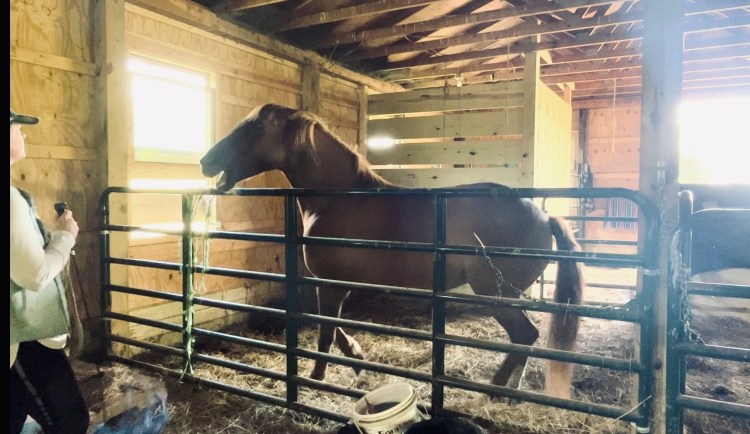
    First, Hurricane Helene turned tropical storm was making her way through the South and though we never had the destructive storms, we had almost 2” of rain and gusty winds. All this boils down to prey animals on high alert. The mares were spring loaded by the time to get going came.

    Second, the weather was crummy enough that though I was minimally willing to do what seemed necessary to have this adventure, I was less willing to go out early enough to assess her mental state, and intervene to find a working mindset before even considering loading. I gravely underestimated the effect of these adverse conditions. I might normally have planned a few minutes to shape this up… What I really needed in these conditions (in hindsight) was an hour of focus… and still, it might not have brought success.

    Third, we had a soft deadline. I highly value my farrier and drive an hour over the mountain to haul to him. He was at home, and happened to be flexible. Still, night would fall at some point, and though I had a time window, it wasn’t endless. Time restrictions always feel like pressure. Pressure brings fear of failure which often makes for poor decisions.

    To make a painfully long story shorter, Matt and I did the things that were successful in the past for about an hour. Over that time I watched the stubborn mare I used to know show up stronger to the forefront and dig in her heels. The more we insisted she join us with the trailer plan the more she resisted.

    I made a pretty good mess of it as I became desperate to get it done. Matt was a phenomenal help, and he never got frustrated though things were not going well. When our best efforts and closest moments dissolved into escapes off the ramp in panic, I saw I was doing more harm than good and creating problems I was going to have to fix. I knew the frustration I kept at bay was getting closer to the surface, and I knew that would only make things even worse. 

    I made one good decision to set aside my own stubbornness. I made the call to abort the mission, put her back in the lot, and take the horse who needed shoes before we had to abandon altogether. Wyoming did not have to make this trip. 

    It was hard not to consider this admitting defeat and total failure. Because that’s exactly what it felt like, and I am not one to admit defeat easily. I told myself years ago I would NOT allow work with my horses to become a win-lose scenario. I am not in this to make my horses into losers. How I want to function is a growth model, and it’s a long journey. I was recently reminded by Adam Grant in his book Hidden Potential:

    though straight line growth feels faster in the short term, it’s been proven many times that growth curves and loops are the only way to get farther over the long term.

    For a straight line thinker I have to remind myself of this intentionally, often.

    The mare was not with me, and we were way too deep in adverse conditions to swim out- especially considering it wasn’t necessary. Hopefully this was a loop in the long term trajectory that would carry us farther than my preferred straight lines of success ever would.

    My biggest miscalculation was to think I could get her out of the field after a half day of being jacked up by her environment, and then load her as if we had already mastered this because we had a few successful trips in ideal conditions. If I would have stopped to ask myself if she was mentally centered up sooner it would have been obvious that she was not. For some reason I thought I could overcome this deficiency by sheer willpower. Strangely enough eight years of trying to overcome her inattentive mind to get her to do anything never worked. Why I thought I could revert to my old ways and get a different outcome is… mostly embarrassing.

    After over thirty minutes of this idiocy, I saw it clearly. I realized she was minimally mentally present and that was my biggest problem. She wasn’t running me over or creating a danger and so I accepted it as good enough- but she was still highly distracted. After starting the process and getting very poor results I took her away from the rig to address her mental connection. 

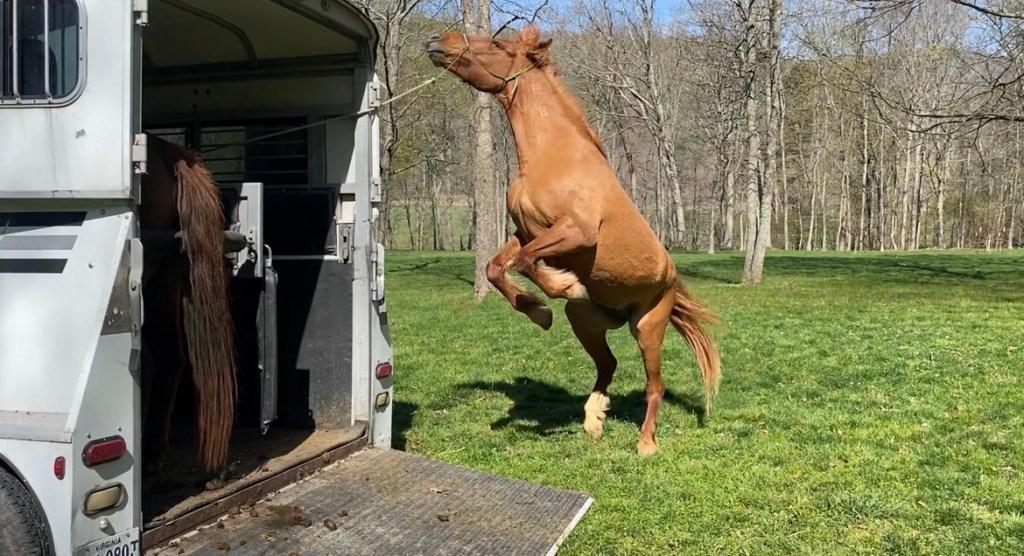
    This was the most challenge I’ve ever had getting big enough for her to let go of every outside distraction a stormy day could bring. She would look at me and immediately avert her eyes, head, neck or even her body, to a sound or rustle or leaf in the air. To her this was survival and self-preservation. I couldn’t keep her mind for more than two seconds at a time. I worked very hard to get very big and very loud and very active and I could get maybe five seconds. If so I would take a few steps do it again and get a few seconds and take a few steps. In this mode I got her all the way onto the trailer, but as soon as matt touched the butt bar she would explode off because even though I could get her body on, her mind had not settled there. 

    It was a lost cause. I might have stopped after I realized she was not capable of staying present, and I should have realized that within five-ten minutes. I could have asked that question sooner and I might have realized that I was into depths we could not swim successfully. Possibly if I’d have addressed the mental state better in the first few minutes I might have had a chance. I don’t know.

    As always there are the growth opportunities. I get to experience once again as a reminder what many people I care about are also experiencing when they get some momentum with their horses and then skip over – sometimes purposely and sometimes without realizing it- to the deep end and get into a bad situation. Not only is it humbling for me to hit a place I cannot overcome in one fell swoop, it’s good for me to have to experience what people around me are going through. I am willing to go through challenges in order to learn things that might be able to help others. And so as James tells us in his letter: Count it all joy when you meet trials of various kinds! For you know the testing produces steadfastness, and let this have its full effect that you may be complete, lacking in nothing! 

    Also, it reveals to me me the dark, stubborn, frustrated part of me I hope to identify and eradicate. If I could have done so, I would have picked up that horse, hog tied her into that stall, and forced her on the journey. At some point I lost most of my compassion for her and the real sense of threat and pressure she felt.

    Working in ideal conditions

    In ideal conditions I have grown so much! I have tons of patience and empathy for what the horse thinks and feels. I can say I am here to help you and mean it. When the conditions squeeze me, what comes out? Eventually frustration and the desire to beat her with my flag until she complied by force, broken mind and broken will. I did not go there, but it was because I know that doesn’t work- not because of my stunning maturity and grace. It’s good to be reminded of the garbage that remains in the darkest corners that still need cleaning out. Lord help me, and thank you for exposing it without me acting on it.

    Something encouraging I considered in my personal debrief: this mare has a history of going to fight mode unusually quickly. She has threatened violence when she feels treated unfairly, with punishment or force. Friday, her stubborn will engaged, refusing to be loaded on the trailer, however, she never threatened with dragon ears, rearing, or nipping. She refused, but she didn’t fight.

    In the end, the conditions didn’t seem adverse enough to me to create this trial. I was wrong. Also, I had thought that our ideal conditions work was going well and it was. But I’ve learned from Harry that me, and many of us who are pursuing excellence and a higher working connection, are not aware enough yet of the subtleties in the ideal conditions that his eye would be. I can hear him say: you’d better get that working better because it won’t hold when things get adverse. The same as he has observed: most people don’t know what it looks and feels like for a horse to be fully present and truly mentally centered.

    Practicing going forward and back through the gate keeping her present each step.

    It seems many of us have to feel in mortal danger before we dig into what seems good enough. Apparently, for each person, there is a different threshold for working good enough. All foundations have a certain amount of weakness. Will it result in a tragic wreck or only sub-standard performance? It probably will depend in part on what kind of conditions you face. For Khaleesi, these adverse conditions were not a huge deal, for Wyoming they were a deal breaker. I want to be someone who digs deeper even when things are not downright scary and grow even when things seem good enough.

    Harry… the ‘Coast Guard’ Whitney

    I still having a long way to go. This means more time in the ideal to expose foundational cracks and more gradual steps into incremental adversity so the cracks are patched up before being totally overwhelmed beyond hope without a rescue effort from the coast guard. Someday I hope to see morelike Harry. Because of his experience and attention to details, time for him is shorter in the shallow end, and he has more tools and experience in the deep end- I suppose in some ways Harry is the coast guard.

    Today I am grateful that horses have memories and experiences, yet they also shift quickly with their experiences. I am pretty sure I caused problems I’ll have to fix, but if I show up fresh the next day, I believe she will as well, and if I bring my A game she will respond. Nothing is beyond repair, even though repairing damage I’ve caused isn’t a good way to proceed. 

    Epilogue.

    The following day we had a break in the rain and I spent some time with Wyoming to assess the damage. She was more difficult to halter in the field, but once I had her on line she came with willing softness and keeping her attention centered was easier in the calm sunny afternoon. I struggled to load her as easily as previous, but Matt had been watching and asked if he could try. It took some communication and patience, but he was able to load her twice fully on where she felt relaxed and calm. We did not close the bar, but took the progress and moved on.

    Matt and Wyoming regroup after the storm

    Matt then kept her attention and held the rope while I attended to her feet which did need a trim. She did so well we also put on her saddle and did some work in the round pen. All of this went well and Matt took the lead (literally) on much of it. He has a grace and patience for that mare I sometimes struggle with, and she responds well to it. 

    Yes there are some setbacks, there was a price from the poor choices and miscalculations I made, but these things will pass, the growth will continue in loops and curves. As always… Hope continues.

  • The devil in the details.

    The devil in the details.

    In the last post (Complicated), I posed the root question:

    And so, the whole thing depends on the question: can I help change Wyoming’s experiences and thus her mind, that working together with me is something she can feel good about? And in changing this, could she feel better about her life all around?

    Over time I have been given advice about Wyoming suggesting a few basic horsemanship concepts. I was told You’ve got to make the “wrong” thing difficult and the “right” thing easy. Also This is a horse where you have to get it to be her idea if you want to succeed.

    This is all well enough… but somehow I wasn’t able to get a next step from the well meaning clinicians and horse-folk who suggested these better ways, to actually sort out exactly how was one to do this? The devil, they say, is in the details.

    As for the first premise, I have been astounded at how easy the “right” thing can be (walk quietly in a circle) to find this mare will choose ear pinning, rearing, and even trotting or cantering in order to NOT comply with my “easy” request. Have you ever heard that it takes more effort to frown than to smile? I’m certain that ear pinning and rearing take way more effort than quietly walking relaxed a turn or two around me.

    Khaleesi had this figured out pretty quickly. She did the math and came to the conclusion complying with my general requests were going to be the path of least resistance. I think she also knew my heart (is that a stretch to write about?) for however a horse knows these unseen things, I think Khaleesi has always known that for better or worse, overall I am trying to do right by her. This horse seems to reward the least try by her human, and she seems to have a lot more grace in my failings. Khaleesi is the kind of horse of which it is said: they will fill in for you… a lot.

    Wyoming is not such a horse. She may or may not know my heart is to do right by her, but she tells me every single time I am not quiet enough in a request, every single time I get impatient and don’t allow her the time to consider and choose. She responds to my energy and where I am looking and if my body is not exactly angled in the ideal way to ask that thing. She responds in a huge way if I am at all confusing to her in any signal. Wyoming has a very low tolerance for mixed signals or confusion.

    As for the second piece of advice, the making it her idea. I never got someone to show me effectively what that would that look like with her. In the past I figured it’s obviously one of those things you have to struggle through on your own (what are you an idiot to have to ask that follow up question of HOW to do it? Or maybe it was like the force… you have to find it on your own grasshopper). That was another assumption. I should have probably asked better follow up questions. Maybe someone might have been able to show me.

    Observing Harry Whitney and Tom Moates, it seems altogether less magical and more practical. The horse gets to choose and whatever she does IS her idea now. And as I’ve heard Harry say: when it’s her idea, then she will own it, then it’ll stick.

    Harry Whitney in TN patiently allows for the horse to come to the idea on her own

    Oh, I thought. So I must not trick, force, or otherwise manipulate and threaten her into doing what I want. And yet somehow I have to help her make better decisions? Which then follows that if I’m dealing with her honestly and not manipulating or otherwise controlling or punishing her… then it actually has to work out better FOR HER when she chooses the thing I am presenting. Which might incentivize her to truly seek to join with me because… it works out for her when she does.

    The devil is in the details.

    I hear a lot of talk in horse circles about putting the horse first, then watch the presentation of folks’ interpretation of that in action and am skeptical. Let me clarify a finer point, often I observe my own presentation of my own interpretation of putting the horse first, and I am highly skeptical even of my own stewardship of this concept.

    And yet, as I perch outside the round pen as Harry helps a horse, I think there is actually a simple truth in… well… put the horse first? Harry Whitney, in the scant week or so I’ve spent around him in California and Tennessee, puts an emphasis on how the horse feels above everything else. 

    Harry in Vista, CA February 2023 helping a horse center and find peace in the midst of distraction

    I am pretty good by now about sorting out what a horse does. I can see the way a horse steps over a hind foot, or if the horse’s body moves backward, or if the horse is walking, trotting or cantering. I am even good at seeing a weight shift and feeling which foot is lifting underneath me. It is not that hard to sort out: I asked you to walk, and you are not walking. This I need to “fix” somehow. Harry wants to know how the horse feels.

    As I circle back to the question, can I help Wyoming FEEL better about her life, it seems now to rise above all the other questions I have asked: Can I get Wyoming comfortable on the trailer? Can I get Wyoming to respond to a simple request unoffended? Can I put on a halter without her nipping at it as I put it on? Can I convince her to carry me as a rider without being so pinched up inside?

    And so I went to work last week, and the devil is in the details.

    Day one and day two were spent with Tom sorting out the fact that Wyoming is not only complicated, but that she does not feel good most of the time. Even in the herd she is never fully relaxed, she is the one who appears to take on the role of defender of any possible harm. This is a heavy load to carry. Any new environmental stimuli, even a chainsaw a mile away in the woods across the street is cause for concern and alert. 

    Khaleesi has a more balanced sense of what is concerning, and what can be noticed and let go of. Same herd, same stimuli, still aware of her environment and sometimes on alert, but quicker to let something go and relax again.

    If I were to consider Wyoming’s “worry cup” (as in the amount of anxiety a horse is building up until it runneth over – usually in a negative expression of some sort), Wyoming is not a cup half full kind of mare… she is like 5/8th  most of the time and now has learned to carry that kind of worry in everything she does. This would mean when I want to do something together I have precious little room to press her before her cup runs over. I think this constant anxiety is a big part of this not feeling good all the time.

    If she lives at 5/8 full, I think me showing up puts her at 6/8 (or 3/4 for those who prefer to simplify their fractions) then whatever we begin to sort through together leaves only 7/8 and then bam… self-protection at all costs shows up in fight/flight with the fight being unusually high on her list of options.

    I am considering the possibility that her 5/8 full worry cup at all times being a way of life could account for why she is so quick to flip over to fight/flight and the fact that we’ve had to get decent at dumping out the part we just filled if we both want to survive together. If this is an accurate hypothesis, then it follows that I have not been effective at getting down into the bottom 5/8 of the cup she carries constantly in order to empty some of that and give us some emotional space to work in.

    If I had to find an analogy to compare it to, it’s like working with a machine that is not running quite properly and you have to learn how to manage it without it overheating and blowing up if you want to get anything done. We exist too close to the red zone as an every day functioning.

    I think until I find a way to dig into some of the chronic discontent/anxiety she carries as her normal and help her to let go some of that somehow… then I’m constantly in the zone where every move I make could be the thing that takes her over the edge. It’s an eggshell kind of life. My guess is she would rather not live that way either. If she knew there was another way.

    As Tom says: this is the horse she would rather be.

    This winter and at other times I’ve put her into the benign neglect zone, first because I didn’t have any promising answers to bring a change. Second, in the winters I’m busy with my teaching work and have far less time for the herd.

    I used the think caring for her basic needs, allowing her to settle into a herd in a life of basic freedom could not only do no harm, but would help her reset again and feel better in order for us to possibly try again after that refreshing time off. Maybe the horse can drain the cup on her own? Since meeting Harry I am convinced that they actually DO need intervention in a different experience in order to make a change. Leaving them alone to “be a horse” if they are troubled will not fix the trouble. 

    The biggest take-away I had from Harry in Tennessee this spring was: 

    Our understanding runs our emotions, our emotions dictate our actions.  If you want a change in the horse, you must change their understanding. 

    Harry Whitney

    After Tom’s visit it had come into focus for me, somehow Wyoming needs new experiences to get that cup drained enough that she could withstand a little pressure in order to grow and expand her world. Leaving her alone to a world that gets smaller and smaller due to fears is not kindness. Creating a shake up in order to help her was going to be necessary.

    No Wyoming… tell me how you really feel?

    And the devil is in the details.

    This is where the hoof hits the dirt. The first question from the last post was: can I help Wyoming feel better with new experiences that will change her mind. Once everyone was gone and it’s just me and the mare I now to have to ask: How on earth am I going to do this?

    I have a feeling this is going to demand more from me that I currently possess in knowledge, skill, creativity, grace and most of all patience. As I got started, I realized this horse is probably going to be the kind that makes me or breaks me – meaning I will either grow and learn, or she’ll be too much for me and I will truly fail her. I can not at the moment accept the latter as a possibility, so I’m prepared to be changed from this process. 

    And so we begin… again… again.

  • Avoidance

    Avoidance

    Have you considered avoidance?

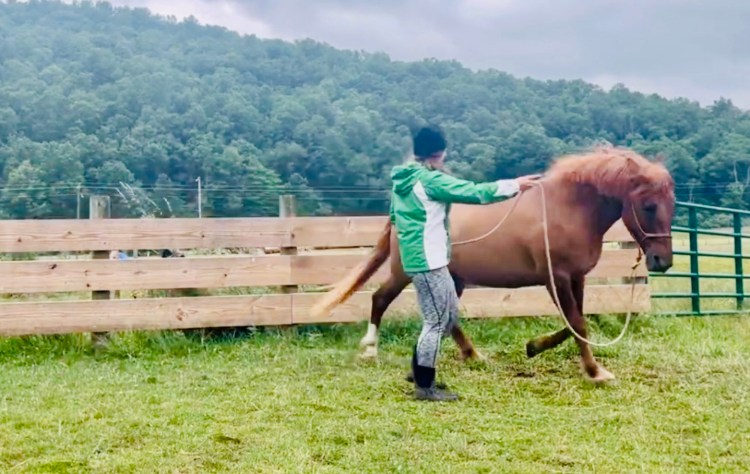
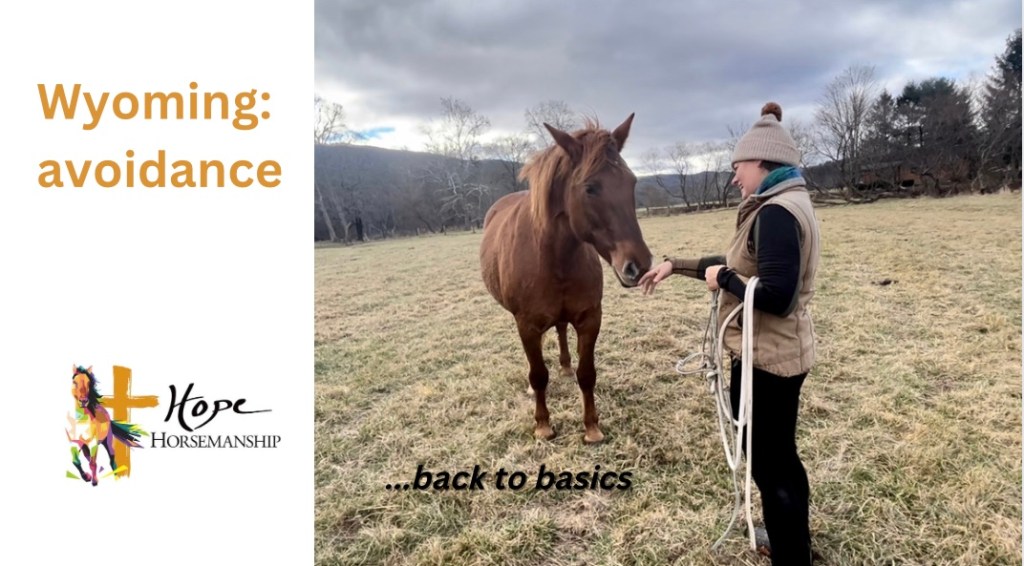
    In my somewhat “off grid” experiments with Wyoming this fall, I am changing my approach to her education away from the direct pressure paradigm and trying to lead her mind and emotions by guiding instead of driving. I am finding myself yet again back at the basics with this mare. Last winter I spent four months with complete liberty and no halter-lead rope where she had to choose to engage if we did anything. This winter I suppose we’ve stepped it up as now I find us in the step of putting the halter on and teaching her to be led.

    I had a friend take a video Monday of the process on a challenging high alert day because the farm cows were being moved around in the horse field so her environmental antennae were fully tuned and her ability to focus on me and consider being willingly restrained was very difficult. What a great opportunity to see how deep the cracks are in this trust foundation.

    What I saw in great clarity when I watched the video was avoidance. 

    In the video you can see Wyoming is not comfortable with the idea of being confined by wearing the halter attached to a lead rope. Her personality is fear based and her flight mode is easily triggered. Her freedom is her most sacred need. [Hm, they say our horses teach us about ourselves….] If she is attached to me I would interfere with her perceived need to move those feet (fast) when she feels enough worry to flip to the sympathetic nervous system and go into flight. I have come to understand more than ever for this mare to partner with a human it is going to take massive trust on a higher level than the average horse.

    When I position myself in the place I would put the halter on her, she is pressed to discomfort but not thrown over her threshold. This is an important factor in the work with her. If I break through her threshold I push her into full on flight-fight-freeze mode and we cannot do any mental work there. Note that with many horses you can work in that mode, but you are training reactions not responses and neither of you can access the horse’s brain when they are in sympathetic response mode. What I hope to find is the place where she is slightly uncomfortable because I’m pressing on that bubble but haven’t exploded it. This is where she can think and learn, and my hope is finally get some traction on progress with our partnership that is lasting.

    How I know in this video that I have not gone into full flight mode is she is never attached to a tool (she has her freedom) and she doesn’t exit stage left. Still it is clear she is pressed into discomfort because she does “leave”, but in more subtle ways. 

    Avoidance.

    I knew it was happening but I saw it with more clarity from the 3rd perspective eye of the video. She didn’t want me to put the halter on and I could see this in the ways she would disconnect from being present with me. She would turn her full attention to the cows (mental). She walked a few steps away (physical). She “nipped” at me with her lips (emotional). She tried to ignore me through eating grass (how many of us have avoidance issues that turn us toward food or drink?).

    My response to these was not punishment. The goal of punishment is to change a behavior. While I am pressing on her comfort zone it only makes sense she is going to have to sort out what to do about it and telling me she is uncomfortable. I don’t want to change the behavior, I want to change her mind.

    In order to do this I will stay in the place where it’s pressing in but not exploding and make sure she knows I hear her. I let her know I hear her by not crossing the line she is most worried about. She is not uncomfortable with my presence around her body in any place. She is uncomfortable with the next step of losing her freedom to me (halter). So I stay in the conversation with her and let her know I will not force her to make the next step. This is how I build trust with her. I stay present with her exactly where she is until she can make the change mentally that she is safe with me and can relax.

    In the video I talk through the conversation I have with her as she uses various avoidance ideas to disconnect and not stay present with me in the uncomfortable place. I can tell you for sure- I can see that this mare is afraid of punishment. She is afraid of correction. I have to communicate with her so the correction is helpful and gentle while still guiding her toward a better path. If it’s too much she overreacts and goes into flight-fight. So when she “leaves” me mentally I do something to bring her back. This is part of the experimental part for me because I have to always find that sweet spot where she feels heard and led into a better place not thrown into sympathetic response mode. I wiggle my lead rope sometimes, I annoy her grazing attempts with my boot (and you can see how that works out!), I stay in step with her when she takes a few steps. 

    This kind of work takes unique understanding of each horse because there is no set answer to all horses. I would have to get much bigger to break Hope out of a shut down state and get her back to present in ways that would send Wyoming to flight. My relationship with Khaleesi is much stronger so I can do a bigger correction without her taking it as personally- she doesn’t have an unnatural response and we can move forward together more efficiently together.

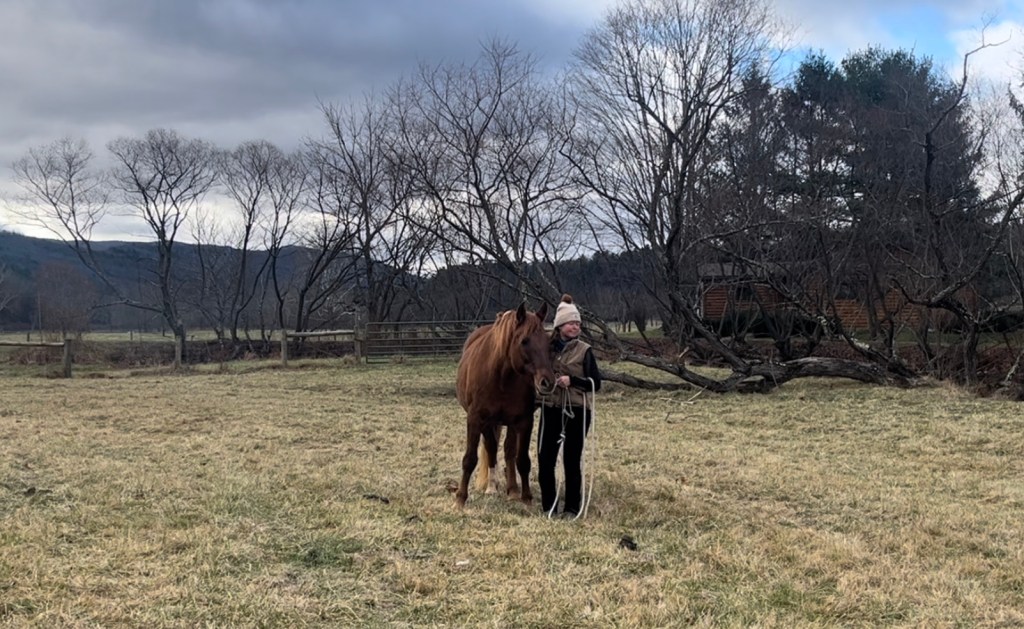
    At some point the change I hope for comes and she releases the tension and worry she had been holding in her body with a big neck shake. On this particular day that is a great place to finish and I tell her thank you and walk away. I don’t pierce into the next level with the halter although the session before this (which was over a week before due to being out of town) we had put the halter on and done some leading work without worry.

    Each session I must take the horse I have and do what she can tolerate or I will create relationship damage. That is the thing I am coming to realize more and more as I “grow up” is that yes, we can go forward when we don’t have agreement and connection- but do we fully understand the damage that is caused? I wonder.

    This is the case with the humans around us as well. Some are more geared toward progress and goals and some are naturally geared toward relationship and connection. I see that both are strengths and weaknesses. Those goal-progress oriented can do a lot of damage as we believe the prize is worth it and everyone will see that eventually. We run over others mostly for their own good. And yet the relational-connection folks can get so stuck in the messy imperfect relationship questions that they don’t get the strength of relationship because they don’t press into the challenges with courage and intention.

    If I never ask anything of my horses it does not create any relationship. Asking them to do things they don’t understand or are not ready to do mentally destroys relationship opportunities.  

    I see great value in this work and will continue to experiment with it. 

    Wyoming has by far required me to understand new ways of thinking or one of us was eventually going to get really injured. Yet as she has kept me in the curious mindset (I am too stubborn to just give up on us) I am seeing an early harvest with this line of work with Khaleesi and Hope as well. Because these two are less of a challenge for every day “simple” tasks (like wearing a halter without anxiety) their changes have been deeper and exciting.

    As always, I appreciate the clarity working with these horses gives me on my own life. I have begun to see in others around me to deeper layers of questions below the surface behaviors and it helps me have more compassion and not get so focused on the “unwanted behavior” and realize it’s the deeper heart and mind cracks that are behind the behavior. I can’t always help each person depending on our relationship and connection, but I can have more freedom in my own responses and not go into sympathetic self-protection responses as quickly.

    More transformational still, it’s brought awareness to my own avoidance behavior. When am I uncomfortable and want to distract myself with “the cows over there” or trying to eat or drink (or pick up my phone to check emails and messages rather than engage a troubling situation or thought), when do I nip at those around me hoping to send them away so I can self-protect? Truly not everyone should have my full submission and trust and that must be built, but I’m certain I can do this more intentionally and made decisions instead of reactions if I slow down and try to understand why I am feeling so anxious, angry or afraid. I can sort out my own cracks and look for greater truths to strengthen with, and maybe stop some of the cycles around me of irresponsible relationship behaviors that leave people wounded and lashing out in self-protection (creating more wounds in others).

    Link to YouTube videos:

    Avoidance video

    Fear of pressure video

  • I don’t JUST…

    I don’t JUST…

    I have been re-inspired recently with the concept of brace in horses. I am seeing in a fresh way that if we are willing to look, the layers of brace in even the simple things we do with horses hold practically infinite opportunity. I am taken by the fractal nature of it… astounded how the better one gets at dissolving brace, the better one gets at recognizing it in deeper layers and smaller junctures, and then hunting it out and dissolving that, and it becomes a lifelong passion of seeking out the weak place that is rough in transition and then the love of finding ways to work it smooth.

    Like any work worth a life’s passion, it is endless.

    It brings a strange mixture of humility and celebration; a brace covers a weakness and the more of these you find, in essence you are hunting weak points. When you see in greater depth the amount of weak points you hadn’t recognized before it is a humbling experience. Yet for those with passion for excellence, once we begin to hunt for these weak places, the celebration comes! There is great reward in seeing that it’s possible to do this work and though often slow and diversive, it always results in more balance and finesse and overall strength. As Buck Brananman once said about similar work:

    If you got a taste of it, if you got a taste of what I’m talking about, you’d rather do that than eat. You couldn’t get enough of it. You’ll hunger for it the rest of your life..

    Buck Brannaman

    Brace in a horse is a term for any place the horse doesn’t move smoothly through. There are a million opportunities for all shapes and sizes of being stuck in transition, it can look like a horse not melting smoothly from forward to backward, it can be as obvious as a horse rearing up or bucking in protest of something it is afraid of to as subtle as a horse that doesn’t blink when it’s being haltered or doesn’t breathe when being saddled, not standing still to have a rider mount, or standing still when asked to walk. Head tossing, rushing into gaits, race brain, spooky, hard to load… these all include places of brace to smooth out and clean up. If there is fear or confusion or resistance, that means brace in the mind, and also in the body.

    Sunny worries about his education being ridden and he often throws up his head around the mounting block.

    Recognizing brace is a skill that can be developed over time and experience. If you think your horse doesn’t carry any brace then step one is to get better at recognizing it. Once the skill of identifying brace is developed the art of horsemanship comes in how to move through that brace in a way that dissolves it and creates softness instead.

    In fact I am beginning to consider the possibility that all of excellent horsemanship is an art of helping horses release the brace they carry (mentally/physically/emotionally) from the first encounter until they breathe their last breath with us. Is it possible that everything we could want to partner with the horse to do can be achieved by seeing through the eyes of sticky transitions from one thing to another?

    Sunny ‘stuck’ in a corner as I help him let go of the brace that will also be worked out in leading on the ground.

    Mark Langley says many common issues people have with horses stem from the foundational truth that the horse doesn’t understand leading. When I first heard this I didn’t completely recognize the depth. It intrigued me enough to seek out more.

    As I puzzled over the claim by Langley that most horses do not know how to lead, I saw what he meant. It became apparent that most people don’t recognize brace in the most elementary act of a horse understanding simple back and forward feel on a lead rope to a halter. As I watched him spend 45 minutes helping a horse get a sense of how to follow a feel, the layers of possibility peeled back in a new way for me.

    Indeed the style of horsemanship through the Ray Hunt/Tom Dorrance lineage call attention in depth to the concept of feel (often paired with timing) as if it were the magic answer to most of our shortcomings in every horse relationship. Thankfully between Emily Kemp and Joe Wolter last year I had a fair amount of hands on help to delve more seriously into the mystery of this idea I first heard in depth at a Buck Branaman clinic a handful of years back.

    Working on both following a feel (away from the human) and getting comfortable with changing eyes

    In my own herd it became more clear that Wyoming had significant brace about the halter itself. Working through her trust and comfort of accepting the halter from me is significant for her. If I ignore the brace she carries just having the halter on her head, how likely is it the next steps in educating her will work well? No wonder riding her always went sideways at some point, I had never addressed her concerns (to her satisfaction**) about the halter and our misconnection regarding the feel of such between us. I don’t know that it’ll solve everything but it’s a good weak place to begin at.

    ** side note… a major gap comes when we as the human decide when something has been addressed to the horse’s satisfaction because that’s enough for us. I have heard so many times: the horse knows better… the horse knows this… the horse has done this before… and clearly an outside observer can see the horse disagrees. This is a common place for brace to develop. The human presses through because the human has decided it’s time to do so.

    Khaleesi is highly opinionated but she generally trusts me- as I began to float her back and forth checking her ability to follow my lead, the brace I experienced wasn’t hard to dissolve and soon she was rolling with me in a dance and when I removed the halter she stayed with me deep in thought for a time. It was a new take on an old conversation I believe she appreciated.

    Hiking the mountain together

    Still as we leave on our mountain hikes her smooth as butter leading gets sticky as her mind toggles between these things: Wyoming calling from the pasture, the clover that grown in the yard grasses we walk along the river, the old herd we pass by heading out the the trails, and finally me and what I’m asking. That 1/4 mile takes the longest of the entire hike because of how stuck in other thoughts she gets and how much practice I get asking her with feel to come back to being present with me and our activity.

    Being present together is an often neglected key in successful partnership. If we are distracted how can we expect our horse to be focused and present? Then once we are observant and engaged we must develop the skills and nuance to invite the horse to be present with us. If a horse is barn sour, race brain or spooky that horse’s thoughts are not present in what we are trying to do together. It’s quite stunning what we can pull off disconnected from each other- it’s more stunning what happens when we do stay present and connected.

    The comment I heard in an interview of being “able to roll smoothly without brace forward and back like a ball is the start of riding in balance and leads to what people are looking for when they talk about collection” was like a light bulb in my mind.

    Many riders riding around in a frame of some sort of collection have a horse braced into the frame that looks basically like what they are trying to achieve- however the deeper I seek, I think most haven’t experienced the difference because the real thing. Lifted carriage of the horse in relaxation without brace is not actually hard, but it’s impossible without connecting first to their mind, and having them in a relaxed and willing state which is quite a rare thing. It takes patience and trust.

    For me many years of slow building and also trusting those who have helped me when I have a vision of this thing and I get sent walking in small circles feeling even footfalls and being asked if my horse’s ribcage is moving equally in each direction… of learning to ask for a slowing of the front end to match the drive of the hind in relaxation and feel I hadn’t exactly developed yet. Can we walk or trot, come to a soft halt and take steps backward without a sticky transition? Of the times spent asking my horse to go from standing to walking to see if she is able to move straight or if she fishtails off naturally to go forward… to learn to let go of rein control to find out what is really functioning there underneath…

    As I look back I trusted whomever I went to for guidance- that each of the simple things I was doing that didn’t seem to have anything to do exactly with a canter lead change was entirely what was needed to build a horse that could understand and in strength and balance carry out athletic maneuvers in grace. When the time comes the hard things are actually incredibly easy if the foundation is strong and not braced together.

    I have seen it from time to time, and there’s a quality to it like when you see the work of a true artist instead of a skilled painter. It is something you know without quite knowing how you know when you see it, but once I felt the difference in K it was quite obvious from the inside.

    Hope is trickier because she spends more time shut down trying to hide the fact that in fact she is not comfortable or quite sure of herself. She spent a life being trained that once the halter goes on you do what you’re asked and if not you’ll be punished so your training is complete. On a well trained horse you can push the “button” that was installed and you get a “response” that you can count on. If the button stops working then you make it clear that punishment or correction will come and the horse gets better at compliance (as along as they aren’t a fighter). Then the process of shutting down their own thinking system which is not required when you are looking for obedience to training, and the challenge I picked up with her is how can you get a horse to see that they are actually being asked to think again, and act on their own thoughts while working with you. Hope was finally discarded when she could not comply any more. Whoever had her in the line of short term owners before me made sure she was indeed… broke.


    Something I’ve noticed around me when I hear horse people chatting is the fairly common phrase I just want to…..

    I just want a horse I can trail ride…

    I just want a horse that does what I ask…

    I just want a horse that doesn’t buck me off…

    I just want a horse I can do basic dressage (or jumping classes, or…)

    I just want a horse that is safe for my children and whoever comes to ride…

    There are a plethora of fill in the blanks, but I began to notice this sense of both this should not be so hard to just have a horse that does this very simple thing I’m hoping for… But also a settling as if it’s a positive attribute to carry… I don’t want much, I only ask for this simple thing… a horse that can just do this one thing for me. And gradually in the background this thought rose up in me I never want to be someone who just wants anything with my horses…

    No matter what I’m doing from putting on the halter to riding an endurance race I want a horse who is intelligent, willing, not shut-down, knows her thoughts and feelings matter to me even if they are inconvenient. I want my horse to flow with grace and not be rushed into something she doesn’t understand or doesn’t have the balance to do in strength. I do not want to resort to a tool to cover over a brace so I can just do that thing now. I want a horse who will have everything she needs (mentally, physically and emotionally) to partner with me at the highest level even if what we are doing is as simple as walking around the field in balance or opening a gate with ease.

    I think many of the horse community doesn’t suffer from grandiose plans, but instead for accepting such low standards. Many of us have big goals and that can be a problem because we are confused about the difference between having high standards and big goals. So we can get busy rushing toward our big goals and end up accepting so little quality in the process that we just want a horse that will [fill in the blank here].

    There is something in the upside-down truth of going down deeper to reach, in the fullness of time, the heights we crave deep in our souls that is fascinating to me. The lower we are willing to go in service to others the better our relationships thrive. The deeper we seek to find brace and cracks in our foundation the higher the skyscraper can reach in strength.

    Thankfully horses are quite good at being led and understanding feel. As soon as we begin to lead well and learn quality feel they begin the process to follow that feel and though it can be slow and take patience, it is the most rewarding thing… a taste of it can sustain you for quite a lifetime.

  • Am I safe? (conclusion)

    Am I safe? (conclusion)

    In part 1 and part 2 of Am I Safe? I wrote about some observations and questions that connect to conversations I’ve been listening to around the neurological system and healing. Hopefully in the wrap up below (part 3) I can give some thoughts on what we can do with these questions.

    First the elephant… It is very hard to see borderline (or outright) abuse happening in situations where very clearly the people involved see it as normal. The more I learn the more clarity comes with my own herd- and the world around me. I am grateful for the horses in my own herd because they are constantly reminding me that humility is my superpower… this doesn’t mean I am amazing at humility, instead it means I can always choose humility and every time I do it empowers me and those around me where pride is ALWAYS ALWAYS destructive. I am convinced it is pride and ego that are the deepest roots of the pain we cause horses day to day.

    Early in my career riding endurance with Khaleesi I was certain she was not giving me her best  (she’s being lazy) and I was determined on this particular ride to insist she give me all she had to see what we were capable of. Around the last loop of the ride she really began to slow down. I INSISTED she get moving! We only had so many miles left: you can do this, come ON why are you slowing down you are not that tired! I know you! You have more to give!!

    The more I insisted the more she resisted. I can still feel the red-angry frustration that was welling up in me, I was not thoughtfully making a decision anymore I was infuriated that she was refusing to get this done. I grabbed a stick and whipped her butt- I MEAN IT!

    She began to comply and try (this story still breaks my heart to retell it) and I began to notice something…. When the ground got sandy and soft she ran and trotted her best, and she always slowed down when the ground got hard and rocky – still trying to show me she was going, but CLEARLY not as comfortably. She wasn’t softly giving me her everything, she was doing the whole thing with brace and not exactly an attitude (she never threatened to buck or fight me) but not a willing happy heart.

    It began to come together and I softened. No, I was right she wasn’t tired. Her feet hurt.

    She was in pain.

    We were now close to the finish and I let her walk every rocky surface and she would trot on sand- but the damage was done. Both physically and mentally. When we got to the finish, it was a hot day, but it took her 20 minutes to come down in heart rate. We used ice water and hand walked her. This horse generally pulses if she is fine in minutes after cantering into camp. The ONLY reason she does not pulse is physical pain. There have been three times in our career I’ve had pulse issues. We did get her down in enough time to final vet. She didn’t look great and got a “C” on gait but the vet noted it was not clearly a lameness- she was just looking all around exhausted so we got a completion. 

    Grace I did not deserve.

    We got back to the trailer and I was devastated. What had I done? Ego. Pride. Never again.
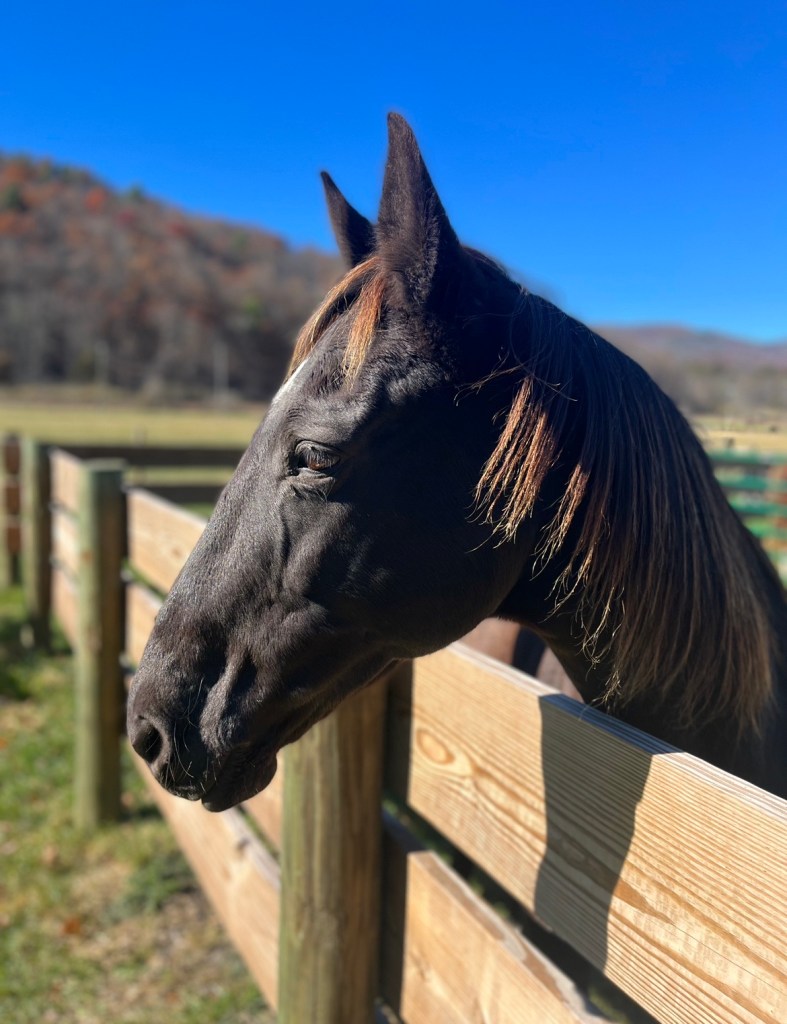
    I learned a lesson that day and in the years since I have NEVER repeated that by forcing Khaleesi to give me more than she was willing and able.

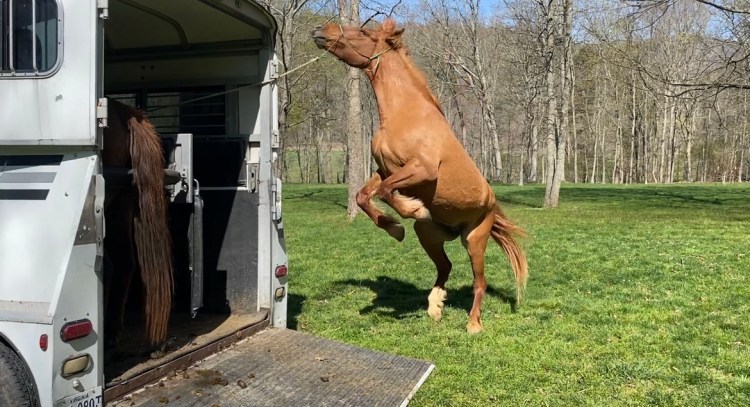
    The trailer loading debacle I wrote about in part 2 was that NEVER again moment between Wyoming and me. I tried to use force to move her forward in the process. That choice that jacked up my trailer, could have gotten her killed (as she broke off the chest bar leaving enough lead rope to hang herself over a hinge like a fish on a line) and left me some wicked rope burns to remember it by. Again I know I got off easier than I deserved.

    I took this picture that day when I “hung up her halter” for a time. I comitted to work within her threshold regardless of what it was and not to listen to the voices that say I should just “get it done” by force, whatever the thing is. I did not use a halter with her for months.

    Now that I write this… some of that deep trauma in her poll and neck that she was resisting could very well be residual from that wreck I caused.

    So there are two of my most dramatic, but not the only, moments of when my ego or pride and ignorance created trauma for a horse in my own herd. But for the grace of God go I again over those paths and every year I learn more I can look back more recent than I’d like and see ignorance or impatience creating problems I preach so hard against.

    Humility is my superpower.

    Yet humility does not mean never speaking about what I see, and what I’m learning because it might create discomfort. It means I don’t do it in a “me against you” conversation, but always a “I am with you” conversation. With compassion. And with the knowledge that we can only do the best we know at the time. And pride is so insidious- it attacks at a deep root level and is very hard for any of us to see in the mirror, and easy for others to spot looking in. My best advice if you care to grow, is to find a few people you trust and give them a hunting license to help you see what you cannot. 

    In all fairness, I still fail a lot. But I refuse to quit. 

    In the case of Hope and other horses I see in broken down states, I don’t think any one of the people in her line was an evil genius trying to wreck a beautiful creature physically, emotionally and mentally. I think every one of them wanted what most horse people want with a horse. They want good things right? And yet people created the deep rooted problems in this mare by ego and ignorance. It’s how most problems start. Not one person in her line of owners took the time to listen to her and then do what it took to help her. They saw her as obstinate and unwilling. I can say she is neither of those. She had finally been… broken.

    What then can we do?

    I asked the question in part 2: What can I do to make Wyoming feel safe enough to let go of her trauma? I will never had a successful relationship with her while her nervous system is on overdrive. She cannot communicate, connect or learn if she is only on survival/react mode. Wyoming wears her emotions on her outside. We always know how she’s feeling, and she doesn’t have emotional stability and well being. On the other side of the coin is Hope. She is equally traumatized but her reaction is to withdraw and shut down, comply as much as she is able. She hides deep inside herself. Horses willing to go this route are often considered respectful and obedient. Bombproof and ideal… until they simply cannot.

    I had hoped to find another expert conversation to tell me in a nutshell how to fix all this for my herd. No such luck. Instead I heard another quote ringing in my ears: 

    You cannot come to a horse intentionally thinking you want to fix something. If you come with the goal of fixing it your horse will internally brace against it and you won’t be able to fix it. Instead let go of the idea that you are fixing something and simply find a little place to release tension here or help them to relax there and before you know it thinks get better and you have fixed things. You have to let go of your agenda in order to help the horse. 

    Jim Masterson

    I have three personal takeaways from all of this. The order isn’t key as much as they are all interconnected so they work together in a synergistic way. I trust you can sort out what it all means for you and your horse journey.


    1. Get better than you currently are at understanding horse communication. And put it into practice by listening better. Everyone says that of course they listen to their horse. Just as no one was setting out to destroy Hope earlier in her life, my experience is those owners would say the same thing- of course they understand horses and of course they listen, many many people who have own horses and ride horses do not have accurate understanding of what is going on in their horse’s communication. I see most riders- especially ones who have “been around horses all their lives” making assumptions about what they think the horse is saying that is often pretty inaccurate. This brings up another quote:

    Horses survive by being incredibly adaptable. They adapt to the way we work with them. They are so adaptive we often miss what’s really there because they are so good at accommodating.

    Jim Masterson

    Keep in mind have a real disadvantage in this from the start because of how accommodating horses are by nature, but that is a survival skill not a healthy way of being.

    Horse people have taken pure communication from the horse like ear pinning, evasion (evasion can be trying to step away from mounting, bucking, rearing, spooking, running away etc), pawing, pushing, nipping and kicking and turned those into “unwanted behaviors” that we train out so they can be “good horses”. This begins early on and then is continued through their lives. We have taken away their negative communication channels. We as a culture training our horses not to share when they have a problem. No one wants a horse to bite them including me. If we were more adept at seeing early subtle signs they wouldn’t have to bite us in order for us to understand. 

    Part of helping a horse to understand it is safe is ensuring a horse feels seen and heard. Accurately. Acknowledge when your horse is trying to communicate she is not OK and see if you can find out why. Then commit to a change- do something about the problem.

    2. Accept that one cannot separate behavioral (mental and/or emotional) from physical issues.

    Of course there are issues that begin behavioral and there are issues that stem from physical problem but it is always more complicated and they will always connect. If you have a physical issue that isn’t addressed it will always show up as a behavioral issue. If your horse is experiencing physical discomfort they will do things like refuse to make that jump, not be as eager to do upward transitions, try to evade being caught, pin their ears or nip while being groomed or saddled, etc.

    On the other side, if your horse is having mental or emotional issues (isn’t confident to leave the herd, confusion over what is being asked, feels like it will never get released or there is never a right answer, is over stimulated) that will show up in time in the physical body as ulcers, joint or tendon injuries due to not moving in a relaxed and proper form for the work, or acute injuries from flight responses when they aren’t thinking but reacting and get themselves hung up, cut up, or in some other wreck.

    If you always assume there are connections between behavior and the body you will have more data to work with in assessing what is really going on and have a leg up on finding problem before they are a big financial and time investment to sort out. 

    3. Assume your ego and pride are your biggest enemy and that both are working against you and then seek out ways to fight against them. Humility is your superpower too.

    We all see our horses as friends (well anyone reading this blog for sure does), and we want to do what’s best for them. That is our high value (high values are how we talk, core values are what we walk). I hear most people say “I always put the horse first.” It’s in the core value where things get dicey. Are you willing to do what is best for your horse when it costs you the resource you have least of… for some that is money, for some it is time. 

    I was fascinated listening to Anja Beran who has been teaching classical dressage in Germany for over 25 years. She has been a voice against poor training in modern dressage (at very high levels) and is a great to seek out in the conversation of creating a powerful willing horse that can compete in any discipline much longer than the norms we see today. When the interviewer asked her how long it usually takes her to work with a client horse that comes in with some trouble (when you get good at successfully fixing problems, you see a fair amount of them) and even I was a bit surprised at her answer: Well, you see usually we find it is a minimum one year, and often we will keep them and work with them up to three years to help them come back into a healthy way of moving again.

    Here in America we expect results in a weekend to maybe 30 days on the outside. Unfortunately you can get a horse looking to an uneducated eye (that would be 80% of the horse-person population if you go with the rule of the Pareto principle) in 30 days training, but there are so many holes in these horses that someone is eventually going to crash through physically, mentally, emotionally or all of the above- it’s only a matter of time.

    Anja explained that a very high level circus in Germany uses her exclusively to train their Lippizaner team and she says they bring them to her for seven years. The reason they are willing to invest that kind of time she explains is because they perform well into their thirties when they are trained properly. A healthy balanced horse will also cost much less over time in vet bills and missed work.

    Money is a limited resource for most of us. It is true we have to make decisions thoughtfully when it comes to how much we can allocate to a horse, but I have seen people throw tons of cash around if they believe they will get a quick fix to a problem. Time is usually the more treasured resource and we appear as a culture not willing to give our beloved horses the time they desperately need to learn how to carry their bodies properly, to think and make choices instead of hurry up and react to my pressure (obey) so we can get on with what I want to do. We also need time – to get better in our own knowledge and skills so we can actually help the horses instead of always talking about how they are so good at taking care of us.


    And so I circle all the way back to that first question… why is that horses — when they are given more supportive care and a place that will hear them ask for help do they appear to get so much worse?
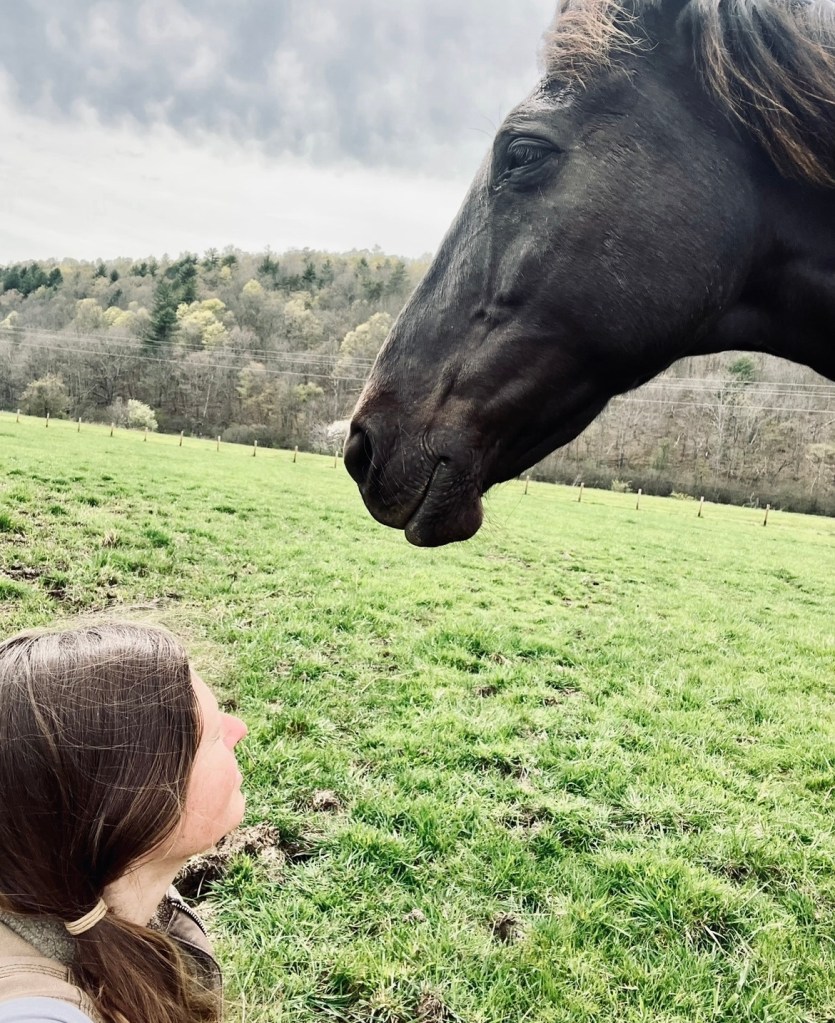
    From the neurological perspective I have been learning more from, I think when they begin to feel safe they will begin to heal. And no healing can take place without the revelation of brokenness. One must feel in order to heal. With any person or horse or any living creature- survival often means setting aside a wound in order to get through now. When we are given a safe place to peel off the survival mechanisms the only road to wholeness is by revealing the brokenness and then letting it go or getting the professional help required to walk through the healing.

    It makes more sense to me now that it would take Hope some time to believe she was in a safe enough place to fall apart. It also makes sense that Wyoming has deep layers she does not feel she is safe to release yet. Knowing that means I can be more attuned to making her feel heard and that her worries and concerns while I might think on human terms are overblown and inaccurate, to her they are enough to jack up her nervous system and that’s all that matters.

    In both cases I have come to see that I cannot approach this as a new (oh that ego is tricky!) goal for them. I am a driven person and I can take their healing and turn it into it’s own goal that then becomes a new source of stress and pressure.

    When Hope first came back from her stay with Dr. Hancock I was very excited to see her bloom into a healthy mare. I was great at doing all the things I was told would help her recover. But she seemed to be getting worse after a week or so. I was able to recognize that I had dumped my expectations of her coming into health on her and she was straining under the pressure. I tried to let her know that I believe I had done all I could for her professionally and now it was up to her to get better. I would help all I could but she would need to go at her own pace in her own way. I was committed to be with her and support her. 

    She has good days and bad days, and stress is more likely to create a bad day. I don’t always have control over stress in a horse herd. My healthier horses are less affected by it. Overall I see clear trends toward better. She more stable in her balance. She is moving better in her body. She has less mucous and infection recurrence. She is brighter in the eyes. She has more “personality” and preferences coming out. When we brought her home in December of 2020 I would never have guessed she could have so many deep layers of brokenness it came close to costing her life; she held it together pretty well for months. The very limited work she was for a few months in could not have caused the depth and seriousness of her condition. The downhill freefall actually came while she was in pasture rest with her herd through her second winter here. A place she probably felt the most safe in a long time.

    I look forward to what healthy Hope will be like. I look forward to her becoming more her own horse and getting to know her. And I will continue to find ways to help Wyoming believe she can let go of the trauma her past life and I have caused. I will get better at hearing their concerns and answering how I can. I will assume less and be curious more. I will honor them with the time they need and set aside my own goals and plans for them regardless of what people on the outside think. And hopefully I will look back at this series someday with a more complete picture and have some corrections to make- 

    For now, I think that is the best I can do.

    Hope before I brought her home December 2020
    A little morning trot in July 2022 after returning from functional vet care
    Hope now (October 2022)

    I would like to conclude by bringing up that one cannot give what one does not have. I also have seen in myself wounding and brokenness that made it hard for me to be the whole healthy balanced person who could set aside my ego and goals and the external pressures at work on me to have the grounding and confidence to allow these horses to fall apart. Because there was a time when them falling apart was too close to my own identity and I could not be the stabilizing factor and have the patience and grace to not need the horse to perform for me in order to make it’s life worthwhile. I also consider the complexity of a world of wounded people who are part of the cycle with traumatized horses. I hope someday HH will be able to help encourage increasingly more powerful horses AND powerful people in richness of mental, physical and emotional health.

    Thank you for reading this series and I hope it gives you some things to chew on and encouragement to find ways to improve your own herd toward increasing excellence, connection, and deeper relationship.

  • Am I Safe? (part 2)
    Am I Safe? (part 2)

    This is the continuation from Am I Safe? (Part 1).

    Mulling over some of the basic ideas I shared in part 1, I headed to the barn to experiment with Jim Masterson’s simple initial video of the bladder meridian to see what my herd had to say about it all. I have three diverse mares to explore:

    Ireland’s Khaleesi I’ve had 8 years now. She is the horse that began the grand experiment. I started her myself as a basically untouched 4-year old that was born into a herd running the western Virginia Mountains on a large property on St. Patrick’s day 2010. I wanted a horse that didn’t have much human interaction and all the mistakes in her development would be mine… I had little information and fewer tools, but I wanted to learn and grow. Boy have I gotten what I asked for. It’s had highs and lows, but the relationship between that mare and me is, if nothing else, authentic. I think that also makes it strong. I’ve been as honest as possible warts and all, and she’s had to put up with a massive learning curve. She has also been pretty honest with me and thankfully lets me know when it’s not going well on her end. If she held her thoughts to herself and just complied I would not learn as quickly.

    Every year I’m sure I write in one of my blog posts that we are finally connecting and what that tells me is there is always more- because every time I wrote it I believed it. I was sure we had come to a new level of connection. The truth as I look back is it was always right, and there are way more layers than I ever dreamed. So this year, including so much freedom, choice, and physical strength we have a lot more harmony of thought and movement and it’s a glimpse for me of the dream: that horse that feels like you’re one with when you think and she responds… and then there’s the day when she looks right at you and trots away down the trail you just finished riding and for what reason you cannot imagine decides to go back out and explore when you dropped the lead rope carrying the saddle to the truck hoping to get home before dark… or at the trot out for the vet at a ride you see an old friend and wave and find your attention snapped back when she nips at your elbow letting you know you’re not present… Regardless, we are friends and all the mess that goes along with it.

    Wyoming who I’ve had about 6 years now (who’s counting?) and have gone through many questions and confusion as to how she’s put together. I have had success with her but it always  falls apart at some point without me understanding why. She appears very physically healthy- in fact my friends and I tease nothing COULD kill that horse (not even a hand grenade) she is a tough wild BLM mare who is a little too adept at survival. However she appears to like me, and other people. She is the friendliest animal I have and loves to interact, she is unwilling to take much direction and is quick to take her toys and go home if you cross her threshold which seems to be amazingly a low one. She has been my greatest teacher. She makes me better than any other horse I’ve met so far.

    Redemption’s Hope is the rescue who has been quite sick in her second year in my care though she is on the long slow road to recovery now, she is quiet and came to me on the shut down side. She has a sweet nature and a soft eye but the lady has a vein of marble running through her and when she gets to a certain point you slam against the wall and nothing moves. 

    I purposefully brought her in to see if I could learn to help a shut down horse- one who had not been heard and had learned to cope by withdrawing and cooperating. This is a horse who (my best guess recreating from the pieces I’ve been given and physical evidence I’ve accumulated) probably tried hard to do what she was asked and was trained with pressure to some degree (like most horses today). She had trainers, owners, or handlers who did not realize they were causing her confusion, stress or pain mentally and physically. She likely didn’t have a real choice, the double-blind I mentioned in part 1 (comply or become more uncomfortable, where comply might have been physically painful, physically awkward, or confusing and unclear), so she began to learn to react rather than respond, to seek release instead of follow a feel or invitation, her right to think was taken away as was her right to communicate that she was confused or hurting. She shut down and seemed like a respectful obedient horse. She had all the signs of being that fabulous natured horse we all want for our kids to ride, until she really couldn’t anymore and then she’d dig in her heels and unable to continue finally say no until it looked like bucking and rearing. She was likely sold early on as a problem or injured horse, discarded to rescue, then returned twice to rescue (this I was told), picked up by a teaching stable operation, and failed out of teaching with two different instructors. Then abandoned to a field where the new owner hoped to figure out what to do with her at some point- glad to sell her to me for a song to have one less mouth to feed.

    My definition of a shut down horse.


    I began the Masterson experiment with Khaleesi because we have the most solid relationship and I should get an honest read from her. She is like my baseline case. True enough, I found his method of watching for reaction as I traced my fingers down her line seemed to work as he said it would. She didn’t have a lot going on but occasionally would have a reaction/tension spot and if I waited there she would respond with a release usually in a working of her jaw and tongue occasionally in a neck shake or deep sigh. 

    I did shorter pieces of the work with Hope and found her resistant at first in the way of being distracted and fidgety, but when she began to figure out what I was doing- and that it was helping her not expecting something of her that she couldn’t understand – she began to get still and engage in the process. 

    Hope was so sick physically in the late spring that I am certain if I didn’t get her to True North Vetrinarian Services I would have been digging a hole for her. I had routine standard vets look at her the summer and fall before as I observed issues that I knew weren’t quite right, but the standard vet answers of antibiotics some chiropractic adjustments didn’t address the healing of the root causes and the effects of them always wore off. True North does functional integrative veterinary care and Hope ended up staying with Dr. Hancock for a month (this was not our initial plan!) as they peeled back the layers to get to the roots and help her.

    She has been home three months and it’s a long road but she is improving. She came home after many sessions of osteopathic body work done slowly as her body could handle it, and many blood tests and radiographs to rule out diseases and injury, and ended up needing a dental adjustment to release pressure in her sinus cavity that was causing a constant low grade abscess. Right now her body is in much better shape except chest area is still holding deep hard tension —- gradually I see it releasing. When I began to do some of the Masterson work with her I was a bit surprised to find so much releasing around her hind end and less in the neck/shoulders. But she did seem to enjoy the process and even stopped eating grass to participate. She gave many release moments and I could see a change in her movement later that day when she trotted around the field with the herd in a more relaxed gait. She is also walking more fluidly as I do this work on her little by little. 

    I think Hope has come to trust that she is in a safe place and that I am here to help her. I hope that she has released the worst of the root damage in her physical and emotional system and is now on the road to healing and becoming truly better for it.

    It was Wyoming that had me the most intrigued.


    One morning I went into Wyoming’s stall while the herd was hanging in the barn in a relaxed way. I gave her a rub and told her what I was going to do and began at the poll like I had seen and didn’t get very far before I saw her eye blink a few times. So I made a note of the spot and moved my fingers lightly back up to see if that was coincidence, flies, or that spot would have the same reaction. I saw exactly the same eye blinking when I got to that spot. There was something going on there.

    In this method you only need observation and patience. First get good at observing very subtle reactions from the horse, then be prepared to wait with a very light touch calling attention to the place the tension is being held, if anything lighten the touch releasing your own energy to encourage the horse to let that tension go. When they release the protective tension they allow their body more into alignment which will enable the horse to move more freely.

    So I gently let a breath out, waited in the spot and whispered almost to myself: It’s ok, you can let that go whatever it is…

    This is where Khaleesi and Hope would have yawned, breathed out, shaken her neck or some sort of relaxing movement to release tension. So I waited for something to happen. But instead she stood quietly but not exactly relaxed. Her lips and eye looked tight.

    Then she moved her lips but it was not a release, it was more to make a kind of nipping in my general direction: I’m not comfortable with this, whatever it is…

    So I got softer, breathed out and whispered so my intent was clear: It’s ok, I’ll stay with you, you can let this go now.

    Again she stood still but not soft. We both waited, I tried softening my gaze and also looking other places to leave her feeling the least pressure possible. Then I saw her ears begin to pull back and she bared her teeth in my direction clearing telling me: I said I AM NOT comfortable with whatever it is you’re doing.

    There was no misunderstanding in this. She was saying NO and she was getting louder.

    Because I have been offering real choice and freedom whenever I can, I set aside my goal of getting Wyoming to release her tension and/or trauma and I stepped back and gave her a friendly rub and told her: Ok, you don’t have to do this now, but I’m telling you, you can. It’s safe here. I am here to help you. When you’re ready.

    I left her stall and went into Khaleesi’s and noticed Wyoming had turned away from toward the wall and was snaking her head in interesting angles and yawning- working her jaw in all kinds of ways. She was releasing or processing something over there way outside the normal. I don’t know that she was releasing that tension I brought her attention to. I think it’s more likely that she was processing the unexpected response I gave her when she said No thank you to my healing plan. It might have been both. I know that I did the right thing for her in the moment- I honored her prerogative to choose not to let that tension go and find more healing. I did not force or even press the issue, especially not telling myself it was for her own good. I walked away.

    It seemed abundantly clear to me she did not feel safe to do that healing work with me in that moment.

    As I left that barn that morning it was like additional lights pinging to create dots in a constellation that finally began to take recognizable shape. Wyoming has been a mystery to me- and she still is. I am far from ready to share my brilliant understanding of the neuroscience of healing of trauma. However the fact that all the good horsemanship I’ve studied to help us become more successful has only worked between us for a time and then gone backward and unraveled every time has been confounding. 

    I’ve had some truly stunning moments of riding this powerful mare — stunning in her balance and grace under saddle, stunning in her athleticism to buck and dance in protest, and less stunning as I stood next to her on trail in confusion as she laid down and tried to roll in a pile of leaves (she got so good at this I’d barely have time to jump off before she was on the ground!). I have video of her running with me around an obstacle course at complete liberty and I’ve had her threaten me violence for asking for some simple circles and figure 8s. I’ve gotten her to ride on the trailer – twice in 6 years and also had her almost kill us both trying to do loading practice last year. I’ve looked at our experience together and wondered if I am simply a terrible horsewoman or if she might be demon possessed.

    At this point, I’ve accepted that Wyoming is atypical and is not here at the moment to be a trail riding companion, but is excellent at her job if she was sent to teach me patience, humility, a higher level of observation and response, and make me laugh – at myself and her. For all the danger we have gotten into over the years with her willingness to try and then zero to sixty in a millisecond emotional threshold responses, the thing that has kept me from turning her into dogfood (in a manner of speaking) is that she apparently likes me, and she is both the most difficult horse I’ve yet come across in my limited experience and also the most friendly with me and other humans. She is not actively plotting to kill me, but she comes to a place of survival where she cannot think rationally. On the flip side, she is everyone’s favorite in the herd and she’s never met a stranger.

    So this interaction of Masterson’s technique revealed to me something in her poll-neck area she was holding tension and refused to allow me to be a part of that release process gave me another clue: she does not feel safe to be that vulnerable with me- even today.

    I have had this horse for 6 years, and I have always done my best with what I have known at the time to create a safe place that took her needs into account. I have learned a whole lot in those 6 years to know that early on I missed a lot of things I understand differently today. So it wasn’t six years of heaven for her, however I have had Khaleesi for 8 years and was the same person Wyoming had to work with. Though it’s completely clear to me that doing my best until recently was actually falling short of the horsewoman I hope to be next year, Khaleesi has been able to shift with me and I’ve seen her bloom in the atmosphere I’ve learned to cultivate in the past year and season while Wyoming is still stuck.

    The question isn’t as much is Wyoming safe as it is does she FEEL safe

    I walked away with a new clarity that she likes me and she is willing to try, but what I saw the last time I tried to push my way through with the trailer loading debacle is that she will try and try and try and then comes a point where she is past her safe zone and then survival kicks in and as a wild horse it becomes life or death regardless of if she likes me or not- we both might get killed because she is not responding she is now reacting. The lizard brain of fight-flight-freeze has taken over and we are way past freeze.

    It was that day after the trailer incident that I made the decision not to listen to the people who told me I was just not getting it done with her and she needed to see it would be ok if I just put enough pressure on her and forced her to comply. From now on I knew with Wyoming, we were going to have to honor her emotional threshold and I was going to have to get a whole lot better at reading the very early signs, and this mare was going to have to go at the speed of what she felt she could do without fear. Which it turns out seems to be not all that much…

    The potential was high that this horse could have deeper emotional trauma layers both from my ignorance and from her previous experiences being wild (there are plenty of trauma opportunities in the wild), rounded up, penned up, and then transferred around for the mustang makeover program, which she failed out of due to an injury, resulting in her ending up with a TIP (trainer incentive program) to get her gentled and started in TN before I adopted her and relocated her to VA. You can imagine plenty of opportunties for trama in this mare’s life.

    If she has never felt safe to release the deeper things and allow her nervous system to rest and heal, it would make sense to me she would try to assimilate and get so far and then failure would set in when she couldn’t hold it together. It really was like watching her come apart on me. In fairness she would give me clues she was not doing ok, but they are subtle and as a human I would think they were small so we could handle that. Over time I’ve come to see it’s best not to blow by the small signs because trouble would be ahead when they got bigger in exponential fashion. The worry cup was filling up… and eventually it runneth over!

    And yet this horse still looks to me as her friend, she still comes to me for help if she’s in trouble, and she knows I am here to make things better. So the question I had to ask is:

    What can I do to help her feel safe enough to heal?

    And that maybe I can wrap up in a part 3…

    Read part 3 here…

  • Am I safe? (part 1)

    Am I safe? (part 1)

    I have asked myself the question of why I have seen a horse on multiple occasions move into a home better suited to its needs and watched the horse go from not particularly thriving (meaning none of the horses were in peak physical condition at the transfer) to pretty seriously ill or lame… broken down in a much more serious way than would have been expected over a period from months to a year.

    Why (I kept thinking) am I seeing this pattern, and experiencing it myself (specifically with Hope, but in a more emotional less physical way with Wyoming as well)? I would think that the horse moving into an environment better suited to helping it thrive should mean the horse improves in condition, not worsens. I have asked myself if I am wrong about what makes for a better environment for the horse to thrive? Are these horses getting better or getting worse? What is the truth?

    Someone working with our functional equine health care told me they see this quite commonly and explained to me that it is an honor when a horse will choose you to fall apart. Ok I thought, I sense truth in that, but what is really happening?

    I had an early theory that these new owners took on the horses knowing they would find some issues under what I call the duct tape that had been holding them together previously. When you are willing to take on a horse that is not in peak physical condition, and you begin to take off the “duct tape”- you’d better be ready to find (like in a project house) things behind the layers behind the layers that always are more serious than you realized on the surface when you did a walk through. 

    Sweet Hope finally on the mend… I think.

    I had a sense there was something to this but not real clarity.

    Recently I stumbled across an interview with Jim Masterson who developed what is called The Masterson Method which is a body work that is simple to begin, anyone can start, and builds connection between you and your horse while also encouraging the horse release layers of tension and trauma that are held in the body. I liked his story and this method work was based on observation, listening to the horse as you went, and a light touch paired with patience to wait until something changes. It was a low risk – high reward experiment. So I did some investigating on his website, watched a couple demo videos and thought I would see what happened in my own herd.

    This is where things began to get interesting.

    One caveat from Jim Masterson was that as prey animals, some horses would resist releasing tension in the body because it is a vulnerable state and reveals even momentary weakness. If the tension spot seems clear by observation, and in waiting you sense they are resistant, one suggestion was to be sure you were not looking with too much intent at the horse (expecting release) or possibly try looking away entirely for a moment. Sometimes Jim noticed that after a small release, if he turned away for a moment or gave the horse a break, the horse would have bigger releases that continued on their own.

    This podcast binge where I stumbled on to Masterson also led me into some interviews that began with training concepts and wove into equine behavioral neuroscience and trauma and healing. One of the interviews with a neuroscientist included discussion of some studies that revealed: the nervous system must find rest in order for healing to occur, a being (horse or human etc) cannot heal especially in the deeper levels if they do not feel safe.

    A different interview along the same subject brought up this point: tolerance and willing acceptance are not the same. Many of our accepted even natural horsemanship training methods include a psychological double-blind where no good options exist.

    An example of this is when pressure is put on a horse intended to bring a response. If the response the human is seeking is outside the threshold of the horse they are now in a psychological double-blind. They can choose not to respond which will result in increasing pressure until the pressure is worse than the discomfort of the response they are being asked for. In this case the increased pressure is used to force horses into situations they are not ready or properly prepared for, put them in pain, or do not understand. Under this pressure they are not in a relaxed learning state, but in self-preservation.

    In self-preservation the most common reactions are flight, fight or freeze. We rarely allow flight from a training session, in fact most horses are hard wired to choose flight first. When we don’t give them an out we force them to fight with us or freeze. A horse who fights will generally run into a human with access to tools that can win the fight (though humans and horses are often hurt in the process) these horses are quickly labeled bad and disrespectful and problem horses. The freeze response is not only a stoic stillness, but can be when a horse shuts down or withdraws inside themselves to a certain tolerance level in order to survive and function. They are in a heightened nervous system response even though they look docile and calm. 

    Pressure and toleration are not inherently bad. Simply walking toward a horse is pressure. For a wild horse just an approach will send it into survival mode flight. For my herd they more often greet me with curiosity as they graze feeling generally unthreatened by my approach. I might ask my mare to tolerate the annoying flies for a period of time while we try to do some work under saddle, I’ve asked her to tolerate my lack of grace and occasional mistakes or imbalance in learning a new movement with the expectation I will improve. We work with green horses to learn to tolerate things like saddle bags, water bottles, raincoats being put on or taken off, or tolerate riding in front or back of a group when it isn’t their preference. Different horses tolerate different levels of discomfort depending on their personality. The problem comes when the human decides to (or is ignorant to) override the horse’s threshold and we don’t go at the pace where their comfort level is pushed on but not broken through. To work at this pace as with most things, takes time investment and patience and our fast paced world the value of the art of slow development has gotten lost in the rat race.

    One of my favorite moments with Wyoming

    I heard Karen Rohlf (Dressage Naturally) recently say that power (or strength) in a horse is energy plus relaxation. If you take a look at her horses, her courses, and her talk-walk integrity she is building powerful horses that have been trained to do high level complex physical movements and they have to push the comfort zones in the horse, but done in such a way that no shortcut tools or force are levered against the horse allowing the trainer to push past their ability to comply with willingness. Something I particularly like about her training is the emphasis that the horse feels good about what they are learning and how their body is moving so they seek the correct form naturally because it’s where things feel good to both the horse and rider. The attention to miniscule changes in the horse’s posture and how to feel this as a rider and then encourage the horse to seek that feel again seems overwhelming to most riders but if we were to embrace the process over progress we might even come to enjoy the art of horsemanship instead of getting to a finish line, a ribbon, or a new level of competition.

    In order to thrive and move in power and strength, the basic question a horse or human needs answered is:

    Am I safe?

    Unfortunately this question is better translated Do I FEEL safe? Because we have all been in a position where our thinking brain has sorted out the fact that it is irrational but yet we don’t FEEL safe and I have seen some instances where the person has FELT safe and it was pretty clear from the outside (or what came next) that they were not actually safe. We know that if we are in fear or pain and the person who can help us ignores our concerns, that rarely feels safe.

    I do not suffer from anxiety but I have met many women who do. I have a long time violin student who recently explained to me that she can go into a freeze state of high anxiety and appear like she is listening and even do what I’m asking of her. She shared with me that for years this has been happening to her in various intervals in different situations including her lessons from time to time, and what is going on inside of her (which I did not see from the outside she had gotten so good at being functional in this state) was panic and the inability to take in information. She might ask me to wait a moment while she got a drink, or went to the restroom just to get outside the situation and find a way to come back to calm. She did not dislike me or blame me, something had tripped her brain into overwhelm and internally she was having a panic attack. She fully realized this was irrational and knew that I was her friend and she wasn’t in danger, it didn’t come from me being particularly demanding either. In her case it was a mental disorder that would take over from time to time that she has learned to manage in recent years. 

    Human nervous systems and minds are more complex than the horse. I do not think horses have the same issues with anxiety disorder in the way humans do. My point in this example is that she felt unsafe even though she knew in her mind it wasn’t true. The fact that she FELT unsafe was what tripped her nervous system and she was unable to learn or take in information in that state. From the outside it would be easy for me to think she was being ridiculous and irrational; if I didn’t understand she had a legitimate struggle that I was not experiencing in the same way at the same moment I could try to force her to just get with the program and stop being so difficult.

    What I see with horses is many times the human doesn’t believe the horse has a legitimate concern instead I hear things like: you should be ok with this… or you have seen a tarp/cone/tractor/bike/mud puddle fill in the blank before and that is enough that you should not be afraid ever again… or we learned this yesterday you are just being difficult… don’t be stupid… or we see new behavioral shifts and assume the horse is being a jerk, taking advantage, or lazy instead of seeing the behavior as information and wondering why is this happening? is there pain somewhere? Does the horse possibly not connect the pieces as I assume he should? Could my horse be confused? is it possible he really is afraid of the cone because it is in a new place…

    Instead of curiosity, taking the information as real data, slowing down, listening to the horse’s concern and trying to address it from their perspective (ain’t nobody got time for that….) We push through with force or shortcut with a tool heading ever onward toward the goal we have for the day or week or year and when the horse complies or is forced into a physical frame without relaxation and understanding we assume they are ok with it.

    Moment of disconnect where the work I was trying to do was not working for K on any level. Many things were going wrong here but if this is what a canter depart looks like it will not be balanced and strong! From 2018.

    This potentially creates long term mental, emotional and physical wear. Eventually it will reveal damage that gets pressed under the surface until either the duct tape is pulled off or it just cannot hold together anymore and that “out of nowhere” blow up comes or the injury makes it way to the surface and is forced to be dealt with. I am increasingly astounded at the amount of things going on beneath the visible surface of the horse (in my own herd) both physically and emotionally that we will not see (if we don’t make the effort) often because they will hide it especially if they do not feel safe. When we do finally see it arrive at the surface is much more deeply rooted and harder to heal.

    What is also very clear in my observation is that everyone I know that has horses loves and cares for them very much. Not one of them is intentionally being abusive or making a decision to cause them deep rooted harm. Every one of them is doing their horse program the way they were taught by someone else who had been taught by someone else and so it goes.

    Ironically I have found the same people who tell me that horses are not intelligent enough to make good choices, partner with us on a willing level, saying they must be completely controlled at all times in order to be safe also will tell me the horse is taking advantage of them or premeditating bad behavior. This is an odd disconnect. You can’t have a dumb animal incapable of deep emotions or the ability to make good choices also be an intelligent creature who premeditates bad choices in order to get out of work, faking injury, or the complexity that comes along with taking advantage of us.

    So with this background that’s had me thinking. I will pause and post this precursor to the experiences I had digging deeper into my own herd, and some of the surprising revelations that make sense out of some lingering patterns I haven’t previously had answers for.

    In part 2 I will begin with what Wyoming had to say….

    Read part 2 here

  • Equine Love Languages

    Equine Love Languages

    Do you know your horse’s love languages?

    In relationship counseling, there is a concept about the five love languages (website inspired by the book by Gary Chapmans) where we see that if a couple has different love languages they can be telling each other just how much they love each other, and yet not receiving the love and going through life with an ever more depleted love tank. 

    In human terms the love languages Chapman delineates are:

    • Physical touch
    • Quality time
    • Gifts
    • Acts of service
    • Words of Affirmation

    And so if you’re a physical touch and quality time kind of guy married to an acts of service and words of affirmation woman you’re going to feel super uncared for when your wife is too busy trying to “do things” to help you and leaving you cute little notes to find in your car, lunch and briefcase and doesn’t stop to hug or touch you while she’s running out the door with the kids and doesn’t really have the time to sit down and hear all about your day while you do something fun together.

    The problem isn’t that they don’t LOVE each other. The problem is they don’t know how to see the world from the other perspective and the communicate in the language the other can hear.

    I’ve been thinking for a while about how this relates to my horse herd. 

    Do you know your horse’s love language?

    Sure- just about everyone can answer: Of course… grain, carrots maybe or apples… peppermints… But is that all you’ve got? Is there more? How would you know? Something I’ve noticed is the tendency to assume that if you’re an acts of service girl that everyone would appreciate getting helped out… right? And gifts, that’s so materialistic! Why would someone want to get stuff to be shown love… I don’t need THINGS I just need you to come to the barn and move the hay with me, that’s real love right there…

    However the gifts person is often trying to get the point across- it’s not the THING, it’s the fact that you thought of me, and you KNOW me and you choose that for me because it’s perfect for me. The gift person isn’t materialistic- they just want to feel known.

    In the end it’s about trying to see the world from a different viewpoint. It can be a challenge to see it from your friend or spouse or teenager, but I think it’s ever more challenging and takes more time to see it from your equine’s eyes.

    I have three horses in my current herd. Without question they have different love languages. I recently heard a challenge to see how many things you can list that your horse loves, and then I’d add- see if you can give them some kind of weight or rank.

    Wyoming loves to be surrounded by touch

    Wyoming is wild. She is so easy. She has never really been shut down by humans so her voice is always close to the surface. Some of Wyoming’s favorite things are:

    • Scratches….
    • Head scratches
    • Inside leg scratches
    • Outside leg scratches
    • Neck scratches
    • Side scratches
    • Back scratches
    • Chest scratches
    • Butt scratches (you get the idea)
    • Grooming (brushing specifically- this is kind of like being scratched)
    • Learning something new
    • Being very very close to you
    • Resting her head on your shoulder
    • Touching you
    • Killing flies for her she can’t reach
    • Underbelly Rubs (related to scratching)
    • A good roll
    • Being allowed to come on an adventure
    Khaleesi quietly greets a new friend

    Khaleesi was “feral” and she is pretty clear on her communication but she is domestic by breeding and she will tone it down a little more than Wyoming. She is also more “compliant” by nature so you have to listen more closely and be more observant to know her loves:

    • Hay pellets
    • Carrots
    • Apple juice (in a syringe… this is jackpot)
    • Killing flies for her
    • Wild blackberries on the mountain (in season)
    • Bonus if you pick the good wild blackberries so she doesn’t get thorns in her lips
    • Grazing time
    • Grazing time on the clover in the yard
    • Space (love me at a distance)
    • Reliable patterns
    • Clear communication
    • Underbelly scratches (not rub)
    • Butt Scratches
    • Being trusted with choices and responsibility
    • Being told she has done a good job
    • Being thanked
    Super gentle with Hope

    Hope is the most difficult for me. She spent many years in situations that appear to have been hard on her. Since she was returned to rescue twice and then failed out of being a lesson horse (also twice) she came pretty shut down and dull. It seems likely she was in situations where no one really cared what her thoughts and feelings were- they expected her to perform a job without much communication that would slow down the process. So it takes significantly more effort to coax her out of her shell to trust a human with any communication. Here are a few things I’ve figured out that Hope likes:

    • Hay Pellets
    • Apples
    • Carrots
    • Gentle rubs
    • Being told she’s a good girl (gentle soft tones, not high energy)
    • Grazing
    • Grazing on the clover in the yard
    • Being near the herd
    • Those cornflower blue weeds that come up in August

    You may notice I did not add grazing to Wyoming’s list. Wyoming does graze of course, but she will 80-90% choose human interaction over grazing. Khaleesi will only choose the human over grazing if they human is interesting her with something she likes better than grazing (a sweeter food or a fascinating activity where she is learning something new). Hope will almost never choose anything above grazing except if you offer her a food and then when she’s finished eating she will go back to grazing- the exception for her is the herd, she would stop grazing to follow the herd. She doesn’t yet believe that human interaction could be as good as eating grass. And in an opposite nature both Wyoming and Khaleesi are clearly appreciative of killing especially the biting flies. Hope is still on the side of dullness that she is basically tolerant of the flies and if you take care of one for you, she may be grateful but she does not show any evidence of even acknowledging (the other two clearly do).

    Additionally, Hope is the newest horse which means I’ve had the least amount of time to get to know her. She is also the most subtle about showing her likes. Here is what I look for- spend time with your horse in her environment without any halter or lead rope or tool for control, ask questions:

    • what do they do if I’m not controlling them?
    • what distance do they prefer me at?
    • do they have a side they prefer me on?
    • do they ask me to scratch or help with flies?
    • if I offer something (to brush, or scratch, or help with flies etc) how do they respond?

    If you aren’t sure what you’re looking for, here are some things to notice (when you try something different):

    • Does my horse move (even slightly, like a weight shift) away from me or more toward me?
    • Does my horse pin her ears?
    • Does my horse tense any part of her body?
    • How is my horse breathing (regular? Deep/shallow? Watch for holding breath!)
    • How are the lips? Tight? pinched? Relaxed?
    • How are the eyes? Soft? Worried? Wide? Alert?
    • Is the horse blinking normally (not breathing or blinking is a sign of being frozen!)
    • What about the tail? Swishing? Relaxed? Held to one side or other?

    How observant are you? What are their “favorite” things? Then check and make sure! Or you could end up being the guy who comes home to your “acts of service” wife with chocolates for valentines day and is confused in counseling the next month when she says: I don’t even like chocolatesbut if you’d pick up your underwear I’d be over the moon!

    Knowing what your horse’s love languages are could be a great start in improving your relationship in small but foundational ways!

    I’d love to hear your comments on what you found or what you thought and found wasn’t really true!

  • The Wild One

    The Wild One

    Khaleesi was the first horse I started. She was what I’d consider basically feral. She was intentionally bred then born on a massive mountain property and handled minimally spending her first four year running with a large herd. I thought she would be the perfect project for me- a horse without a lot of human influence. After enjoying that process and the things I learned from it I was inspired by my past (living in the west) to the plight of the wild horses and was inspired to adopt a mustang. I wanted to do one small part to help the overwhelming issue of unwanted wild horses, and I knew a native equine would teach me even deeper layers of horsemanship. I had met a couple other mustangs in recent years that were fine horses with great connection to their humans and so I looked into finding one of my own.

    The night I met Wyoming after a long drive to TN

    Wyoming (then called Wild Heart) was in the TIP (Trainer Incentive Program) and so was supposed to have a solid start and good foundation and only needed some finishing miles. Somehow I had enough sense to realize it would not be best for me to start with an unhandled wild horse after only one experience in colt starting. Lets begin with one that has a good foundation-

    I think I can take that on. I thought.

    I had no idea what was to come.

    Over the few years I’ve had Wyoming I have seen “success” in moving forward and then always sideways and backward in progress. I won’t attempt in this post to cover all the layers of our time together and my journey as a horsewoman. There were significant holes in her foundation, I’m certain some trauma I will never know, and there were plenty of shortcomings in my own communication skills and observational accuracy.

    And so here we are beginning once again as I have a few times in the past. Another opportunity to learn from this mare, a horse of lifetime… I hope… because I can’t imagine having another one this challenging for me to uncover what she needs to become my partner.

    I think this is the third time I’ve taken time off to re-evaluate and begin again. The first pause was for over a year where I left her with the herd for the most part and didn’t ask much of her except good manners. She is a friendly mare and enjoys to be close (sometimes too close) and I had hands on her regularly but didn’t do anything that would require more than basic cooperation. This first break came on the heels of working with a friend who was interested in the mustang project as well. If the fit was right the mare could eventually become her horse, but for the start we’d share the responsibility and work together. I was committed to her for life regardless how things went.

    We brought her home and began some simple ground work sessions to get to know each other, introduced her to her herd, did some ponying on trail, and in a few weeks got her under saddle (she had been started and ridden by her TIP trainer) and began to move forward in a slow but steady way that normally would have built confidence and trust.

    Things progressed at first, then after a certain point she began to refuse to go out. We checked saddle fit, made sure we had a French link bit that wouldn’t be harsh, my friend was an experienced rider, we had her physically evaluated, we took her out with herd mates for confidence. Yet she would turn around on trail and get more and more forceful when we would press through… she began to rear up and crow hop and buck if we insisted. This wasn’t a ride through it and she’ll see it’s ok situation.

    Both of us worked on various levels in as many creative ways as we could come up with, we added hand walking, sometimes I’d pony her for a time from the lead mare, (please don’t give me suggestions, I promise we put a LOT of thought and asked for ideas from trusted sources, and in the end- it always got worse, not better). Finally one day I hopped on her when she began her refusal as my friend was not feeling so confident and I have less fear (maybe less sense). She turned rodeo horse on the trail without a lot of room to maneuver. I was able to ride her straight up the mountain (no trail) but back toward the barn making life much harder than if she were to just continue on the nice trail as we’d asked. I worked her through trees and around rocks in an attempt to connect her feet and her brain, and she didn’t put me off, but she never changed- she never softened or come to me. She put up with it and then eventually we went on home. She wasn’t the right horse for my friend that was for sure, so we dissolved that partnership – and yet I wasn’t sure what to do to help her. She was beginning to get more frustrated and occasionally going into fight mode as we worked with her. Things were going backward, so she went into the field until I could figure out what to do that would change things for the better, not continue to make them worse. In the meanwhile a reset seemed like the best starting point.

    It was in that time I renamed her. I told her one day in the field: you aren’t Wild Heart anymore – you belong here, you have a herd, a “family” and you don’t have to be wild anymore. You can trust this home for life. You are no longer fending for yourself, for resources, for a herd, for your life, for survival. You are “home” now. What do you want to be called? I was reminded where she came from… Wyoming. It had traces of heritage in it, but didn’t brand her with the “wild” streak which I’d like her to let go of in time. It seemed like a good name for her.

    Wyoming it is.

    We began again. I’d done some work with her, had a fabulous horsewoman come help me get her out of kindergarten in our ground work and begin to prepare to take a rider again. A crash course due to time limitations of restarting her, but at least helping me get more tools to help her in the process. I’d also been working on trailer loading (this has been a very long term process with mild success and failure). Christmas of 2019 I had a clear sense it was time to put on a saddle and try riding her again.

    I began with some ground basics. Got some conversation sorted out and then got on her. It was a beautiful Christmas gift.

    I only rode her for 20 minutes or so, in the front yard, but it was hopeful. She was willing to try, and no western show.

    I continued the slow gradual work and eventually had some help from Emily Kemp once again in a spring clinic. I inherited a really great western saddle that suited our purposes better, and we were progressing together — building small steps toward her becoming a solid riding horse.

    Eventually she was on the trail again, I was enjoying her though never truly confident she felt solid.

    Once again, very gradually, things began to go sideways. First she would try to roll (while I was riding her on trail) and then she would be reluctant to leave the property, if I worked her in the yard she would stick her feet and not want to move. Eventually she would refuse to leave altogether and began to go western in the yard. I have limits to my riding skills, but in the bucking and rearing I sat through as calm as possible (I did not think she was trying to kill me, she was trying to communicate) it never got better.

    During her trail riding season

    Riding it out or even making her work harder to show her just walking along is much less effort- it didn’t help. She only escalated each week. And I became aware that though with other horses you can push through the sticky points, build their confidence and move forward, with this horse once she got to the “I can’t” she would eventually stop thinking completely and do anything to get out of whatever situation she felt was overwhelming her in increasing drama and volume until the “pressure” was removed. It wasn’t a choice anymore. It was like blind instinct, or raw emotion.

    And yet. The horse seems to “like” me. She never seemed to want to hurt me (she absolutely could have), and she was always willing to try to work with me again. This mare was quite a puzzle, a lot of try in her and a desire to please, but a point gets crossed where she simple cannot do it anymore.

    Everything continued to go sideways or backward and I used every creative thought process I had to help encourage her, build confidence, go back to fundamentals, try to go forward into a new challenge that might inspire her, more groundwork, less groundwork, lots of encouragement, more demands (she is incredibly intelligent and physically athletic and balanced so maybe she needed to be challenged to use her gifts more?). Everything had limited success… everything went sideways or backward by the second or third time.

    Finally a barn move meant she had to be loaded up or left behind. I tried a larger stock trailer which was worse because of it’s unfamiliarity. In the end she loaded onto the small 2-horse we had worked on for at least a year or two. She’d had one semi-successful ride a few months back and then went backward not wanting to have to do that again… After an hour or so where she actually went under the chest bar and squeezed herself out through the front human door once (that was a terrifying moment for us all), I was able to hard wrap the lead rope to the chest bar and she stepped up to release herself and she was locked in for the short 7 minute drive up the road to her new home with the herd.

    After this I decided to try to continue the trailer work with her to solidify that experience and build on it. Wrapping the lead line to the chest bar had worked to create a scenario where she pulled against herself and could release by coming forward. Let’s try that again. As so often happens with her, you can get it done once, but she’s had a week now to consider how she might change the outcome… and she did. She put all that mustang strength into pulling and as I stood there waiting for her to come forward and be able to release her – instead she bent the metal, broke out the chest bar which gave her another 3 feet of treeline which then put her outside the trailer (NOT GOOD) and rearing up. She tried to go sideways and hung herself over the upper door hinges and now was strung like a fish and the rope around the chest bar pulled tight enough to not want to come loose either.

    My beloved sidekick Iva was watching from outside and had also been first witness to the mustang coming through the front door like toothpaste out of the tube a couple weeks before… stood calmly and said to me:

    Jaime, this is not good.

    Indeed.

    I was able to loose the rope and free the mare. I had rope burns and she was basically unharmed, shockingly no one was seriously injured- except my trailer which did go in for some repairs after this session.

    We returned to the field. I tied her to a tree while I reflected for a bit, and she stood quietly. I eventually set her loose and took a few months off to think.

    What am I missing with her? Every success so far in working with her like I would any other horse has always gone backward over time. There were periods where much was going so well with us. She’s a fine mare… big personality, athletic, balanced, smart, responsive. When things are good they are really good…

    One of my favorite riding sessions with Wyoming

    Was her purpose in life to humble me and remind me how limited I am? Show me that in fact I have much less control than I ever thought over things? Maybe every puzzle does not have a solution? What is her purpose in my life?

    I quietly reminded myself that I wanted a mustang to learn how to be a better horsewoman, and so regardless if she turned into a working riding horse or not, she is amazing at teaching me. The day I freed her from the trailer fiasco I was calm on the outside, knew to control my breathing and reaction, but deep down incredibly frustrated. In that moment I considered the term “breaking” a horse that many of us horsefolk have moved away from. And I asked myself, could I “break” this horse? and if I even thought I could… did I want to? Did I want her spirit broken if it meant I could control her? In this moment… frustrated as I was… was the closest I have ever come to wanting to break a horse’s will. And in the depth of my heart I knew… if I could do it… I would not.

    I knew that day that I wanted Wyoming to be her vibrant, wild, beautiful self and I wanted to have a relationship with her, but regardless if I ever got her on a trailer or under saddle, I did not want to break her. Because that would break something in me in the process. Something neither one of us would be able to ever recover.

    And after a couple months of down time to reset, I returned again this fall to the work… of learning how to work with this wild heart in a way that we could both live with.