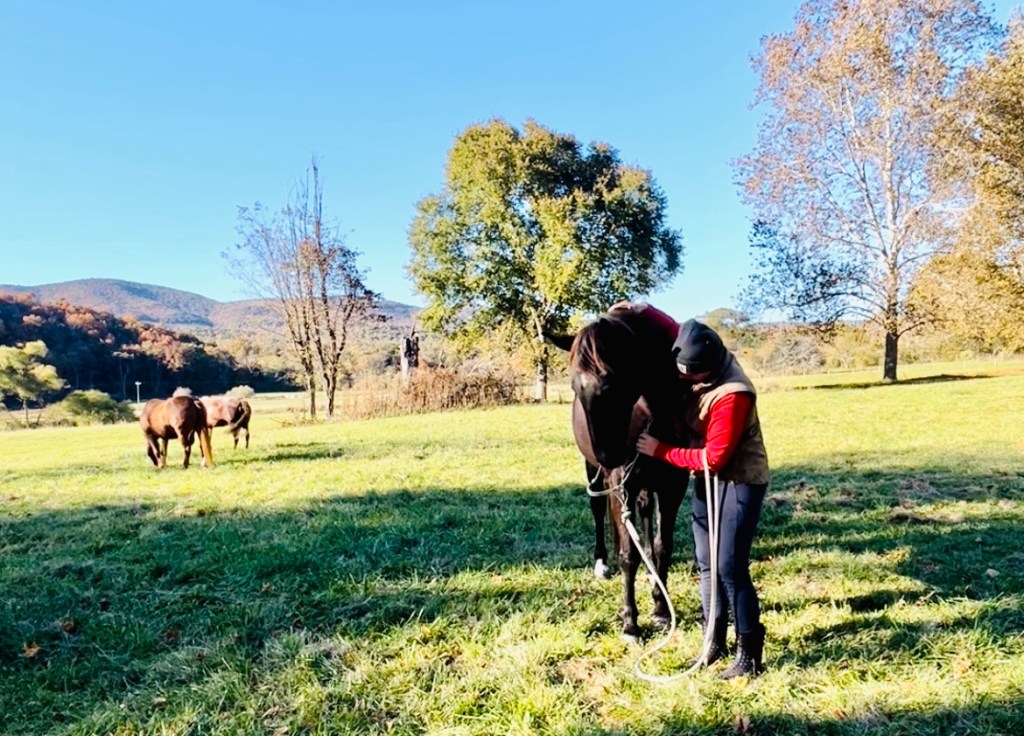
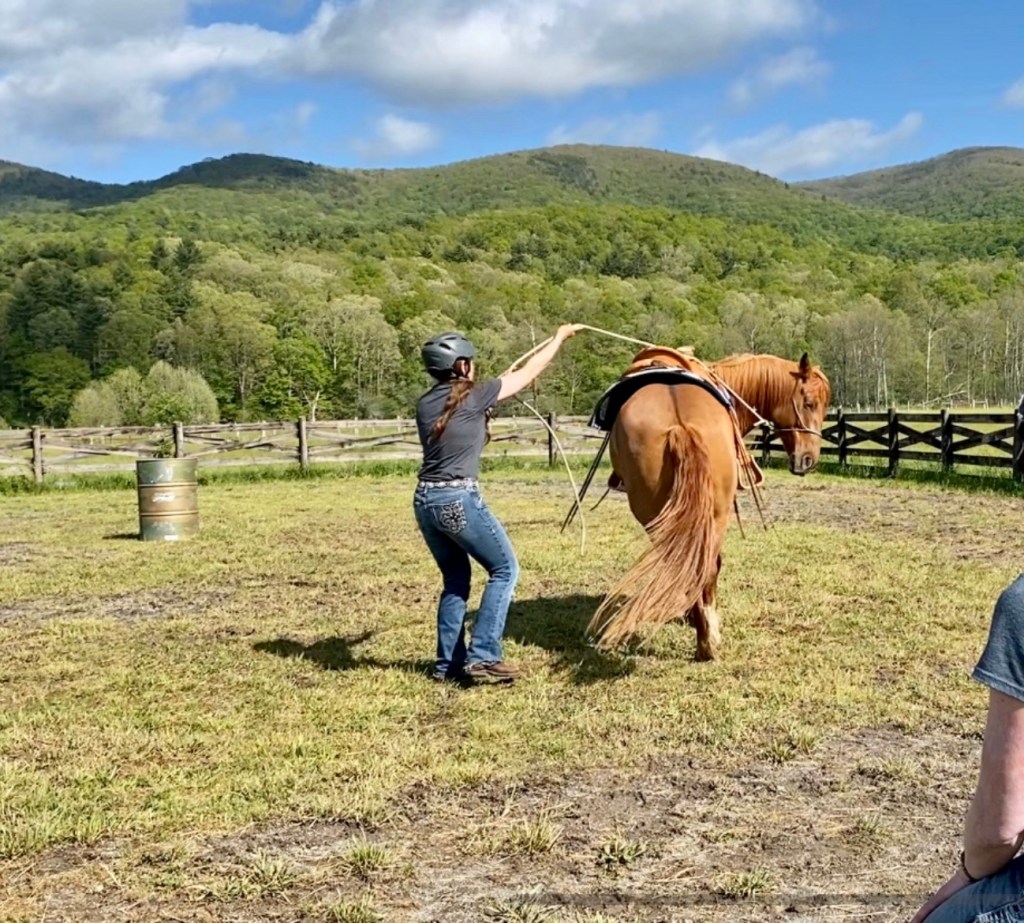
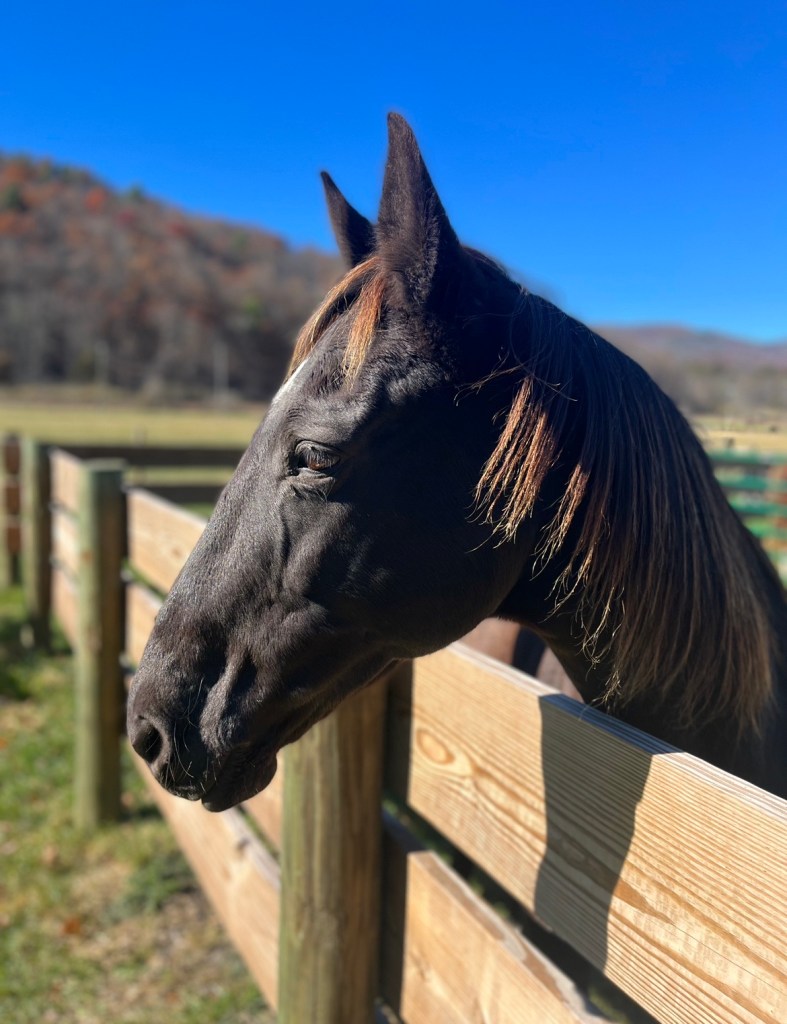
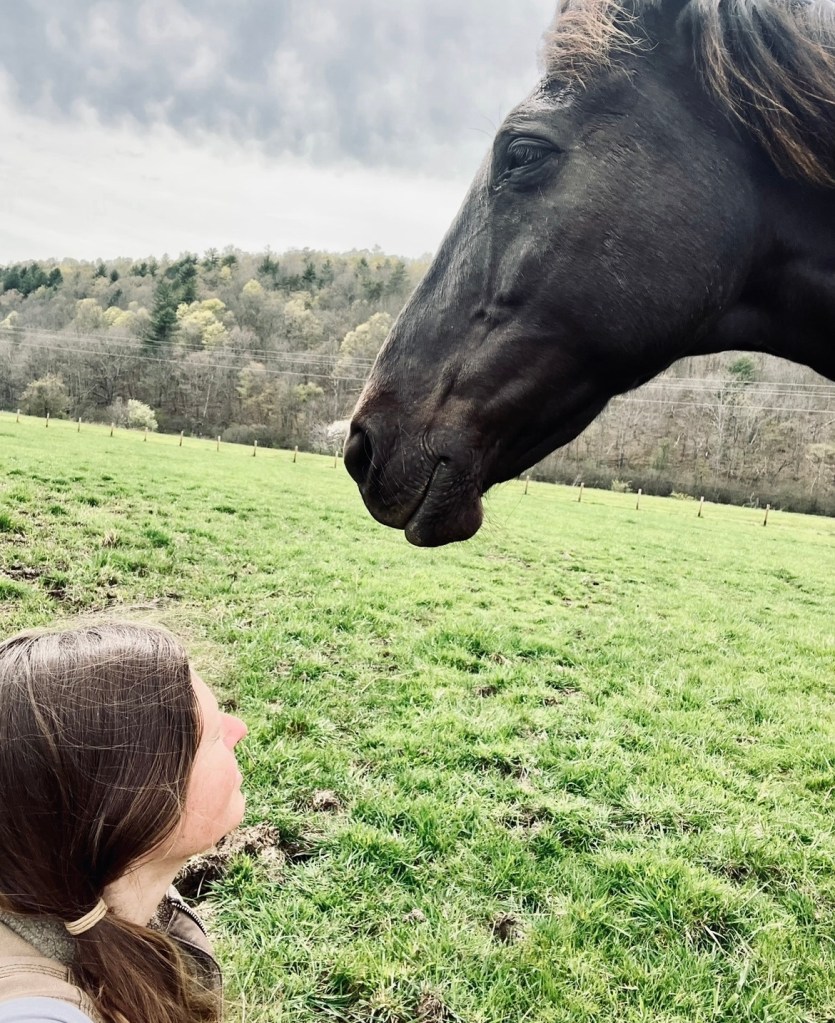
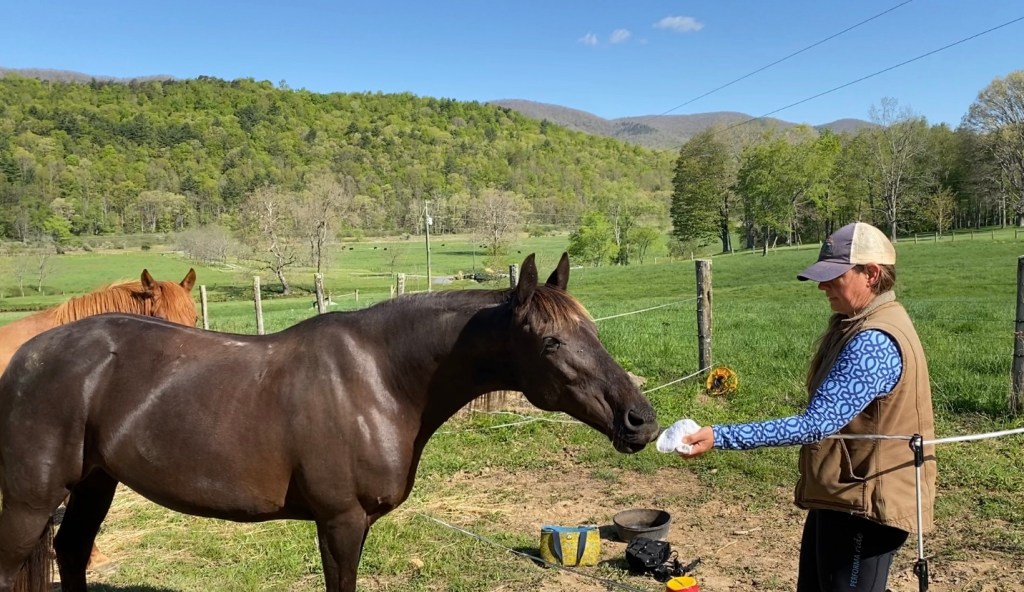
I have been re-inspired recently with the concept of brace in horses. I am seeing in a fresh way that if we are willing to look, the layers of brace in even the simple things we do with horses hold practically infinite opportunity. I am taken by the fractal nature of it… astounded how the better one gets at dissolving brace, the better one gets at recognizing it in deeper layers and smaller junctures, and then hunting it out and dissolving that, and it becomes a lifelong passion of seeking out the weak place that is rough in transition and then the love of finding ways to work it smooth.
Like any work worth a life’s passion, it is endless.
It brings a strange mixture of humility and celebration; a brace covers a weakness and the more of these you find, in essence you are hunting weak points. When you see in greater depth the amount of weak points you hadn’t recognized before it is a humbling experience. Yet for those with passion for excellence, once we begin to hunt for these weak places, the celebration comes! There is great reward in seeing that it’s possible to do this work and though often slow and diversive, it always results in more balance and finesse and overall strength. As Buck Brananman once said about similar work:
If you got a taste of it, if you got a taste of what I’m talking about, you’d rather do that than eat. You couldn’t get enough of it. You’ll hunger for it the rest of your life..
Buck Brannaman
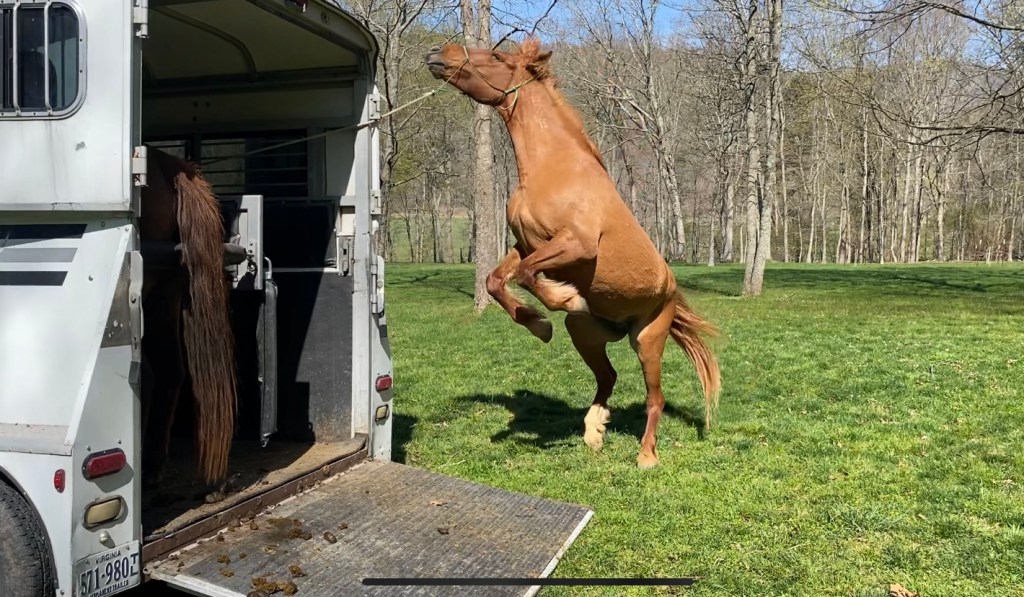
Brace in a horse is a term for any place the horse doesn’t move smoothly through. There are a million opportunities for all shapes and sizes of being stuck in transition, it can look like a horse not melting smoothly from forward to backward, it can be as obvious as a horse rearing up or bucking in protest of something it is afraid of to as subtle as a horse that doesn’t blink when it’s being haltered or doesn’t breathe when being saddled, not standing still to have a rider mount, or standing still when asked to walk. Head tossing, rushing into gaits, race brain, spooky, hard to load… these all include places of brace to smooth out and clean up. If there is fear or confusion or resistance, that means brace in the mind, and also in the body.
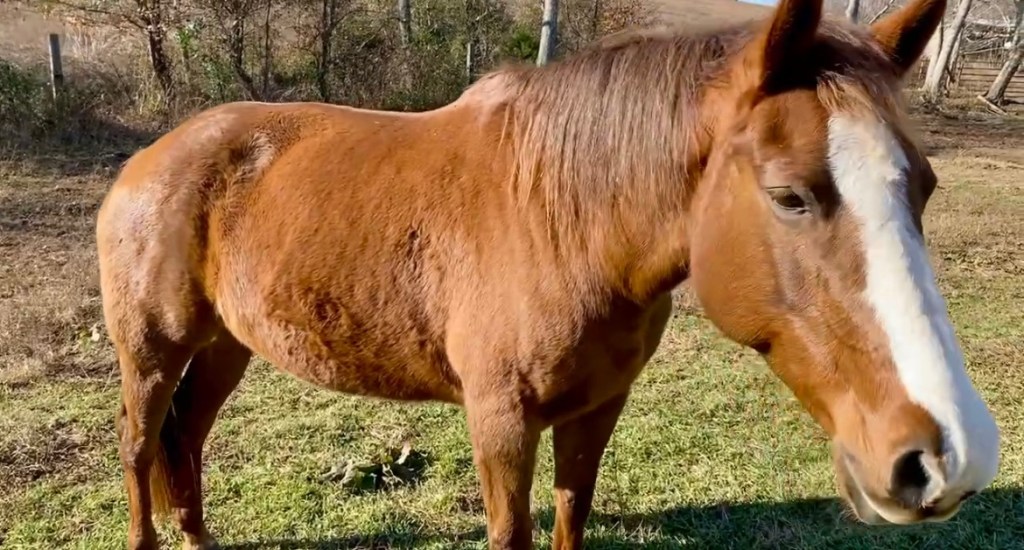
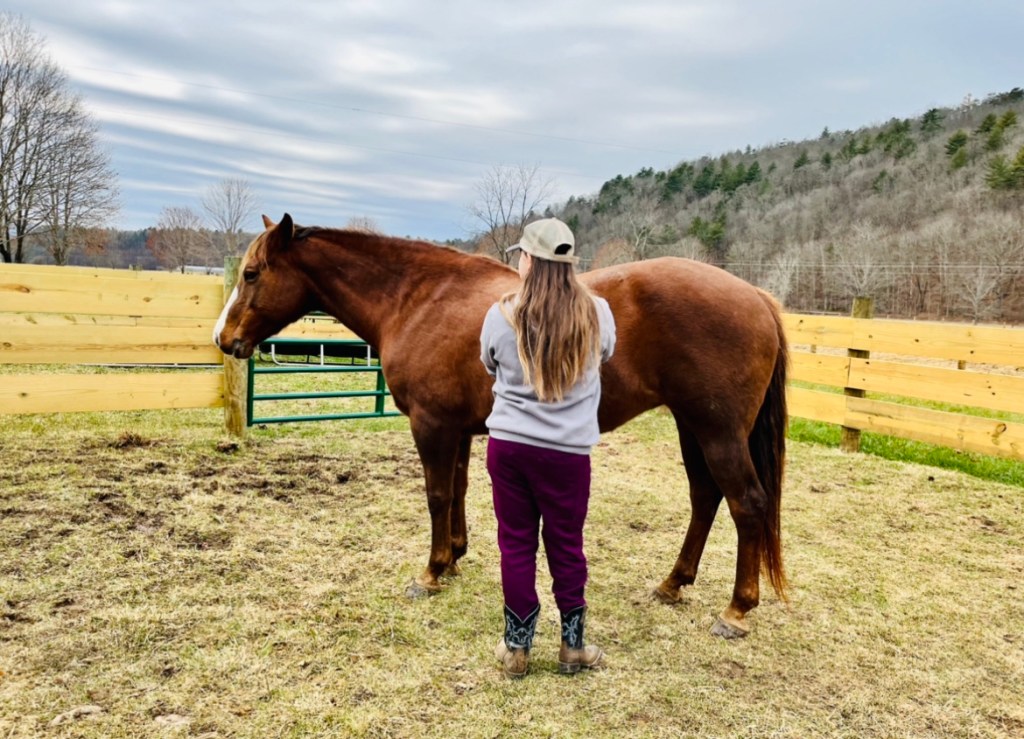
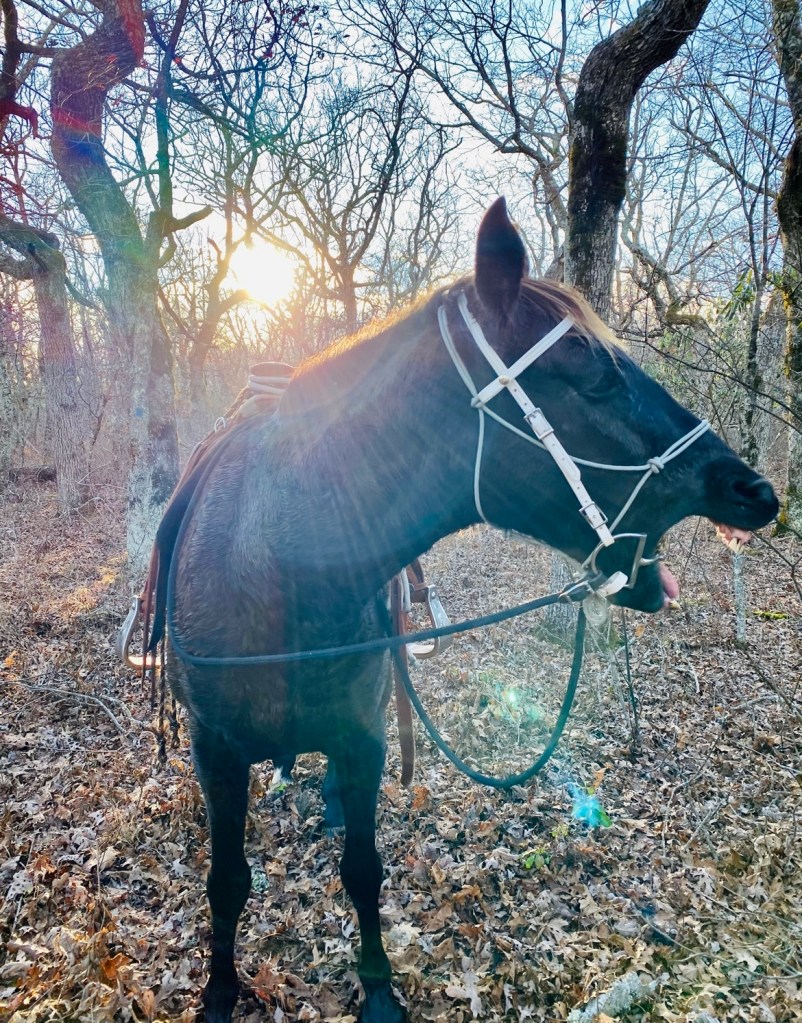
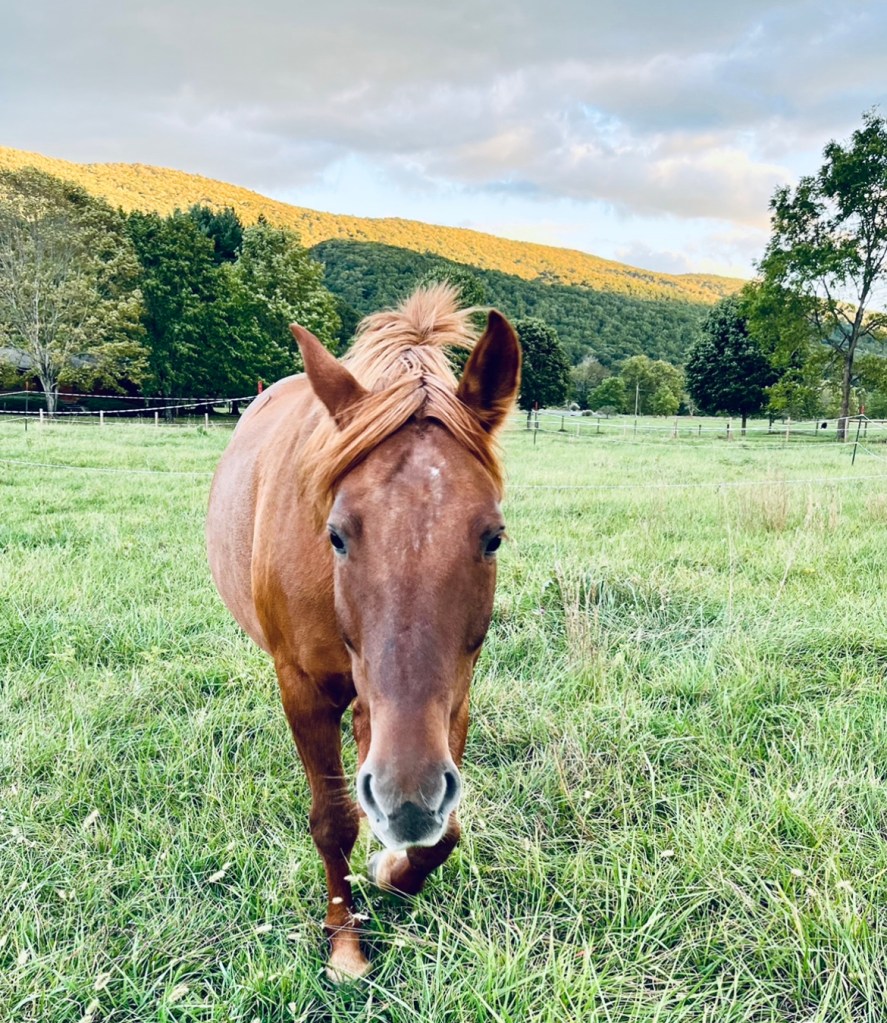
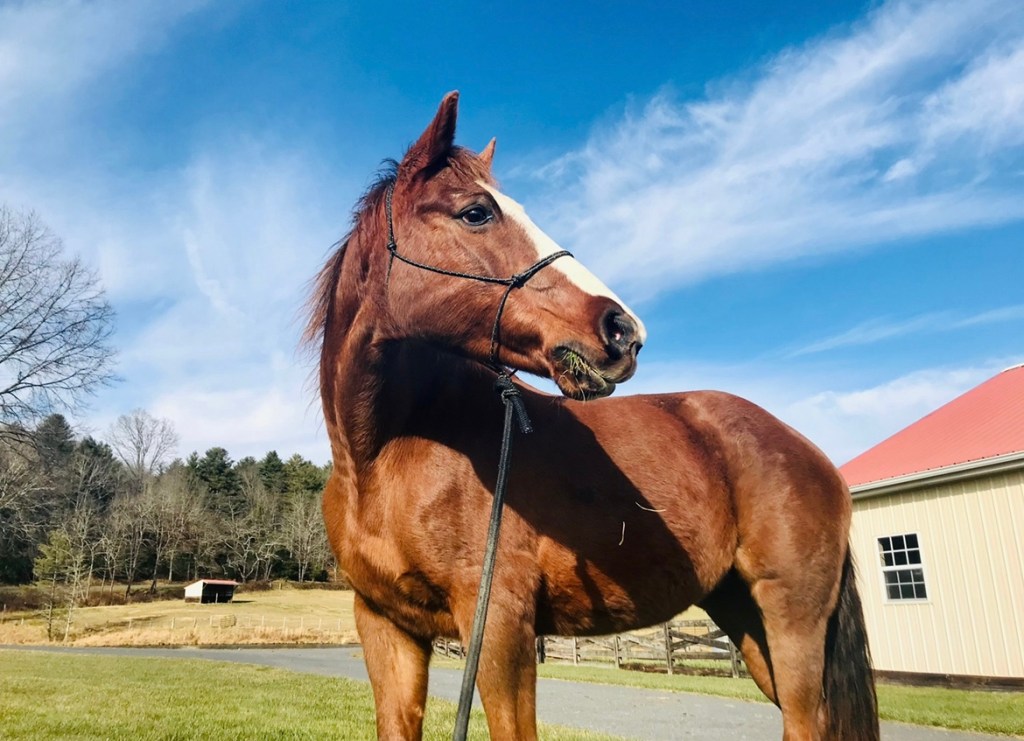
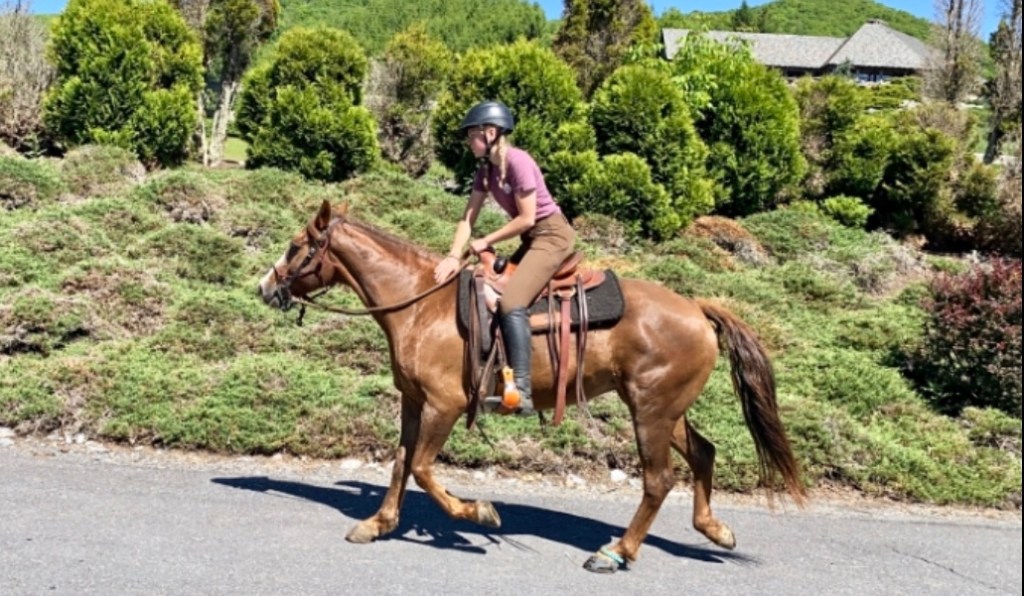
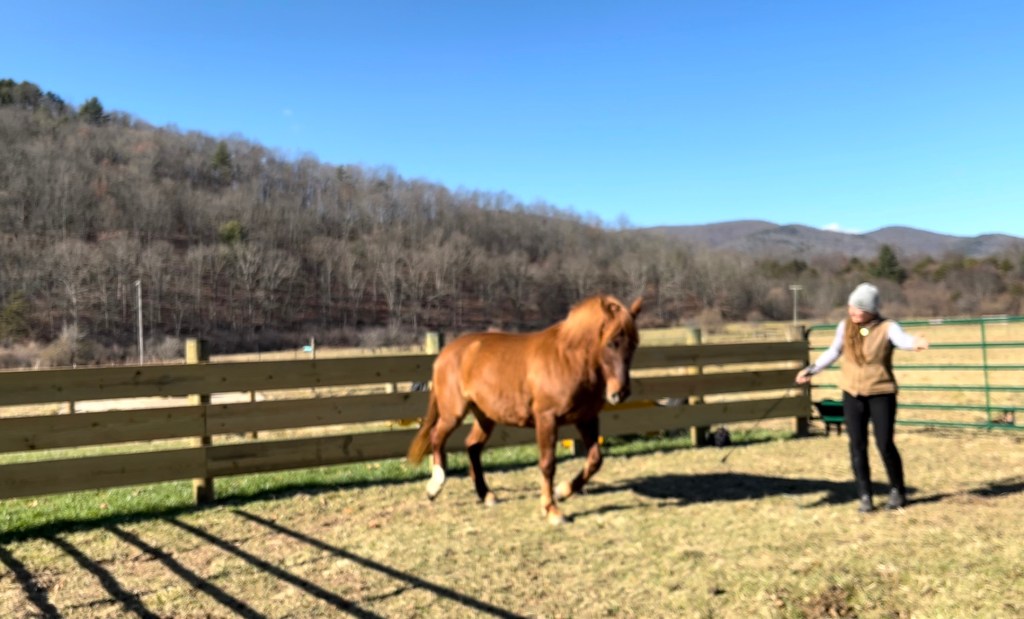
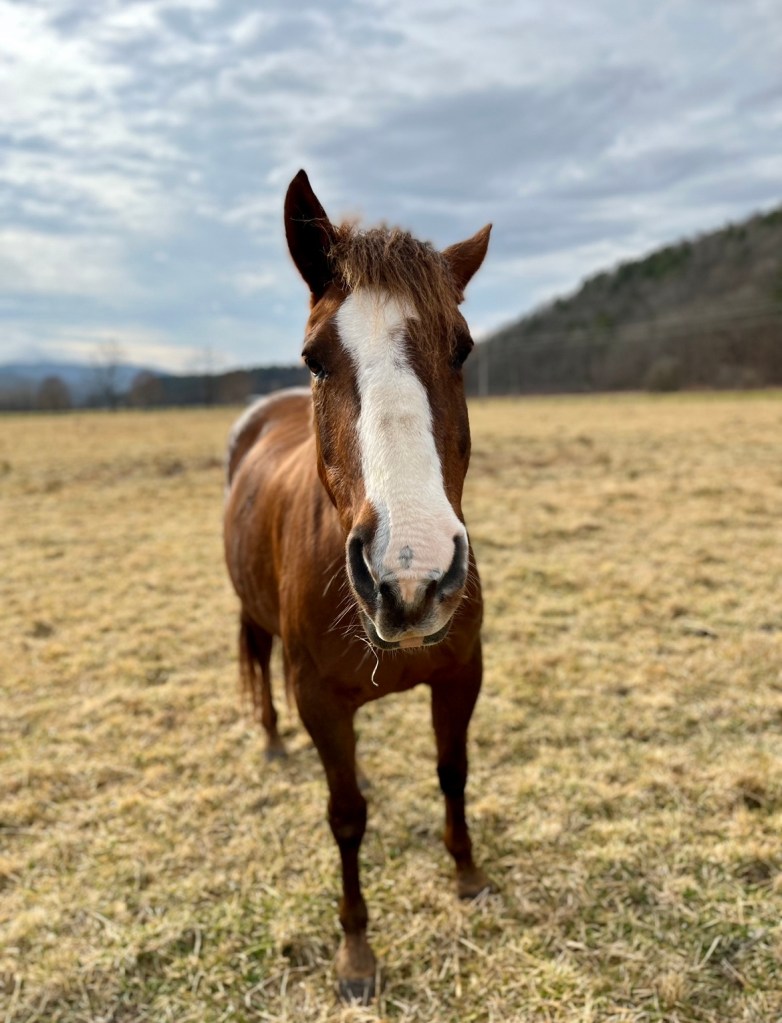
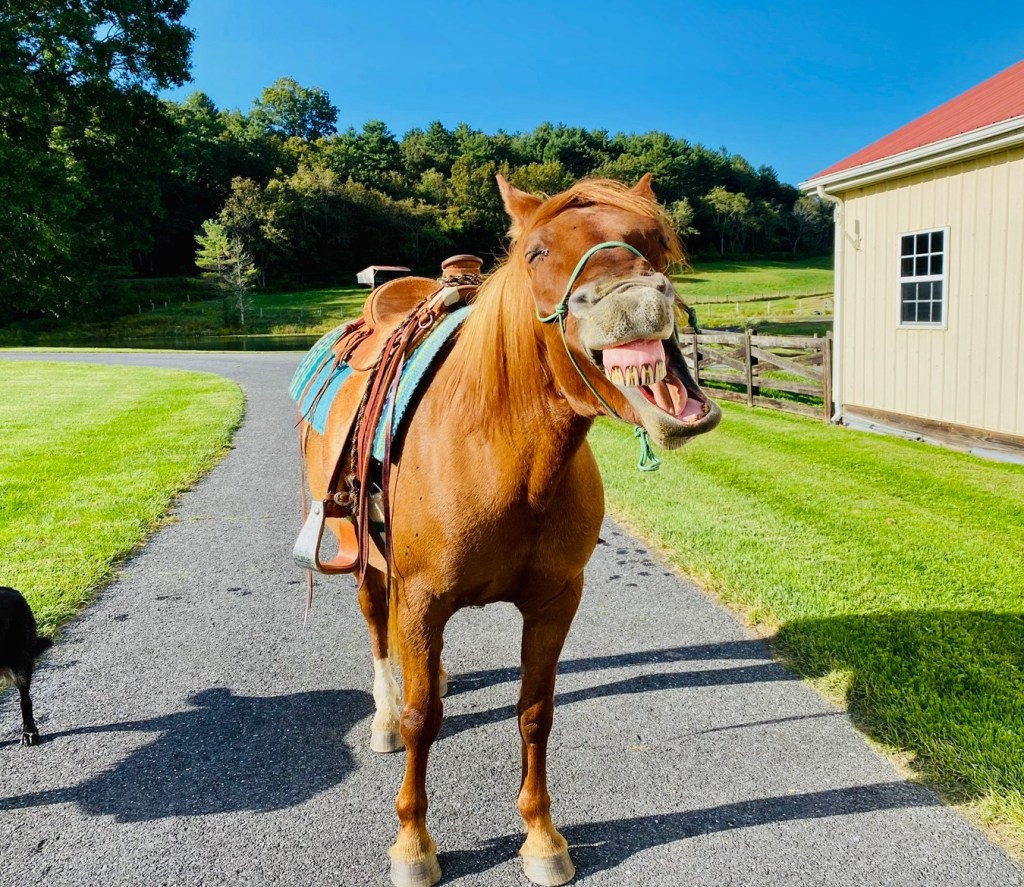
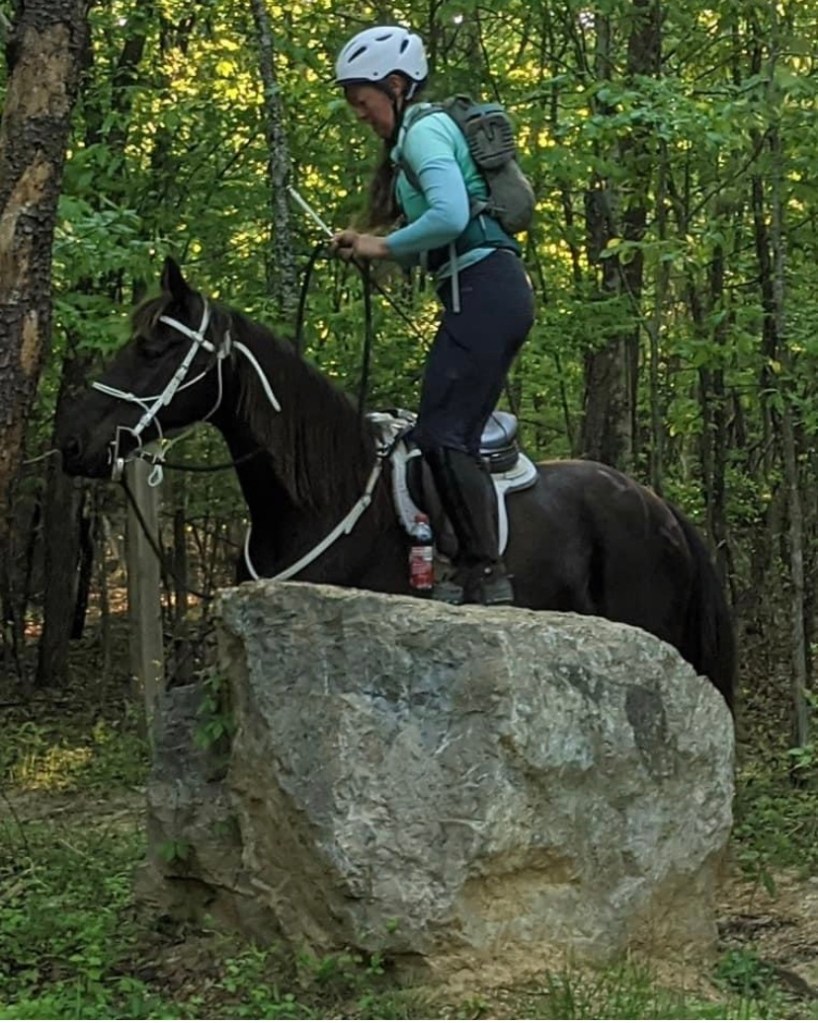
Sunny worries about his education being ridden and he often throws up his head around the mounting block.
Recognizing brace is a skill that can be developed over time and experience. If you think your horse doesn’t carry any brace then step one is to get better at recognizing it. Once the skill of identifying brace is developed the art of horsemanship comes in how to move through that brace in a way that dissolves it and creates softness instead.
In fact I am beginning to consider the possibility that all of excellent horsemanship is an art of helping horses release the brace they carry (mentally/physically/emotionally) from the first encounter until they breathe their last breath with us. Is it possible that everything we could want to partner with the horse to do can be achieved by seeing through the eyes of sticky transitions from one thing to another?
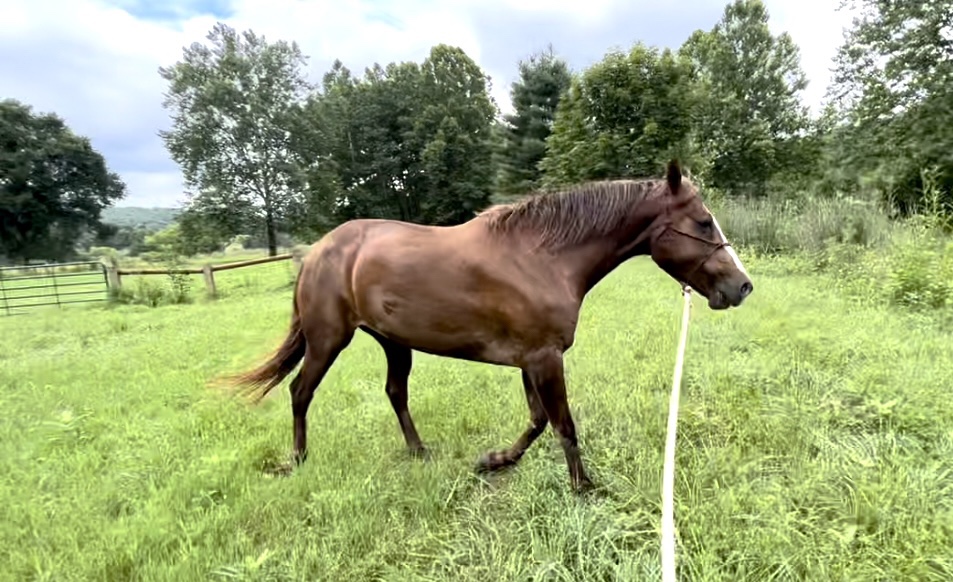
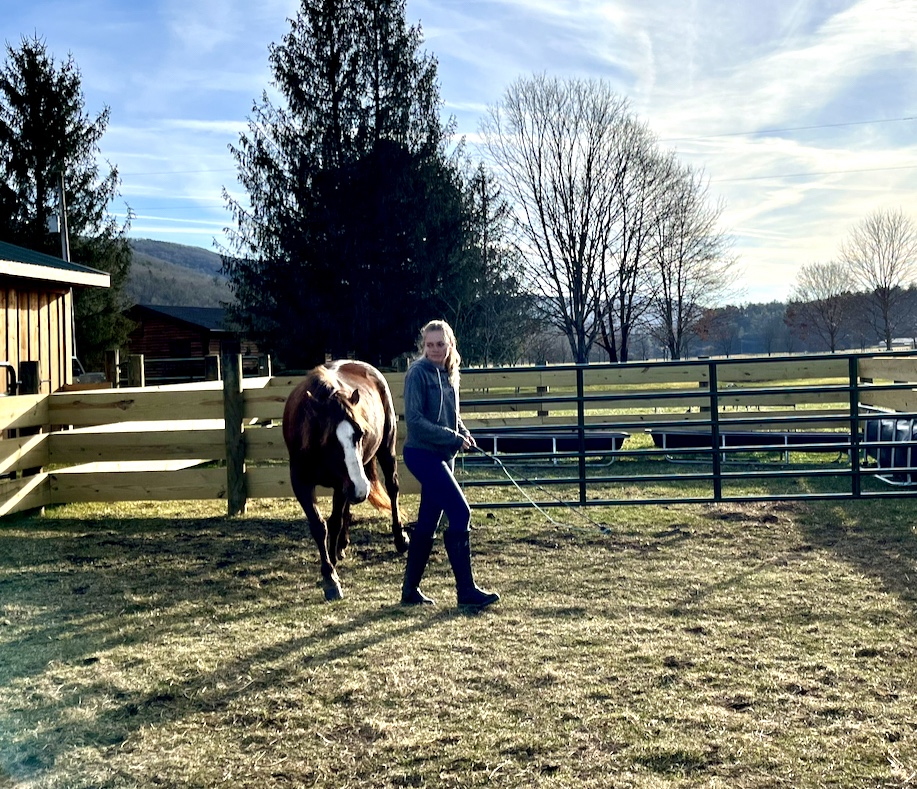
Sunny ‘stuck’ in a corner as I help him let go of the brace that will also be worked out in leading on the ground.
Mark Langley says many common issues people have with horses stem from the foundational truth that the horse doesn’t understand leading. When I first heard this I didn’t completely recognize the depth. It intrigued me enough to seek out more.
As I puzzled over the claim by Langley that most horses do not know how to lead, I saw what he meant. It became apparent that most people don’t recognize brace in the most elementary act of a horse understanding simple back and forward feel on a lead rope to a halter. As I watched him spend 45 minutes helping a horse get a sense of how to follow a feel, the layers of possibility peeled back in a new way for me.
Indeed the style of horsemanship through the Ray Hunt/Tom Dorrance lineage call attention in depth to the concept of feel (often paired with timing) as if it were the magic answer to most of our shortcomings in every horse relationship. Thankfully between Emily Kemp and Joe Wolter last year I had a fair amount of hands on help to delve more seriously into the mystery of this idea I first heard in depth at a Buck Branaman clinic a handful of years back.
Working on both following a feel (away from the human) and getting comfortable with changing eyes
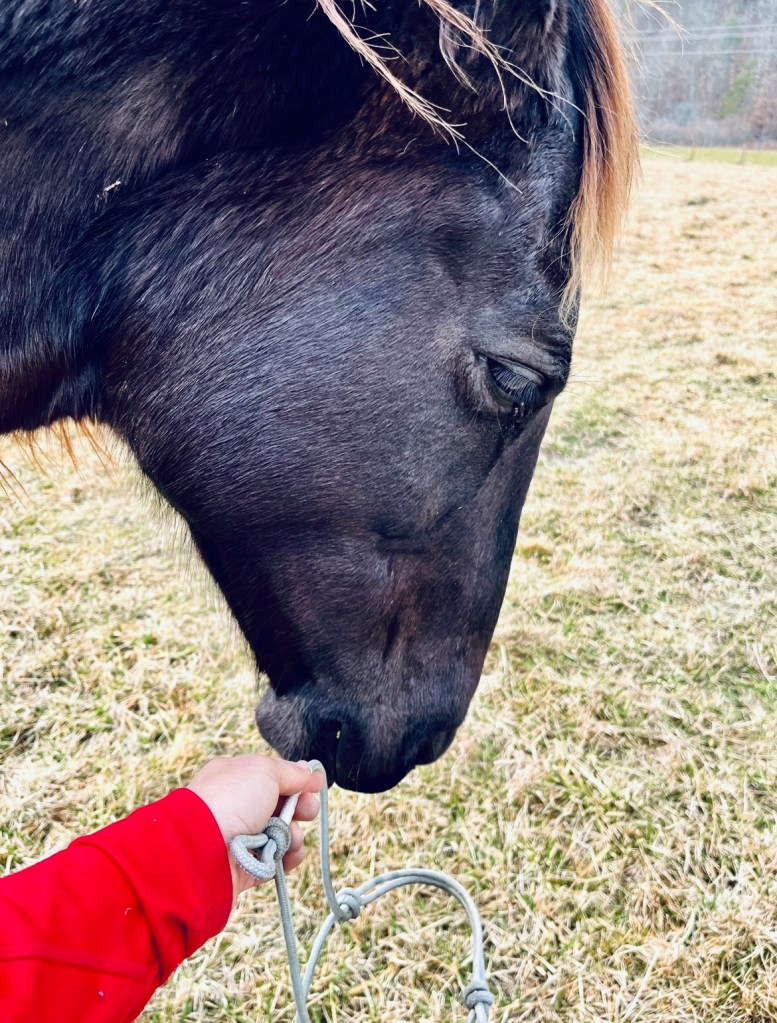
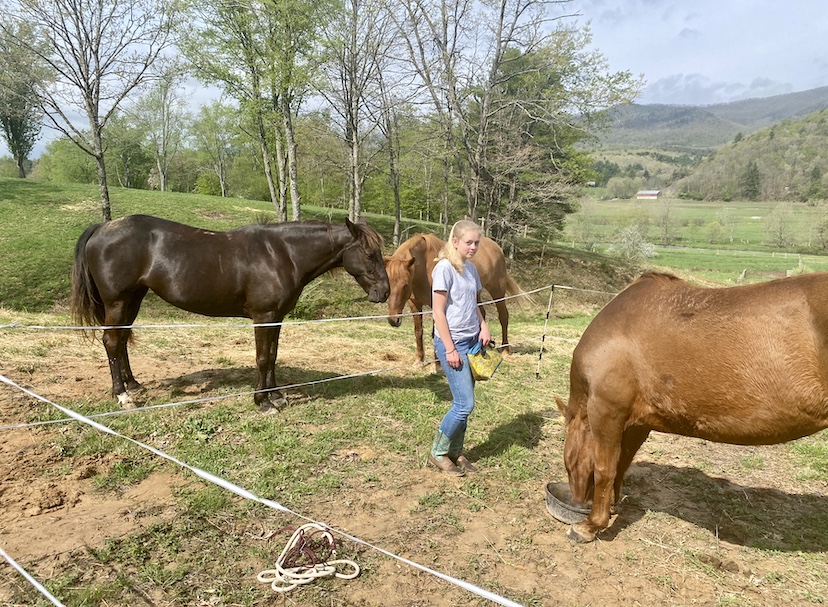
In my own herd it became more clear that Wyoming had significant brace about the halter itself. Working through her trust and comfort of accepting the halter from me is significant for her. If I ignore the brace she carries just having the halter on her head, how likely is it the next steps in educating her will work well? No wonder riding her always went sideways at some point, I had never addressed her concerns (to her satisfaction**) about the halter and our misconnection regarding the feel of such between us. I don’t know that it’ll solve everything but it’s a good weak place to begin at.
** side note… a major gap comes when we as the human decide when something has been addressed to the horse’s satisfaction because that’s enough for us. I have heard so many times: the horse knows better… the horse knows this… the horse has done this before… and clearly an outside observer can see the horse disagrees. This is a common place for brace to develop. The human presses through because the human has decided it’s time to do so.
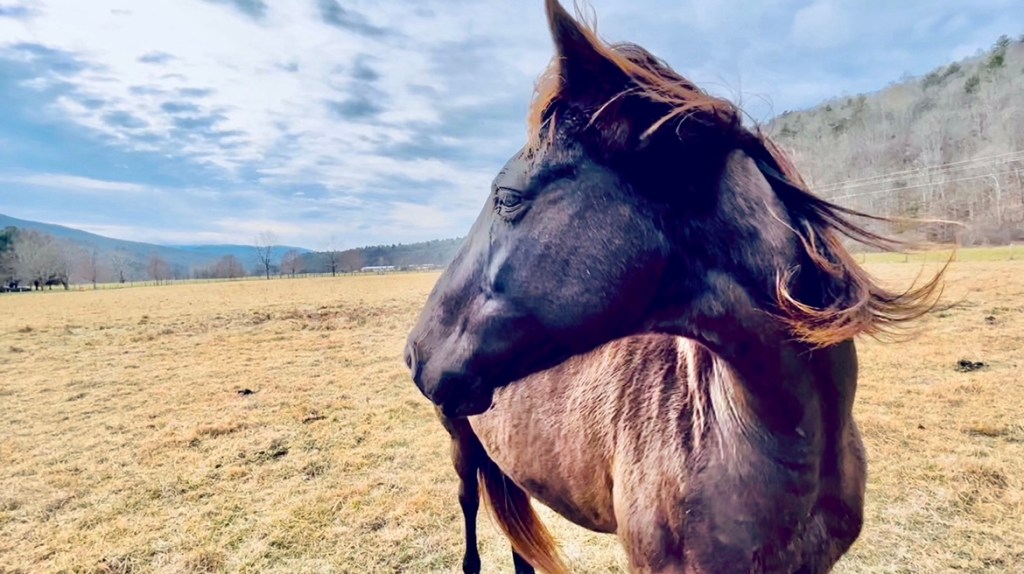
Khaleesi is highly opinionated but she generally trusts me- as I began to float her back and forth checking her ability to follow my lead, the brace I experienced wasn’t hard to dissolve and soon she was rolling with me in a dance and when I removed the halter she stayed with me deep in thought for a time. It was a new take on an old conversation I believe she appreciated.
Hiking the mountain together
Still as we leave on our mountain hikes her smooth as butter leading gets sticky as her mind toggles between these things: Wyoming calling from the pasture, the clover that grown in the yard grasses we walk along the river, the old herd we pass by heading out the the trails, and finally me and what I’m asking. That 1/4 mile takes the longest of the entire hike because of how stuck in other thoughts she gets and how much practice I get asking her with feel to come back to being present with me and our activity.
Being present together is an often neglected key in successful partnership. If we are distracted how can we expect our horse to be focused and present? Then once we are observant and engaged we must develop the skills and nuance to invite the horse to be present with us. If a horse is barn sour, race brain or spooky that horse’s thoughts are not present in what we are trying to do together. It’s quite stunning what we can pull off disconnected from each other- it’s more stunning what happens when we do stay present and connected.
The comment I heard in an interview of being “able to roll smoothly without brace forward and back like a ball is the start of riding in balance and leads to what people are looking for when they talk about collection” was like a light bulb in my mind.
Many riders riding around in a frame of some sort of collection have a horse braced into the frame that looks basically like what they are trying to achieve- however the deeper I seek, I think most haven’t experienced the difference because the real thing. Lifted carriage of the horse in relaxation without brace is not actually hard, but it’s impossible without connecting first to their mind, and having them in a relaxed and willing state which is quite a rare thing. It takes patience and trust.
For me many years of slow building and also trusting those who have helped me when I have a vision of this thing and I get sent walking in small circles feeling even footfalls and being asked if my horse’s ribcage is moving equally in each direction… of learning to ask for a slowing of the front end to match the drive of the hind in relaxation and feel I hadn’t exactly developed yet. Can we walk or trot, come to a soft halt and take steps backward without a sticky transition? Of the times spent asking my horse to go from standing to walking to see if she is able to move straight or if she fishtails off naturally to go forward… to learn to let go of rein control to find out what is really functioning there underneath…
As I look back I trusted whomever I went to for guidance- that each of the simple things I was doing that didn’t seem to have anything to do exactly with a canter lead change was entirely what was needed to build a horse that could understand and in strength and balance carry out athletic maneuvers in grace. When the time comes the hard things are actually incredibly easy if the foundation is strong and not braced together.
I have seen it from time to time, and there’s a quality to it like when you see the work of a true artist instead of a skilled painter. It is something you know without quite knowing how you know when you see it, but once I felt the difference in K it was quite obvious from the inside.
Hope is trickier because she spends more time shut down trying to hide the fact that in fact she is not comfortable or quite sure of herself. She spent a life being trained that once the halter goes on you do what you’re asked and if not you’ll be punished so your training is complete. On a well trained horse you can push the “button” that was installed and you get a “response” that you can count on. If the button stops working then you make it clear that punishment or correction will come and the horse gets better at compliance (as along as they aren’t a fighter). Then the process of shutting down their own thinking system which is not required when you are looking for obedience to training, and the challenge I picked up with her is how can you get a horse to see that they are actually being asked to think again, and act on their own thoughts while working with you. Hope was finally discarded when she could not comply any more. Whoever had her in the line of short term owners before me made sure she was indeed… broke.
Something I’ve noticed around me when I hear horse people chatting is the fairly common phrase I just want to…..
I just want a horse I can trail ride…
I just want a horse that does what I ask…
I just want a horse that doesn’t buck me off…
I just want a horse I can do basic dressage (or jumping classes, or…)
I just want a horse that is safe for my children and whoever comes to ride…
There are a plethora of fill in the blanks, but I began to notice this sense of both this should not be so hard to just have a horse that does this very simple thing I’m hoping for… But also a settling as if it’s a positive attribute to carry… I don’t want much, I only ask for this simple thing… a horse that can just do this one thing for me. And gradually in the background this thought rose up in me I never want to be someone who just wants anything with my horses…
No matter what I’m doing from putting on the halter to riding an endurance race I want a horse who is intelligent, willing, not shut-down, knows her thoughts and feelings matter to me even if they are inconvenient. I want my horse to flow with grace and not be rushed into something she doesn’t understand or doesn’t have the balance to do in strength. I do not want to resort to a tool to cover over a brace so I can just do that thing now. I want a horse who will have everything she needs (mentally, physically and emotionally) to partner with me at the highest level even if what we are doing is as simple as walking around the field in balance or opening a gate with ease.
I think many of the horse community doesn’t suffer from grandiose plans, but instead for accepting such low standards. Many of us have big goals and that can be a problem because we are confused about the difference between having high standards and big goals. So we can get busy rushing toward our big goals and end up accepting so little quality in the process that we just want a horse that will [fill in the blank here].
There is something in the upside-down truth of going down deeper to reach, in the fullness of time, the heights we crave deep in our souls that is fascinating to me. The lower we are willing to go in service to others the better our relationships thrive. The deeper we seek to find brace and cracks in our foundation the higher the skyscraper can reach in strength.
Thankfully horses are quite good at being led and understanding feel. As soon as we begin to lead well and learn quality feel they begin the process to follow that feel and though it can be slow and take patience, it is the most rewarding thing… a taste of it can sustain you for quite a lifetime.
In part 1 and part 2 of Am I Safe? I wrote about some observations and questions that connect to conversations I’ve been listening to around the neurological system and healing. Hopefully in the wrap up below (part 3) I can give some thoughts on what we can do with these questions.
First the elephant… It is very hard to see borderline (or outright) abuse happening in situations where very clearly the people involved see it as normal. The more I learn the more clarity comes with my own herd- and the world around me. I am grateful for the horses in my own herd because they are constantly reminding me that humility is my superpower… this doesn’t mean I am amazing at humility, instead it means I can always choose humility and every time I do it empowers me and those around me where pride is ALWAYSALWAYS destructive. I am convinced it is pride and ego that are the deepest roots of the pain we cause horses day to day.
Early in my career riding endurance with Khaleesi I was certain she was not giving me her best (she’s being lazy) and I was determined on this particular ride to insist she give me all she had to see what we were capable of. Around the last loop of the ride she really began to slow down. I INSISTED she get moving! We only had so many miles left: you can do this, come ON why are you slowing down you are not that tired! I know you! You have more to give!!
The more I insisted the more she resisted. I can still feel the red-angry frustration that was welling up in me, I was not thoughtfully making a decision anymore I was infuriated that she was refusing to get this done. I grabbed a stick and whipped her butt- I MEAN IT!
She began to comply and try (this story still breaks my heart to retell it) and I began to notice something…. When the ground got sandy and soft she ran and trotted her best, and she always slowed down when the ground got hard and rocky – still trying to show me she was going, but CLEARLY not as comfortably. She wasn’t softly giving me her everything, she was doing the whole thing with brace and not exactly an attitude (she never threatened to buck or fight me) but not a willing happy heart.
It began to come together and I softened. No, I was right she wasn’t tired. Her feet hurt.
She was in pain.
We were now close to the finish and I let her walk every rocky surface and she would trot on sand- but the damage was done. Both physically and mentally. When we got to the finish, it was a hot day, but it took her 20 minutes to come down in heart rate. We used ice water and hand walked her. This horse generally pulses if she is fine in minutes after cantering into camp. The ONLY reason she does not pulse is physical pain. There have been three times in our career I’ve had pulse issues. We did get her down in enough time to final vet. She didn’t look great and got a “C” on gait but the vet noted it was not clearly a lameness- she was just looking all around exhausted so we got a completion.
Grace I did not deserve.
We got back to the trailer and I was devastated. What had I done? Ego. Pride. Never again.
I learned a lesson that day and in the years since I have NEVER repeated that by forcing Khaleesi to give me more than she was willing and able.
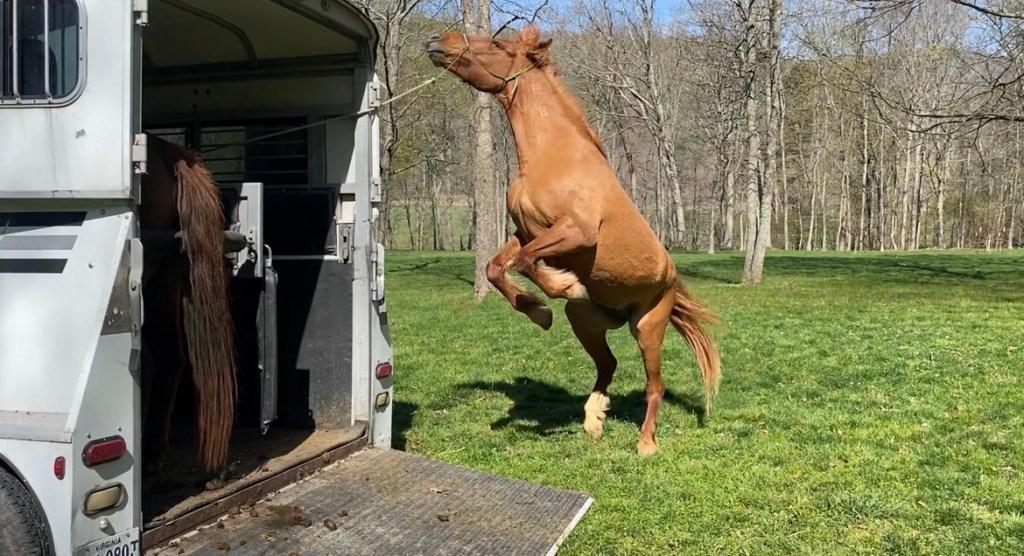
The trailer loading debacle I wrote about in part 2 was that NEVER again moment between Wyoming and me. I tried to use force to move her forward in the process. That choice that jacked up my trailer, could have gotten her killed (as she broke off the chest bar leaving enough lead rope to hang herself over a hinge like a fish on a line) and left me some wicked rope burns to remember it by. Again I know I got off easier than I deserved.
I took this picture that day when I “hung up her halter” for a time. I comitted to work within her threshold regardless of what it was and not to listen to the voices that say I should just “get it done” by force, whatever the thing is. I did not use a halter with her for months.
Now that I write this… some of that deep trauma in her poll and neck that she was resisting could very well be residual from that wreck I caused.
So there are two of my most dramatic, but not the only, moments of when my ego or pride and ignorance created trauma for a horse in my own herd. But for the grace of God go I again over those paths and every year I learn more I can look back more recent than I’d like and see ignorance or impatience creating problems I preach so hard against.
Humility is my superpower.
Yet humility does not mean never speaking about what I see, and what I’m learning because it might create discomfort. It means I don’t do it in a “me against you” conversation, but always a “I am with you” conversation. With compassion. And with the knowledge that we can only do the best we know at the time. And pride is so insidious- it attacks at a deep root level and is very hard for any of us to see in the mirror, and easy for others to spot looking in. My best advice if you care to grow, is to find a few people you trust and give them a hunting license to help you see what you cannot.
In all fairness, I still fail a lot. But I refuse to quit.
In the case of Hope and other horses I see in broken down states, I don’t think any one of the people in her line was an evil genius trying to wreck a beautiful creature physically, emotionally and mentally. I think every one of them wanted what most horse people want with a horse. They want good things right? And yet people created the deep rooted problems in this mare by ego and ignorance. It’s how most problems start. Not one person in her line of owners took the time to listen to her and then do what it took to help her. They saw her as obstinate and unwilling. I can say she is neither of those. She had finally been… broken.
What then can we do?
I asked the question in part 2: What can I do to make Wyoming feel safe enough to let go of her trauma? I will never had a successful relationship with her while her nervous system is on overdrive. She cannot communicate, connect or learn if she is only on survival/react mode. Wyoming wears her emotions on her outside. We always know how she’s feeling, and she doesn’t have emotional stability and well being. On the other side of the coin is Hope. She is equally traumatized but her reaction is to withdraw and shut down, comply as much as she is able. She hides deep inside herself. Horses willing to go this route are often considered respectful and obedient. Bombproof and ideal… until they simply cannot.
I had hoped to find another expert conversation to tell me in a nutshell how to fix all this for my herd. No such luck. Instead I heard another quote ringing in my ears:
You cannot come to a horse intentionally thinking you want to fix something. If you come with the goal of fixing it your horse will internally brace against it and you won’t be able to fix it. Instead let go of the idea that you are fixing something and simply find a little place to release tension here or help them to relax there and before you know it thinks get better and you have fixed things. You have to let go of your agenda in order to help the horse.
Jim Masterson
I have three personal takeaways from all of this. The order isn’t key as much as they are all interconnected so they work together in a synergistic way. I trust you can sort out what it all means for you and your horse journey.
1. Get better than you currently are at understanding horse communication. And put it into practice by listening better. Everyone says that of course they listen to their horse. Just as no one was setting out to destroy Hope earlier in her life, my experience is those owners would say the same thing- of course they understand horses and of course they listen, many many people who have own horses and ride horses do not have accurate understanding of what is going on in their horse’s communication. I see most riders- especially ones who have “been around horses all their lives” making assumptions about what they think the horse is saying that is often pretty inaccurate. This brings up another quote:
Horses survive by being incredibly adaptable. They adapt to the way we work with them. They are so adaptive we often miss what’s really there because they are so good at accommodating.
Jim Masterson
Keep in mind have a real disadvantage in this from the start because of how accommodating horses are by nature, but that is a survival skill not a healthy way of being.
Horse people have taken pure communication from the horse like ear pinning, evasion (evasion can be trying to step away from mounting, bucking, rearing, spooking, running away etc), pawing, pushing, nipping and kicking and turned those into “unwanted behaviors” that we train out so they can be “good horses”. This begins early on and then is continued through their lives. We have taken away their negative communication channels. We as a culture training our horses not to share when they have a problem. No one wants a horse to bite them including me. If we were more adept at seeing early subtle signs they wouldn’t have to bite us in order for us to understand.
Part of helping a horse to understand it is safe is ensuring a horse feels seen and heard. Accurately. Acknowledge when your horse is trying to communicate she is not OK and see if you can find out why. Then commit to a change- do something about the problem.
2. Accept that one cannot separate behavioral (mental and/or emotional) from physical issues.
Of course there are issues that begin behavioral and there are issues that stem from physical problem but it is always more complicated and they will always connect. If you have a physical issue that isn’t addressed it will always show up as a behavioral issue. If your horse is experiencing physical discomfort they will do things like refuse to make that jump, not be as eager to do upward transitions, try to evade being caught, pin their ears or nip while being groomed or saddled, etc.
On the other side, if your horse is having mental or emotional issues (isn’t confident to leave the herd, confusion over what is being asked, feels like it will never get released or there is never a right answer, is over stimulated) that will show up in time in the physical body as ulcers, joint or tendon injuries due to not moving in a relaxed and proper form for the work, or acute injuries from flight responses when they aren’t thinking but reacting and get themselves hung up, cut up, or in some other wreck.
If you always assume there are connections between behavior and the body you will have more data to work with in assessing what is really going on and have a leg up on finding problem before they are a big financial and time investment to sort out.
3. Assume your ego and pride are your biggest enemy and that both are working against you and then seek out ways to fight against them. Humility is your superpower too.
We all see our horses as friends (well anyone reading this blog for sure does), and we want to do what’s best for them. That is our high value (high values are how we talk, core values are what we walk). I hear most people say “I always put the horse first.” It’s in the core value where things get dicey. Are you willing to do what is best for your horse when it costs you the resource you have least of… for some that is money, for some it is time.
I was fascinated listening to Anja Beran who has been teaching classical dressage in Germany for over 25 years. She has been a voice against poor training in modern dressage (at very high levels) and is a great to seek out in the conversation of creating a powerful willing horse that can compete in any discipline much longer than the norms we see today. When the interviewer asked her how long it usually takes her to work with a client horse that comes in with some trouble (when you get good at successfully fixing problems, you see a fair amount of them) and even I was a bit surprised at her answer: Well, you see usually we find it is a minimum one year, and often we will keep them and work with them up to three years to help them come back into a healthy way of moving again.
Here in America we expect results in a weekend to maybe 30 days on the outside. Unfortunately you can get a horse looking to an uneducated eye (that would be 80% of the horse-person population if you go with the rule of the Pareto principle) in 30 days training, but there are so many holes in these horses that someone is eventually going to crash through physically, mentally, emotionally or all of the above- it’s only a matter of time.
Anja explained that a very high level circus in Germany uses her exclusively to train their Lippizaner team and she says they bring them to her for seven years. The reason they are willing to invest that kind of time she explains is because they perform well into their thirties when they are trained properly. A healthy balanced horse will also cost much less over time in vet bills and missed work.
Money is a limited resource for most of us. It is true we have to make decisions thoughtfully when it comes to how much we can allocate to a horse, but I have seen people throw tons of cash around if they believe they will get a quick fix to a problem. Time is usually the more treasured resource and we appear as a culture not willing to give our beloved horses the time they desperately need to learn how to carry their bodies properly, to think and make choices instead of hurry up and react to my pressure (obey) so we can get on with what I want to do. We also need time – to get better in our own knowledge and skills so we can actually help the horses instead of always talking about how they are so good at taking care of us.
And so I circle all the way back to that first question… why is that horses — when they are given more supportive care and a place that will hear them ask for help do they appear to get so much worse?
From the neurological perspective I have been learning more from, I think when they begin to feel safe they will begin to heal. And no healing can take place without the revelation of brokenness. One must feel in order to heal. With any person or horse or any living creature- survival often means setting aside a wound in order to get through now. When we are given a safe place to peel off the survival mechanisms the only road to wholeness is by revealing the brokenness and then letting it go or getting the professional help required to walk through the healing.
It makes more sense to me now that it would take Hope some time to believe she was in a safe enough place to fall apart. It also makes sense that Wyoming has deep layers she does not feel she is safe to release yet. Knowing that means I can be more attuned to making her feel heard and that her worries and concerns while I might think on human terms are overblown and inaccurate, to her they are enough to jack up her nervous system and that’s all that matters.
In both cases I have come to see that I cannot approach this as a new (oh that ego is tricky!) goal for them. I am a driven person and I can take their healing and turn it into it’s own goal that then becomes a new source of stress and pressure.
When Hope first came back from her stay with Dr. Hancock I was very excited to see her bloom into a healthy mare. I was great at doing all the things I was told would help her recover. But she seemed to be getting worse after a week or so. I was able to recognize that I had dumped my expectations of her coming into health on her and she was straining under the pressure. I tried to let her know that I believe I had done all I could for her professionally and now it was up to her to get better. I would help all I could but she would need to go at her own pace in her own way. I was committed to be with her and support her.
She has good days and bad days, and stress is more likely to create a bad day. I don’t always have control over stress in a horse herd. My healthier horses are less affected by it. Overall I see clear trends toward better. She more stable in her balance. She is moving better in her body. She has less mucous and infection recurrence. She is brighter in the eyes. She has more “personality” and preferences coming out. When we brought her home in December of 2020 I would never have guessed she could have so many deep layers of brokenness it came close to costing her life; she held it together pretty well for months. The very limited work she was for a few months in could not have caused the depth and seriousness of her condition. The downhill freefall actually came while she was in pasture rest with her herd through her second winter here. A place she probably felt the most safe in a long time.
I look forward to what healthy Hope will be like. I look forward to her becoming more her own horse and getting to know her. And I will continue to find ways to help Wyoming believe she can let go of the trauma her past life and I have caused. I will get better at hearing their concerns and answering how I can. I will assume less and be curious more. I will honor them with the time they need and set aside my own goals and plans for them regardless of what people on the outside think. And hopefully I will look back at this series someday with a more complete picture and have some corrections to make-
For now, I think that is the best I can do.
Hope before I brought her home December 2020A little morning trot in July 2022 after returning from functional vet careHope now (October 2022)
I would like to conclude by bringing up that one cannot give what one does not have. I also have seen in myself wounding and brokenness that made it hard for me to be the whole healthy balanced person who could set aside my ego and goals and the external pressures at work on me to have the grounding and confidence to allow these horses to fall apart. Because there was a time when them falling apart was too close to my own identity and I could not be the stabilizing factor and have the patience and grace to not need the horse to perform for me in order to make it’s life worthwhile. I also consider the complexity of a world of wounded people who are part of the cycle with traumatized horses. I hope someday HH will be able to help encourage increasingly more powerful horses AND powerful people in richness of mental, physical and emotional health.
Thank you for reading this series and I hope it gives you some things to chew on and encouragement to find ways to improve your own herd toward increasing excellence, connection, and deeper relationship.
I have asked myself the question of why I have seen a horse on multiple occasions move into a home better suited to its needs and watched the horse go from not particularly thriving (meaning none of the horses were in peak physical condition at the transfer) to pretty seriously ill or lame… broken down in a much more serious way than would have been expected over a period from months to a year.
Why (I kept thinking) am I seeing this pattern, and experiencing it myself (specifically with Hope, but in a more emotional less physical way with Wyoming as well)? I would think that the horse moving into an environment better suited to helping it thrive should mean the horse improves in condition, not worsens. I have asked myself if I am wrong about what makes for a better environment for the horse to thrive? Are these horses getting better or getting worse? What is the truth?
Someone working with our functional equine health care told me they see this quite commonly and explained to me that it is an honor when a horse will choose you to fall apart. Ok I thought, I sense truth in that, but what is really happening?
I had an early theory that these new owners took on the horses knowing they would find some issues under what I call the duct tape that had been holding them together previously. When you are willing to take on a horse that is not in peak physical condition, and you begin to take off the “duct tape”- you’d better be ready to find (like in a project house) things behind the layers behind the layers that always are more serious than you realized on the surface when you did a walk through.
Sweet Hope finally on the mend… I think.
I had a sense there was something to this but not real clarity.
Recently I stumbled across an interview with Jim Masterson who developed what is called The Masterson Method which is a body work that is simple to begin, anyone can start, and builds connection between you and your horse while also encouraging the horse release layers of tension and trauma that are held in the body. I liked his story and this method work was based on observation, listening to the horse as you went, and a light touch paired with patience to wait until something changes. It was a low risk – high reward experiment. So I did some investigating on his website, watched a couple demo videos and thought I would see what happened in my own herd.
This is where things began to get interesting.
One caveat from Jim Masterson was that as prey animals, some horses would resist releasing tension in the body because it is a vulnerable state and reveals even momentary weakness. If the tension spot seems clear by observation, and in waiting you sense they are resistant, one suggestion was to be sure you were not looking with too much intent at the horse (expecting release) or possibly try looking away entirely for a moment. Sometimes Jim noticed that after a small release, if he turned away for a moment or gave the horse a break, the horse would have bigger releases that continued on their own.
This podcast binge where I stumbled on to Masterson also led me into some interviews that began with training concepts and wove into equine behavioral neuroscience and trauma and healing. One of the interviews with a neuroscientist included discussion of some studies that revealed: the nervous system must find rest in order for healing to occur, a being (horse or human etc) cannot heal especially in the deeper levels if they do not feel safe.
A different interview along the same subject brought up this point: tolerance and willing acceptance are not the same. Many of our accepted even natural horsemanship training methods include a psychological double-blind where no good options exist.
An example of this is when pressure is put on a horse intended to bring a response. If the response the human is seeking is outside the threshold of the horse they are now in a psychological double-blind. They can choose not to respond which will result in increasing pressure until the pressure is worse than the discomfort of the response they are being asked for. In this case the increased pressure is used to force horses into situations they are not ready or properly prepared for, put them in pain, or do not understand. Under this pressure they are not in a relaxed learning state, but in self-preservation.
In self-preservation the most common reactions are flight, fight or freeze. We rarely allow flight from a training session, in fact most horses are hard wired to choose flight first. When we don’t give them an out we force them to fight with us or freeze. A horse who fights will generally run into a human with access to tools that can win the fight (though humans and horses are often hurt in the process) these horses are quickly labeled bad and disrespectful and problem horses. The freeze response is not only a stoic stillness, but can be when a horse shuts down or withdraws inside themselves to a certain tolerance level in order to survive and function. They are in a heightened nervous system response even though they look docile and calm.
Pressure and toleration are not inherently bad. Simply walking toward a horse is pressure. For a wild horse just an approach will send it into survival mode flight. For my herd they more often greet me with curiosity as they graze feeling generally unthreatened by my approach. I might ask my mare to tolerate the annoying flies for a period of time while we try to do some work under saddle, I’ve asked her to tolerate my lack of grace and occasional mistakes or imbalance in learning a new movement with the expectation I will improve. We work with green horses to learn to tolerate things like saddle bags, water bottles, raincoats being put on or taken off, or tolerate riding in front or back of a group when it isn’t their preference. Different horses tolerate different levels of discomfort depending on their personality. The problem comes when the human decides to (or is ignorant to) override the horse’s threshold and we don’t go at the pace where their comfort level is pushed on but not broken through. To work at this pace as with most things, takes time investment and patience and our fast paced world the value of the art of slow development has gotten lost in the rat race.
One of my favorite moments with Wyoming
I heard Karen Rohlf (Dressage Naturally) recently say that power (or strength) in a horse is energy plus relaxation. If you take a look at her horses, her courses, and her talk-walk integrity she is building powerful horses that have been trained to do high level complex physical movements and they have to push the comfort zones in the horse, but done in such a way that no shortcut tools or force are levered against the horse allowing the trainer to push past their ability to comply with willingness. Something I particularly like about her training is the emphasis that the horse feels good about what they are learning and how their body is moving so they seek the correct form naturally because it’s where things feel good to both the horse and rider. The attention to miniscule changes in the horse’s posture and how to feel this as a rider and then encourage the horse to seek that feel again seems overwhelming to most riders but if we were to embrace the process over progress we might even come to enjoy the art of horsemanship instead of getting to a finish line, a ribbon, or a new level of competition.
In order to thrive and move in power and strength, the basic question a horse or human needs answered is:
Am I safe?
Unfortunately this question is better translated Do I FEEL safe? Because we have all been in a position where our thinking brain has sorted out the fact that it is irrational but yet we don’t FEEL safe and I have seen some instances where the person has FELT safe and it was pretty clear from the outside (or what came next) that they were not actually safe. We know that if we are in fear or pain and the person who can help us ignores our concerns, that rarely feels safe.
I do not suffer from anxiety but I have met many women who do. I have a long time violin student who recently explained to me that she can go into a freeze state of high anxiety and appear like she is listening and even do what I’m asking of her. She shared with me that for years this has been happening to her in various intervals in different situations including her lessons from time to time, and what is going on inside of her (which I did not see from the outside she had gotten so good at being functional in this state) was panic and the inability to take in information. She might ask me to wait a moment while she got a drink, or went to the restroom just to get outside the situation and find a way to come back to calm. She did not dislike me or blame me, something had tripped her brain into overwhelm and internally she was having a panic attack. She fully realized this was irrational and knew that I was her friend and she wasn’t in danger, it didn’t come from me being particularly demanding either. In her case it was a mental disorder that would take over from time to time that she has learned to manage in recent years.
Human nervous systems and minds are more complex than the horse. I do not think horses have the same issues with anxiety disorder in the way humans do. My point in this example is that she felt unsafe even though she knew in her mind it wasn’t true. The fact that she FELT unsafe was what tripped her nervous system and she was unable to learn or take in information in that state. From the outside it would be easy for me to think she was being ridiculous and irrational; if I didn’t understand she had a legitimate struggle that I was not experiencing in the same way at the same moment I could try to force her to just get with the program and stop being so difficult.
What I see with horses is many times the human doesn’t believe the horse has a legitimate concern instead I hear things like: you should be ok with this… or you have seen a tarp/cone/tractor/bike/mud puddle fill in the blank before and that is enough that you should not be afraid ever again… or we learned this yesterday you are just being difficult… don’t be stupid… or we see new behavioral shifts and assume the horse is being a jerk, taking advantage, or lazy instead of seeing the behavior as information and wondering why is this happening? is there pain somewhere? Does the horse possibly not connect the pieces as I assume he should? Could my horse be confused? is it possible he really is afraid of the cone because it is in a new place…
Instead of curiosity, taking the information as real data, slowing down, listening to the horse’s concern and trying to address it from their perspective (ain’t nobody got time for that….) We push through with force or shortcut with a tool heading ever onward toward the goal we have for the day or week or year and when the horse complies or is forced into a physical frame without relaxation and understanding we assume they are ok with it.
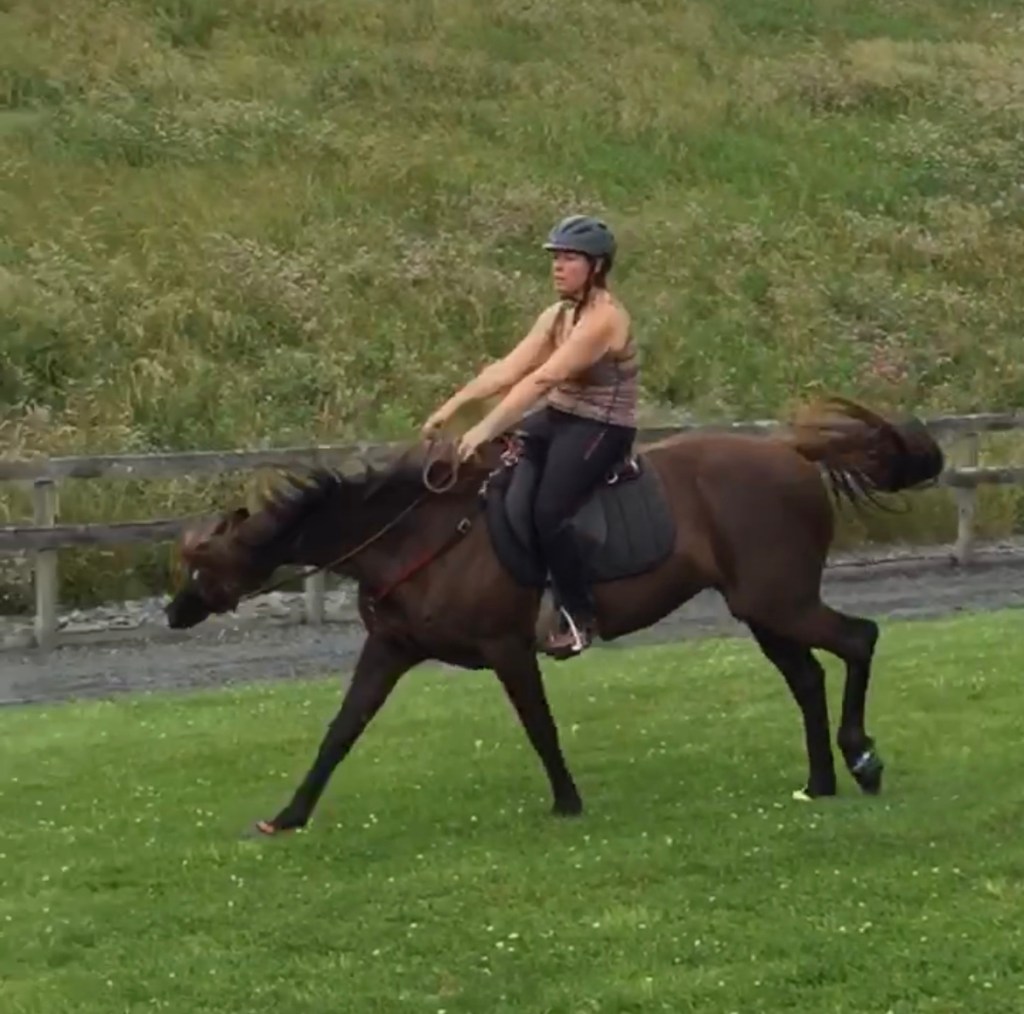
Moment of disconnect where the work I was trying to do was not working for K on any level. Many things were going wrong here but if this is what a canter depart looks like it will not be balanced and strong! From 2018.
This potentially creates long term mental, emotional and physical wear. Eventually it will reveal damage that gets pressed under the surface until either the duct tape is pulled off or it just cannot hold together anymore and that “out of nowhere” blow up comes or the injury makes it way to the surface and is forced to be dealt with. I am increasingly astounded at the amount of things going on beneath the visible surface of the horse (in my own herd) both physically and emotionally that we will not see (if we don’t make the effort) often because they will hide it especially if they do not feel safe. When we do finally see it arrive at the surface is much more deeply rooted and harder to heal.
What is also very clear in my observation is that everyone I know that has horses loves and cares for them very much. Not one of them is intentionally being abusive or making a decision to cause them deep rooted harm. Every one of them is doing their horse program the way they were taught by someone else who had been taught by someone else and so it goes.
Ironically I have found the same people who tell me that horses are not intelligent enough to make good choices, partner with us on a willing level, saying they must be completely controlled at all times in order to be safe also will tell me the horse is taking advantage of them or premeditating bad behavior. This is an odd disconnect. You can’t have a dumb animal incapable of deep emotions or the ability to make good choices also be an intelligent creature who premeditates bad choices in order to get out of work, faking injury, or the complexity that comes along with taking advantage of us.
So with this background that’s had me thinking. I will pause and post this precursor to the experiences I had digging deeper into my own herd, and some of the surprising revelations that make sense out of some lingering patterns I haven’t previously had answers for.
In part 2 I will begin with what Wyoming had to say….
If I would have known this would have happened, I probably would not have made the trip.
I stopped for gas two hours in on a three hour trailer haul. It was June 1 and the morning was getting hot the farther I got from the mountains. I half didn’t want to know, but I also needed to know. I had to open the trailer door (front door) to get a look. What I saw didn’t exactly surprise me, but for the first time in my own horse owner journey I very seriously began asking what happens if she doesn’t make it. I mean it’s a very large creature to pull up to your destination and have the life gone and to figure out how to move her and more importantly… where?
I was looking at a healthy Khaleesi maneuvering her head around to get a better view to determine if we were there yet but otherwise completely fine, and next to her was Hope. She was covered in sweat, standing at odd angles with her back legs apart and front feet together making a kind of awkward triangle. Her neck wasn’t exactly resting lifeless on the chest bar, but it hung pretty low. Eyes so dull I could get no response from them. She was still breathing. But aside from that this was very, very concerning.
This trip could be the end of her.
I shouldn’t have brought her.
No. If we didn’t come the next step probably was going to be dig a hole, it was only a matter of time. I had to get her to someone who could really help her.
At this point turning around was not an option, so when I got back in the truck I sent a message to my HH partner Brandea and Hope’s half owner Iva- both women of powerful prayer- and I let them know I’ve never been so concerned for the life of a horse and if they could pray for her now that would be great.
They did.
The temperature continued to climb into the high 80s and I tried to think of about anything else as I kept going North on 81 to 66. The distance seemed to stretch on forever. Would we ever arrive? And when we did what would I find?
I knew she was sick and I knew this ride would be hard on her, but it’s a good thing I didn’t know exactly how hard because any sane person might have made the call not to do it.
Hope in the field in SC after a 4th rejection
If I would have known this would have happened, I probably would not have made the trip.
As I wrote that opening line I realized that though it was true for the trip to True North Veterinary Services in Northern Virginia, it was also true for the trip that brought the sweet little mare home to VA in the first place.
I was looking for a new addition to my herd two years back and Brandea told me about Hope (then named Sugar- she was in South Carolina… the land of sweet tea and lots and lots of sugar…) she seemed like a good fit. She had a kind face but one that carried a lot of trouble under her eyes. Her story was vague, somewhere after she was born and started and maybe loved she ended up at a rescue. The rescue adopted her out… twice… she was returned both times before she ended up a prospect for Western style kid lessons at a boarding facility.
They also saw a kind face and a nice quarter horse that seemed calm and willing. Apparently she had a marble streak in her that refused to do the work (I can tell you why she refused considering the kind of pain she was in though no one saw it) and she was kicked out of both the kids and the teen programs and then dumped for the time being in the pasture until they could figure out what to do with her next.
That’s where Brandea saw her and had a sense there was something of value inside of Hope, she needed someone who could help to call it out. Brandea has a gift for hidden treasure in many forms.
I realize that every one of my horses has been chosen for their value not so much of what they could “do” for me, but what they could teach me. Actually, I just realized that as I write this.
Khaleesi I chose as a feral 4-year old because I wanted to learn to start a horse from zero and it was a bonus that she was 4 and had almost never been touched.
Wyoming came a BLM wild mustang with minimal training (enough to gentle her and get her started) and I wanted to learn horse language from a native, that is exactly why I got her. To teach me “equine”.
Hope had been chosen because I have not worked with shut down horses. I wanted to learn what to do with a horse whose lived under humans who have created a situation where the horse withdraws and goes inside to escape which usually happens for survival. I wanted to see if once the damage had been done, is there hope for drawing them back out. Could there be redemption? I hoped so. And when I loaded her on the trailer in South Carolina to join Khaleesi on the ride to Virginia her new name was strikingly clear: Redemption’s Hope.
If I knew just what was brewing in that sweet little horse it’s very likely, wisdom would have dictated I not make the trip.
In both cases, I’m glad I had just enough ignorance and optimism to move forward. That is my gifting. Ignorance and optimism.
God might have had a plan B for this sweet little mare, so I will not suggest that without me (and Brandea) she would not have lived or had a good life. Who knows, the plan B might have been even better than me! Regardless, I’m honored now to be chosen for her story, as twisted as it’s become, I’m glad I didn’t know before I picked her up. In the end it will be me who is the lucky one.
When I brought her home I noticed occasional mucous mostly if under stress, trailer ride across a few states or doing some trot work etc. But it wasn’t regularly enough to dig too deep, or that’s what my ignorance and optimism suggested. I thought maybe it was a new location allergen. She’d get over it.
We began to do some work to earn her trust. We began to encourage her to explore, to be curious, to interact. We would do things she wouldn’t expect like ride her on the buckle, no steering, only forward and let her go anywhere in the arena she wanted. One day we even let her out of the arena and she went all over the area exploring. She had a herd, a home, and we cared about her above what she could perform for us.
Gradually the mucous issue increased, and by summer there was also an occasional faint odor. When we had a vet come examine her there was no sign of the mucous or the odor the day she came. She did some chiropractic work (what we thought at the time was her biggest issue) and said otherwise she seemed healthy.
By early fall the mucous was steady enough to get a sample (though of course it didn’t present when the vet came and I had to take the sample the next day) and the odor was more noticeable. A lab report told us what bacteria was present and what antibiotics would kill them. We went ahead with a double length course of Exceed and it seemed to clear the issues up. But a few weeks later it all began to return. This process repeated three times with new antibiotics shown to kill the bugs, into the end of the year ending with an attempt at homeopathic remedies which also worked beautifully… until the issue returned… every time.
This was about it’s worst in December 2021
I knew there was a deeper root cause we weren’t addressing by now and was at a loss where to go next.
I began with a more “hospital” approach that was recommended and talked to folks at both VA Tech and a (somewhat) local equine veterinary clinic that has equipment and facilities of a large animal vet set up for most anything they might need to do diagnostics to treatment to surgical. The next approach seemed to the professionals to be a scoping of her guttural pouches and a flushing of the system. The best guess was the infection wasn’t really clearing because it was likely too deep and needed to be flushed. No antibiotics are getting to the root of it.
That was going to be invasive and expensive but even more it was right around the holidays of Christmas and New Year, also our weather for travel gets really sketchy in January. Something did not feel right about setting that up and I sat on it.
I thought it was worth talking to my neuromuscular equine dentist first, but that’s not simple either because she comes up from South Carolina. Actually for some regulatory reason it’s almost impossible for someone with her skills to have a home base in VA. Reminds me of when I had to get my diesel Jetta from Washington State when I lived in CA. I ended up using biodiesel and using zero oil and was polluting the environment less than the Prius owners who got incentives and HOV lane stickers. I was penalized. Government intrusion and regulation from lobby groups has never stopped me from doing what I think is right and that’s still true today… I digress.
I would go without dental work before I would have a “normal float” done on any of my horses again. Especially now that we’ve worked for 4 years to get their mouths balanced, their TMJ functioning again, and their jaw working how it’s supposed to. That’s a whole other blog. Oh wait… I already wrote it.. Here’s a link! https://drawingboardlessons.wordpress.com/2019/01/13/whats-in-a-dentist/
My dentist is also in equine osteopath school, she saw Hope just weeks after I brought her home and as usual with a horse of this age who had “normal” dentistry for years, there just isn’t much she can do to help her until she erupts enough new tooth. This rehab process of the jaw, TMJ, and skull that balance with the teeth can take years because it depends on having enough tooth to work with and most equine dentist take off a lot of tooth to address what they see as pathology (waves, hooks etc). She made lots of notes on Hope, but adjusted very little the first visit waiting for a year when she could help her more. When I asked for help said she would try to find a way to connect with me to look at Hope (I thought a root cause could be in her teeth, but she didn’t seem to have anything obvious like a broken tooth or acute pain), however she suggested I was within driving distance from the best equine osteopath she knows. I might consider going right to her, she understands the jaw and teeth and can do good work in the mouth, but also she’s going to have the skills to take care of many other problems as well.
I took the information and continued to sit on it. I was working on if I could get my dentist to us or Hope to her somehow and that took weeks to hem and haw over. Today I wish I would have just called to schedule with Dr. Hancock sooner, but within driving distance is a three hour trailer ride, and the dollar signs and time commitment were both a factor. She didn’t seem to be getting any worse, or any better.
Finally the day came in spring when I felt like worse was becoming a pattern and I sat in my car after feeding one morning and prayed: God, I know you want to heal this horse. You haven’t done it yet, so I’m sure I’m missing something. Can you tell me what you want me to do next?
As if from heaven but only in my head it was about as booming as one could get:
CALL THE NUMBER, I GOT IT TO YOU MONTHS AGO.
I did just that, in that very minute actually, from my car, and that brought me to True North Equine Veterinary Services. From here I chatted with Stephanie Carter who has already been worth her weight in gold to me. She explained that they won’t schedule a visit with Dr. Hancock until they assess the diet for chronic cases. They want to be sure there isn’t an inflammatory diet issue that will mean the osteopath changes won’t be effective.
I already liked this approach, it was so different- it was exactly what I had been searching for and didn’t know how to find.
Stephanie did a dive into my current feeding program and found it over all really solid. I am whole food based and stay away from commercial mixed feeds of any sort. For years my horses are on 24/7 forage and their supplements (mostly minerals) come through a small amount of Coolstance and timothy or orchard hay pellets. That’s it. My horses don’t need and don’t get any alfalfa, any beet pulp, or any feed mixes. I stay away from things that tend to be GMO (soy, corn, beet, alfalfa) It’s super simple. I have had their pasture and hay analyzed in years past and have found a basic foundation from CA Trace minerals and I add a few extras: chia seeds, extra magnesium, occasional spirulina, vitamin E, and plain salt. It isn’t perfect, but it was keeping my already healthy horses in pretty good shape. However for Hope though Stephanie didn’t find sources of inflammation in the diet, she found the amount I was supplementing though probably fine for a normal healthy horse was not enough for one who came to me likely immune compromised, with a lingering chronic infection (creating inflammation), probably carrying heavy metals, and then taken down even farther with three rounds of serious antibiotics killing off her gut biome.
As I thought this all through, I realized I would have never deep dove into Khaleesi’s supplementation because as far as I can see she is healthy and thriving, but when we decided to send in a hair mineral test to get a better picture of what was actually getting through to Hope’s system, I added K too. Turns out Hope is carrying a high amount of aluminum which didn’t surprise either of us, and her nutrients indeed were not making it into the ideal range (we also found a high parasite load).
Khaleesi is overall doing well but her adrenal function was low which means she isn’t going to have a lot of quick energy. Now I can look into supporting this in a variety of ways before it shows up in ways I can see it on the outside. There were a few really minor things I can address to tweak her health into a more excellent place, especially supporting her more when she’s in harder work.
So we began with a few changes to Hope’s supplements to build up her system and a probiotic she’s had good luck with and then set the appointment for a few weeks out with Dr. Hancock.
I decided it would be plain stupid for me to take a two horse trailer three hours each way to see what I was told is one of the best osteopath vets around and not take two horses. So I loaded up both K and Hope. And this is where we pick up the story.
Thankfully when I (finally!) pulled into the satellite barn facility (not the main office) and met Dr. Hancock, I opened the front door to see her awake, alert, and … not dead. I cannot discount the value of a few praying warriors here because she should not have gotten BETTER in that last hour as the temperature continued to rise and her fatigue increased from the drive. But she offloaded without drama and walked over to eat some grass.
We began with Khaleesi who was in overall really good shape, but this is so cool to me: Dr. Hancock found a pattern that went from poll to hind by her sacrum that seemed like it had been in place a while that was off. She did light sedation, went into her rear end and adjusted a few things to put her into alignment. I believe the years back when I had a lot of trouble keeping her sound etc, that I also found was likely related to a saddle I was using, and also I have had years to learn about my own body and balance and how to improve, I think she was able to set right something that needed attention that hopefully I have in recent years made adjustments that will keep her in good balance going forward.
Meanwhile Hope had laid down in her stall and was out cold. Not dead, but exhausted.
We encouraged her to stand and Dr. Hancock did a very preliminary overview. Hope ate a little hay and we felt at least she wasn’t going to expire yet. So we talked over what to do and it was clear to both of us she was not getting back on the trailer. This was an unusual circumstance neither one of us had particularly planned for and we made the start of a plan.
Dr. Hancock would keep her and begin diagnostics to sort out the layers including X-rays and bloodwork, fecal testing, farrier visit and osteopath body work. Because Hope was so depleted, having her at her own barn would allow her to do it over time which would make it easier on Hope.
We planned for a 9 day stay and I left her there feeling unusually confident (I don’t trust a lot of people to care for my horses). Turns out that in that 9 days, though much was uncovered, there was more to go and we continued to extend it. In the end she spent a month with the True North folks and the rest of the “duct tape” as I call it with a horse that needs deep healing came off layer after layer.
This is interesting to me as I’ve observed it and talked to others who have been involved in deep rehab cases. The horse can put up a lot of inner protection to survive and people can add duct tape to keep them in work and things look not so bad. This horse has had very little work since coming to me. She’s had basically what would be necessary for rest and recovery, better nutrition than she likely has ever had in the past, turn out, a stable herd, shelter…
It’s not likely anything that we have addressed was a result of her time in my care, and yet I look back a year plus ago and anyone would have thought she was basically a horse that could use a little TLC and would be great. I have pictures of Iva trail riding around the property, her working in a local clinic, and we even took her camping one weekend at an endurance event though she didn’t compete she got to ride around the trails and be in ride camp with Khaleesi.
How did she go from not thriving to almost dead?
Stephanie and Dr. Hancock have seen some rehab cases in their time and Stephanie said to me in one conversation:
it means a lot when a horse trusts you enough to finally fall apart.
Writing that even now makes my eyes get all damp.
I saw this play out in recent years with Brandea and Molly. The Woman who sold Molly was certain she was ready to be competing in 25 mile distances and was expecting that was just what Brandea would do with her. Actually it’s exactly what Brandea had planned to do as well. It was only after we began to peel back a few obvious concerning layers that over time we learned that one reason she was “so fast” was because if she wasn’t rushing around she had so little balance she’d probably crash. What a ride. She went from a previous owner who was disappointed that this amazing horse wasn’t being competed within months to a vet visit where the small team who had assembled did some diagnostics and told Brandea the horse would barely be rideable in a pasture for a kid, she was finished. Neither story was true. That little Morgan mare has come through amazing transformation and Brandea has had to give up a lot to commit to what the horse needed and not what she wanted. But today she says it’s all worth it. She isn’t racing quite yet but she is in the physical shape where she could, and maybe soon her mental capacity will get there too!
When we want the truth, not only what we hope for (I sure hoped that Hope would be up for teaching some kids this summer, and doing some trail riding) but we really want to know the deep truth, it will come out. I think this horse hasn’t had a safe place to let that truth come out for many years. A place where her value was greater than what she could perform. Both Iva and I did everything we could to ensure she somehow knew that we valued her because she was “ours” and she was safe, and no matter what we were there to give her what she needed, not to get what we needed. And I’m not sure, but I think she had to know somehow as well that we wouldn’t be “afraid” of what was in there either. We could handle it.
I would like to add that Iva wanted in on this project without me ever inviting her. She asked if she could be a part owner of this little project horse. She wanted to try an endurance ride someday, even if it was only a limited distance ride. She would have loved to do some jumping (her own background) but in the least she would have been happy with some great trail riding. And yet this young woman of an unusual grace has been totally heart invested in Hope regardless of the fact that at the age she is now when she can still do some of this, she’s sacrificed her own “dreams” because this horse symbolizes to her a giving back to all the lesson horses that gave to her in her teenage years. It’s a maturity level I rarely see in any adult forget one just passed 20.
And so, over time we began to peel back some of the duct tape and allow her to fall apart and she began, very slowly to trust us with that process too. And it has taken a professional experienced staff a month to find all the pieces and help sort them out.
I think the pieces are basically in place, but there is much to still do to have a strong thriving horse come out of this.
I am grateful for the return of Hope.
No. My summer at Hope Horsemanship does not look at all like I’d planned. And probably if I knew how much expense and time and effort would go into bringing this creature back to a fullness of life, I might have not made the trip. But as the staff told me in an update email a few weeks ago:
Hope is why we do this, to see her slowly coming around and looking more alert and even younger by the day has been encouraging to watch. She is such a sweet mare, we all love her and are so glad she is getting another chance.
She needs daily rehab, not intensive, but there are things that her body just doesn’t believe yet are possible, like she doesn’t have to hold her chest muscles like tight little balls to support her entire body and to avoid pain in her heels. We have a long term plan to help her with the last 10-20% of healing. Sometimes that final stretch takes the longest. But she will get there, and when she comes into strength, with no duct tape needed, her last years will be her best. And I and sure there is treasure in her. I cannot wait to see the beauty as it unfolds!
Epilogue
For those asking what was actually wrong with her, these are the details:
An Xray of her skull showed a place where lower teeth were creating pressure into the upper teeth just enough to create a constant pressure abscess. This was where the inflammation and constant sinus infection was coming from and she relieved the pressure which began the healing of that.
She had other issues as well relating to balance and being able to pick up her feet. The first year I had her we kept shoes on her, but in December I had them pulled and with her not in work I thought barefoot was fine. Though radiographs of her feet show no serious changes it is likely she has some soft tissue damage in the heel causing pain which is what contributed to her chest being so tight from having to hold herself in a way to alleviate the pain in her feet. This had gotten so bad over time that it was difficult to get her feet picked up at all to even trim them and her heels were slightly long which made it all worse.
Dr. Hancock had to do a nerve block on the feet just to get them trimmed, and then they had to wait a few weeks in the rehab process to try again at getting a heel relief shoe on her because she would not stand long enough with her foot picked up to get a shoe on- even by a top professional who is apparently “very fast”.
They ran tests for both Lymes and EPM. The lymes was negative but the EPM had low but present titers. She is on a treatment protocol that as far as I understand goes through the immune system to get rid of the protozoa that remains. It’s hard to know how long she’s carried the EPM, but we had always noticed she had a tendency to trip and not have a good feel for the ground under her feet.
Since we brought her home in December 2020 we noticed her entire body was very hard. Her neck was like stones, her spine had a roach hump very noticeable and her hind end “didn’t exist” to her. Her chest has always been pretty tight and her TMJ is not properly functioning either. We had some chiropractic work and myofacial body work done last year hoping to help her come right through her body and I’m sure it was positive, but the month long gradual changes Dr. Hancock was able to do has completely changed her body. Her neck is not a solid chain of rocks anymore and she can bend it in both directions pretty freely (this is in itself a miracle to me!). Her roach spine began changing even last year to relax as she began to release the tight ball that was her body even in increments.
I cannot discount the part her mouth has played in all of this the more I learn. First my dentist noticed last year that her mouth was basically in the same shape as her spine. Yikes. She did what she could with the tooth matter she had to work with, and we watched the spine stretch and come down over months. However the teeth being able to meet in the jaw is key for the feet to be able to feel the ground properly. Apparently humans and horses cannot really walk a straight line if their teeth cannot meet in their jaw. Also there is a fascinating interview where Dr. Hancock talks to Wendy Murdock about how the jaw in a horse almost acts like a third pair of legs the horse balances on. If that system is out of whack lots of issues show up in the rest of the body. (Video Link Here: Webinars with Wendy)
It is certain that Hope has had problems in her mouth— the biggest being the pressure in one place creating an abscess and inflammation. I wonder if some of the balance issues and tripping she’s had connect to her not being able to have a properly functioning jaw, TMJ, and in the end skull. It’s stunning to me what whole horse problems can have a root in a dysfunctional skull, jaw or TMJ. And yet we cannot see any of that from the outside, and most people don’t look at a horse with stifle issues or a small grade lameness and say: hm, it looks like the TMJ is stuck and thus the hind legs cannot function properly.
No ones says that.
More commonly they inject the joints, or give you a protocol for backing up hills, if they are really good they might look at the saddle to see if there’s atrophy or impinging that make the hind unable to function fully creating a movement that will over time create damage.
This is why I’m so grateful to have found someone who is really looking at the whole horse from incisor angle to the tail placement. A team who started with the diet before trying to fix the acute issues that were visible on the outer layer.
I am not glad that Redemption’s Hope had to go through all this healing. It’s expensive and time consuming for me, and I’m sure even the healing process is somewhat painful as she gets better for her. However, I know that connecting with this team and learning what I did is a vital piece of Hope Horsemanship from now on out.
And I thank them for all they did over and above what was professional, to invest in her wholeness.
I ran into a friend recently who asked: are you riding a lot lately? I had to answer honestly: no. Oddly I felt like I had to clarify the answer to explain, I’ve been spending a fair amount of time with the horses, but no… I’m not riding.
I have pressed into a season where Khaleesi is getting some rest (MENTAL), Wyoming as I mentioned recently is in “restart” mode once again (EMOTIONAL), and Hope has had a bacterial infection that seems to be resurging leaving Iva and I sensing she needs to have some down time to heal (PHYSICAL).
Wyoming in the penHope in the field
Horses have three major systems and it seems like I have all of them operating slightly out of balance in some form in the HH herd. What a neat opportunity, and a perfect time (early winter) to step back and ask: what can I learn from all this?
In years past I would have been bemoaning having 3 horses and none of them in a riding state at the moment, but today I see opportunity.
In my last blog I recounted Wyoming’s highlight reel and I continue to press in creating relationship with her. I have always believed that the challenges I have with Wyoming would make me a better horsewoman, and what I learned with her would bring me improvement in my already solid relationship with K. Today I wonder if in fact, maybe I have that backward.
Khaleesi is the favored one. The chosen. She is the mare I cut my teeth on what it’s like to start a horse from almost untouched. She and I have grown together from not being able to lay a hand on her to competing in 50 mile distances. On our best days I can think things and she does them while riding. She is a stunning creature of strength and balance with a good mind. I appreciate her input and try to at least take her suggestions as a factor as we work together- often she has very good ones. We’ve been in some pretty tight situations over our years together, and I trust her with my life. Yet the more I examine our connection- which is pretty solid- I realize it’s much more like a business partnership than that deep thing I long for.
In this season of giving her some down time to (you can read about this in my last greento100 blog “Rest Reset”) I only bring her in for more necessary things- which occasionally includes going in a pen to graze and hang out while I work with Wyoming. I can always “catch” my horses at least right now, but Khaleesi knows the difference when I communicate we have business and I’m haltering you versus I have something I’d like to do and am willing to have a conversation about it. When I offer more conversation, she has let me know recently that if I’m asking, then no, I’d prefer not to do whatever it is on your mind today thank you very much.
She isn’t rude about it. And I can insist and get it done. But it brings me back to the age-old question: doesn’t a horse always prefer to graze and be with the herd if given the choice?
Well, I have a little time this season. Maybe I can dig into this a little deeper. Maybe I can answer it at least for this horse.
And so I began a new experiment… without a tool of control (halter/lead) or a lure (hay pellets/treats) can I bring her into the pen and convince her to carry me around in there of her own choosing?
Can I go from a solid partnership – the illusion of choice – to a new layer of real choice where at any time she can disengage and leave without any adverse consequence?
I went out with the halter and no real plan… well that’s not true. The first day I had big plans. I cycled through plan A, plan B and plan C before I began to see the depth of the truth.
I had spent about an hour with the herd in the field, my curiosity at first would she choose for me to put on the halter? I was certain I could tell her that’s what we were doing and she would comply… but tolerating and choosing are not the same. She took the opportunity to kick up her heels and push the herd around the large field letting me know that her choice was not to work with me. So now I needed to begin trying to change her mind. I continued my human attempt at conversation with her where she would disengage with me but I would try again. Like unsuccessful courting… however her range of how far she would push the herd began to diminish until at least we were working in a smaller area.
I had danced my way clumsily into her space and began to get a real honest moment with her where she would go still and relax and accept me there – when she would turn toward me slightly and even take a step in and finally there was a moment where she would stand calmly and accept that it’s likely I’ve earned some right to her time after an hour of waiting her out I saw her give up and accept that this WAS going to happen…
And I stood next to her quietly and still, and then… walked away.
I did not even put the halter on her. This was not part of my plan at all.
I recently had a conversation with Katy Pistole who has a transformational approach to horses and humans where she reminded me: keep in mind that you must get away from seeing success or failure in an interaction with your horse based on their performance or what you “got done” in the session. I already believe this with my entire mind. My mental system concurs, but the truth is deep down I didn’t know HOW to live this out. What a strange thing it is to find out you are believing one thing in your mind but you can see the reality is that you don’t believe it in your depth of being.
I was ok with changing the goal post either direction as I sort out how things are going, but this was removing the goal post and the ball. What then are we doing out here?
And I knew: it would have looked to an outside eye like I walked around my field unable to catch my horse for an hour, apparently “gave up a failure” and yet something vitally important had occurred in that time.
Instead of answers I had even more questions.
How do I keep conversation with this horse going…I don’t have a lead rope, a halter, a stick, even a limited space pen where she doesn’t have 6 acres to leave into? Will she always walk away from me or ignore me without some way to connect us physically? How can I keep her interested in a connection with me with NO tool and NO lure (food)? Is this a stupid idea? What conversation should I even try to have? What are we even communicating about? Where can I get better equine language skills? I am not very non-verbal naturally – is there any hope for me?
And yet, I was willing to try. And on the next day a few changes had already occurred. First she never ran off at a trot from me, and though she has a huge field she stayed in a relatively small area. Her retreat zone was already smaller in perimeter than the previous day.
Also, she allowed me the space next to her much sooner and was relaxed about it, but I still felt more tolerated than welcomed. She gave me access to her “on” side where I normally would prefer to put on the halter sooner as well.
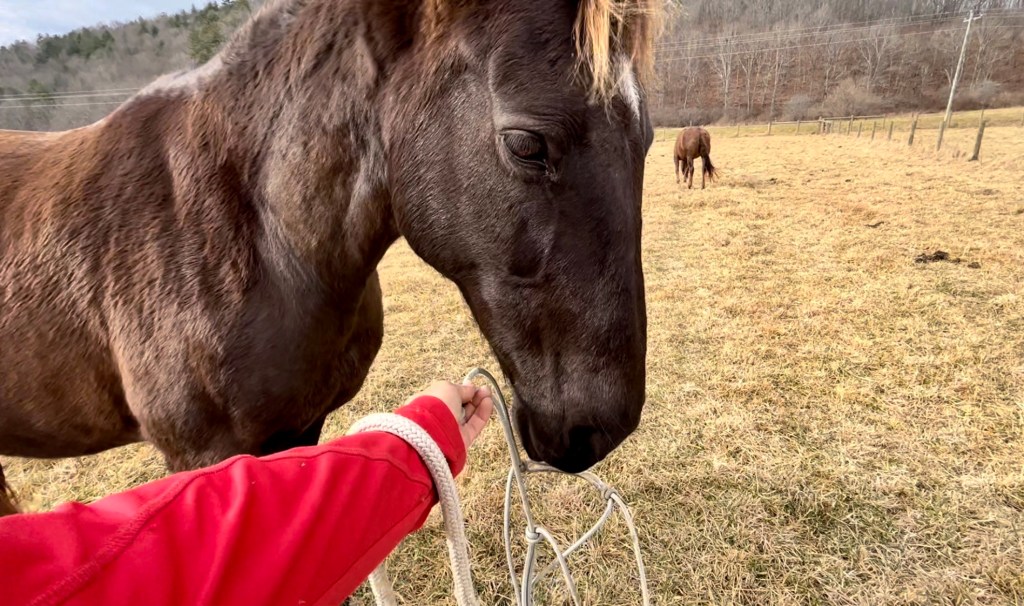
There came a point I considered quitting for the day. I had seen improvement, but I was coming up short in the conversation department. I didn’t know what else to do, so I found myself standing quietly near her, on the off side, mind wandering a bit as she grazed… what next? I got nothing. And just then, she took a step toward me and began to nibble on the halter almost as if to have me open it up. Which I did.
Then things got interesting.
She began exploring the halter, and when I’d offer it open to see if she wanted to put her nose in it she would turn slightly away.
Ok. So you want to talk about it, but aren’t looking to put your head in there quite yet.
Then I started to go off the map for me, and began change the conversation completely.
Let’s talk about the illusion of choice for a moment.
I have learned a fair amount of horsemanship that using concepts of training the horse. I have worked with shaping a desired behavior with pressure release horsemanship and also with positive reinforcement (clicker/treat) training.
In either branch of “training”, as K began to show interest in the halter I “should” reward her. Either by removing pressure/punishmentrelease (remove the halter when she shows interest and keep it steady there when she turns away from it) or by click/treatreward to encourage learning and conversation about the halter.
I have trained my horses to be pretty good at being haltered in both branches. I worked on asking her to lower her head into the halter with pressure-release as our foundation of horsemanship, and this summer I experimented with Positive Reinforcement (clicker/treat training or R+) and could take the halter out, stand a few feet away from the horse and if they knew it was “game time” the horse would walk over to me and put their head into the halter. Fun.
Today as I was having a truly honest and open conversation with my lead mare, I considered an option I have not tried before: when she turns toward me and the halter, offer it more; and when she turns away, let it go and release.
My brain began spinning as we experimented. This is essentially rewarding the horse for evading the halter. IF we are training or shaping behavior. What if there was another option? What if I really wanted to switch to trust, conversation, and freedom? If that were the case could I be rewarding her for an honest response? Now I’m in the weeds and I’m not quite sure the terrain. Yet deep down I know I want this relationship to be built on choice, but a really good illusion of choice seems to me the best we have in the other systems.
Pressure-release says to me You get to choose as long as you choose what I want you to choose!! Great job getting the answer right! I will release you, and when you do something super amazing I will reward you the highest reward I have: I will walk away and leave you in peace. And even though R+ puts the foundation of the work in choice… we don’t reward a horse for leaving us, walking away, or making a “wrong” choice. I like this game of learning approach for some things, but it becomes a bit of a problem when I run out of hay pellets. This system is better at choice because we find out when our own request/behavior is so undesirable to the horse they walk away even in the face of getting cookies. Also I do believe this system in the long run can make a horse feel pretty good about being with the human if done well, but there’s a gap after the cookies before the honesty really comes to the surface… and in the end neither are truly freedom and choice.
** Let me clarify I don’t think shaping and training are bad things. Probably they are even necessary — but are they limited to anyone who has the deep dream of more? Who wants to dance instead of train? Who wants the horse to operate as one with them together? Yes we can train horses to do those things but what we really want is partnership and in shaping and training only are we kidding ourselves by creating an illusion of what looks like total connection?**
This has bothered me at the core for a long time. Training by pressure-release and R+ are better than some old school methods of violence and force toward horses- yet there is something richer I keep feeling is missing.
I want deeper.
So the other day I took a plunge and decided to STOP shaping and training Khaleesi, and begin to build a different kind of relationship with her that could very well backfire on me completely at best, and depending on the horse, possible even become dangerous (not likely with K).
Back to the field experiment…
Khaleesi explored the halter with me on the off-side at first and if she turned her nose away I removed the halter and when she turned her nose back toward me I presented it again. I opened the noseband and she even began to put her nose slightly into it and then wiggle around.
Like someone trying to communicate in a totally foreign sign language I thought: she wants me to put this halter and lets go do something? Maybe she’s wondering where my leadership is and why I’m standing around like I have no plan? and so I began to bring the poll piece up over her head… and then she would remove herself and I always removed the halter and let her choose when to re engage.
We did this a couple times and then she zoned out, looked straight ahead and yawned and chewed and twisted her tongue practically in a loop as she considered the unexpected thing I was doing.
Next she offered to reposition me on the on-side. This whole conversation continued until I was offering the halter to her with my arm already raised and she could dip her nose through my arms into the halter with my arm over her neck ready to close the poll section over her head. She would lift her head up gently and I would release the poll section and let the halter drop down. She must have done this ten times to check and make sure I meant it. It was like she didn’t really believe that I would let her release herself even from when I had the poll section through the loop- at ANY MOMENT girl, you can say: no thank you.
This seemed to blow her mind. If I stepped back a moment she stepped closer to me. She wasn’t grazing, she was engaged in this conversation. Finally she stepped away and began to graze a moment. This was ok, it had been over an hour of field work and the last part of the conversation seemed really deep to me. It touched things in my own heart that I would need to process too. So I slowly stepped away and began to walk back to the barn.
As I looked back I saw she had taken a few more steps toward me and was still looking intently at me. I paused, I squatted down where I was and waited. After a few moments she crossed more than half the distance between us and then stopped again- intently watching me.
I waited a moment, and then walked over to her. She greeted me with her muzzle to my hand, and then she returned to grazing, and I walked off to the barn.
I have struggled with the idea of solid leadership versus listening to the horse and getting with the horse so that they can get with you. I’ve heard more times than I can count that if you don’t “be the boss” — or at least in a way I prefer to think of it “be a good leader” then you are both just going to be confused.
I think there is important truth in this. I do need to lead the conversation, however as I consider the greatest leader ever… the God who created the universe and the horse and me, I see that He tells us that great leadership is always in service. And we must serve in love. Love is patient, kind, does not demand it’s own way, is not arrogant, it is not frustrated, irritated or resentful… love rejoices in truth. Love bears all things. Love believes and hopes and endures.
Is it possible to lead a horse this way? Some parts are obvious. Leave your ego at the door and choose humility. We know patience is vital with horses. We know being mean, mad, annoyed or frustrated will kill our ability to work together with them. Everyone I know believes kindness is important… but, does not demand it’s own way?
If God is love… does HE NOT demand his way? Wait. Have I ever considered this as a truth? Doesn’t God actually demand we do things his way if we want to have relationship with him? Certainly he has a higher plan available if I will trust him. Just like I have a higher plan available to K if she would trust me. Horses love to graze and be with the herd, but I also believe giving them purpose is good for them, and I’ve felt her come alive in race day and sink into deep consideration when we find new balance together in the arena. Things she can’t do on her own with the herd.
Now as I’m leaving the field my analytical mind begins clicking new gears. God doesn’t just love the world, God IS love. And then God gives us the definition of love in the famous love chapter (1 Corinthians 13). If these things are true about love… then they HAVE to be true about the character of God himself!
Khaleesi will do just about anything and pretty willingly, but there is a part of her that she holds back. I do not have her heart, her complete trust, her spirit (or soul.. whichever is the inner being of an animal which is different from a human). We are a strong business partnership, but we lack the intimacy of a deeper connection.
She is my mirror. The hang up as I gaze into that mirror in the field this week is that I also lack trust in intimacy. To be clear- we are not called to deep intimacy in all our relationships, but there is a calling from the heart of the creator of the universe to us to let him in- all the way in- to the deepest part of ourselves… and yet it takes time and trust to get there and intimacy cannot be forced, it must be given. Similarly Khaleesi will have to choose if I am worthy of that deeper layer of her freedom, and I will have to prove my own heart of love for her.
Maybe this creature, this gift from the creator will help me understand and change that in a way that is healing in my own heart. Maybe HE is trying to tell me something, about how I hold back layers from his own heart of love. Probably there are changes in me that must happen before Khaleesi will sense the security and worthiness in me.
The story is not finished yet. I don’t know if I’m on a ridiculous useless tangent or on the road to something magical. I’m going to take a chance and see where the path leads.
Khaleesi was the first horse I started. She was what I’d consider basically feral. She was intentionally bred then born on a massive mountain property and handled minimally spending her first four year running with a large herd. I thought she would be the perfect project for me- a horse without a lot of human influence. After enjoying that process and the things I learned from it I was inspired by my past (living in the west) to the plight of the wild horses and was inspired to adopt a mustang. I wanted to do one small part to help the overwhelming issue of unwanted wild horses, and I knew a native equine would teach me even deeper layers of horsemanship. I had met a couple other mustangs in recent years that were fine horses with great connection to their humans and so I looked into finding one of my own.
The night I met Wyoming after a long drive to TN
Wyoming (then called Wild Heart) was in the TIP (Trainer Incentive Program) and so was supposed to have a solid start and good foundation and only needed some finishing miles. Somehow I had enough sense to realize it would not be best for me to start with an unhandled wild horse after only one experience in colt starting. Lets begin with one that has a good foundation-
I think I can take that on. I thought.
I had no idea what was to come.
Over the few years I’ve had Wyoming I have seen “success” in moving forward and then always sideways and backward in progress. I won’t attempt in this post to cover all the layers of our time together and my journey as a horsewoman. There were significant holes in her foundation, I’m certain some trauma I will never know, and there were plenty of shortcomings in my own communication skills and observational accuracy.
And so here we are beginning once again as I have a few times in the past. Another opportunity to learn from this mare, a horse of lifetime… I hope… because I can’t imagine having another one this challenging for me to uncover what she needs to become my partner.
I think this is the third time I’ve taken time off to re-evaluate and begin again. The first pause was for over a year where I left her with the herd for the most part and didn’t ask much of her except good manners. She is a friendly mare and enjoys to be close (sometimes too close) and I had hands on her regularly but didn’t do anything that would require more than basic cooperation. This first break came on the heels of working with a friend who was interested in the mustang project as well. If the fit was right the mare could eventually become her horse, but for the start we’d share the responsibility and work together. I was committed to her for life regardless how things went.
We brought her home and began some simple ground work sessions to get to know each other, introduced her to her herd, did some ponying on trail, and in a few weeks got her under saddle (she had been started and ridden by her TIP trainer) and began to move forward in a slow but steady way that normally would have built confidence and trust.
Things progressed at first, then after a certain point she began to refuse to go out. We checked saddle fit, made sure we had a French link bit that wouldn’t be harsh, my friend was an experienced rider, we had her physically evaluated, we took her out with herd mates for confidence. Yet she would turn around on trail and get more and more forceful when we would press through… she began to rear up and crow hop and buck if we insisted. This wasn’t a ride through it and she’ll see it’s ok situation.
Both of us worked on various levels in as many creative ways as we could come up with, we added hand walking, sometimes I’d pony her for a time from the lead mare, (please don’t give me suggestions, I promise we put a LOT of thought and asked for ideas from trusted sources, and in the end- it always got worse, not better). Finally one day I hopped on her when she began her refusal as my friend was not feeling so confident and I have less fear (maybe less sense). She turned rodeo horse on the trail without a lot of room to maneuver. I was able to ride her straight up the mountain (no trail) but back toward the barn making life much harder than if she were to just continue on the nice trail as we’d asked. I worked her through trees and around rocks in an attempt to connect her feet and her brain, and she didn’t put me off, but she never changed- she never softened or come to me. She put up with it and then eventually we went on home. She wasn’t the right horse for my friend that was for sure, so we dissolved that partnership – and yet I wasn’t sure what to do to help her. She was beginning to get more frustrated and occasionally going into fight mode as we worked with her. Things were going backward, so she went into the field until I could figure out what to do that would change things for the better, not continue to make them worse. In the meanwhile a reset seemed like the best starting point.
It was in that time I renamed her. I told her one day in the field: you aren’t Wild Heart anymore – you belong here, you have a herd, a “family” and you don’t have to be wild anymore. You can trust this home for life. You are no longer fending for yourself, for resources, for a herd, for your life, for survival. You are “home” now. What do you want to be called? I was reminded where she came from… Wyoming. It had traces of heritage in it, but didn’t brand her with the “wild” streak which I’d like her to let go of in time. It seemed like a good name for her.
Wyoming it is.
We began again. I’d done some work with her, had a fabulous horsewoman come help me get her out of kindergarten in our ground work and begin to prepare to take a rider again. A crash course due to time limitations of restarting her, but at least helping me get more tools to help her in the process. I’d also been working on trailer loading (this has been a very long term process with mild success and failure). Christmas of 2019 I had a clear sense it was time to put on a saddle and try riding her again.
I began with some ground basics. Got some conversation sorted out and then got on her. It was a beautiful Christmas gift.
I only rode her for 20 minutes or so, in the front yard, but it was hopeful. She was willing to try, and no western show.
I continued the slow gradual work and eventually had some help from Emily Kemp once again in a spring clinic. I inherited a really great western saddle that suited our purposes better, and we were progressing together — building small steps toward her becoming a solid riding horse.
Eventually she was on the trail again, I was enjoying her though never truly confident she felt solid.
Once again, very gradually, things began to go sideways. First she would try to roll (while I was riding her on trail) and then she would be reluctant to leave the property, if I worked her in the yard she would stick her feet and not want to move. Eventually she would refuse to leave altogether and began to go western in the yard. I have limits to my riding skills, but in the bucking and rearing I sat through as calm as possible (I did not think she was trying to kill me, she was trying to communicate) it never got better.
During her trail riding season
Riding it out or even making her work harder to show her just walking along is much less effort- it didn’t help. She only escalated each week. And I became aware that though with other horses you can push through the sticky points, build their confidence and move forward, with this horse once she got to the “I can’t” she would eventually stop thinking completely and do anything to get out of whatever situation she felt was overwhelming her in increasing drama and volume until the “pressure” was removed. It wasn’t a choice anymore. It was like blind instinct, or raw emotion.
And yet. The horse seems to “like” me. She never seemed to want to hurt me (she absolutely could have), and she was always willing to try to work with me again. This mare was quite a puzzle, a lot of try in her and a desire to please, but a point gets crossed where she simple cannot do it anymore.
Everything continued to go sideways or backward and I used every creative thought process I had to help encourage her, build confidence, go back to fundamentals, try to go forward into a new challenge that might inspire her, more groundwork, less groundwork, lots of encouragement, more demands (she is incredibly intelligent and physically athletic and balanced so maybe she needed to be challenged to use her gifts more?). Everything had limited success… everything went sideways or backward by the second or third time.
Finally a barn move meant she had to be loaded up or left behind. I tried a larger stock trailer which was worse because of it’s unfamiliarity. In the end she loaded onto the small 2-horse we had worked on for at least a year or two. She’d had one semi-successful ride a few months back and then went backward not wanting to have to do that again… After an hour or so where she actually went under the chest bar and squeezed herself out through the front human door once (that was a terrifying moment for us all), I was able to hard wrap the lead rope to the chest bar and she stepped up to release herself and she was locked in for the short 7 minute drive up the road to her new home with the herd.
After this I decided to try to continue the trailer work with her to solidify that experience and build on it. Wrapping the lead line to the chest bar had worked to create a scenario where she pulled against herself and could release by coming forward. Let’s try that again. As so often happens with her, you can get it done once, but she’s had a week now to consider how she might change the outcome… and she did. She put all that mustang strength into pulling and as I stood there waiting for her to come forward and be able to release her – instead she bent the metal, broke out the chest bar which gave her another 3 feet of treeline which then put her outside the trailer (NOT GOOD) and rearing up. She tried to go sideways and hung herself over the upper door hinges and now was strung like a fish and the rope around the chest bar pulled tight enough to not want to come loose either.
My beloved sidekick Iva was watching from outside and had also been first witness to the mustang coming through the front door like toothpaste out of the tube a couple weeks before… stood calmly and said to me:
Jaime, this is not good.
Indeed.
I was able to loose the rope and free the mare. I had rope burns and she was basically unharmed, shockingly no one was seriously injured- except my trailer which did go in for some repairs after this session.
We returned to the field. I tied her to a tree while I reflected for a bit, and she stood quietly. I eventually set her loose and took a few months off to think.
What am I missing with her? Every success so far in working with her like I would any other horse has always gone backward over time. There were periods where much was going so well with us. She’s a fine mare… big personality, athletic, balanced, smart, responsive. When things are good they are really good…
One of my favorite riding sessions with Wyoming
Was her purpose in life to humble me and remind me how limited I am? Show me that in fact I have much less control than I ever thought over things? Maybe every puzzle does not have a solution? What is her purpose in my life?
I quietly reminded myself that I wanted a mustang to learn how to be a better horsewoman, and so regardless if she turned into a working riding horse or not, she is amazing at teaching me. The day I freed her from the trailer fiasco I was calm on the outside, knew to control my breathing and reaction, but deep down incredibly frustrated. In that moment I considered the term “breaking” a horse that many of us horsefolk have moved away from. And I asked myself, could I “break” this horse? and if I even thought I could… did I want to? Did I want her spirit broken if it meant I could control her? In this moment… frustrated as I was… was the closest I have ever come to wanting to break a horse’s will. And in the depth of my heart I knew… if I could do it… I would not.
I knew that day that I wanted Wyoming to be her vibrant, wild, beautiful self and I wanted to have a relationship with her, but regardless if I ever got her on a trailer or under saddle, I did not want to break her. Because that would break something in me in the process. Something neither one of us would be able to ever recover.
And after a couple months of down time to reset, I returned again this fall to the work… of learning how to work with this wild heart in a way that we could both live with.
So far my greatest teacher has been my mustang mare Wyoming. I’m a “goal oriented” type and tend to be good at moving forward toward progress. Of course our greatest strengths can also be our greatest weaknesses; with Khaleesi, this goal setting personality and refusal to quit the relentless march toward progress paid off. I started her with the very limited tools I had, and though it was a bit messy with holes here and there, today she is a fine partner and my go-anywhere trail companion and endurance horse.
However with Wyoming….
I have gone forward, sideways, backward and in circles with her and this has created much confusion for me. I can’t understand why it seems impossible to build on any kind of foundation with her. Each time I make a kind of breakthrough, at some point it goes sideways, and then often backward and I find myself in some negative momentum place farther back than I was before.
Of course along with this goal orienteering mindset comes stubbornness and refusal to give up so I tend to take complete failure as a minor set back. I lick my wounds and try again, willing to learn what it was in me or my approach that caused the crash. Each time I find opportunity to grow.
And with her… lots and lots… and lots of opportunities to grow.
I have had this mare riding miles on trails successfully (or so it seemed) only to have her eventually begin a habit of laying down on me that got so quick and subtle she’d outsmart me even when I was ready for it… she carried me along at a great walk and trot only to eventually start a bucking fit whenever I asked for the trot- of course I did all I could to rule out pain or physical issues – I found the way I was asking (which was mostly with my energy!) was apparently offensive to her sensitive mare system. I began to have great success loading her on the trailer until she broke two welds on my butt bar and chest bar- once she went underneath the chest bar to exit the front human door in order to escape the pressure she felt.
Well meaning friends when they hear some of the stories helpful suggest things that… Yes. I’ve tried that… is probably the answer.
Is she aggressive and dangerous someone asked of her recently?
No- actually she’s about the friendliest horse I have and she loves to interact. She wants a job, just apparently not a job that I’d like to see her engage in! She’s like the brilliant kid who wants to play and design video games when I’d like to see her just engage in some kind of standard boring gainful employment. Regardless, the truth is I adore her. She’s beautiful, bright and friendly, and surprisingly willing.
Yes. Willing- despite all I’ve said I think it’s her willingness to try that might be the downfall. I can see her want to try, but something in her eventually just can’t. And then we get into trouble. Once the pressure builds… the expression of it can be… wild.
I began to wonder if the murmuring peanut gallery might be right. What if I’ve refused in my natural relationship non-violent horse training attempts to simply get it done. I mean she is a horse right? There comes a point when the spoiled child has to comply, for everyone’s sake. Maybe I just refuse to close the deal with her. Like an irresponsible indulgent parent?
I decided that trailer loading and taking a ride up to a friends nearby farm to do a little fun work then come home would be the test. I was able to get this mare on the trailer (blood sweat and tears included) to move her, maybe it was time to build on this with a purpose- turn the trailer into the adventure box! Not just an exercise.
If I look back on how well riding out the bucking to go on a trail ride worked for me (I’m not afraid of her, she isn’t trying to kill me… yet the bucking did end up escalating to rearing and trying to bite at my foot when I ignored her, stayed calm and simply asked her to get over her concerns and go on the trail…Just riding her through it was not the best answer to that question.) ….. so if I were to l look back on how that closing the deal worked out for me with her in other situations I might have thought differently. But I am stubborn and somehow we both are going to have to learn.
The short of the story is we did not load the mare and go work at my friend’s property. I ended up with the second broken weld, terrible rope burns (yes gloves would have helped, I hate gloves) and thankfully though it seems she made it clear she would chose to the death rather than comply, the horse did not die, and if she hurt herself it seems nothing long term.
That day was a low point for me, but in a moment of slight danger to herself, me, and my trailer, I was certain of a few things now that I might have suspected before, but I knew them in that fleeting moment:
This horse was not ever going on this trailer by any kind of force. She’d only get on when she decided to on her own.
I hate the term “breaking” a horse… but if ever I was tempted to consider that breaking was necessary this might be the moment.
I wasn’t sure I could cross that line, but felt fairly certain if I wanted to I could not do it with this horse- I did not have the tools, and regardless if given the option she would die first.
Nothing that had worked for me with other horses was going to be the solution to working with this horse.
So. I released her from her precarious situation she’d gotten into. I calmly decided to accept failure for the moment and walked her back to the field and left her tied to a tree for a while giving me a chance to think and do some barn chores. She waited there mostly patiently and eventually when I had finished the things I needed to do, I set her loose.
What would I do with her I wasn’t sure, but even in this there must be some good. I was at ground zero. I had nothing to offer except surrender. Everything was on the table… shoot her? leave her as a pet? enjoy her antics as a pasture ornament? Get into liberty work? Learn the classic lesson of failure? There are just some things no amount of tenacity will solve?
Though I don’t need her to be a solid riding horse, I have seen she is not really a pasture pet. She isn’t looking for a life of early retirement. She’s too engaged. I just was missing it. Missing what?
Exactly.
As I thought, prayed, and talked this out with a friend I heard that still small voice reminding me of the well timed interview I’d just heard the day before. The interview I almost turned off because I found it to be a little too fringy. It was with a young woman who loves mustangs and had found success working with the ones hardest to gentle and train. She eventually went from wild horses to working with zebras and found them to be even more difficult to work with in traditional pressure release horsemanship. She explained that at least wild horses come from a domestic equine genetic line, zebras do not. She had to find a different way to get to both the zebras and the particularly challenging wild horses.
Maybe there was a reason that interview came at exactly this timing. Maybe the lady who can work with the mustangs other saw as ‘untrainable’ and undomesticated zebras had some things I might be open to hearing now.
So I began a dig into the world of positive reinforcement and it’s been quite a mind shift. I’ve only started dabbling and learning and I’m so far from being an expert I’m hesitant to even talk much about it yet. It feels like entering an alternate universe for me and one I’m not certain how to navigate, not certain how the world works, not certain how long to spend there, and not certain how to exist in both somehow. I don’t see myself leaving the pressure-release horsemanship system (negative reinforcement) completely– especially because horses use pressure release in their own language, and horses living alongside humans need to understand giving to pressure so we can work together for the horse and human’s best interest.
Yet there are things I’m beginning to seeing this alternate universe that are sucking me into a vortex that is all at once exciting, fun, and a little frightening. For today I can say the horses respond to it quickly, they have a lot of buy in, and I can see how giving them more choice is both scary to a control freak human like me, but empowering for them in a really beautiful way.
I woke up one morning recently with the whisper asking me: What makes you think if you allow them more choice they will choose not to partner with you? They are horses, they are looking to connect and partner…
And true enough, I’m already seeing them choose to do things I want them to do – better than my pressure release techniques ever worked. Wyoming is coming around a little slowly but she is definitely responding. Considering what we went through and the breech of trust I caused it’s a testament to her generous equine heart that she is still willing. And Khaleesi is eating it up literally — I can hardly work with any other horses without her trying to cut in and join the game for herself.
In fact when I go to the classroom my greatest struggle at the moment is not wanting to close any horse into the area so they get the total choice of leaving when they want to, but I have to close OUT the other horses because I can’t work them all at once and it’s like kids trying to break into the school room for their turn in class. It’s a little overwhelming actually.
I am seeing more and more opportunity and possibility each day with this and it’s engaging and invigorating work… it’s downright more FUN than any way I’ve worked horses before. I can see how it becomes a way of life, and the proponents of this “method” explain that it
Gets horses to learn how to learn and enjoy the process more.
Is a cleaner learning process for the horse to know when an answer is correct so they can learn more quickly with less frustration.
Associates the human/handler/rider with positive activities as opposed to just work.
Empowers the horse to have more control and choice which tends toward them offering more to the process and the rider, not less.
Creates better relationship for the long term (yes, at first the horse is excited for the treats or the food, but I’ve read that over time that association becomes greater than just reward but the time spend together is enjoyable for both and that deepens more than simply the food/reward which is a starting point)
It is way too soon for me to share advice or direction for someone else in this realm. I am certain I will find some pitfalls and I am trying to learn what I can so I fall into less of them. I don’t know if this is a helpful process for every human and every horse or if there are specific situations that will benefit more, but for the moment, just a few weeks of dabbling, my horses are changing. The changes are good, but also I find myself a little freaked out… by this alternate universe. The unknown.
Ironically I began this process for Wyoming, but it’s been K that has had the loudest response. I’ve come to the barn to find her standing in the classroom as if waiting for me. I’ve finished with her and given her an extra treat to end the session and 10 minutes later still found her waiting in the classroom for me. And she’s so quick to learn that I have struggled to keep up with her challenging her with new parameters and ideas.
Wyoming is smart, but she has needed (not surprisingly) to exercise the right to engage or disengage. I think this is the most important thing to her for now so she will work with me then decide to walk off and eat some grass. I don’t chase after her, I just watch her a while and wait. She always wanders back over and re-engages. This cycle will continue until I disengage and walk off putting my “tools” away. And ironically sometimes at this point Khaleesi is still waiting in the classroom!
Hope gets the least time though I still work with her. She is the most withdrawn and she will engage a minute or less and then stand deep in though processing. She will come out and re-engage, but I have to make the puzzle super easy to solve for now, she has little threshold for wrong answers or me changing parameters. She is more like the shy kid who needs a lot of confidence building with easy questions. If I shut her into the classroom and the other two walk off too far she can’t “stay” with me. She is incredibly herd bound for safety being the lowest and least confident horse. Finding a place she is comfortable, feels safe, and keeping the other horses nearby if they aren’t engaged can be tricky. I can see she won’t let down her guard and trust easily. Yet when I can find a way to work with her a few minutes at a time she responds and engages.
Each of them is unique. The more I work with horses, the more I see that though there may be answers that work more often than others, the real answer on how to connect is varied as the horses and humans creating the equation. The real answer truly is: it depends. Working in this universe gives me so much more feedback because they can walk away, so I have to find ways to help them be successful, not too challenged but not bored, and see if they have gone toward fear or stress (which shuts down learning) or can stay in curiosity mode.
With Khaleesi at the moment I am finding ways to apply the positive reinforcement to almost everything from haltering to standing while I tack up, while I mount at the block and even when I choose a trail she doesn’t want to go up… I can help sweeten the deal turning almost anything into a puzzle she begins to look at it differently.
I’ll keep you posted here as I play around with these concepts and let you know what I find. If you’ve used positive reinforcement training let me know how it’s going (or gone) and how it’s worked for you!