Tag: endurance horse

  • Death and Resurrection

    Death and Resurrection

    Everyone dies… but not everyone really lives.

    William Wallace

    As I pondered an appropriate title for this recap I thought it fitting that, on the road to Vermont, my husband stopped to pick up a Garmin Fenix Smartwatch for me as a birthday gift. Next time I might ask if they have a model named: Garmin Victory Lap, or a Garmin Nailed-it…

    Pair of Garmin Fenix Watches

    The Vermont 100 starting line had an eight month lead up from conception to reality — if you don’t count the nine years it took us to crest the first 100 mile finish line in 2023. This was clearly the biggest overall investment in a goal over my decade engaging in equine endurance events. 

    As the event drew near, I realized the larger the investment, the more pressure to produce a favorable outcome builds. What is the point of doing this if it isn’t to ride over the finish line? Most of us know on some level this is not the whole truth. Still, it is a struggle for the goal driven to not only believe there is more to life than a favorable outcome, but to live (and ride) in the peace that larger reality brings.

    I have been binge listening to Jaime & Donna Winship interviews  this year and they have been transformational in my life. The insight and questions have challenged me to up my game when it comes to walking in the truth, and it’s meant being real about what I want to believe, what I know in my head, and what is being lived out in my actions – revealed by my emotional system. I have come to realize, that regardless of what knowledge I have accumulated, my emotional system tells on me, and if I slow down and address it, like it or not, I will find what I really believe, and what I’m actually afraid of.

    I thought the Vermont trip was a test of what my horse was made of, what I was capable of, and if we had what it took to take on an unknown 100 mile ride, and succeed by crossing the finish line. I was probably wrong. 

    As the departure neared it seemed like the resistance grew. Vehicle issues, dog fights, horses escaping in a storm, an entire massive batch of dog food is ruined (this was a huge problem actually!), then bad traffic on our first day of travel leaving us sitting in unseasonably hot temperatures for over an hour— which is not ideal for a horse on her way to a 100 mile event. Each disruption gave me pause and as I wondered “what is this about?” I always heard the nudge: Keep going, do the next step until you don’t have one.

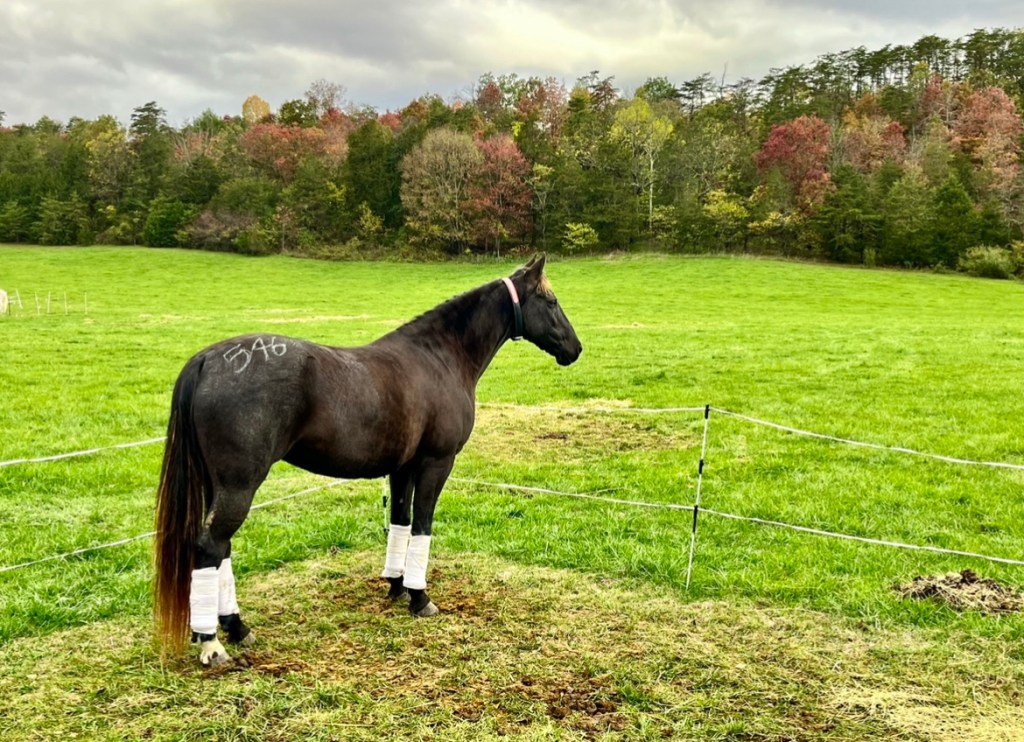
    Shady grass yard for Khaleesi in PA

    I am grateful for the warm welcome from Matt’s family at our layover in PA. Khaleesi had a lovely shaded back yard with grass where I set up her temporary pen, and we enjoyed family time with eggplant and cheesecake!

    The second day of travel brought new territory for both of us as we continued onward and on my birthday we arrived in Vermont— through dark clouds and a rain storm that gave way to a cool evening and stunning colors in the sky. We set up camp alone in the area set aside for smaller trailers, near the start and finish line. This evening I will always remember as a moment of beauty and quiet as we had the entire field to ourselves and the glory of Vermont stretched out on all sides of us. 

    We had arrived.
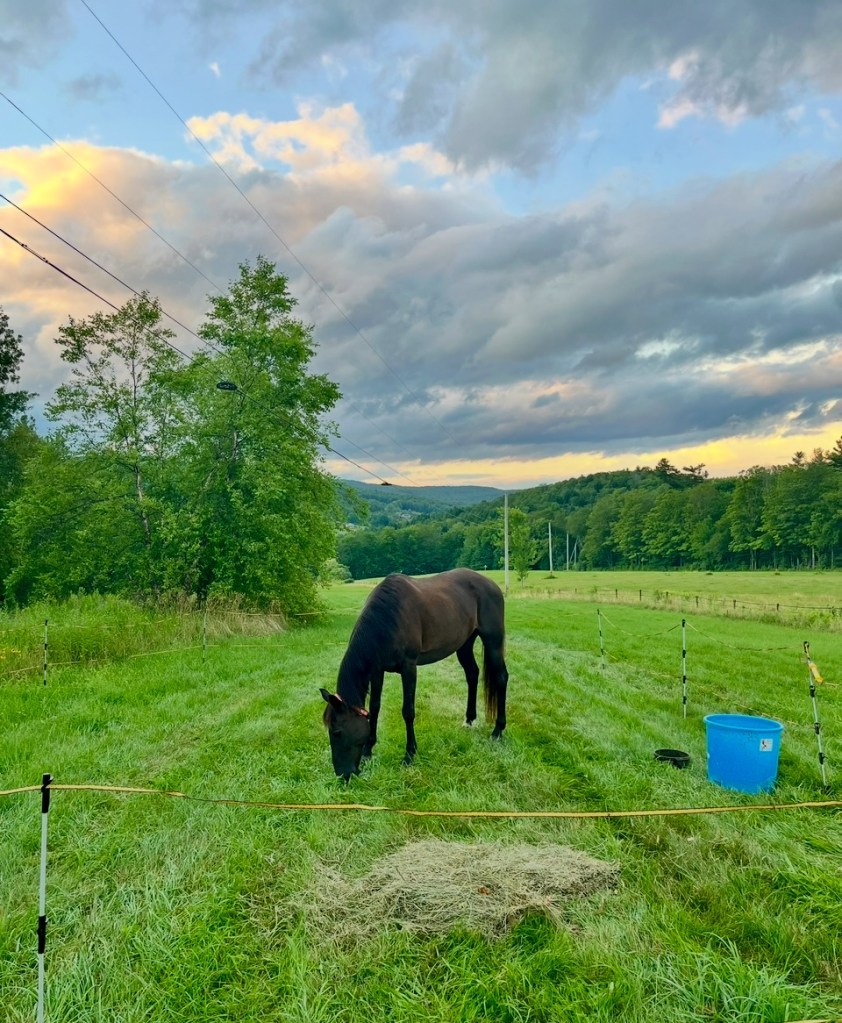
    Ride camp Thursday evening after the storm

    We woke up to cool breezes and peeking out the tent we watched the grasses dance in the early light. It was sublime and Matt and I took a moment to take in the glory of the last moments of peace and calm we may have for a while. Check in and Vetting in was not available until Friday afternoon, so we puttered about with details, and found a delightful little market and cafe with home made bagels and much needed ice. Camp began to bustle through the day as 450 runners came and went to register for the foot race that would share the trail with us horse riders. When the time came, we checked in with the ride management, then took horse #109 (that’s Khaleesi) to the pre-ride vet inspection. 

    This is where things began to get disruptive again. K had a resting heart rate of 36BPM which is excellent, and her hydration and overall condition earned A scores. The head vet saw something slightly off in her trot out and asked us to try again. We did. He still thought something was questionable and asked us to trot a third time and included another vet to watch. Not enough to hinder us, but enough to plant a seed of doubt, they marked her card with a “B” and suggested I stay aware of the potential something might be off. 

    Checking out the starting line the day before the race.

    This is not what you want to hear the day before you embark on a single-day 100 mile endurance race. 

    I mulled over what it could mean. We visited the ride farrier, Howard, who became a new friend! Marcus had warned that her feet were getting soft from such a wet summer, and I wanted to have her nails clenched in case they were getting loose. Howard chatted with us freely in his Scottish lilt as he checked all four feet and added one nail for good measure in a weak spot. He was a positive and kind guy, and didn’t charge us for the time he spent checking the nails. He wished us the best and promised he’d keep his eye out for us through the day. 

    Still, I had concerns. 

    It clouded my evening. I was nervous. Do I go out with concerns? Once again I asked the question: what should I know, what do I do about it? And I sensed the reply so clearly: You do the next thing you know to do, until there is no next thing

    We spent some time looking up references for #109 and I held onto the words from Joshua 1:09 that reminded me to have courage and do not fear because God goes with you. Ok then. We show up to the starting line, and we go. We do the next thing until there isn’t a next thing to do.

    The runners leave at 4am, and what an experience that was! They line up and hundreds of headlamps jog under the starting line turning up the dirt lane past our camp site with cheers and cowbells. Khaleesi was beside herself with the experience! A line of cheering mass in the dark with headlamps bouncing to and fro. She had never seen anything like it. I had been warned of this and she was walking on lead with me when they departed and it took a moment to get her settled back down. 
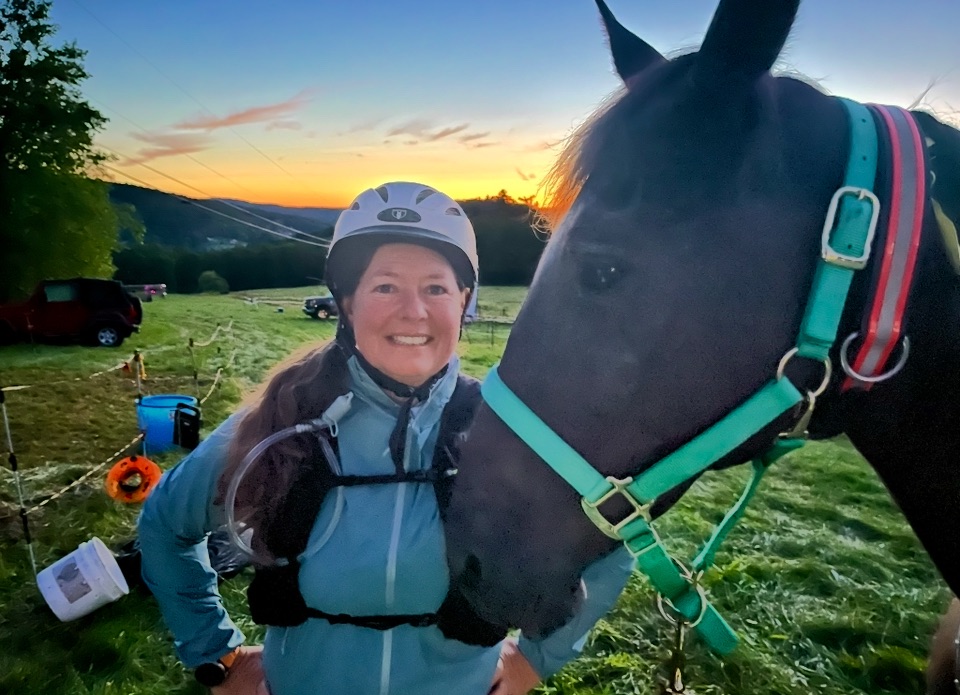
    Before the start

    The trail opened for horses an hour later, and the eleven, 100-mile equine competitors left camp with my mind on the only problem I thought I was facing: would I end up with a lameness issue today? The trail is monstrously hilly from go. The exit from camp is significantly downhill on a gravel road. I had been walking Khaleesi around camp for 15 minutes, but she was not adequately warmed up for these hills and to make matters more concerning, her adrenaline was way up. Her head was in the air like a llama, and her trot felt like a jackhammer. If I had reason to be concerned she might hurt herself, the tension she was packing along with us trying to race at a high speed in the cool pre-dawn was not helping. 

    I unloaded all my tools to bring her mind back to the present and not run as if for her very survival with the other horses. I was mostly unsuccessful in getting her to relax into the work and had to negotiate with her the best I could. It is common for her to run faster in the morning and I work with her to find a good speed where she is moving freely and soft through her body. Considering the morning was cooler than it had been and her adrenaline was up- I now also worried about potential tie up. Tie up is somewhat mysterious, but the root is usually associated with a horse over running their ability through adrenaline and going into a metabolic state that can be dangerous. This is not something I have worried about with this horse previously, but something about this morning had her running on more adrenaline than I’ve seen. 

    It took almost 30 minutes to get a more relaxed mental state. We rode on this way for a few miles, now in last place, but I have been there many times and wasn’t concerned. She had leveled out, was trotting beautifully, strong, and relaxed.  We may cross the finish line last, but a finish was my goal. We had launched past the danger zone and were well on our way to the first checkpoint at mile 16. This was not a true vet hold, but a 10 minute pass through where the vet gave a quick look as you departed to make sure all systems appeared to be sound.

    It was about mile 13 when the unraveling began.

    Flying along with a beautiful balanced trot I was enjoying the early morning and greeting the runners we passed, when things went into slow motion. First I felt my left foot was not catch the stirrup bar. Then I realized I was coming off balance and wasn’t able to recover. I reached around Khaleesi’s neck and when it was clear I was going down, I swung myself around her neck and landed on the ground in front of her. She was aware something went wrong and when I landed at her feet she came to a stop above me. I remember my calves both going into a tension spasm, but otherwise I was perfectly fine and so was she. How embarrassing, I thought, and assured the runners who had witnessed the crash that I was totally fine. Next I saw my left stirrup and it’s leather on the ground and realized I hadn’t simply come unbalanced in a poor riding moment, the stirrup had come off the saddle. 

    My hope as I stood up, was the leather had simply worked its way off the bar it attaches to. The truth was worse. The metal bar itself had sheared off and there was nothing on the saddle to reattach the left stirrup.
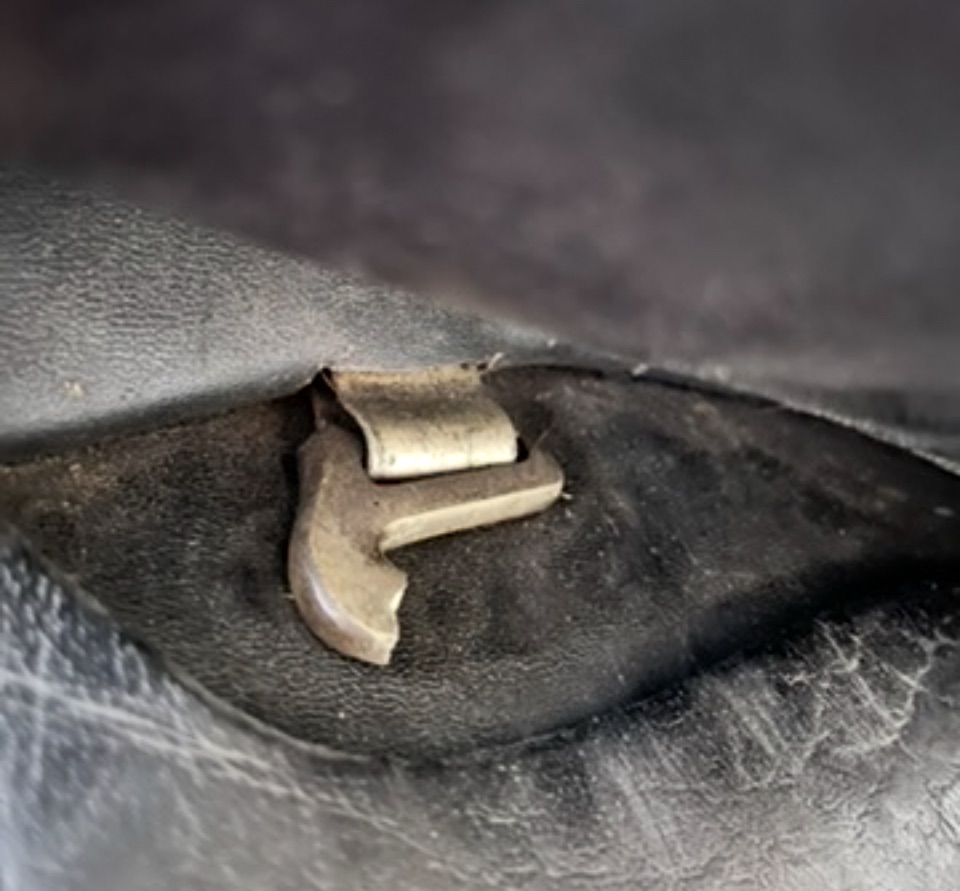
    Broken metal stirrup bar

    I had not planned for this.

    In all the potential things that could go wrong. This was not one of the things I had even considered. 

    I began walking next to K, carrying the stirrup leather in hand and wondered: is this the end for us? Already only 13 miles in? Can we recover? 

    Again I heard the reminder: do what comes next, until you cannot make another move. Do the next thing. Keep moving.

    Service in this area of Vermont is notoriously horrible, but miraculously both Matt (already waiting at the checkpoint) and I (three miles out) had service. The only thing I could think was to try my alternate saddle. However, there were issues:

    • 1) the saddle was in the horse trailer at ride camp. Ride camp (I learned then) was 30-35 minutes away from the check point by vehicle. At least an hour round trip.
    • 2) the alternate saddle was the exact make and model, but it was a “regular” width. The saddle that I was using that fits her properly with the ideal pad set up is an “X” or a wide width. 

    The broken piece of metal would cost us around an hour, and it would mean riding in a saddle that was not the right size. An analogy would be if I had two pairs of identical shoes, the ones that work best for me a size 9, and the other pair a size 8.5. In this example we could say I wear the size 9 with thick socks that help protect my feet from blisters and give the comfort I need to run at my best. If I have to switch to the size 8.5, I will have to use thin socks with less protection and will not be as comfortable running. 

    I walked the three miles into the pit stop and chatted with the vet and land owners while waiting around 30 more minutes for Matt to return with the saddle. We changed the saddle quickly as possible, and trotted down the hill with a green light from the vet to meet everyone at the first vet hold at mile 22. 

    My first go with the other saddle I had left too much padding and had to stop and get off twice to adjust as the pads, but we moved as fast as we could and arrived at Vet Check 1 to find everyone waiting to help us. The vet was taking the heart rate of the horse as we were pulling off the saddle and her pulse dropped very fast to get our hold clock starting as quickly as possible. She looked great and the vet wondered aloud to us why we had a “B” score for her trot the day before, he thought her trot looked great. 

    Arrival at vet hold 1

    After the 30 minute hold we left with almost zero padding under the saddle, and 22 more miles until the next hold. The “rolling hills” were relentless. I had expected hills, but these were mini-mountains. Thankfully she is aces as trotting down the hills and staying in a relaxed form, but every time I thought we hit some level ground, around a corner was another brutal climb. I could feel the saddle impeding her free moving trot and meant a shorter stride. We were running against the clock, and doing it alone except for the runners which did keep us company. The drawback was they often would walking up the big hills, and when I could inspire K to get some trotting intervals up the hills, and as soon as we came to a walking human she put on the brakes and walked with them instead!

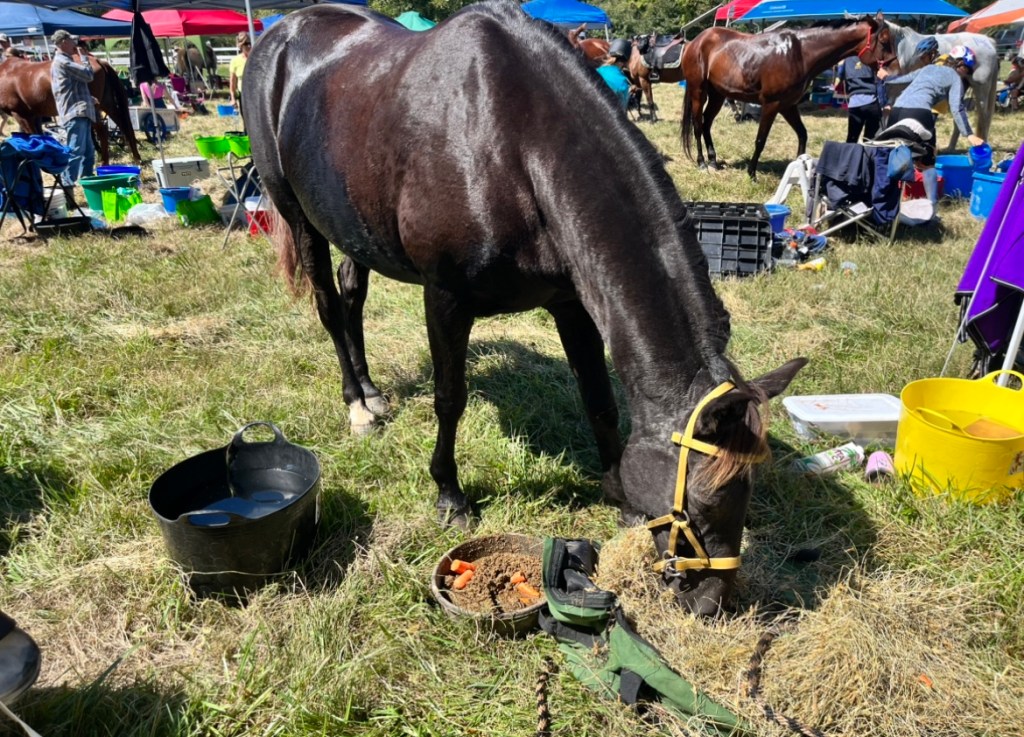
    Still, we ran into vet check 2 with a few minutes to spare and met again with the royal treatment. She was pulsed immediately to the parameter of 64 while pulling tack and they started our hold clock immediately. Here we saw Howard again who offered to trot out Khaleesi while a volunteer brought me iced water. He even checked her nails and gave a quick tighten up to be sure. It was wild to watch the whole team working my horse while Matt helped me with my own needs. She passed with all perfect scores and was surprisingly tolerant of all the pampering. They even brought over a pop up tent and fed her apples while continuing to sponge her as we were going into the heat of the day. 

    Volunteers swarm around the royal steed helping us at vet hold 2

    This hold was 50 minutes and then we were pushing the clock to do 17 miles with more nasty climbs (one I think was called suicide!) to make it to mile 62. I had my doubts we could sustain this all the way to the finish line, but the reminder came: do the next thing until there isn’t a next thing to do. 

    The climbing had been grueling and I kept wondering if it would level out. The total elevation we climbed from starting line to Vet Check 1 was 3,200 feet. The 22 miles from Vet Check 1- Vet Check 2 was 3,786 feet. I suppose we got a little relief on the third loop as the 17 miles brought just under 3,000 feet of climbing. The hour we lost in the cool of the morning to get ahead was very costly.

    This mid-afternoon is where she generally begins to drag. It’s hot and here the bugs were voracious. When the flies got really bad she would stop and shake her head and refuse to move onward. She kept begging me to stop in a large grass patch and eat.
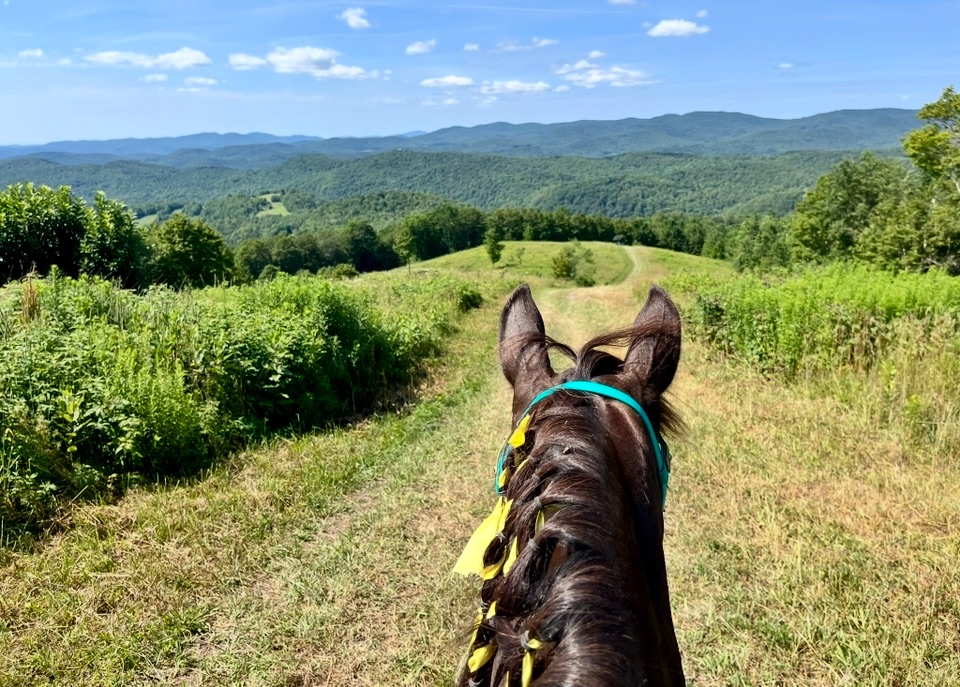
    Gorgeous views from the high meadows

    Unfortunately- we did not have time for that while also racing the clock (she had great gut sounds – this was not an issue). I wanted her to be able to graze and go, but once she started eating it’s all she could think about. I could tell she wasn’t exactly “tired” she was hot, distracted, and irritated. 

    And in the background, the clock… always ticking away.

    It was about three miles more to the next vet check when we passed by the runner aid station they call “Margaritaville,” one other frustration was not knowing where the horse vet checks are and for example Vet check 2 showed up almost 2 miles late according to my GPS which had me concerned. If I had been familiar with the course I might have had more confidence, I might have pushed through here, but I wasn’t even sure in 3 miles the mirage of vet check 3 would actually appear. 

    After the hills, the heat, the clock, the flies, and the constant nagging to give up and only eat the grass… I faced the gauntlet of Margaritaville. We had just gotten a little steam rolling and then there are people lined up on both sides of the road waiting to crew for their runners, canopy tents set up, and cheers and chaos and actually lots of fun for humans- but it’s a potential death zone for a horse not used to such things. Each one of these aid stations slowed us down as K navigated what to her was totally new and concerning, and truthfully it about took all the hope out of me as we walked through the town with her worrying about the cowbells and the little kids running out in front of us excited to see the horse, waving flags or shaking bells. 

    It is possible if I had gotten through the Margaritaville gauntlet and ran her up the hill into the checkpoint, we MIGHT have just made it and gotten out for one more loop. It is possible if we had gotten out there we MIGHT have taken the slightly easier next 11 miles and found the day cooling off, and her second wind coming up, and we MIGHT have begun to beat the clock that was breathing down our hind end. I’ll never know.

    Instead, when I saw a house that offered horse water and carrots, I stopped and got off my horse. This act was basically where the white flag came out and went up the flagpole, because I think I knew getting off and taking time here would mean surrender to the clock. I had not taken the time to electrolyte during the 17 miles and I wondered if that was working against us. I allowed someone to offer K a carrot, and I took a glass of cold water (my hydration pack wasn’t empty but it was warm). After a few minutes I got back on Khaleesi and I insisted we keep moving, but I didn’t push. We got into the hold about 4 minutes after the pulse time had passed and were considered “OT” or Over Time, and no longer in the race. 

    After pulling her tack, the remaining vet checked her and with a heart rate of 48 and all A scores, we loaded up on a trailer to base camp. She was healthy and her gait remained solid through the 62 miles without a hitch. All the things I had prepared for and been concerned about did not pose a problem. The extra calcium plan for the heat and humidity was in place, no metabolic issues came. Her shoes held up great. No issues with her gait. Looking back I did a pretty good job getting this non-arabian ready for a challenging 100 mile ride. Regardless of that, equipment failure still turned into a failure to complete. 

    It was disappointing, but I think I had a pretty good outlook. In retrospect, the day before when we heard a vet tell us we might have a problem, I asked: please let me start this race, and please, I want to see some of the trail… we’ve come so far. And as if a response to that request, we saw over half of the trail. We got three full hard loops in and saw 62 miles of the Vermont 100. 

    I thought the test was going to be about getting across the finish line, but in looking back, I think it was a test to reveal what is under my own skin when the cost is high and the outcome is loss. The only way to see what is there is when things get real. The investment has to be real, and the loss has to be equally real.

    The night before the ride, as I stressed over the potential lameness, I looked squarely at the fear that if I did not finish this ride I might feel like I was a wasted investment. I felt if I could not pull off a finish that I was unworthy. That I had less value. I was worried I might carry the label: Failure. I think that “B” grade helped prepare me, because I sat with my devoted husband and in tears I admitted that I felt I will have let him and everyone down if I can’t get this done. 

    And we both knew that was not true. The pressure was internally generated, and completely unnecessary. 

    He assured me that regardless of the outcome, he was here… WITH me. And I kept hearing a reminder over the months and in that moment that also God was with me. Regardless the outcome. As I navigated between the lies and the truth, like a sharp double edged sword separating bone from marrow, tendons and joints, I think the lie was cut away and the truth remained. 

    Jaime & Matt give K a break at a rest stop in NY

    The truth transforms us. The truth sets us free. The truth allows us to respond to what comes and be disappointed without being devastated.

    No matter what came in the test of the event, I had reached for something beyond what my comfort zone could claim. I had dreamed big and made plans. I walked out those plans day after day, and not only did the preparations, but wrote about them and shared them transparently with others. I took the risk because my real identity was not tied to the outcome and I knew I would still be “me” if I shared a victory or a defeat with the stakeholders.

    In the end, only a few days of hindsight, and hours of being able to process, I can see that I carry a failure to complete on my public record, but I am not a failure. My identity is a bold, adventurous daughter of a creator king. That Father created a beautiful world for me to explore. I love a challenge. I want to live fully the life I have been given, and I’m willing to take a risk that things may not go as planned, and then pivot and roll with the next steps. I want to be fearless and free in the truth, and to walk in grace and love as I run and fall, as I encourage others, and help pick them up along the way. 

    I have heard it said that it is only in being willing to die that we may fully live. As Dr. Luke wrote centuries ago: Those who seek to preserve their lives will lose it, but whoever is willing to lose their life will find it.
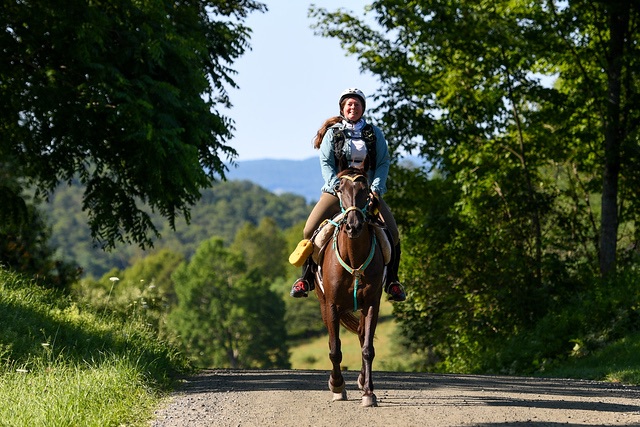
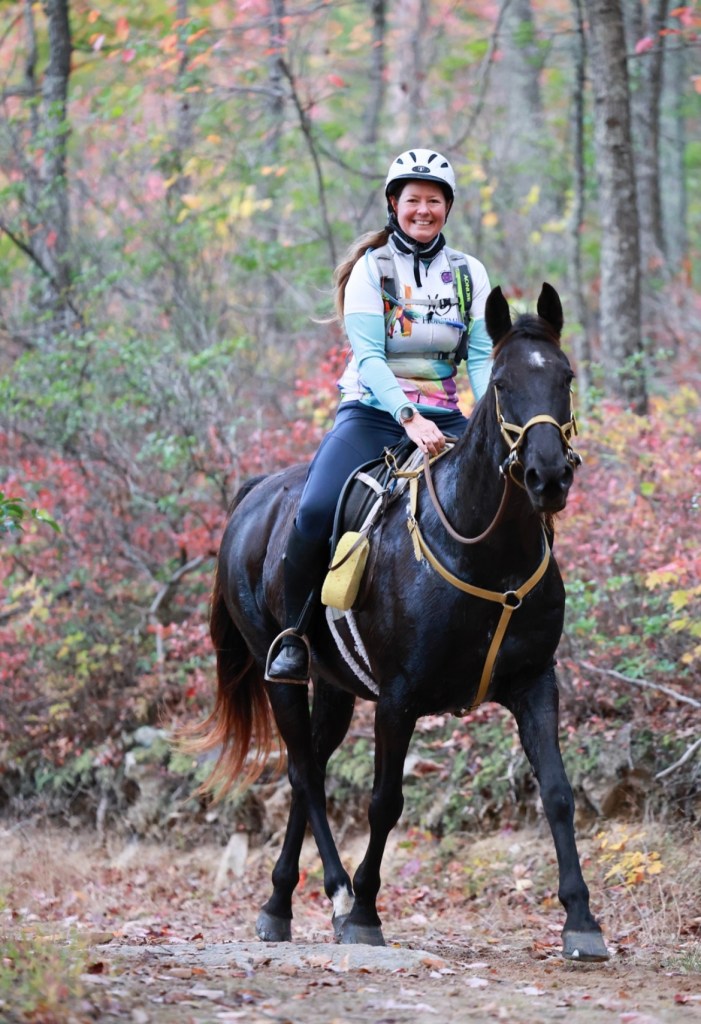
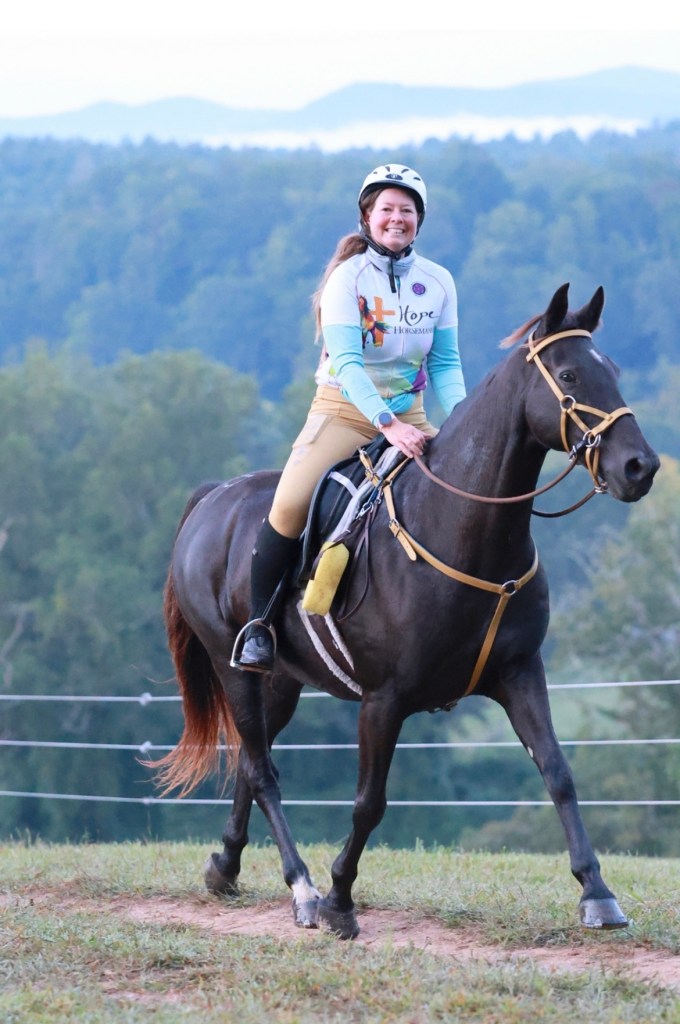
    Photo taken between checkpoint 1 and vet check 1. Makes me smile as I imagine the hope we held after the trouble began. Ben Kimball Photography.

    In a way, the trailer ride home from mile 62 was like a death. The death of a hoped for outcome. But I have experienced that to move from empire building to living in the kingdom, death is only a door to resurrection. Like the Phoenix (Fenix!), there is a level up that only death of the old can bring forth. I do believe that this story is a good one, and the little voice that came as I looked at my broken saddle from the ground at mile 13 (“Don’t be afraid, this is a gift!”) is somehow right… Even this is a gift, bigger and better than I can see at the moment.

    Possibly the most interesting question that still lingers, floating up in the aftermath of the great adventure, the one I am not certain how to answer honestly… remains… 
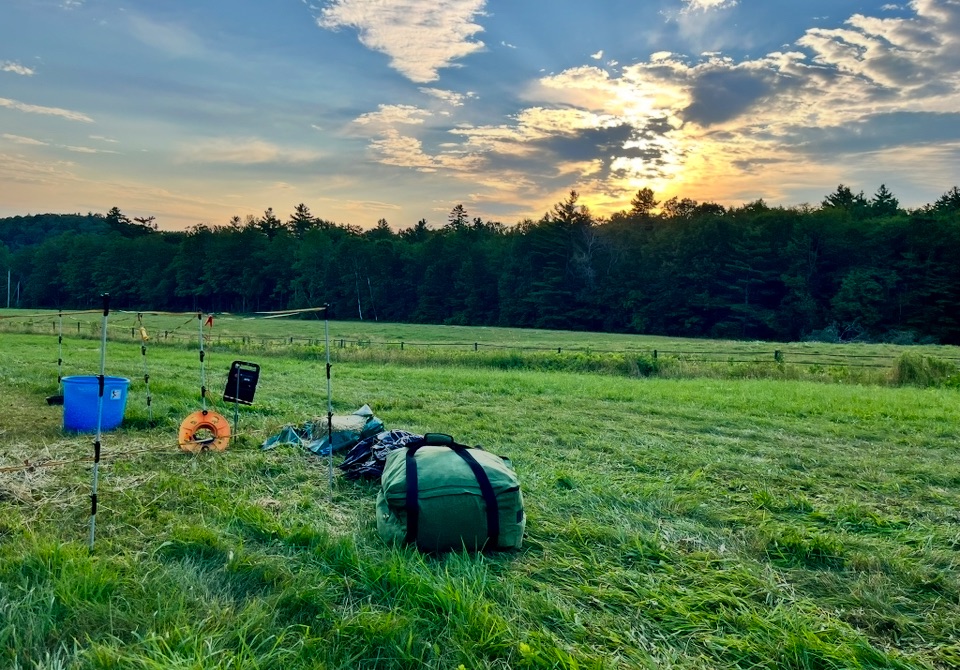
    If I knew then how this would play out… would I still have gone?
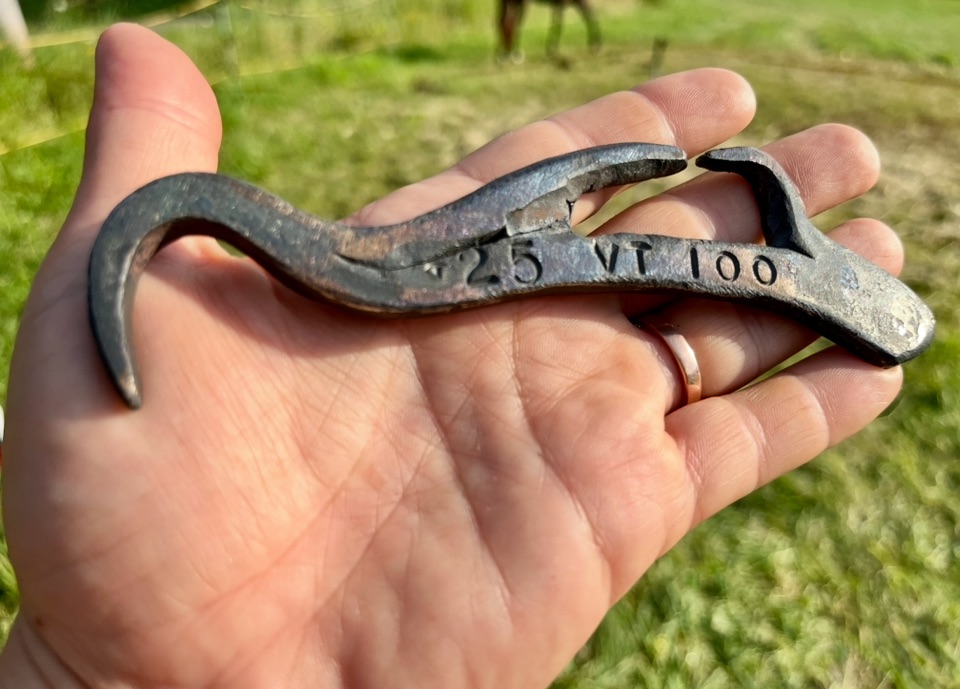
    Howard the farrier brought us a special momento to honor our spirit with the ‘Broken Tack Challenge’ award. I treasure it!
  • We’ve got plans

    Hello readers-

    I’m working on a blog today that will publish ‘soon’, but in case you haven’t seen our video about plans for the 2025 season I’m sharing that here!

    Plans for 2025

    Stay tuned!

  • The Triple Crown

    The Triple Crown

    Things here in Hope-town this fall have been packed in with some unexpected twists and turns.

    This little post is to share the ride video from the Fort Valley 50 on October 20, 2023. This was our scheduled final ride of the season and looking back I could not be more pleased.

    Photo: Becky Pearman

    I like to hold my event plans loosely through the year and leave room for recalibration. This year not only did my tentative ride calendar run as it developed in early Spring, we added the fall Biltmore ride to it for a total of 5 rides this season. I believe this could be our first year for 100% completion on all rides we entered.

    We completed over 300 miles this season and the rides for 2023 were:

    • (OD) No Frills 55
    • Biltmore 55
    • (OD) Old Dominion 100
    • Biltmore 50
    • (OD) Fort Valley 50

    Of course this was also the year of our first 100 mile completion, and our first season of finishing all three Old Dominion (OD) series rides which earns our first triple crown award.

    I could not be more pleased. For those who have followed us any length of time you will know it’s been a long road that was not always certain to have this kind of success. But I do believe in the long process and building up a powerful horse over a long road it’s taken many puzzle pieces, team members, and trial and error to put it all together so she is truly running in her strength now.

    The Fort Valley ride had nothing particularly special about it. It was what we in the Harry Whitney circles like to call a ‘non-event event’ — meaning it just worked like you’d hope. Maybe it was the ride I didn’t learn anything in particular, we just celebrated and ran along with joy!

    Meanwhile there are updates about Wyoming who is really coming along into a new connection and we are truly becoming friends. So the next updates will be for the fans of Wyoming’s journey.

    As for the endurance plans… I have come to a good place, and I’m certain there will be new mountains to climb next year, but it’s too far away to get wrapped up in that story yet… there are stories in between that need engagement first. Khaleesi is on a well deserved break for now with her herd.

    Enjoy the show… and ride along our last ride of the season with us:

  • The weight of a thought.

    The weight of a thought.

    September 27, 2023

    Last weekend I went solo to the Fall Biltmore ride. I suppose Khaleesi might have something to say about calling it solo since technically we went together, and she might even contend that she’s the one who counts. Regardless, I hadn’t initially planned on this ride when mapping out my tentative calendar, and as it approached, and I kept seeing no reason not to go, my usual crew were all otherwise engaged. I used to ride crew-less fairly regularly years back and it seems the Biltmore is a good ride to take on without help since the vetting and crew area is the same throughout the ride and is near camp. Thankfully, Brandea and Abigail live in the area and though they weren’t available to crew on the Saturday, they met me in camp Friday afternoon and helped me get the crewing area set up.

    Crew area

    Biltmore is a “fun” ride for us so to speak where we aren’t so concerned about each minute counting and being concerned for the clock. The difference for us comes down to the footing. There are tons of loose rocks dispersed around gravel roads and paths, but no rock climbing or embedded rocks in the wooded areas that slow us down. The elevation, though it adds up, is never a five mile grueling climb over a mountain. Rolling hills take their toll, but the climbs are reasonable and followed by a recovery plateau or a downhill in short order.

    Our last event was the Old Dominion (OD) 100 in early June and most of my readers might notice that the summer has been spent on the herd with more focus on Wyoming than Khaleesi, so with a few exceptions here and there to get her out for a hike or a ride, and the fabulous Harry Whitney clinic in August, she’s been on a break. I thought this ride would be a good prep for the (Old Dominion Series) Fort Valley which is more challenging due to the infamous OD rocky technical terrain and the trail of tears climb that historically happens in both the first and second loop up the rocky side of the mountain. I wasn’t sure what I would find as she increases in fitness and strength over the years so the Biltmore would give us a dry run, revealing what we were going into the fall with under the hood.

    Overall I was pleased with what I found. In May the ride was a 55 mile but basically similar overall to the September 50 mile ride. I calculated an overall ride average of 7.3mph for the May ride and a 7.5mph average for the September ride, so comparable all in all.

    Photo credit: Becky Pearman

    The difference that was glaringly clear to me after a few days looking back was in the post-ride. After the May ride I had a horse that stood longer with a foot cocked taking rest naps. Eating off and on, but moving around generally less. In walking her later that evening she was slightly shorter strided and a little stiff. Her return to the herd and home field was average, walking around like normal, taking a roll, getting a drink, but in no hurry. Because we live in a river valley and do a lot of climbing in our home riding, and we see a fair amount of rocky terrain, I find the Southeastern rides wear her out more physically because though we do train on the scenic river trail a fair amount adding long trots and cantering intervals, it’s not our normal jam so she is less accustomed to speed over long distances like that.

    After this ride she was less “nappy” and spent more time wandering around her pen as I organized our gear to leave the next day, curious about what I was doing, asking for carrots, taking a few bites of her food, picking through the hay for favorite parts and looking for some grass that might have been overlooked in earlier perusals. When I walked her later she was more energetic, clearly limber, and considerably less stiff. The following day we hauled the six hours home and I took her into her stall intending to remover her leg wraps before setting her loose.

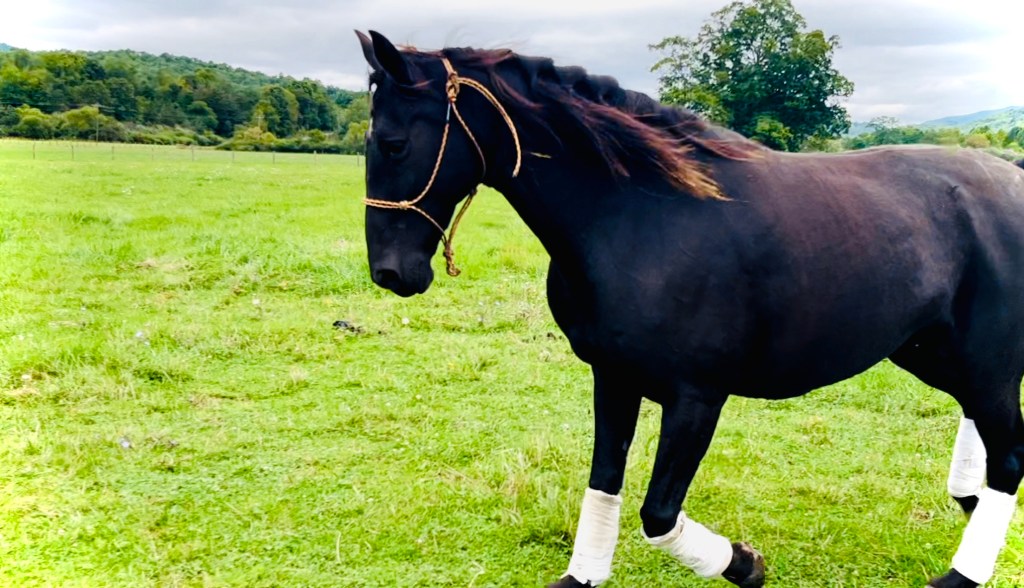
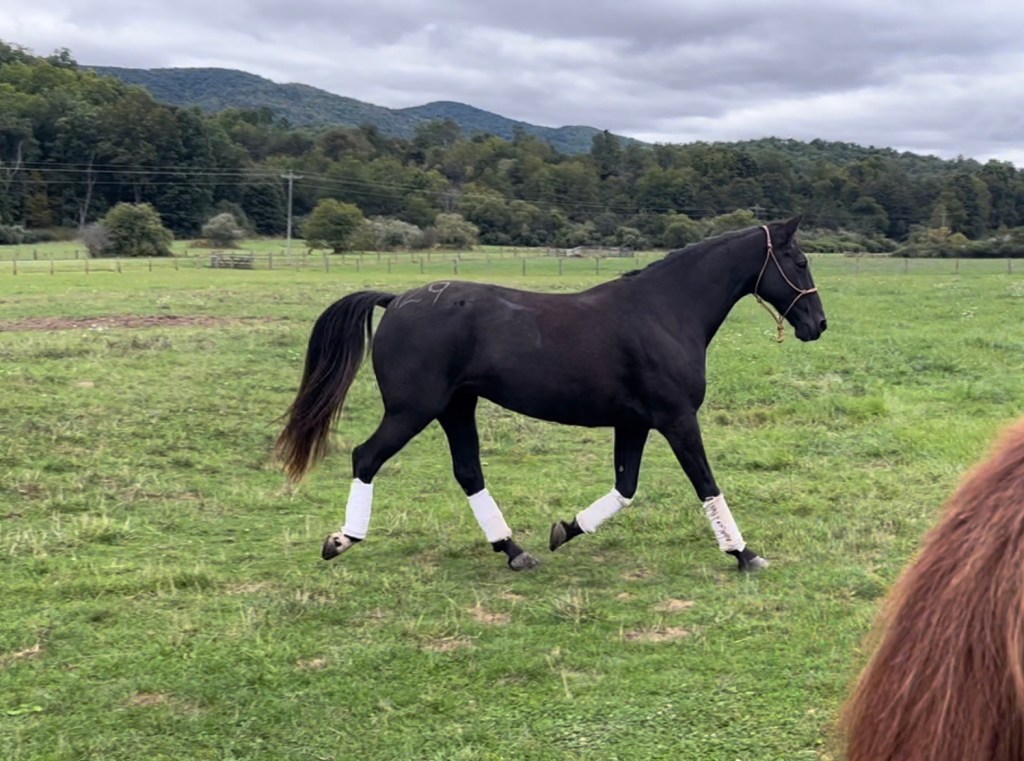
    I hadn’t noticed her rope lead had worked it’s way to the end of the rope in the halter and as I walked her into the stall from the trailer, I turned to close the outer stall door and saw her leaving the stall into the field while the rope was still in my hand- her end limp on the stall floor. She headed out to greet the herd and I was amazed to see her floating around trotting the field. I grabbed my phone to catch some of it. She wanted to roll and Wyoming (too excited to have her leader return) was crowding her so I watched K warn her, then kick and then in a graceful front-feet-stand send both hind legs toward her asking for some space to roll. Well she can’t be too sore if she’s pulling those acrobatics today.

    Then she got up, trotted around almost in a sort of homecoming victory lap, then around toward the water trough to drink before she returned to me in the stall to have her leg wraps removed as if to say: It’s sure nice to be home, I got the herd in line out there, but I’m back. Can you take these leg wraps off?

    Not only did I like seeing her floating around the field doing acrobatics, but I like that she presently returned to me before I had to retrieve her. Not only did the ride seem to do little harm physically, it seems we’re still on friendly terms.

    As for the ride itself, it was basically smooth, peaceful, and quiet with no problems or snags from doing it without crew. The details aren’t particularly interesting, except the following two experiences that I took particular note of.

    In chronological order, the first vet check was easy. All day she had ‘A’ scores and good heart rate recovery (52, then 56, then 64). I was ready to leave a few minutes before my out time in the hope I might be leaving around the same time some of the riders who finished the first loop roughly when we did. This would make leaving camp a little easier for us as this is the biggest challenge for me. After a great 15 mile first loop and returning “home,” my horse is never very excited about leaving again at the Biltmore. Oddly enough, I don’t seem to have this same issue at Big South Fork when she almost seems to drag me back out on trail… The long gravel road along camp seems to have a magnetic draw that is unusually strong in this ride and I think it’s always been this way for us.

    Considering we were in the front third or so of almost sixty riders, I didn’t have much to worry about finding other horses going out on trail. We were released with a couple other riders, and there were a couple just behind. This seemed set up well to help us motivate out into the long middle loop, and if we could just get past the magnetic thought field of base camp I knew she’d go along fine. Or so I thought. Within a few steps, we began to trot along with the small group and to my horror Khaleesi began limping at the trot. This was not a questionable, am I imagining she might be off, this felt practically three-legged lame. We walked a few steps and tried again only to find the same limp and immediately dismounted. We were still next to the crew area and I was sure she had a big rock in a hoof that was painful. I inspected all four feet, and just as I had checked them earlier, there was nothing there. That worried me even more. Another crew person I didn’t know at all was near us, saw me, and brought over a stool so I could get back on. Meanwhile my small group was already gone as they weren’t riding “with” us as much as we were overlapping. Now for the time being we were alone, but it didn’t matter because it seemed to me we were not going out regardless.

    I took a few minutes to walk and consider. The next few riders went out and jogged by. I wasn’t sure what to do. This is odd, because it seems obvious. My horse was lame. Unquestionably lame. Yet, I had this nagging in that inner place that said walk a bit more, and lets see what happens. 

    The other voice said: this is the long loop, it’s 20 miles and lots of climbing, aren’t you kind of glad you have a good reason to bail, clean up your stuff, and hey, I even bet you could get on the road today and get home a day early… your own bed… a nice bath… You had a great first loop, considering a good training ride… pull out and don’t do any more damage…

    And more quietly, the other voice stood firm: walk a little, get on the grass, see if you can get a decent trot, and you can always turn around, it’s early in the day and even if you hand walk her back a mile or two you have time. Let us see what happens.

    And so we left camp slow as molasses not only from the challenge of leaving camp alone, but the concern of a potential lameness nagging me. Alone (as we so often are!) I prayed for wisdom: God, I have nothing to prove and neither does this horse. We have been blessed with a huge victory this season completing the 100 in June, and everything else is gravy. I do not need to complete this ride and I am willing to pull out, but I sense an urge to not give up just yet. The last thing I want is to damage my amazing horse- who is a gift from you that I always want to honor. Please give me clarity on what is best to do here. And if you’d like to just fix it and heal her issue, that would be great. Whatever you decide just please let me know so I can get on the same page.

    And I kept hearing that quiet, still small voice urging me not to quit yet.

    So we got past the gravel road now almost a mile out. We hit the grassy “runway” and she began to trot-walk transition. I was not convinced she was sound but she was less lame than she had been earlier. I kept thinking we can always turn around if it lingers, maybe she hit a rock just right and it hurt at the moment but it’ll work itself out.

    Photo along the grass runway leaving on the second loop by Becky Pearman.

    As we continued, a trio of riders came up from behind at a nice steady pace and now about 2 miles out of camp she let go of the anchor her mind had been and seemed to worry less about both leaving camp and whatever was painful and she fell in with them. As we picked up a steady pace I was hypersensitive.  First, a little heavier on one diagonal, then in another mile increasingly more even. I worried slightly because she offered to canter more throughout this loop and I don’t know if it felt better on a sore hoof or if she just came round and was feeling good. 

    Our little band stayed together the entire twenty mile loop which made it less lonely for both of us — I always feel Orange West is longer than the mileage somehow. I figured the next vet check would give us some information if she seems at all off in the trot, but she passed with flying colors again and we were released to finish the ride.

    From this, I felt a reminder that sometimes the still small voice doesn’t align with common sense. I felt an encouragement that sometimes we’re called to do things that go against what we can see clearly on the surface in front of us, but when we listen to the guidance which is often the softer deeper message, we may be surprised at what miracles can come if we follow. I tend toward the conservative when it comes to my horse and her needs, but in this case, playing it safe was not the call. I’m a bit astounded by it. I’m not sure if it was a miracle or simply a knowing that this was distraction and not injury. Regardless I am grateful.

    The second take away from this ride comes in leaving camp for the last loop, again alone. It’s like variations on a theme! Harry Whitney has a saying that there is nothing heavier to move than a hard thought, and there is not much lighter than a willing thought. Anyone who has tried to drive a horse across a bridge, a river, on onto a trailer when the horse’s mind is convinced otherwise knows, this is a deep truth.

    There is nothing heavier to move than a hard thought, and there is not much lighter than a willing thought.

    Harry Whitney

    Somehow the Biltmore events host the most magnetic ride camp of any we face. Every single ride here, leaving on the third loop is the greatest challenge we face. Last year, on the third loop, before I found the horsemanship strain of Mark Langley, which led me to Harry Whitney, and then to Tom Moates, I had to absolutely DRIVE her down that mile long gravel road and DRIVE her into the grass runway that leads toward the river and out into wooded lime trail where she begins to free up.

    Now I have better tools to influence her thoughts, and I ask her to let go of hard thoughts in our day-to-day world anytime it’s helpful. I also have experience helping her find a FORWARD thought since our August clinic and this is a case where her body will comply with my driving forward while her brain is cemented back at the trailer and that means tension, brace, and a fight. With this particular horse it’s a fight I can win, but I hate fighting with her. It’s exhausting.

    I was able to guide her thoughts forward without driving her this ride. I was able to get her thinking in transitions to bring her BACK to me at the present place and present time. I was able to bring her mind along sooner and with less disruption than in times past. It felt like trying to leave a magnetic field, the grip the thought rooted in camp had, loosening as the yards went on, and her mind breaking free and starting to roll again. This has happened in the past as I drove her body onward- eventually she would begin to reunite her brain and body in the place I had forced her body to go. This may seem obvious but some horses who have become experts at clinging death grip-like to their own thoughts, can run their body through an entire ride and have never brought their mind from the buddy or the trailer or the food they’d left behind, only rejoining mind and body once they completed the loop.

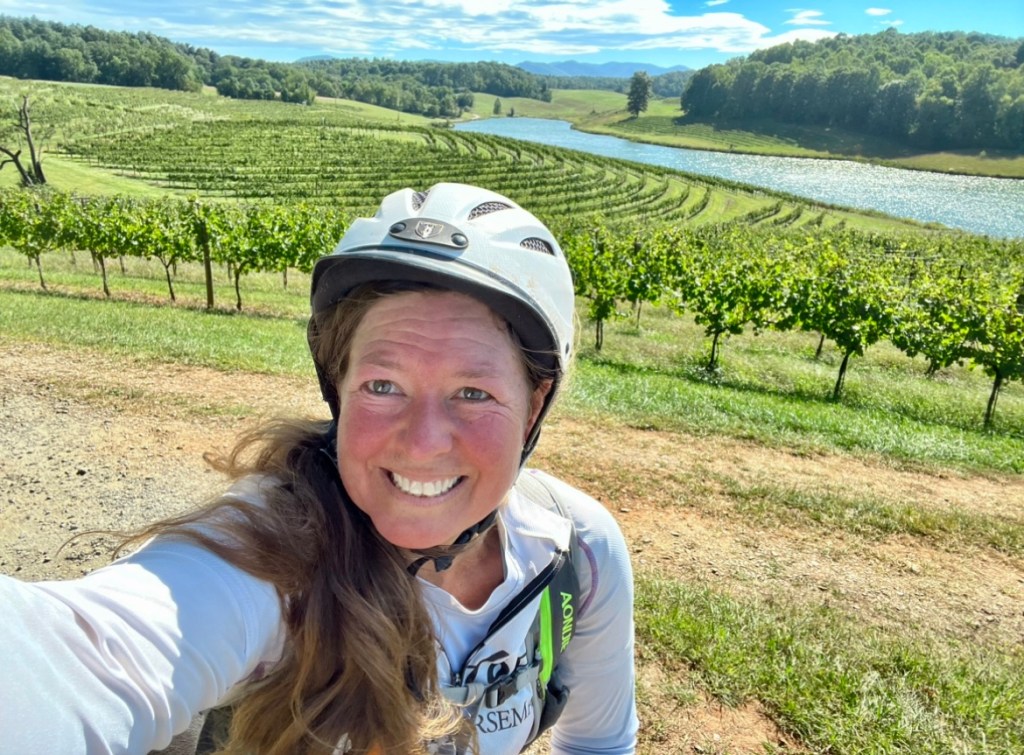
    Last white west loop went along the lagoon and vineyards it was beautiful!

    This final 14 miles we did largely alone though we leapfrogged a bit in the final miles with two riders who we ended up crossing the finish line with. There was no sign of lameness for K, and though it was the hottest part of the afternoon, and this tends to be our slowest loop, we hung pretty steady once the mental ball broke loose around a 6.5mph easy trot.

    The final vet out was solid, and she maintained the ‘A’ scores and good gut sounds. Nick congratulated her (wryly) on appearing not to lose a pound in the 50 miles. (In fact she lost 40 total if the scale is correct, but that’s not much in an 1100 pound creature).

    In another small miracle, as I looked somewhat unhappily to hand carting my crew stuff the 1/2 mile from crew to trailer in a few trips after finishing 50 miles, I was offered a ride by a new friend that was next to us in camp. That was a blessing for sure.

    I think Khaleesi’s stronger recovery from this ride is in no small part due to the help Harry Whitney gave me to increase awareness of when my horse isn’t moving in her most relaxed state. When brace or tension creeps in we are not in best form, and tension creates way more muscle soreness that simply the workload alone. That also goes for me as I felt pretty good after the ride and made a concentrated effort to keep my own body in softness as much as possible.

    When we work at our home territory along the river scenic trail, I have been able to keep her softer with good forward motion in the upward transitions into a loose powerful movement. Things on the river trail that creep in to destroy maximum relaxation are usually environmental —like when we pass the handful of homes with tarps, lawnmowers, goats, barking dogs, etc. Her head and neck raises and gets harder in brace as she becomes alert and concerned.  I use those moments to influence her, inviting her to let go of her worry, trust me, and relax again. I have various levels of success in this, but the usual distractions are more regular for us as we travel that trail often, and it’s the same goats, the same tarps, etc. most of the time. She can “let go of that” and come back to me more easily because it’s less novel.

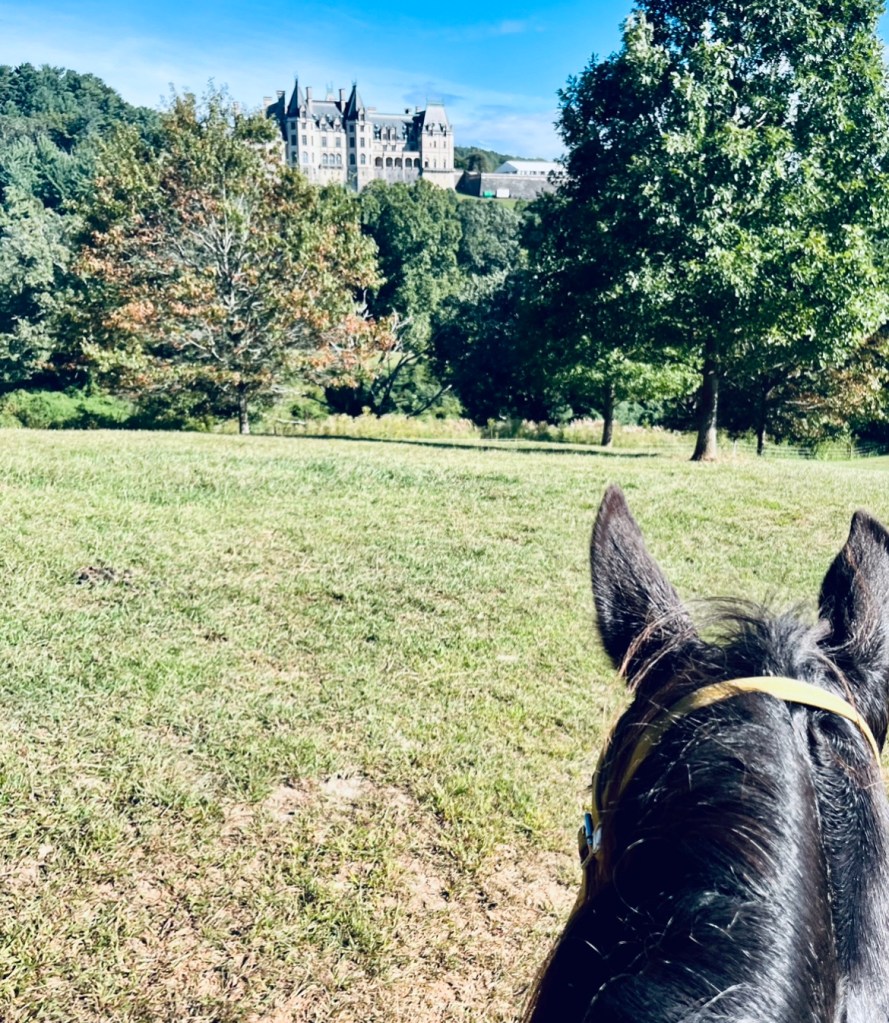
    View of the Biltmore house from the trail

    In the Biltmore ride there are novel concerns all over the place. None of these has her fleeing in fear, but they have her more alert and less relaxed than ideal conditions. Not only the other guests on trails with baby carriages, bikes, and whatever other ways they move about, but the property is a working farm with large equipment in the distance banging, pigs, sheep, goats, and even other horses in other areas to pull her attention. In last weekend’s ride, because I’m more aware of how this affects her quality of physical movement, I was able to influence it more often. Her relaxation in movement Saturday was better than in any ride past I believe, however it’s not going to match what I can get working in ideal circumstances.

    This would be point three if there was a third point. A reminder that any event is going to take the highest level we have come to either in control, attentiveness, relaxation, or focus and it’s going to take that down a few pegs in the least, or blow it out of the water completely in worst case scenarios, or simply accumulation of factors. Whatever issues we are working to improve with our horses (and I hope I always have something I am working to improve!) the ride will test it, and I will always be less effective than under ideal circumstances. This reminder encourages me to work even more with focus in ideal conditions to improve to a point that losing ground in the real test will still leave me with high quality performance. Not only do I head back to the river scenic trail to work on longer trot segments and canter- walk intervals, but I’m insisting on quality relaxed transitions and holding softness in all the gaits to increasing levels each visit.

    No wonder I ride alone most of the time…

    Aside from the fact that my horse continues to gain in strength and endurance as her years accumulate (she is now 13 and continues to gain momentum as she heads into her prime years), and the fact that she came through a 100 in a lot of strength this year — which means she is in a good year for building, I believe that the increase of relaxation and softness in movement and being able to increase that softness into transitions and higher speed (speed is usually where we find the breakdown) is why her recovery was so drastically improved over past rides.

    This is exciting for me because I believe it will open yet another layer of increased performance as we build on it going forward. 

    If you’re interested in the principals of guiding over driving, of working first with the horse’s thought and not only focusing on the horse’s body, I highly recommend checking out Mark Langley because he has so much available to get started online from a really good podcast to videos on how he works with indirect pressure and guiding.

    Mark’s materials are the quickest and easiest to access, but Tom Moates has a 5-book series that is a raw, honest journey into this mental focused horsemanship following Harry Whitney. The journey begins with book 1: A Horse’s Thought. Tom has written hundreds of articles for publications from Equus to Western Horseman and Ecclectic Horseman. He’s studied and followed around most of the “important” recognized horsemen and interviewed them while walking out his own horsemanship journey. Years ago, though he still does plenty of interviews, he began to follow Harry just about exclusively. Tom is a fabulous horseman as well and if you’re not too far from him here in VA you might be able to catch a lesson or put together a clinic with him!

    Though Harry Whitney is, as far as I’m aware, the most gifted at sharing this mode of horse work, and has a heart for the humans as much as the horses (which I have observed can be rare) – he is the most challenging to learn from because you simply have to get a seat around a round pen in a clinic, or if you’re fortunate a spot with a horse. He only works one-on-one in his clinics so the participant spots are limited, but I find them pretty paradigm shifting. No one seems to limit auditing spots, so as long as you can get to a place he’s teaching you should be able to find him! If you can get to meet him sometime I can’t recommend it enough.

    Happy trails from the Biltmore!

    Regardless of where you are on your horsemanship journey- or if you’re one of the readers who enjoy following my stories and don’t even have a horse… I wish you the best, and the guidance of the still small voice as you go along the way.


    If you aren’t a subscriber, consider signing up here to not miss an update! My average blog post comes out every 3-4 weeks so you won’t get regular junk mail from us!